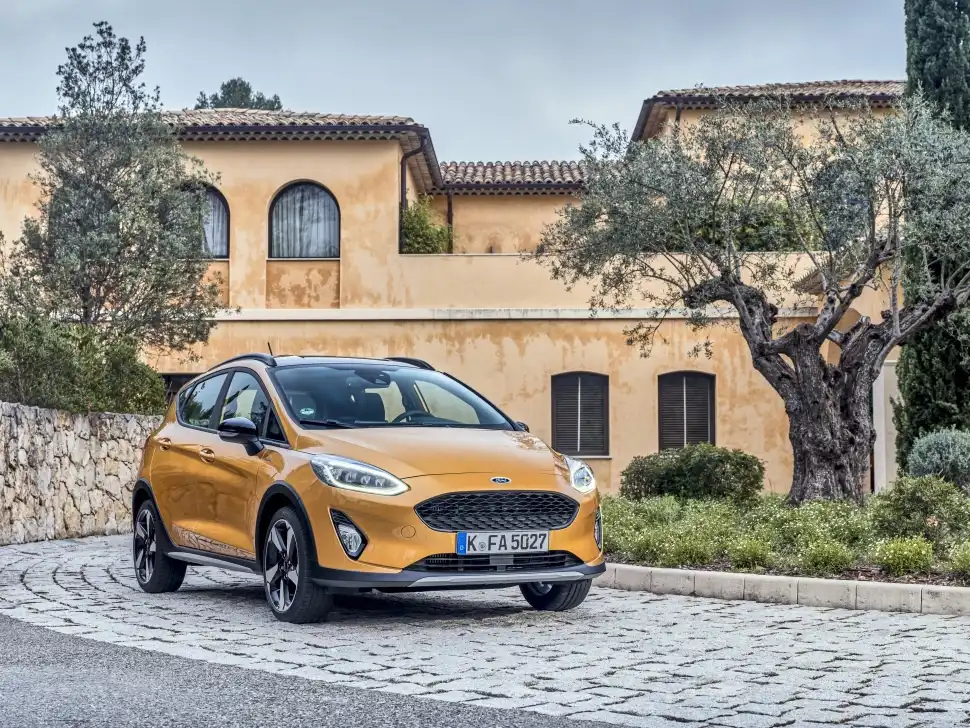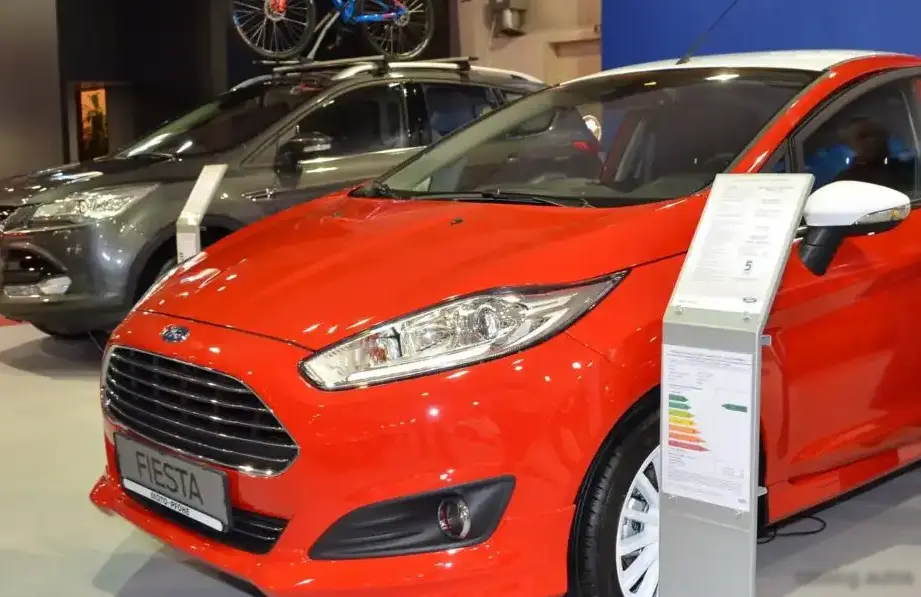
The Ford Fiesta VII, specifically the facelifted model produced from 2013 to 2017, represented a significant evolution of Ford’s popular subcompact hatchback. Among the various engine and trim combinations offered, the 1.0 EcoBoost 100 horsepower variant with a five-speed manual transmission occupied a crucial position in the lineup, appealing to buyers seeking a balance of fuel efficiency, affordability, and modern technology. This version was a key component of Ford’s strategy to offer a diverse Fiesta range catering to a wide spectrum of customer needs within the European and, to a lesser extent, North American markets. The Fiesta Mk7, built on the B2E platform, aimed to provide a more refined and sophisticated driving experience compared to its predecessors.
Technical Specifications
| Brand | Ford |
| Model | Fiesta |
| Generation | Fiesta VII (Mk7, facelift 2013) 5 door |
| Type (Engine) | 1.0 EcoBoost (100 Hp) Start&Stop |
| Start of production | 2013 |
| End of production | 2017 |
| Powertrain Architecture | Internal Combustion engine |
| Body type | Hatchback |
| Seats | 5 |
| Doors | 5 |
| Fuel consumption (urban) | 5.3 l/100 km (44.4 US mpg, 53.3 UK mpg, 18.9 km/l) |
| Fuel consumption (extra urban) | 3.7 l/100 km (63.6 US mpg, 76.3 UK mpg, 27 km/l) |
| Fuel consumption (combined) | 4.3 l/100 km (54.7 US mpg, 65.7 UK mpg, 23.3 km/l) |
| CO2 emissions | 99 g/km |
| Fuel Type | Petrol (Gasoline) |
| Acceleration 0 – 100 km/h | 11.2 sec |
| Acceleration 0 – 62 mph | 11.2 sec |
| Acceleration 0 – 60 mph | 10.6 sec |
| Maximum speed | 180 km/h (111.85 mph) |
| Emission standard | Euro 5 |
| Weight-to-power ratio | 10.2 kg/Hp, 98.4 Hp/tonne |
| Weight-to-torque ratio | 6 kg/Nm, 167.3 Nm/tonne |
| Power | 100 Hp @ 6000 rpm |
| Power per litre | 100.2 Hp/l |
| Torque | 170 Nm @ 1400-4000 rpm (125.39 lb.-ft. @ 1400-4000 rpm) |
| Engine layout | Front, Transverse |
| Engine Model/Code | SFJA, SFJB, SFJC, SFJD |
| Engine displacement | 998 cm3 (60.9 cu. in.) |
| Number of cylinders | 3 |
| Engine configuration | Inline |
| Number of valves per cylinder | 4 |
| Fuel injection system | Direct injection |
| Engine aspiration | Turbocharger, Intercooler |
| Engine oil capacity | 4.1 l (4.33 US qt | 3.61 UK qt) |
| Coolant | 5.8 l (6.13 US qt | 5.1 UK qt) |
| Kerb Weight | 1016 kg (2239.9 lbs.) |
| Max. weight | 1555 kg (3428.19 lbs.) |
| Max load | 539 kg (1188.29 lbs.) |
| Trunk (boot) space – minimum | 281 l (9.92 cu. ft.) |
| Trunk (boot) space – maximum | 965 l (34.08 cu. ft.) |
| Fuel tank capacity | 42 l (11.1 US gal | 9.24 UK gal) |
| Permitted trailer load with brakes (12%) | 900 kg (1984.16 lbs.) |
| Permitted trailer load without brakes | 550 kg (1212.54 lbs.) |
| Length | 3969 mm (156.26 in.) |
| Width | 1722 mm (67.8 in.) |
| Width with mirrors folded | 1787 mm (70.35 in.) |
| Width including mirrors | 1973 mm (77.68 in.) |
| Height | 1495 mm (58.86 in.) |
| Wheelbase | 2489 mm (97.99 in.) |
| Minimum turning circle | 10.2 m (33.46 ft.) |
| Drivetrain Architecture | Front wheel drive |
| Number of gears and type of gearbox | 5 gears, manual transmission |
| Front suspension | Independent, type McPherson with coil spring and anti-roll bar |
| Rear suspension | Coil spring, Torsion |
| Front brakes | Ventilated discs |
| Rear brakes | Drum |
| Assisting systems | ABS (Anti-lock braking system) |
| Steering type | Steering rack and pinion |
| Power steering | Electric Steering |
| Tires size | 175/65 R14; 195/55 R15 |
| Wheel rims size | 5.5J x 14; 6J x 15 |
Powertrain & Engine Architecture
The heart of this Fiesta variant is the 1.0-liter EcoBoost engine, specifically the SFJA, SFJB, SFJC, or SFJD engine code depending on the specific market and production date. This engine is a three-cylinder, inline gasoline engine featuring direct fuel injection and a single turbocharger with an intercooler. The direct injection system allows for precise fuel delivery, optimizing combustion efficiency and contributing to the engine’s impressive fuel economy. The turbocharger, a key component of the EcoBoost technology, provides a significant boost in power output despite the small displacement. The engine utilizes a timing belt and four valves per cylinder, contributing to its responsive nature. The five-speed manual transmission was the standard offering, providing a direct and engaging driving experience. The Start&Stop system, a standard feature, automatically shuts off the engine when the vehicle is stationary (e.g., at traffic lights) to further reduce fuel consumption and emissions.
Driving Characteristics
The 1.0 EcoBoost 100 hp Fiesta offered a surprisingly lively driving experience. While not a performance-oriented model, the turbocharger provides a noticeable surge of power in the mid-range, making overtaking and merging onto highways manageable. The five-speed manual transmission allows drivers to keep the engine in its optimal power band. Acceleration from 0-60 mph took around 10.6 seconds, which was competitive for its class. Compared to the higher-output 125 hp version of the 1.0 EcoBoost, this variant felt less urgent, but it offered a more relaxed and fuel-efficient driving experience. Compared to diesel variants like the 1.6 TDCi, the 1.0 EcoBoost provided a smoother and quieter ride, albeit with slightly higher fuel consumption in some driving conditions.
Equipment & Trim Levels
The 1.0 EcoBoost 100 hp model typically fell into the mid-range of the Fiesta lineup. Standard equipment generally included air conditioning, power front windows, a basic audio system with USB connectivity, and ABS brakes. Higher trim levels, such as Zetec or Titanium, added features like alloy wheels, a more advanced infotainment system, cruise control, and upgraded interior trim. Interior upholstery was typically cloth, with options for different patterns and colors. Optional extras included a panoramic sunroof, rear parking sensors, and automatic headlights and wipers.
Chassis & Braking
The Fiesta Mk7 utilized a McPherson strut front suspension and a torsion beam rear suspension. This setup provided a good balance of ride comfort and handling. The front brakes were ventilated discs, offering good stopping power, while the rear brakes were drums, a cost-saving measure common in this segment. The electric power steering provided light and precise steering feel. Stabilizer bars were fitted to both the front and rear axles to reduce body roll during cornering.
Market Reception & Comparison
The 1.0 EcoBoost Fiesta was generally well-received by automotive critics. It was praised for its fuel efficiency, surprisingly punchy engine, and refined driving experience. However, some reviewers noted that the three-cylinder engine could be a bit rough sounding at higher revs. Compared to other engines in the Fiesta lineup, the 1.0 EcoBoost offered a compelling combination of performance and economy, making it a popular choice for urban commuters and drivers seeking a practical and affordable hatchback. Its fuel economy consistently outperformed the larger 1.6-liter engines, while offering comparable performance in everyday driving situations.
Legacy
The 1.0 EcoBoost engine proved to be a remarkably reliable powertrain. While early versions experienced some issues with coolant leaks, these were largely addressed through updated engine designs and revised cooling systems. Today, well-maintained examples of the 1.0 EcoBoost Fiesta are still relatively common on the used car market. The engine’s fuel efficiency and relatively low running costs continue to make it an attractive option for budget-conscious buyers. The Fiesta Mk7, and particularly the 1.0 EcoBoost variant, helped solidify Ford’s reputation for producing small, fun-to-drive, and economical hatchbacks.