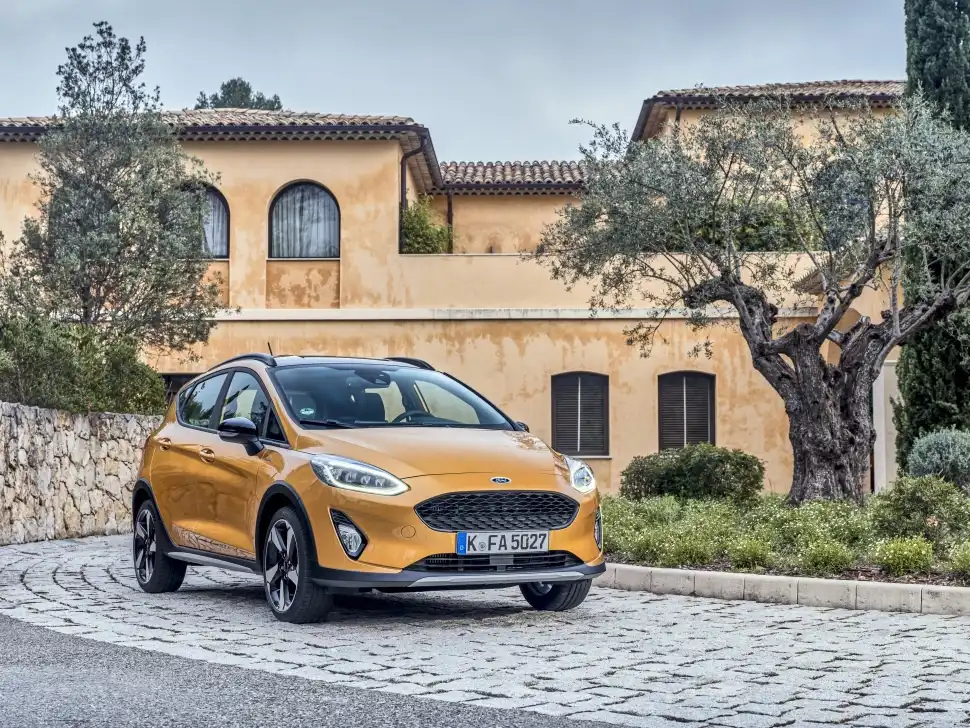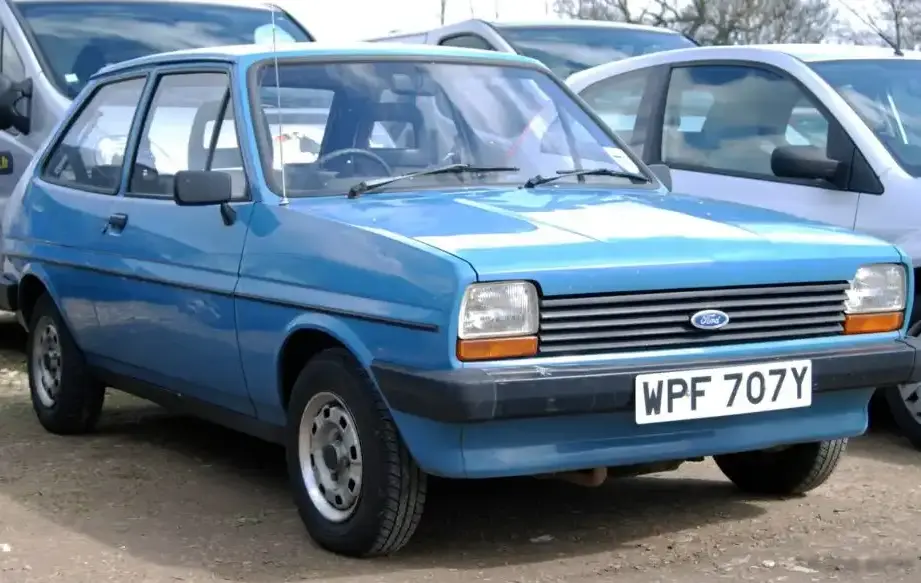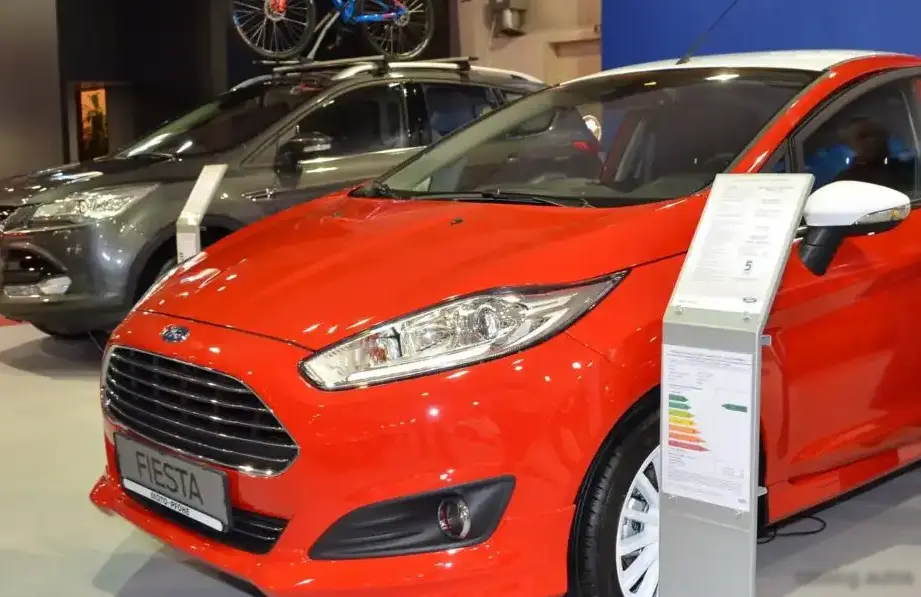
The Ford Fiesta VII, specifically the facelifted model produced from 2013 to 2017, represented a significant evolution of Ford’s popular subcompact hatchback. Within the seventh generation (Mk7) lineup, the 1.4-liter 92 horsepower variant with optional LPG conversion occupied a crucial position as an entry-level offering, aimed at buyers prioritizing affordability and fuel efficiency. This model, typically a five-door configuration, was a common sight on European roads and offered a practical and economical transportation solution. It sat below the more powerful EcoBoost turbocharged engines and the diesel options in terms of performance, but provided a lower cost of entry into the Fiesta range.
Technical Specifications
| Brand | Ford |
| Model | Fiesta |
| Generation | Fiesta VII (Mk7, facelift 2013) 5 door |
| Type (Engine) | 1.4 (92 Hp) LPG |
| Start of production | 2013 |
| End of production | 2017 |
| Powertrain Architecture | Internal Combustion engine |
| Body type | Hatchback |
| Seats | 5 |
| Doors | 5 |
| Fuel consumption (economy) – urban | 7.8 l/100 km (30.2 US mpg, 36.2 UK mpg, 12.8 km/l) |
| Fuel consumption (economy) – urban (LPG) | 9.7 l/100 km |
| Fuel consumption (economy) – extra urban | 4.9 l/100 km (48 US mpg, 57.6 UK mpg, 20.4 km/l) |
| Fuel consumption (economy) – extra urban (LPG) | 5.5 l/100 km |
| Fuel consumption (economy) – combined | 6 l/100 km (39.2 US mpg, 47.1 UK mpg, 16.7 km/l) |
| Fuel consumption (economy) – combined (LPG) | 7 l/100 km |
| CO2 emissions | 138 g/km |
| CO2 emissions (LPG) | 113 g/km |
| Fuel Type | Petrol / LPG |
| Acceleration 0 – 100 km/h | 12.2 sec |
| Acceleration 0 – 62 mph | 12.2 sec |
| Acceleration 0 – 60 mph | 11.6 sec |
| Maximum speed | 175 km/h (108.74 mph) |
| Emission standard | Euro 5 |
| Weight-to-power ratio | 10.5 kg/Hp, 94.9 Hp/tonne |
| Weight-to-torque ratio | 7.9 kg/Nm, 126.9 Nm/tonne |
| Power | 92 Hp @ 5500 rpm |
| Power per litre | 66.3 Hp/l |
| Torque | 123 Nm @ 4300 rpm (90.72 lb.-ft. @ 4300 rpm) |
| Engine layout | Front, Transverse |
| Engine Model/Code | RTJD |
| Engine displacement | 1388 cm3 (84.7 cu. in.) |
| Number of cylinders | 4 |
| Engine configuration | Inline |
| Cylinder Bore | 77.2 mm (3.04 in.) |
| Piston Stroke | 74.3 mm (2.93 in.) |
| Compression ratio | 8.5:1 |
| Fuel injection system | Direct injection |
| Engine aspiration | Naturally aspirated engine |
| Kerb Weight | 969 kg (2136.28 lbs.) |
| Max. weight | 1530 kg (3373.07 lbs.) |
| Max load | 561 kg (1236.79 lbs.) |
| Trunk (boot) space – minimum | 281 l (9.92 cu. ft.) |
| Trunk (boot) space – maximum | 965 l (34.08 cu. ft.) |
| Length | 3969 mm (156.26 in.) |
| Width | 1722 mm (67.8 in.) |
| Width with mirrors folded | 1787 mm (70.35 in.) |
| Width including mirrors | 1973 mm (77.68 in.) |
| Height | 1495 mm (58.86 in.) |
| Wheelbase | 2489 mm (97.99 in.) |
| Minimum turning circle | 10.2 m (33.46 ft.) |
| Drivetrain Architecture | The Internal combustion engine (ICE) drives the front wheels of the vehicle. |
| Drive wheel | Front wheel drive |
| Number of gears and type of gearbox | 5 gears, manual transmission |
| Front suspension | Independent, type McPherson with coil spring and anti-roll bar |
| Rear suspension | Coil spring, Torsion |
| Front brakes | Ventilated discs |
| Rear brakes | Drum |
| Assisting systems | ABS (Anti-lock braking system) |
| Steering type | Steering rack and pinion |
| Power steering | Electric Steering |
| Tires size | 195/55 R 15 |
| Wheel rims size | 6J x 15 |
Powertrain & Engine Architecture
The heart of this Fiesta variant is the Duratec 1.4-liter inline-four cylinder engine, designated with the engine code RTJD. This engine, a member of the Ford Duratec family, is a naturally aspirated unit known for its relative simplicity and durability. It features a single overhead camshaft (SOHC) valvetrain with two valves per cylinder. The RTJD engine utilizes a multi-point fuel injection system, delivering fuel directly into the intake ports. While not as technologically advanced as direct injection systems found in later Fiesta models, it proved reliable and efficient for its intended purpose. The LPG conversion, often performed by aftermarket specialists, adds a secondary fuel system allowing the engine to run on liquefied petroleum gas, offering potential cost savings and reduced emissions. The engine is transversely mounted at the front of the vehicle, driving the front wheels. The standard transmission for this model was a five-speed manual gearbox, although a four-speed automatic transmission was also available, albeit less common. The automatic transmission, while providing convenience, typically resulted in slightly lower fuel economy and slower acceleration compared to the manual version.
Driving Characteristics
The 1.4-liter, 92 horsepower Fiesta with a manual transmission offers adequate performance for urban and suburban driving. Acceleration to 60 mph takes around 11.6-12.2 seconds, and the top speed is approximately 108.74 mph. The engine delivers its peak power at 5500 rpm, requiring drivers to utilize the gearbox to maintain optimal performance. The five-speed manual transmission provides a reasonable spread of gear ratios, allowing for efficient cruising on highways. The automatic transmission, while smoother, noticeably diminishes acceleration and responsiveness. The Fiesta’s suspension, featuring McPherson struts at the front and a torsion beam rear axle, provides a comfortable ride quality, absorbing bumps and imperfections in the road surface effectively. However, the handling is not particularly sporty, with noticeable body roll during cornering. The steering is light and precise, making it easy to maneuver in tight spaces.
Equipment & Trim Levels
The 1.4-liter Fiesta typically came equipped with a basic level of standard features. These generally included power steering, central locking, electric front windows, and an audio system with MP3 compatibility. Safety features such as ABS and front airbags were also standard. Higher trim levels, such as Style or Zetec, added features like alloy wheels, air conditioning, and upgraded interior trim. Optional extras included parking sensors, a trip computer, and a panoramic sunroof. Interior upholstery was typically cloth, with a relatively simple dashboard layout. The LPG conversion, if fitted, would include a dedicated fuel tank and a switch to select between petrol and LPG operation.
Chassis & Braking
The Fiesta Mk7 utilizes a front-wheel-drive chassis with a MacPherson strut suspension setup at the front and a torsion beam arrangement at the rear. This configuration provides a good balance between ride comfort and handling. The front brakes are ventilated discs, offering adequate stopping power, while the rear brakes are drums, a cost-saving measure for this entry-level variant. The electric power steering provides light and responsive steering feel. Tire size is typically 195/55 R15, offering a good compromise between grip and fuel efficiency.
Market Reception & Comparison
The 1.4-liter Fiesta was generally well-received as an affordable and practical city car. Critics praised its fuel efficiency and ease of driving, but noted its lack of outright performance compared to higher-powered variants. Compared to the 1.6-liter Ti-VCT engine, the 1.4 offered significantly less power and acceleration. The diesel variants, such as the 1.6 TDCi, provided superior fuel economy but came with a higher purchase price. The LPG conversion added to the appeal for budget-conscious buyers, offering lower running costs. However, the availability of LPG refueling stations could be a concern in some areas.
Legacy
The 1.4-liter Fiesta Mk7 remains a popular choice in the used car market, particularly for first-time drivers or those seeking an economical runabout. The Duratec engine is known for its reliability, although regular maintenance is essential. The LPG conversions, if properly installed and maintained, can provide significant cost savings. While not the most exciting or technologically advanced Fiesta variant, the 1.4-liter model represents a practical and affordable option that continues to offer value for money.