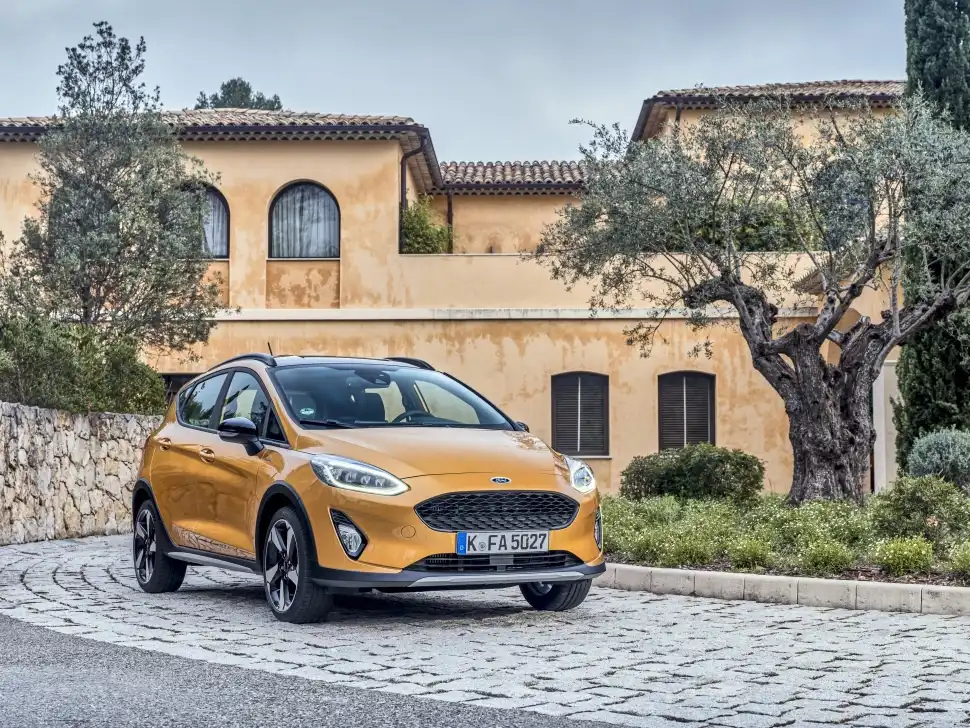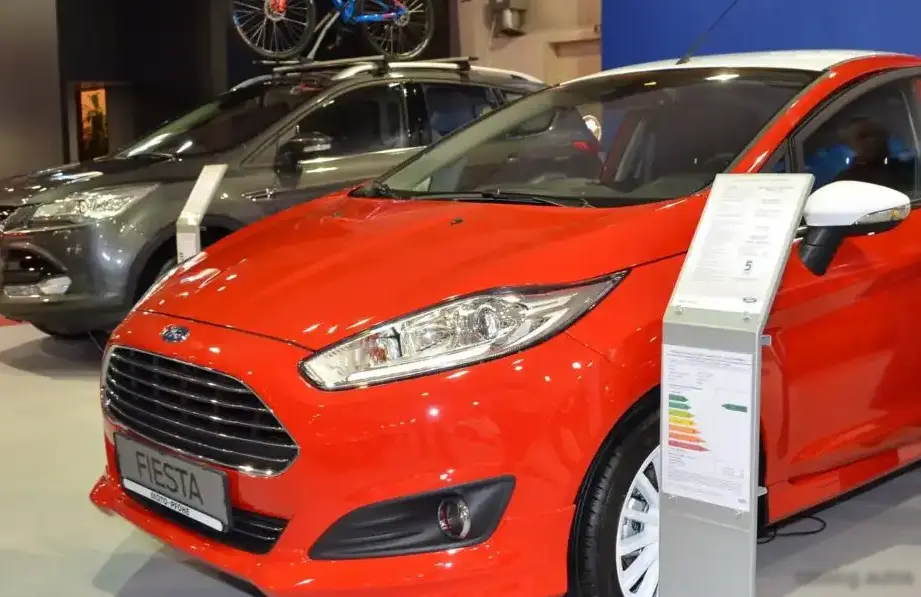
The Ford Fiesta VII, specifically the facelifted model produced from 2013 to 2017, represented a significant evolution of Ford’s popular subcompact hatchback. Within this generation, the 1.5 TDCi 75 horsepower variant with a five-speed manual transmission occupied the entry-level position in many European markets. This model aimed to provide an affordable and fuel-efficient option for buyers prioritizing economy over outright performance. It was a key component of Ford’s strategy to offer a diverse Fiesta lineup catering to a wide range of customer needs. The Fiesta Mk7, built on the B2E platform, was a crucial model for Ford in Europe, competing directly with vehicles like the Volkswagen Polo, Opel Corsa, and Renault Clio.
Technical Specifications
| Brand | Ford |
| Model | Fiesta |
| Generation | Fiesta VII (Mk7, facelift 2013) 5 door |
| Type (Engine) | 1.5 TDCi (75 Hp) |
| Start of production | 2013 |
| End of production | 2017 |
| Powertrain Architecture | Internal Combustion engine |
| Body type | Hatchback |
| Seats | 5 |
| Doors | 5 |
| Fuel consumption (urban) | 4.4 l/100 km (53.5 US mpg, 64.2 UK mpg, 22.7 km/l) |
| Fuel consumption (extra urban) | 3.3 l/100 km (71.3 US mpg, 85.6 UK mpg, 30.3 km/l) |
| Fuel consumption (combined) | 3.7 l/100 km (63.6 US mpg, 76.3 UK mpg, 27 km/l) |
| CO2 emissions | 98 g/km |
| Fuel Type | Diesel |
| Acceleration 0 – 100 km/h | 13.5 sec |
| Acceleration 0 – 62 mph | 13.5 sec |
| Acceleration 0 – 60 mph | 12.8 sec |
| Maximum speed | 167 km/h (103.77 mph) |
| Emission standard | Euro 5 |
| Weight-to-power ratio | 13.8 kg/Hp, 72.6 Hp/tonne |
| Weight-to-torque ratio | 5.6 kg/Nm, 179.1 Nm/tonne |
| Power | 75 Hp @ 4000 rpm |
| Power per litre | 50 Hp/l |
| Torque | 185 Nm @ 1700-2000 rpm (136.45 lb.-ft. @ 1700-2000 rpm) |
| Engine layout | Front, Transverse |
| Engine Model/Code | UGJC |
| Engine displacement | 1499 cm3 (91.47 cu. in.) |
| Number of cylinders | 4 |
| Engine configuration | Inline |
| Fuel injection system | Diesel Commonrail |
| Engine aspiration | Turbocharger, Intercooler |
| Engine oil capacity | 3.85 l (4.07 US qt, 3.39 UK qt) |
| Coolant capacity | 5.5 l (5.81 US qt, 4.84 UK qt) |
| Kerb Weight | 1033 kg (2277.38 lbs.) |
| Max. weight | 1575 kg (3472.28 lbs.) |
| Max load | 542 kg (1194.91 lbs.) |
| Trunk (boot) space – minimum | 281 l (9.92 cu. ft.) |
| Trunk (boot) space – maximum | 965 l (34.08 cu. ft.) |
| Fuel tank capacity | 40 l (10.57 US gal, 8.8 UK gal) |
| Permitted trailer load with brakes (12%) | 750 kg (1653.47 lbs.) |
| Permitted trailer load without brakes | 555 kg (1223.57 lbs.) |
| Length | 3969 mm (156.26 in.) |
| Width | 1722 mm (67.8 in.) |
| Width with mirrors folded | 1787 mm (70.35 in.) |
| Width including mirrors | 1973 mm (77.68 in.) |
| Height | 1495 mm (58.86 in.) |
| Wheelbase | 2489 mm (97.99 in.) |
| Minimum turning circle | 10.2 m (33.46 ft.) |
| Drivetrain Architecture | Front wheel drive |
| Number of gears and type of gearbox | 5 gears, manual transmission |
| Front suspension | Independent, type McPherson with coil spring and anti-roll bar |
| Rear suspension | Coil spring, Torsion |
| Front brakes | Ventilated discs |
| Rear brakes | Drum |
| Assisting systems | ABS (Anti-lock braking system) |
| Steering type | Steering rack and pinion |
| Power steering | Electric Steering |
| Tires size | 195/55 R15 |
| Wheel rims size | 6J x 15 |
INTRODUCTION
The 1.5 TDCi 75 hp Fiesta, introduced with the 2013 facelift, was designed to appeal to budget-conscious buyers and those prioritizing fuel efficiency. It slotted into the Fiesta Mk7 range as the base model, offering a practical and economical option within a broader lineup that included more powerful petrol and diesel engines. The facelift brought with it revised styling, improved interior materials, and updated technology, including the introduction of Ford’s SYNC infotainment system. This variant was particularly popular in Europe, where diesel engines held a significant market share due to favorable taxation and fuel economy.
Powertrain & Engine Architecture
The heart of this Fiesta variant is the 1.5-liter Duratorq TDCi diesel engine, specifically the UGJC engine code. This engine is a four-cylinder, inline configuration, utilizing a common-rail direct injection system. The common-rail system, supplied by Bosch, delivers fuel at extremely high pressure, promoting efficient combustion and reducing emissions. A turbocharger with an intercooler is employed to boost power output and improve torque across a wider rev range. The engine features a single overhead camshaft (SOHC) operating two valves per cylinder. The five-speed manual transmission was the standard gearbox for this model, chosen for its simplicity and contribution to fuel economy. The transmission’s gear ratios were optimized for maximizing fuel efficiency and providing adequate acceleration for everyday driving.
Driving Characteristics
The 75 hp output and 185 Nm (136 lb-ft) of torque delivered by the 1.5 TDCi engine resulted in a driving experience focused on economy rather than performance. Acceleration from 0-60 mph took around 12.8 seconds, and top speed was limited to 103.77 mph. The engine felt responsive at lower RPMs, thanks to the turbocharger, making it suitable for urban driving and overtaking on slower roads. However, it lacked the punch of higher-powered variants like the 1.0 EcoBoost petrol engine or the 1.6 TDCi diesel. The five-speed manual transmission offered a reasonably smooth shift action, but the gear ratios were spaced to prioritize fuel efficiency, sometimes requiring frequent gear changes during spirited driving. The relatively low weight of the Fiesta (around 2277 lbs) helped to mitigate the engine’s modest power output.
Equipment & Trim Levels
The base-level 1.5 TDCi Fiesta typically came equipped with a modest array of standard features. These generally included power steering, electric front windows, a basic audio system with USB connectivity, and ABS brakes. Air conditioning was often an optional extra. Interior upholstery was typically cloth, and the dashboard featured a functional but relatively simple design. Higher trim levels, such as Zetec and Titanium, added features like alloy wheels, upgraded audio systems, climate control, and Ford’s SYNC infotainment system with a touchscreen display. Optional extras available for the 1.5 TDCi included parking sensors, heated mirrors, and a quick-clear windscreen.
Chassis & Braking
The Fiesta Mk7 utilized a McPherson strut front suspension setup with a coil spring and anti-roll bar, providing a comfortable and predictable ride. The rear suspension employed a torsion beam configuration, which was cost-effective and space-efficient. Front brakes were ventilated discs, offering good stopping power, while rear brakes were drums, a cost-saving measure for the base model. The electric power steering provided light and precise steering feel, making it easy to maneuver in urban environments. The chassis was tuned to prioritize ride comfort and handling balance, rather than outright sportiness.
Market Reception & Comparison
The 1.5 TDCi 75 hp Fiesta was generally well-received by critics as a practical and economical choice. It was praised for its fuel efficiency, low running costs, and comfortable ride. However, it was often criticized for its lack of performance compared to other Fiesta variants and its competitors. Compared to the 1.0 EcoBoost petrol engine, the 1.5 TDCi offered superior fuel economy but less power and refinement. The 1.6 TDCi diesel provided more torque and better acceleration but came at a higher price point. In terms of reliability, the 1.5 TDCi engine proved to be generally robust, although issues with the diesel particulate filter (DPF) could occur, particularly on vehicles used primarily for short journeys.
Legacy
The 1.5 TDCi Fiesta remains a popular choice in the used car market, particularly for buyers seeking an affordable and fuel-efficient vehicle. Its simple mechanical design and relatively low maintenance costs contribute to its ongoing appeal. While the engine may not offer thrilling performance, its reliability and economy make it a sensible option for everyday driving. The Fiesta Mk7, as a whole, established itself as a benchmark in the subcompact hatchback segment, and the 1.5 TDCi variant played a significant role in its success, offering a compelling value proposition for budget-conscious buyers.