Technical Specifications
| Brand | Ford |
| Model | Fiesta |
| Generation | Fiesta VIII (Mk8) 3 door |
| Type (Engine) | 1.0 EcoBoost (100 Hp) Start-Stop Automatic |
| Start of production | July, 2017 |
| End of production | May, 2020 |
| Powertrain Architecture | Internal Combustion engine |
| Body type | Hatchback |
| Seats | 5 |
| Doors | 3 |
| Fuel consumption (urban) | 6.9 l/100 km (34.1 US mpg, 40.9 UK mpg, 14.5 km/l) |
| Fuel consumption (extra urban) | 4.2 l/100 km (56 US mpg, 67.3 UK mpg, 23.8 km/l) |
| Fuel consumption (combined) | 5.2 l/100 km (45.2 US mpg, 54.3 UK mpg, 19.2 km/l) |
| CO2 emissions | 118 g/km |
| Fuel Type | Petrol (Gasoline) |
| Acceleration 0 – 100 km/h | 12.2 sec |
| Acceleration 0 – 62 mph | 12.2 sec |
| Acceleration 0 – 60 mph | 11.6 sec |
| Maximum speed | 180 km/h (111.85 mph) |
| Emission standard | Euro 6 |
| Weight-to-power ratio | 11.1 kg/Hp, 90.2 Hp/tonne |
| Weight-to-torque ratio | 6.5 kg/Nm, 153.3 Nm/tonne |
| Power | 100 Hp @ 4500-6500 rpm |
| Power per litre | 100.2 Hp/l |
| Torque | 170 Nm @ 1500-4000 rpm (125.39 lb.-ft. @ 1500-4000 rpm) |
| Engine layout | Front, Transverse |
| Engine Model/Code | SFJE, SFJF, SFJH, SFJJ, SFJK, SFJN, SFJP |
| Engine displacement | 998 cm3 (60.9 cu. in.) |
| Number of cylinders | 3 |
| Engine configuration | Inline |
| Cylinder Bore | 71.9 mm (2.83 in.) |
| Piston Stroke | 82 mm (3.23 in.) |
| Compression ratio | 10:1 |
| Number of valves per cylinder | 4 |
| Fuel injection system | Direct injection |
| Engine aspiration | Turbocharger, Intercooler |
| Valvetrain | DOHC, Ti-VCT |
| Engine oil capacity | 4.6 l (4.86 US qt | 4.05 UK qt) |
| Coolant | 5.8 l (6.13 US qt | 5.1 UK qt) |
| Kerb Weight | 1109-1184 kg (2444.93 – 2610.27 lbs.) |
| Max. weight | 1635-1650 kg (3604.56 – 3637.63 lbs.) |
| Max load | 466-526 kg (1027.35 – 1159.63 lbs.) |
| Trunk (boot) space – minimum | 292 l (10.31 cu. ft.) |
| Trunk (boot) space – maximum | 1093 l (38.6 cu. ft.) |
| Fuel tank capacity | 42 l (11.1 US gal | 9.24 UK gal) |
| Max. roof load | 50 kg (110.23 lbs.) |
| Permitted trailer load with brakes (12%) | 1000 kg (2204.62 lbs.) |
| Permitted trailer load without brakes | 590 kg (1300.73 lbs.) |
| Permitted towbar download | 45 kg (99.21 lbs.) |
| Length | 4040-4065 mm (159.06 – 160.04 in.) |
| Width | 1735 mm (68.31 in.) |
| Width with mirrors folded | 1783 mm (70.2 in.) |
| Width including mirrors | 1941 mm (76.42 in.) |
| Height | 1466-1476 mm (57.72 – 58.11 in.) |
| Wheelbase | 2493 mm (98.15 in.) |
| Drag coefficient (Cd) | 0.30 |
| Drivetrain Architecture | The Internal combustion engine (ICE) drives the front wheels of the vehicle. |
| Drive wheel | Front wheel drive |
| Number of gears and type of gearbox | 6 gears, automatic transmission |
| Front suspension | Independent, type McPherson with coil spring and anti-roll bar |
| Rear suspension | Semi-independent, coil spring, Elastic beam |
| Front brakes | Ventilated discs |
| Rear brakes | Drum |
| Assisting systems | ABS (Anti-lock braking system) |
| Steering type | Steering rack and pinion |
| Power steering | Electric Steering |
| Tires size | 195/60 R15; 195/55 R16; 205/45 R17; 205/40 R18 |
| Wheel rims size | 6J x 15; 6.5J x 16; 7J x 17; 7J x 18 |
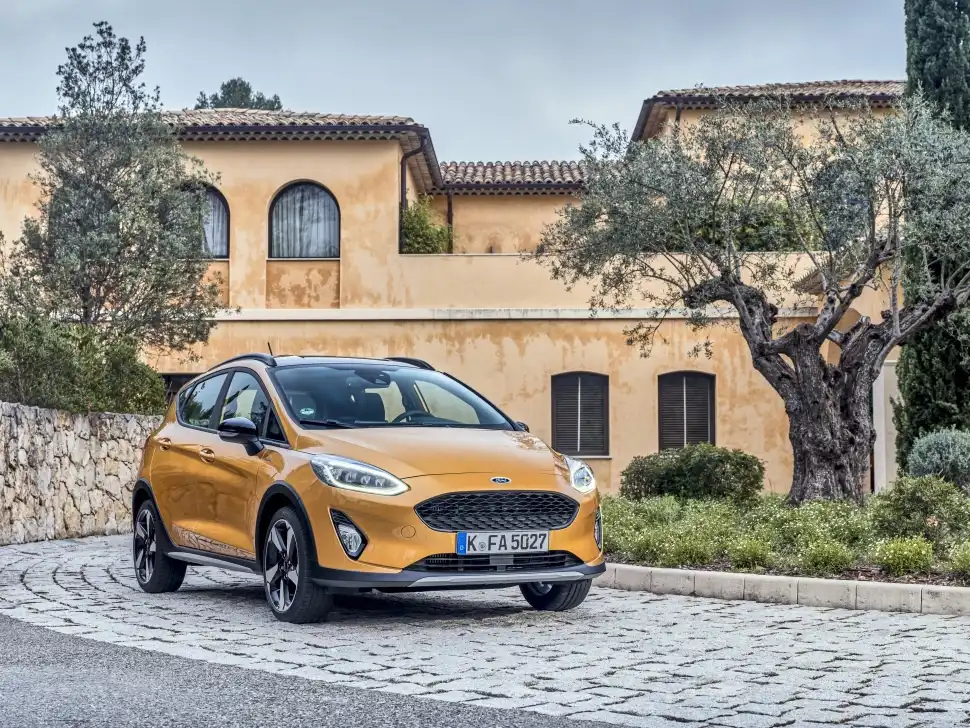
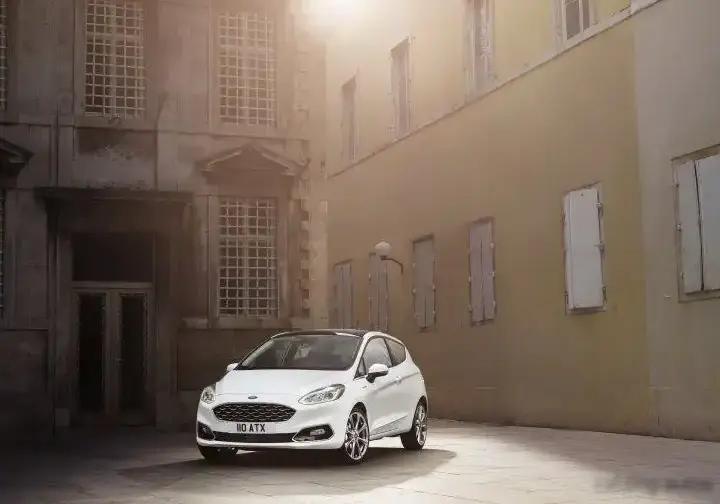
The Ford Fiesta Mk8, produced from 2017 to 2020, marked a substantial upgrade for Ford’s popular supermini. The three-door variant, specifically when equipped with the 1.0 EcoBoost engine producing 100 horsepower and a six-speed automatic transmission, provided a well-rounded package of fuel efficiency, affordability, and practicality. This configuration occupied a mid-range position within the Mk8 Fiesta lineup, appealing to buyers who desired a comfortable and economical daily driver without compromising on contemporary features. It was positioned below the more potent EcoBoost versions and the diesel options, targeting a wider customer base that prioritized ease of use over outright performance.
Powertrain & Engine Architecture
The core of this Fiesta variant is the 1.0-liter EcoBoost engine, often identified by engine codes such as SFJE, SFJF, SFJH, SFJJ, SFJK, SFJN, and SFJP, depending on the production date and target market. This engine is a three-cylinder, inline petrol unit incorporating direct fuel injection and a single turbocharger with an intercooler. The direct injection system enables precise fuel delivery, maximizing combustion efficiency and power output. The Ti-VCT (Twin Independent Variable Camshaft Timing) valvetrain further enhances performance by dynamically adjusting valve timing based on engine speed and load. A six-speed automatic transmission is paired with this engine, engineered to deliver smooth and efficient gear changes. This isn’t a conventional torque-converter automatic; it’s a more advanced unit with optimized shift logic for fuel economy and responsiveness.
Driving Characteristics
The 100 horsepower EcoBoost engine, combined with the automatic transmission, delivers sufficient performance for typical driving scenarios. Acceleration from 0-60 mph takes approximately 11.6 seconds, and the top speed is around 112 mph. While not particularly sporty, the engine provides adequate torque (170 Nm or 125 lb-ft) for comfortable overtaking and merging onto highways. The automatic transmission prioritizes fuel efficiency, resulting in slightly slower acceleration compared to the manual transmission models. Gear ratios are calibrated for economy, with taller gearing in higher gears to reduce engine RPM during cruising. The engine is surprisingly refined for a three-cylinder unit, minimizing vibration thanks to internal balancing shafts.
Equipment & Trim Levels
The 1.0 EcoBoost 100 hp Automatic typically included standard features such as air conditioning, power windows, a basic audio system with Bluetooth connectivity, and alloy wheels. Higher trim levels, like the Titanium, added features like a touchscreen infotainment system, automatic headlights, rain-sensing wipers, and upgraded interior trim. Optional extras included rear parking sensors, cruise control, and a panoramic sunroof. Interior upholstery was generally cloth, with options for partial leather seats on higher trims. The dashboard layout was relatively straightforward and functional, emphasizing ease of use.
Chassis & Braking
The Fiesta Mk8 features a McPherson strut front suspension and a semi-independent, twist-beam rear suspension. This configuration strikes a good balance between ride comfort and handling. The front brakes are ventilated discs, while the rear brakes are drums, a cost-saving measure common in this vehicle class. ABS (Anti-lock Braking System) is standard. The steering is electrically power-assisted, providing light and precise steering feel. Stabilizer bars are fitted to both the front and rear axles to minimize body roll during cornering.
Market Reception & Comparison
The 1.0 EcoBoost Automatic Fiesta was generally well-received by automotive critics for its fuel efficiency and affordability. It presented a compelling alternative to diesel-powered competitors, particularly for drivers who primarily commute in urban areas. Compared to the higher-output EcoBoost variants, this version prioritized economy over performance, making it a more practical choice for budget-conscious buyers. The automatic transmission, while convenient, occasionally received criticism for being slightly less responsive than the manual gearbox. Fuel economy figures of around 45.2 US mpg combined were a significant selling point.
Legacy
The 1.0 EcoBoost engine has proven to be a reliable and durable powertrain, although some early models experienced issues with timing belt failures. Consistent maintenance, including regular oil changes and timely timing belt replacements, is essential for long-term reliability. In the used car market, the 1.0 EcoBoost Automatic Fiesta Mk8 remains a popular choice due to its low running costs and practicality. Its compact size and easy maneuverability make it well-suited for city driving, and its relatively modern features ensure it remains a competitive option in the used car segment.