Technical Specifications
| Brand | Ford |
| Model | Fiesta |
| Generation | Fiesta VIII (Mk8) 3 door |
| Type (Engine) | 1.0 EcoBoost (125 Hp) Start-Stop |
| Start of production | July, 2017 |
| End of production | May, 2020 |
| Powertrain Architecture | Internal Combustion engine |
| Body type | Hatchback |
| Seats | 5 |
| Doors | 3 |
| Fuel consumption (urban) | 5.4 l/100 km (43.6 US mpg, 52.3 UK mpg, 18.5 km/l) |
| Fuel consumption (extra urban) | 3.6 l/100 km (65.3 US mpg, 78.5 UK mpg, 27.8 km/l) |
| Fuel consumption (combined) | 4.3 l/100 km (54.7 US mpg, 65.7 UK mpg, 23.3 km/l) |
| CO2 emissions | 98 g/km |
| Fuel Type | Petrol (Gasoline) |
| Acceleration 0 – 100 km/h | 9.9 sec |
| Acceleration 0 – 62 mph | 9.9 sec |
| Acceleration 0 – 60 mph | 9.4 sec |
| Maximum speed | 195 km/h (121.17 mph) |
| Emission standard | Euro 6 |
| Weight-to-power ratio | 8.6 kg/Hp, 116.9 Hp/tonne |
| Weight-to-torque ratio | 6.3 kg/Nm, 159 Nm/tonne |
| Power | 125 Hp @ 6000 rpm |
| Power per litre | 125.3 Hp/l |
| Torque | 170 Nm @ 1400-4500 rpm (125.39 lb.-ft. @ 1400-4500 rpm) |
| Engine layout | Front, Transverse |
| Engine Model/Code | M1JL, M1JM, M1JP |
| Engine displacement | 998 cm3 (60.9 cu. in.) |
| Number of cylinders | 3 |
| Engine configuration | Inline |
| Cylinder Bore | 71.9 mm (2.83 in.) |
| Piston Stroke | 82 mm (3.23 in.) |
| Compression ratio | 10:1 |
| Number of valves per cylinder | 4 |
| Fuel injection system | Direct injection |
| Engine aspiration | Turbocharger, Intercooler |
| Valvetrain | DOHC, Ti-VCT |
| Engine oil capacity | 4.6 l (4.86 US qt | 4.05 UK qt) |
| Coolant | 5.8 l (6.13 US qt | 5.1 UK qt) |
| Kerb Weight | 1069-1144 kg (2356.74 – 2522.09 lbs.) |
| Max. weight | 1630-1645 kg (3593.53 – 3626.6 lbs.) |
| Max load | 501-561 kg (1104.52 – 1236.79 lbs.) |
| Trunk (boot) space – minimum | 292 l (10.31 cu. ft.) |
| Trunk (boot) space – maximum | 1093 l (38.6 cu. ft.) |
| Fuel tank capacity | 42 l (11.1 US gal | 9.24 UK gal) |
| Max. roof load | 50 kg (110.23 lbs.) |
| Permitted trailer load with brakes (12%) | 1000 kg (2204.62 lbs.) |
| Permitted trailer load without brakes | 570 kg (1256.63 lbs.) |
| Permitted towbar download | 65 kg (143.3 lbs.) |
| Length | 4040-4065 mm (159.06 – 160.04 in.) |
| Width | 1735 mm (68.31 in.) |
| Width with mirrors folded | 1783 mm (70.2 in.) |
| Width including mirrors | 1941 mm (76.42 in.) |
| Height | 1466-1476 mm (57.72 – 58.11 in.) |
| Wheelbase | 2493 mm (98.15 in.) |
| Drag coefficient (Cd) | 0.30 |
| Drivetrain Architecture | The Internal combustion engine (ICE) drives the front wheels of the vehicle. |
| Drive wheel | Front wheel drive |
| Number of gears and type of gearbox | 6 gears, manual transmission |
| Front suspension | Independent, type McPherson with coil spring and anti-roll bar |
| Rear suspension | Semi-independent, coil spring, Elastic beam |
| Front brakes | Ventilated discs |
| Rear brakes | Drum |
| Assisting systems | ABS (Anti-lock braking system) |
| Steering type | Steering rack and pinion |
| Power steering | Electric Steering |
| Tires size | 195/60 R15; 195/55 R16; 205/45 R17; 205/40 R18 |
| Wheel rims size | 6J x 15; 6.5J x 16; 7J x 17; 7J x 18 |
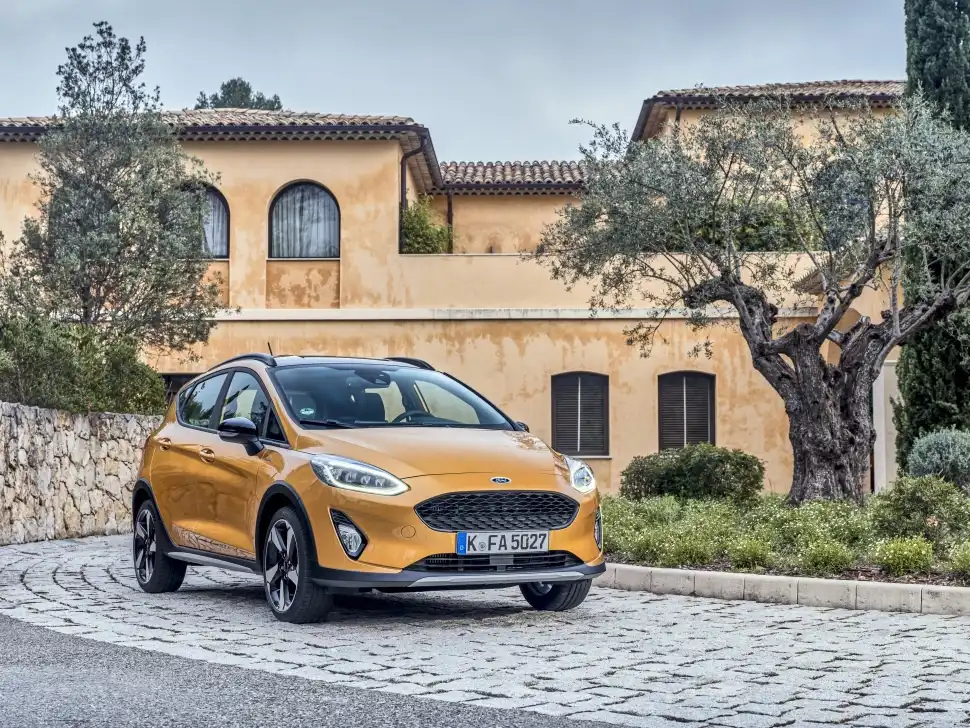
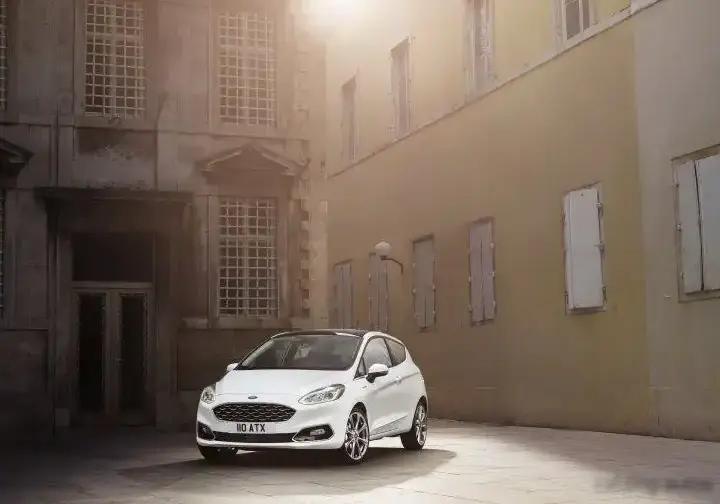
The Ford Fiesta Mk8, launched in July 2017, marked a departure from its predecessors with a more mature and sophisticated design language. Built on the global B-platform, shared with the Ford Focus, the Mk8 aimed to broaden the Fiesta’s appeal beyond its traditional European base. The 1.0 EcoBoost 125 PS three-door model represented a mid-range offering, positioned above the base 1.0 EcoBoost 100 PS variant and below the higher-performance ST models. It was designed to attract buyers who desired a stylish, efficient, and enjoyable driving experience without the added cost of the top-tier trims.
Powertrain & Engine Architecture
The heart of this Fiesta variant is the 1.0 EcoBoost engine, specifically the M1JL, M1JM, or M1JP engine code depending on the specific production date and market. This is a three-cylinder, 1.0-liter (998cc) turbocharged gasoline engine. It utilizes direct fuel injection, a technology that improves fuel efficiency and reduces emissions by injecting fuel directly into the combustion chamber. The engine also features a twin independent variable camshaft timing (Ti-VCT) system, which optimizes valve timing for improved performance and efficiency across the rev range. The turbocharger, coupled with an intercooler, provides a significant boost in power despite the engine’s small displacement. The 125 PS version benefits from revised engine mapping and a slightly larger turbocharger compared to the 100 PS variant. Power is delivered to the front wheels via a smooth-shifting six-speed manual transmission.
Driving Characteristics
The 1.0 EcoBoost 125 PS Fiesta offers a surprisingly lively driving experience. While not a sports car, the engine provides ample power for everyday driving and even spirited excursions. The turbocharger delivers a noticeable surge of torque from around 1400 rpm, making it easy to overtake and merge onto highways. The six-speed manual transmission is well-matched to the engine’s powerband, allowing drivers to keep the engine in its optimal rev range. Compared to the 100 PS version, the 125 PS model feels significantly more responsive, particularly at higher speeds. While the higher-output ST models offer a more engaging driving experience, the 1.0 EcoBoost 125 PS provides a good balance of performance and fuel economy. The gear ratios are tuned for a blend of acceleration and fuel efficiency, with a relatively long sixth gear for comfortable cruising on the highway.
Equipment & Trim Levels
The 1.0 EcoBoost 125 PS Fiesta typically came equipped with a respectable level of standard features. These included air conditioning, power windows, power door locks, a basic audio system with Bluetooth connectivity, and alloy wheels. Higher trim levels, such as Titanium, added features like a touchscreen infotainment system with Apple CarPlay and Android Auto compatibility, automatic headlights and wipers, and upgraded interior trim. Optional extras included a panoramic sunroof, heated seats, and a premium sound system. Interior upholstery was typically cloth, with higher trims offering partial leather options. The dashboard layout was modern and functional, with a focus on ease of use.
Chassis & Braking
The Fiesta Mk8 utilizes a McPherson strut front suspension and a semi-independent elastic beam rear suspension. This setup provides a good balance of ride comfort and handling. The steering is precise and well-weighted, providing good feedback to the driver. Braking duties are handled by ventilated discs at the front and drum brakes at the rear. Anti-lock Braking System (ABS) is standard. The suspension tuning is geared towards providing a comfortable ride for everyday driving, but the chassis is also capable of handling cornering with confidence. Stabilizer bars are fitted to both the front and rear axles to reduce body roll.
Market Reception & Comparison
The 1.0 EcoBoost 125 PS Fiesta was generally well-received by automotive critics. It was praised for its fuel efficiency, peppy performance, and stylish design. Compared to the 100 PS version, the 125 PS model was considered a worthwhile upgrade for drivers who wanted more power and responsiveness. However, some critics noted that the three-cylinder engine could be a bit rough sounding at higher revs. In terms of fuel economy, the 1.0 EcoBoost 125 PS consistently delivered impressive figures, making it an attractive option for budget-conscious buyers. Compared to diesel-powered Fiesta variants, the EcoBoost engine offered a more refined driving experience, albeit with slightly higher running costs.
Legacy
The 1.0 EcoBoost engine has proven to be a reliable and durable powertrain, although some early models experienced issues with timing belt failures. Regular maintenance, including timely oil changes and timing belt replacements, is crucial for ensuring long-term reliability. On the used car market, the 1.0 EcoBoost 125 PS Fiesta remains a popular choice, offering a good balance of affordability, fuel efficiency, and practicality. Its compact size and nimble handling make it well-suited for urban driving, while its comfortable interior and decent equipment levels make it a pleasant companion for longer journeys. The Fiesta Mk8, and this variant in particular, helped solidify Ford’s reputation for building fun-to-drive and economical superminis.