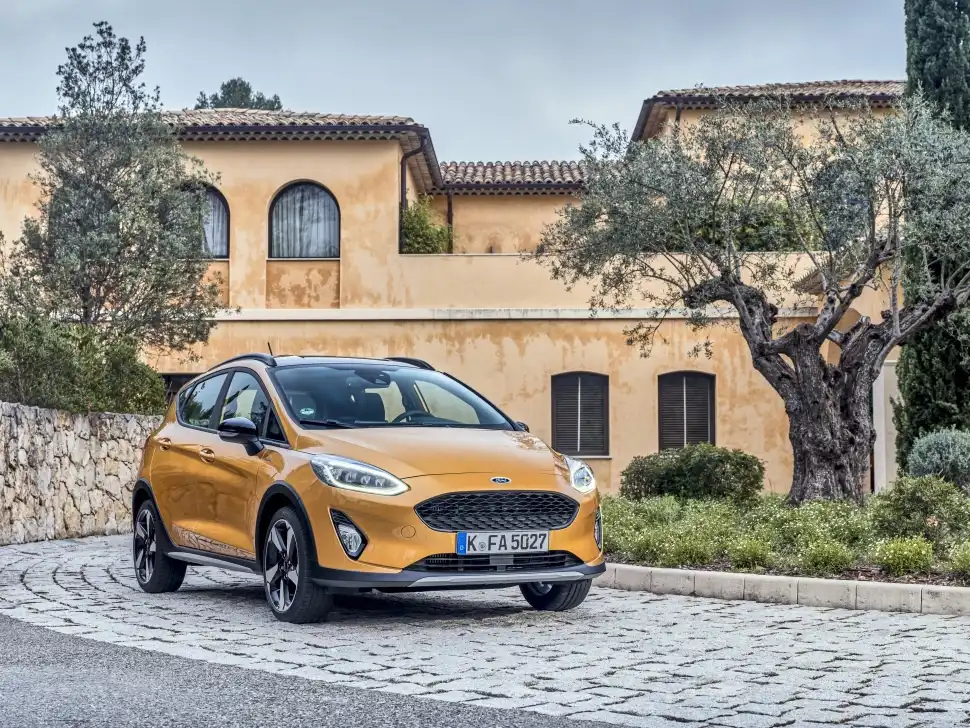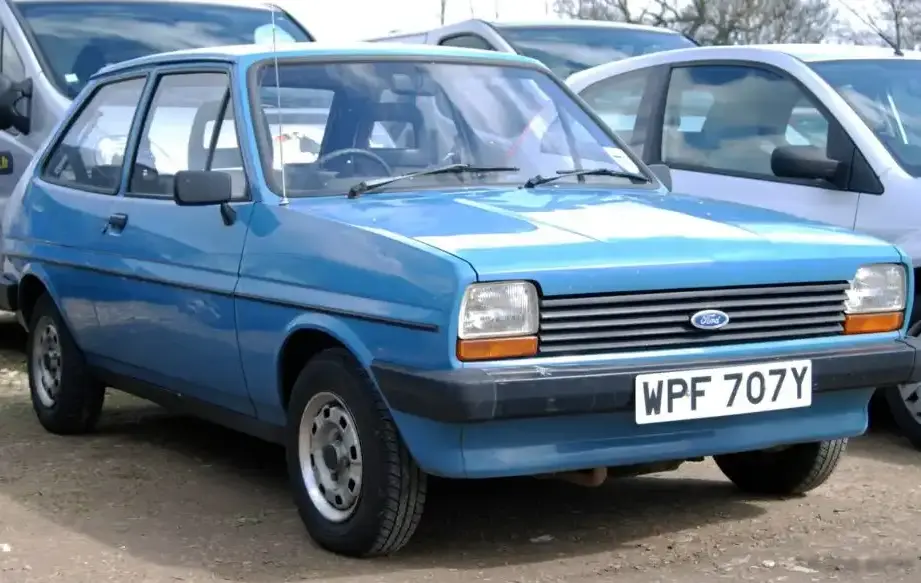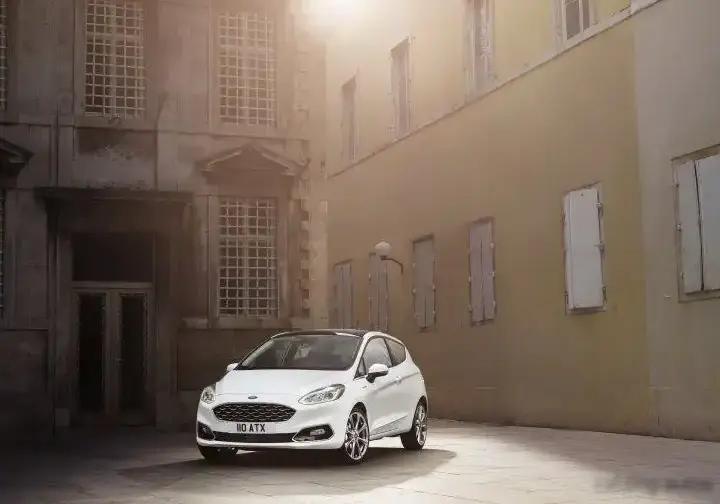
The Ford Fiesta Mk8, launched in 2017, represented a significant evolution for Ford’s long-running supermini. The 3-door 1.0 EcoBoost 155 hp Mild Hybrid variant, produced from May 2020 through 2021, occupied a compelling position within the Mk8 range, offering a blend of performance, efficiency, and technology. This model was aimed at drivers seeking a more engaging driving experience than the base models, while still benefiting from the fuel economy advantages of Ford’s EcoBoost engine family and mild hybridization. It sat above the lower-powered EcoBoost variants and below the performance-focused ST model in the Fiesta lineup.
Technical Specifications
| Brand | Ford |
| Model | Fiesta |
| Generation | Fiesta VIII (Mk8) 3 door |
| Type (Engine) | 1.0 EcoBoost (155 Hp) Mild Hybrid |
| Start of production | May, 2020 |
| End of production | 2021 |
| Powertrain Architecture | MHEV (Mild Hybrid Electric Vehicle) |
| Body type | Hatchback |
| Seats | 5 |
| Doors | 3 |
| Fuel consumption at Low speed (WLTP) | 6.5 l/100 km (36.2 US mpg, 43.5 UK mpg, 15.4 km/l) |
| Fuel consumption at Medium speed (WLTP) | 4.7 l/100 km (50 US mpg, 60.1 UK mpg, 21.3 km/l) |
| Fuel consumption at high speed (WLTP) | 4.3 l/100 km (54.7 US mpg, 65.7 UK mpg, 23.3 km/l) |
| Fuel consumption at very high speed (WLTP) | 5.5 l/100 km (42.8 US mpg, 51.4 UK mpg, 18.2 km/l) |
| Combined fuel consumption (WLTP) | 5.1 l/100 km (46.1 US mpg, 55.4 UK mpg, 19.6 km/l) |
| CO2 emissions (WLTP) | 116 g/km |
| Fuel consumption (economy) – urban (NEDC) | 4.8-5.5 l/100 km (49 – 42.8 US mpg, 58.9 – 51.4 UK mpg, 20.8 – 18.2 km/l) |
| Fuel consumption (economy) – extra urban (NEDC) | 3.5-3.9 l/100 km (67.2 – 60.3 US mpg, 80.7 – 72.4 UK mpg, 28.6 – 25.6 km/l) |
| Fuel consumption (economy) – combined (NEDC) | 4-4.5 l/100 km (58.8 – 52.3 US mpg, 70.6 – 62.8 UK mpg, 25 – 22.2 km/l) |
| CO2 emissions (NEDC) | 92-103 g/km |
| Fuel Type | Petrol (Gasoline) |
| Acceleration 0 – 100 km/h | 8.9 sec |
| Acceleration 0 – 62 mph | 8.9 sec |
| Acceleration 0 – 60 mph | 8.5 sec |
| Maximum speed | 219 km/h (136.08 mph) |
| Emission standard | Euro 6d-ISC-FCM |
| Weight-to-power ratio | 7.3 kg/Hp, 136.1 Hp/tonne |
| Weight-to-torque ratio | 4.7 kg/Nm, 210.7 Nm/tonne |
| Power | 155 Hp @ 6000 rpm |
| Power per litre | 155.2 Hp/l |
| Torque | 240 Nm @ 2500 rpm (177.01 lb.-ft. @ 2500 rpm) |
| Engine layout | Front, Transverse |
| Engine Model/Code | B7JA |
| Engine displacement | 999 cm3 (60.96 cu. in.) |
| Number of cylinders | 3 |
| Engine configuration | Inline |
| Number of valves per cylinder | 4 |
| Fuel injection system | Direct injection |
| Engine aspiration | Turbocharger, Intercooler |
| Valvetrain | DOHC |
| Engine oil capacity | 4.6 l (4.86 US qt | 4.05 UK qt) |
| Coolant | 5.8 l (6.13 US qt | 5.1 UK qt) |
| Kerb Weight | 1139 kg (2511.07 lbs.) |
| Max. weight | 1685 kg (3714.79 lbs.) |
| Max load | 546 kg (1203.72 lbs.) |
| Trunk (boot) space – minimum | 292 l (10.31 cu. ft.) |
| Trunk (boot) space – maximum | 1093 l (38.6 cu. ft.) |
| Fuel tank capacity | 42 l (11.1 US gal | 9.24 UK gal) |
| Permitted trailer load with brakes (8%) | 1000 kg (2204.62 lbs.) |
| Permitted trailer load with brakes (12%) | 1000 kg (2204.62 lbs.) |
| Permitted trailer load without brakes | 605 kg (1333.8 lbs.) |
| Permitted towbar download | 45 kg (99.21 lbs.) |
| Length | 4040 mm (159.06 in.) |
| Width | 1735 mm (68.31 in.) |
| Width including mirrors | 1941 mm (76.42 in.) |
| Height | 1476 mm (58.11 in.) |
| Wheelbase | 2493 mm (98.15 in.) |
| Front overhang | 839 mm (33.03 in.) |
| Rear overhang | 708 mm (27.87 in.) |
| Ride height (ground clearance) | 133 mm (5.24 in.) |
| Minimum turning circle (turning diameter) | 9.8 m (32.15 ft.) |
| Drivetrain Architecture | ICE and electric motor, Front wheel drive |
| Number of gears and type of gearbox | 6 gears, manual transmission |
| Front suspension | Independent type McPherson, Transverse stabilizer |
| Rear suspension | Independent multi-link suspension, Transverse stabilizer |
| Assisting systems | ABS (Anti-lock braking system) |
| Steering type | Steering rack and pinion |
| Power steering | Electric Steering |
| Tires size | 195/60 R 15 |
| Wheel rims size | 6 J x 15 |
INTRODUCTION
The Ford Fiesta Mk8 1.0 EcoBoost 155 hp Mild Hybrid 3-door, launched in 2020, represented a sweet spot in the Fiesta range. Building upon the success of the Mk8 platform – which debuted in 2017 – this variant combined the fuel efficiency of Ford’s award-winning 1.0-liter EcoBoost engine with a 48-volt mild hybrid system. This combination aimed to reduce emissions and improve real-world fuel economy without sacrificing the enjoyable driving dynamics that the Fiesta was known for. The 3-door body style, while becoming less common, appealed to buyers prioritizing a sportier aesthetic and slightly reduced weight. This model year saw updates to the Fiesta range, including the introduction of the mild hybrid technology and revised styling cues.
Powertrain & Engine Architecture
At the heart of this Fiesta variant lies the Ford 1.0 EcoBoost engine, specifically the B7JA code. This is a three-cylinder, turbocharged gasoline engine with direct injection and a double overhead camshaft (DOHC) valvetrain. The 999cc displacement belies its output of 155 horsepower at 6000 rpm and 240 Nm (177 lb-ft) of torque at 2500 rpm. The key to its efficiency and power is the combination of turbocharging, direct injection, and variable valve timing. The mild hybrid system adds a belt-driven integrated starter generator (BiSG) which recovers energy during braking and deceleration, storing it in a small 48-volt battery. This energy is then used to provide a power assist during acceleration, reducing the load on the engine and improving fuel economy. The engine utilizes a sophisticated fuel injection system designed for precise fuel delivery and optimized combustion. The transmission is a 6-speed manual gearbox, chosen for its driver engagement and efficiency.
Driving Characteristics
The 1.0 EcoBoost 155 hp Mild Hybrid Fiesta offers a surprisingly lively driving experience. While not as outright quick as the Fiesta ST, it delivers brisk acceleration – 0-60 mph in approximately 8.5 seconds – and feels responsive in everyday driving situations. The mild hybrid system provides a noticeable boost during acceleration, filling in any potential turbo lag and making the engine feel more eager. The 6-speed manual gearbox is well-matched to the engine’s characteristics, offering precise shifts and a good spread of ratios. Compared to the lower-powered EcoBoost variants (like the 100 hp version), this model provides significantly more punch, making overtaking and merging onto highways much easier. The 3-door configuration contributes to a slightly lighter overall weight, further enhancing agility. However, the ride quality can be firm, particularly on rough roads, a trade-off for the sporty handling.
Equipment & Trim Levels
The 1.0 EcoBoost 155 hp Mild Hybrid was typically offered in higher trim levels, such as Titanium X or ST-Line. Standard equipment generally included air conditioning, a touchscreen infotainment system with Apple CarPlay and Android Auto compatibility, alloy wheels, and a suite of safety features like lane-keeping assist and automatic emergency braking. Higher trims added features like a rear-view camera, parking sensors, heated seats, and a premium sound system. Interior upholstery was typically cloth, with options for leather upgrades. The dashboard layout was modern and functional, with a focus on ease of use. Optional extras included a panoramic sunroof, navigation system, and adaptive cruise control.
Chassis & Braking
The Fiesta Mk8 utilizes a McPherson strut front suspension and an independent multi-link rear suspension, providing a good balance of ride comfort and handling precision. The suspension components were tuned to complement the increased power output of the 1.0 EcoBoost 155 hp engine. The braking system typically consisted of front disc brakes and rear drum brakes, although some higher trims featured rear disc brakes. Anti-lock Braking System (ABS) and Electronic Stability Control (ESC) were standard safety features. The steering is electric power-assisted, providing a light and responsive feel. Stabilizer bars were fitted to both the front and rear axles to reduce body roll during cornering.
Market Reception & Comparison
The Fiesta Mk8 1.0 EcoBoost 155 hp Mild Hybrid received generally positive reviews from automotive critics. It was praised for its fuel efficiency, engaging driving dynamics, and well-equipped interior. Compared to the lower-powered EcoBoost variants, it offered a significant performance upgrade without a substantial penalty in fuel economy. Against competitors like the Volkswagen Polo and Opel Corsa, the Fiesta was often lauded for its superior handling and more enjoyable driving experience. However, some critics noted the firm ride quality and the relatively small interior space compared to some rivals. The mild hybrid system was seen as a positive step towards reducing emissions and improving fuel efficiency, although its impact on real-world fuel economy was relatively modest.
Legacy
The 1.0 EcoBoost engine, in various iterations, has proven to be a reliable and durable powertrain. The mild hybrid system, while relatively new at the time of this Fiesta’s production, has also demonstrated good long-term reliability. On the used car market, the Fiesta Mk8 1.0 EcoBoost 155 hp Mild Hybrid holds its value reasonably well, particularly well-maintained examples with low mileage. It remains a popular choice for buyers seeking a fun-to-drive, fuel-efficient, and well-equipped supermini. The combination of performance, economy, and technology makes it a compelling option in the used car segment.