Technical Specifications
| Brand | Ford |
| Model | Fiesta |
| Generation | Fiesta VIII (Mk8) 3 door |
| Type (Engine) | 1.5 TDCi (120 Hp) Start-Stop |
| Start of production | July, 2017 |
| End of production | May, 2019 |
| Powertrain Architecture | Internal Combustion engine |
| Body type | Hatchback |
| Seats | 5 |
| Doors | 3 |
| Fuel consumption (urban) | 3.9 l/100 km (60.3 US mpg, 72.4 UK mpg, 25.6 km/l) |
| Fuel consumption (extra urban) | 3.2 l/100 km (73.5 US mpg, 88.3 UK mpg, 31.3 km/l) |
| Fuel consumption (combined) | 3.5 l/100 km (67.2 US mpg, 80.7 UK mpg, 28.6 km/l) |
| CO2 emissions | 89 g/km |
| Fuel Type | Diesel |
| Acceleration 0 – 100 km/h | 9 sec |
| Acceleration 0 – 62 mph | 9 sec |
| Acceleration 0 – 60 mph | 8.6 sec |
| Maximum speed | 195 km/h (121.17 mph) |
| Emission standard | Euro 6 |
| Weight-to-power ratio | 9.3 kg/Hp, 107.8 Hp/tonne |
| Weight-to-torque ratio | 4.1 kg/Nm, 242.6 Nm/tonne |
| Power | 120 Hp @ 3600 rpm |
| Power per litre | 80.1 Hp/l |
| Torque | 270 Nm @ 1750-2500 rpm (199.14 lb.-ft. @ 1750-2500 rpm) |
| Engine layout | Front, Transverse |
| Engine Model/Code | XWJA, XWJB, XWJC |
| Engine displacement | 1499 cm3 (91.47 cu. in.) |
| Number of cylinders | 4 |
| Engine configuration | Inline |
| Cylinder Bore | 73.5 mm (2.89 in.) |
| Piston Stroke | 88.3 mm (3.48 in.) |
| Compression ratio | 16:1 |
| Number of valves per cylinder | 2 |
| Fuel injection system | Diesel Commonrail |
| Engine aspiration | Turbocharger, Intercooler |
| Valvetrain | SOHC |
| Engine oil capacity | 3.85 l (4.07 US qt | 3.39 UK qt) |
| Coolant | 5.5 l (5.81 US qt | 4.84 UK qt) |
| Kerb Weight | 1113-1188 kg (2453.74 – 2619.09 lbs.) |
| Max. weight | 1650-1665 kg (3637.63 – 3670.7 lbs.) |
| Max load | 477-537 kg (1051.6 – 1183.88 lbs.) |
| Trunk (boot) space – minimum | 292 l (10.31 cu. ft.) |
| Trunk (boot) space – maximum | 1093 l (38.6 cu. ft.) |
| Fuel tank capacity | 42 l (11.1 US gal | 9.24 UK gal) |
| Max. roof load | 50 kg (110.23 lbs.) |
| Permitted trailer load with brakes (12%) | 1000 kg (2204.62 lbs.) |
| Permitted trailer load without brakes | 590 kg (1300.73 lbs.) |
| Permitted towbar download | 40 kg (88.18 lbs.) |
| Length | 4040-4065 mm (159.06 – 160.04 in.) |
| Width | 1735 mm (68.31 in.) |
| Width with mirrors folded | 1783 mm (70.2 in.) |
| Width including mirrors | 1941 mm (76.42 in.) |
| Height | 1466-1476 mm (57.72 – 58.11 in.) |
| Wheelbase | 2493 mm (98.15 in.) |
| Drag coefficient (Cd) | 0.29 |
| Drivetrain Architecture | The Internal combustion engine (ICE) drives the front wheels of the vehicle. |
| Drive wheel | Front wheel drive |
| Number of gears and type of gearbox | 6 gears, manual transmission |
| Front suspension | Independent, type McPherson with coil spring and anti-roll bar |
| Rear suspension | Semi-independent, coil spring, Elastic beam |
| Front brakes | Ventilated discs |
| Rear brakes | Drum |
| Assisting systems | ABS (Anti-lock braking system) |
| Steering type | Steering rack and pinion |
| Power steering | Electric Steering |
| Tires size | 195/60 R15; 195/55 R16; 205/45 R17; 205/40 R18 |
| Wheel rims size | 6J x 15; 6.5J x 16; 7J x 17; 7J x 18 |
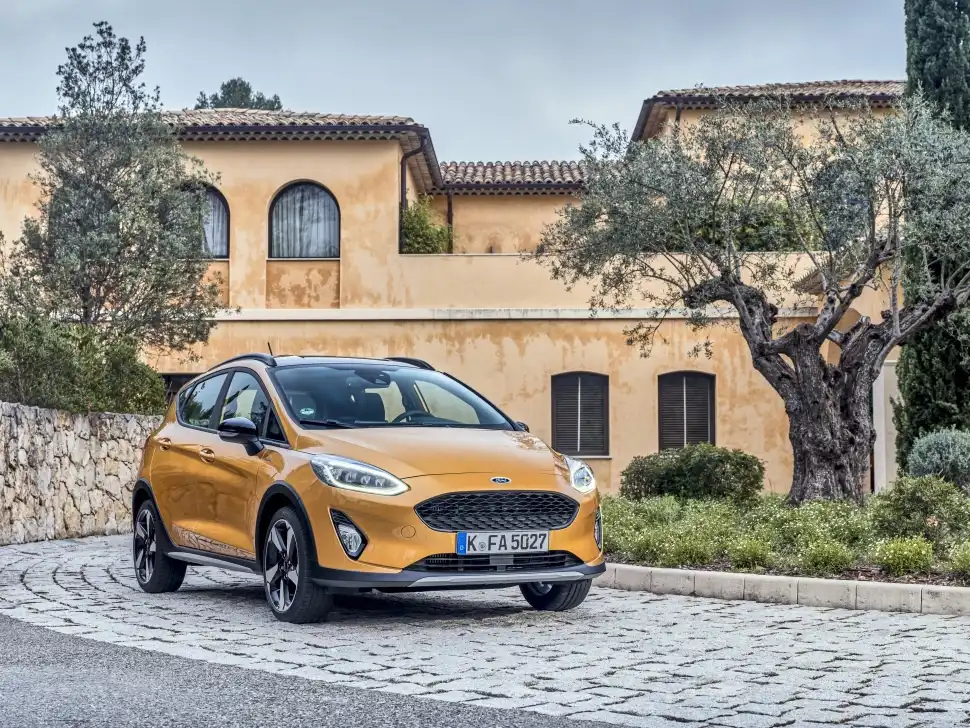
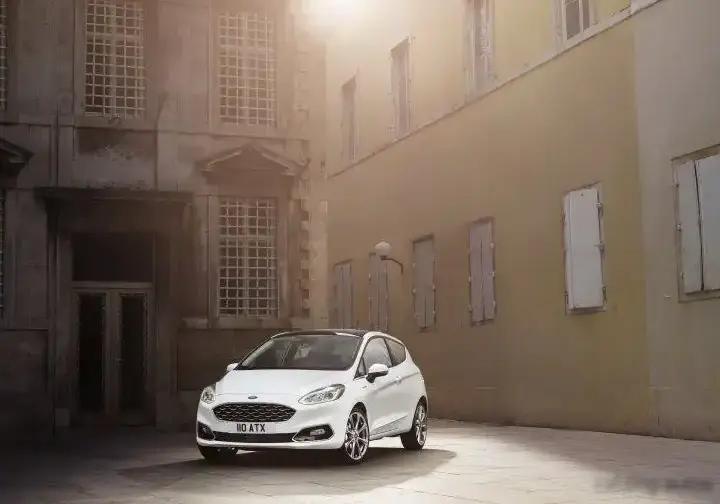
The Ford Fiesta Mk8 1.5 TDCi 120 PS 3-door model, launched in 2017, was a significant offering within the eighth generation of Ford’s popular Fiesta. This variant aimed to provide a balance between fuel efficiency, practicality, and a slightly more dynamic driving experience thanks to its 3-door configuration. The Mk8 Fiesta represented a substantial upgrade in terms of design, interior quality, and available technology compared to its predecessor. The 1.5-liter TDCi engine was a key part of Ford’s strategy to offer a range of efficient and low-emission powertrains, primarily targeted at the European market where diesel engines remained prevalent.
Powertrain & Engine Architecture
The 1.5 TDCi engine, identified by engine codes XWJA, XWJB, and XWJC, is a four-cylinder, inline diesel engine displacing 1499cc. It utilizes a common-rail direct fuel injection system, injecting fuel directly into the cylinders at extremely high pressure for optimized combustion. This engine features a single overhead camshaft (SOHC) operating two valves per cylinder. A turbocharger, coupled with an intercooler, is crucial for boosting power and torque output. The engine produces 120 horsepower at 3600 rpm and a respectable 270 Nm (199 lb-ft) of torque between 1750 and 2500 rpm. This particular variant was exclusively offered with a 6-speed manual transmission, designed to maximize fuel economy and provide smooth gear changes. Ford’s Start & Stop technology was standard, automatically shutting down the engine when idling to further reduce fuel consumption and emissions. The engine’s design prioritized efficiency and durability, making it a popular choice for drivers covering significant mileage.
Driving Characteristics
Behind the wheel, the 1.5 TDCi 120 PS Fiesta delivers a comfortable and refined driving experience. While not a performance-focused model, the engine provides adequate power for everyday driving, with a 0-60 mph time of around 8.6 seconds. The turbocharger provides a noticeable surge of power during acceleration, making overtaking on highways manageable. The 6-speed manual transmission allows for precise gear selection, and the engine’s torque curve ensures good responsiveness across a wide range of speeds. Compared to the 1.0 EcoBoost petrol variants, the 1.5 TDCi offers more low-end torque, making it feel more effortless in city driving. However, it lacks the high-revving enthusiasm and overall punch of the petrol engine. The gear ratios are optimized for fuel efficiency, which can sometimes result in the engine feeling slightly strained when accelerating hard. The 3-door configuration contributes to a slightly more agile feel compared to the 5-door model.
Equipment & Trim Levels
The 1.5 TDCi 120 PS Fiesta was typically available in several trim levels, including Zetec and Titanium. Standard equipment generally included air conditioning, power windows, power door mirrors, a basic audio system with Bluetooth connectivity, and alloy wheels. Higher trim levels, like the Titanium, added features such as a touchscreen infotainment system with navigation, automatic headlights and wipers, cruise control, and parking sensors. Interior upholstery was typically cloth, with options for upgraded materials and trim finishes on higher-spec models. Popular optional extras included a panoramic sunroof, heated front seats, and a premium sound system. The overall interior design of the Mk8 Fiesta was a significant improvement over previous generations, with a more modern and sophisticated aesthetic.
Chassis & Braking
The Fiesta Mk8 utilizes a McPherson strut front suspension setup, providing a comfortable ride and responsive handling. The rear suspension employs a semi-independent elastic beam configuration, a cost-effective solution that balances ride comfort and handling characteristics. The front brakes are ventilated discs, offering good stopping power, while the rear brakes are drums. ABS (Anti-lock Braking System) is standard, enhancing safety during emergency braking. Electric power steering provides light and precise steering feel, making it easy to maneuver in urban environments. The suspension tuning is geared towards providing a comfortable ride without sacrificing too much handling agility.
Market Reception & Comparison
The 1.5 TDCi 120 PS Fiesta received generally positive reviews from automotive critics. It was praised for its fuel efficiency, comfortable ride, and refined engine. Some critics noted that the engine could be slightly noisy under hard acceleration, and that the petrol engines offered a more engaging driving experience. Compared to the 1.0 EcoBoost variants, the 1.5 TDCi offered superior fuel economy, making it a more practical choice for drivers covering long distances. It also provided a more affordable alternative to the higher-performance ST model. Reliability reports suggest that the 1.5 TDCi engine is generally reliable, but owners should be aware of potential issues with the diesel particulate filter (DPF), particularly if the vehicle is frequently used for short journeys.
Legacy
The Ford Fiesta Mk8 1.5 TDCi 120 PS remains a popular choice in the used car market, offering a compelling combination of fuel efficiency, practicality, and affordability. The 1.5 TDCi engine has proven to be relatively durable, although regular maintenance, including DPF regeneration, is crucial for long-term reliability. The Mk8 Fiesta’s improved interior quality and advanced technology have helped it to maintain its appeal over time. As with any diesel vehicle, potential buyers should carefully check the service history and ensure that the DPF has been properly maintained. The Fiesta Mk8, including this 1.5 TDCi variant, cemented Ford’s reputation for building well-rounded and reliable small cars.