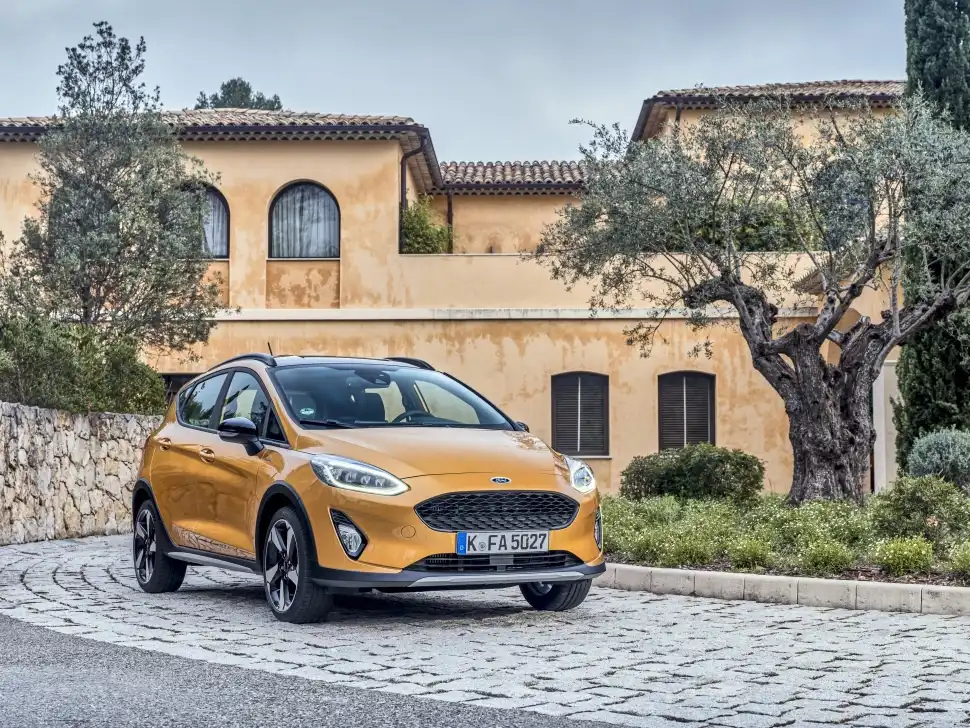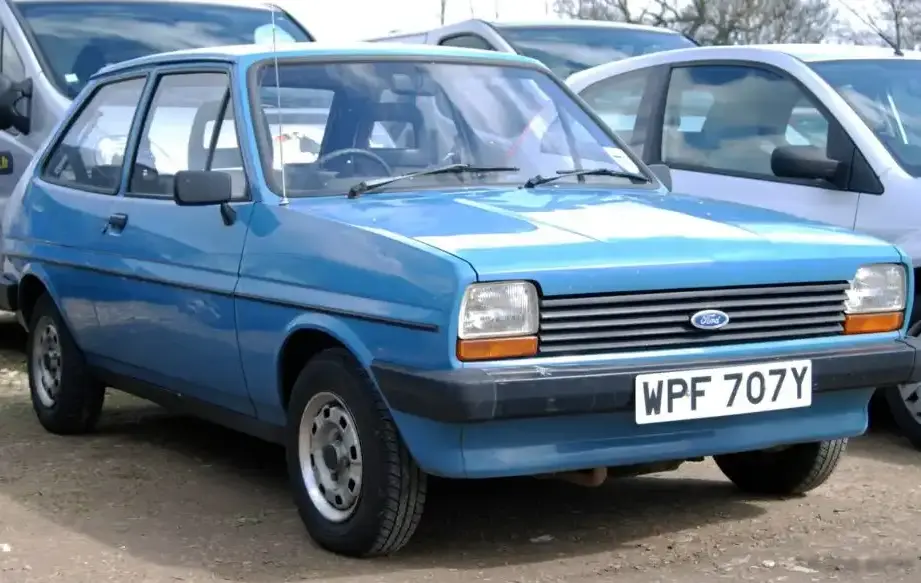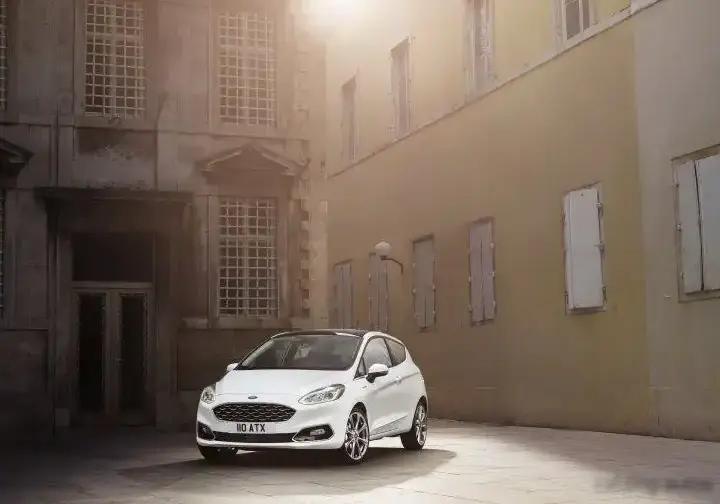
The Ford Fiesta Mk8, launched in 2017, represented a significant evolution for Ford’s long-running supermini. The 3-door 1.5 TDCi 85 horsepower Start-Stop variant was a key model in the lineup, particularly in European markets where smaller, fuel-efficient vehicles are highly valued. Produced from July 2017 to August 2020, this version aimed to provide a balance between affordability, practicality, and reasonable running costs. It sat within the 1HX0/A3 platform family, sharing components with other Ford models like the Ka+ and, to a lesser extent, the Focus.
Technical Specifications
| Brand | Ford |
| Model | Fiesta |
| Generation | Fiesta VIII (Mk8) 3 door |
| Type (Engine) | 1.5 TDCi (85 Hp) Start-Stop |
| Start of production | July, 2017 |
| End of production | August, 2020 |
| Powertrain Architecture | Internal Combustion engine |
| Body type | Hatchback |
| Seats | 5 |
| Doors | 3 |
| Fuel consumption (urban) | 3.5-3.7 l/100 km (67.2 – 63.6 US mpg, 80.7 – 76.3 UK mpg, 28.6 – 27 km/l) |
| Fuel consumption (extra urban) | 3.0-3.1 l/100 km (78.4 – 75.9 US mpg, 94.2 – 91.1 UK mpg, 33.3 – 32.3 km/l) |
| Fuel consumption (combined) | 3.2-3.3 l/100 km (73.5 – 71.3 US mpg, 88.3 – 85.6 UK mpg, 31.3 – 30.3 km/l) |
| CO2 emissions | 82-84 g/km |
| Fuel Type | Diesel |
| Acceleration 0 – 100 km/h | 12.5 sec |
| Acceleration 0 – 62 mph | 12.5 sec |
| Acceleration 0 – 60 mph | 11.9 sec |
| Maximum speed | 175 km/h (108.74 mph) |
| Emission standard | Euro 6 |
| Weight-to-power ratio | 12.8 kg/Hp, 78.1 Hp/tonne |
| Weight-to-torque ratio | 5.1 kg/Nm, 197.6 Nm/tonne |
| Power | 85 Hp @ 3750 rpm |
| Power per litre | 56.7 Hp/l |
| Torque | 215 Nm @ 1750-2500 rpm (158.58 lb.-ft. @ 1750-2500 rpm) |
| Engine layout | Front, Transverse |
| Engine Model/Code | XUJC, XUJD, XUJE, XUJF, XUJG, XUJK, XUJM |
| Engine displacement | 1499 cm3 (91.47 cu. in.) |
| Number of cylinders | 4 |
| Engine configuration | Inline |
| Cylinder Bore | 73.5 mm (2.89 in.) |
| Piston Stroke | 88.3 mm (3.48 in.) |
| Compression ratio | 16:1 |
| Number of valves per cylinder | 2 |
| Fuel injection system | Diesel Commonrail |
| Engine aspiration | Turbocharger, Intercooler |
| Valvetrain | SOHC |
| Engine oil capacity | 3.85 l (4.07 US qt | 3.39 UK qt) |
| Coolant | 5.5 l (5.81 US qt | 4.84 UK qt) |
| Kerb Weight | 1088-1163 kg (2398.63 – 2563.98 lbs.) |
| Max. weight | 1640-1655 kg (3615.58 – 3648.65 lbs.) |
| Max load | 492-552 kg (1084.67 – 1216.95 lbs.) |
| Trunk (boot) space – minimum | 292 l (10.31 cu. ft.) |
| Trunk (boot) space – maximum | 1093 l (38.6 cu. ft.) |
| Fuel tank capacity | 42 l (11.1 US gal | 9.24 UK gal) |
| Max. roof load | 50 kg (110.23 lbs.) |
| Permitted trailer load with brakes (12%) | 750 kg (1653.47 lbs.) |
| Permitted trailer load without brakes | 580 kg (1278.68 lbs.) |
| Permitted towbar download | 45 kg (99.21 lbs.) |
| Length | 4040-4065 mm (159.06 – 160.04 in.) |
| Width | 1735 mm (68.31 in.) |
| Width with mirrors folded | 1783 mm (70.2 in.) |
| Width including mirrors | 1941 mm (76.42 in.) |
| Height | 1466-1476 mm (57.72 – 58.11 in.) |
| Wheelbase | 2493 mm (98.15 in.) |
| Drag coefficient (Cd) | 0.29 |
| Drivetrain Architecture | The Internal combustion engine (ICE) drives the front wheels of the vehicle. |
| Drive wheel | Front wheel drive |
| Number of gears and type of gearbox | 6 gears, manual transmission |
| Front suspension | Independent, type McPherson with coil spring and anti-roll bar |
| Rear suspension | Semi-independent, coil spring, Elastic beam |
| Front brakes | Ventilated discs |
| Rear brakes | Drum |
| Assisting systems | ABS (Anti-lock braking system) |
| Steering type | Steering rack and pinion |
| Power steering | Electric Steering |
| Tires size | 195/60 R15; 195/55 R16; 205/45 R17; 205/40 R18 |
| Wheel rims size | 6J x 15; 6.5J x 16; 7J x 17; 7J x 18 |
Powertrain & Engine Architecture
The heart of this Fiesta variant is the 1.5-liter TDCi diesel engine, part of Ford’s Duratorq family. Engine codes such as XUJC, XUJD, XUJE, XUJF, XUJG, XUJK, and XUJM were used depending on the specific calibration and market. This engine is a four-cylinder, inline configuration with a single overhead camshaft (SOHC) and two valves per cylinder. It utilizes a turbocharger with an intercooler to boost power and efficiency. The fuel injection system is a common rail diesel injection system, delivering fuel at very high pressure for optimized combustion. The Start-Stop system, standard on this model, automatically shuts off the engine when the vehicle is stationary (e.g., at traffic lights) to reduce fuel consumption and emissions. The engine is transversely mounted at the front of the vehicle. The 6-speed manual transmission was the only gearbox option available with this engine.
Driving Characteristics
The 1.5 TDCi 85 hp engine, paired with the 6-speed manual gearbox, provided adequate, though not exhilarating, performance. Acceleration from 0-60 mph took around 11.9 seconds, and top speed was approximately 108.74 mph. The engine’s 215 Nm (158.58 lb-ft) of torque, available from 1750-2500 rpm, made it reasonably flexible for everyday driving, offering sufficient pulling power for overtaking and navigating hills. Compared to higher-output Fiesta variants (like the 1.0 EcoBoost), this version felt noticeably slower. However, it offered a more relaxed driving experience, prioritizing fuel economy over outright performance. The gear ratios were tuned for efficiency, with a relatively long sixth gear for highway cruising.
Equipment & Trim Levels
The 1.5 TDCi 85 hp model typically fell into the mid-range of the Fiesta Mk8 lineup. Standard equipment included air conditioning, power front windows, a basic audio system with Bluetooth connectivity, and ABS brakes. Safety features like ESP (Electronic Stability Program) and multiple airbags were also standard. Higher trim levels, such as Titanium and Vignale, added features like alloy wheels, upgraded infotainment systems with touchscreen displays, automatic headlights and wipers, and more luxurious interior trim. Optional extras for the 1.5 TDCi included parking sensors, a rear-view camera, and a panoramic sunroof.
Chassis & Braking
The Fiesta Mk8 featured a McPherson strut front suspension and a semi-independent, twist-beam rear suspension. This setup provided a good balance between ride comfort and handling. The front brakes were ventilated discs, while the rear brakes were drums – a cost-saving measure common in this segment. Electric power steering was standard, offering light and precise steering feel. Stabilizer bars were fitted to both the front and rear axles to reduce body roll during cornering.
Market Reception & Comparison
The 1.5 TDCi 85 hp Fiesta was well-received by critics for its fuel efficiency and low running costs. It was particularly popular with drivers who covered high mileages or primarily used the car for commuting. Compared to the 1.0 EcoBoost petrol engine, the diesel offered significantly better fuel economy, but at the expense of performance and refinement. The 1.5 TDCi was also generally more reliable than some of the earlier, more complex diesel engines offered by Ford. However, it was subject to the same scrutiny regarding diesel emissions as other diesel vehicles of the era.
Legacy
The 1.5 TDCi engine proved to be a relatively durable and reliable unit, although, like all diesel engines, it requires regular maintenance, including oil changes and filter replacements. On the used car market, these Fiesta variants are often sought after for their fuel economy and affordability. However, potential buyers should be aware of the potential for diesel particulate filter (DPF) issues, particularly if the vehicle has been primarily used for short journeys. The Fiesta Mk8, in general, established itself as a strong contender in the supermini segment, and the 1.5 TDCi 85 hp model played a significant role in its success.