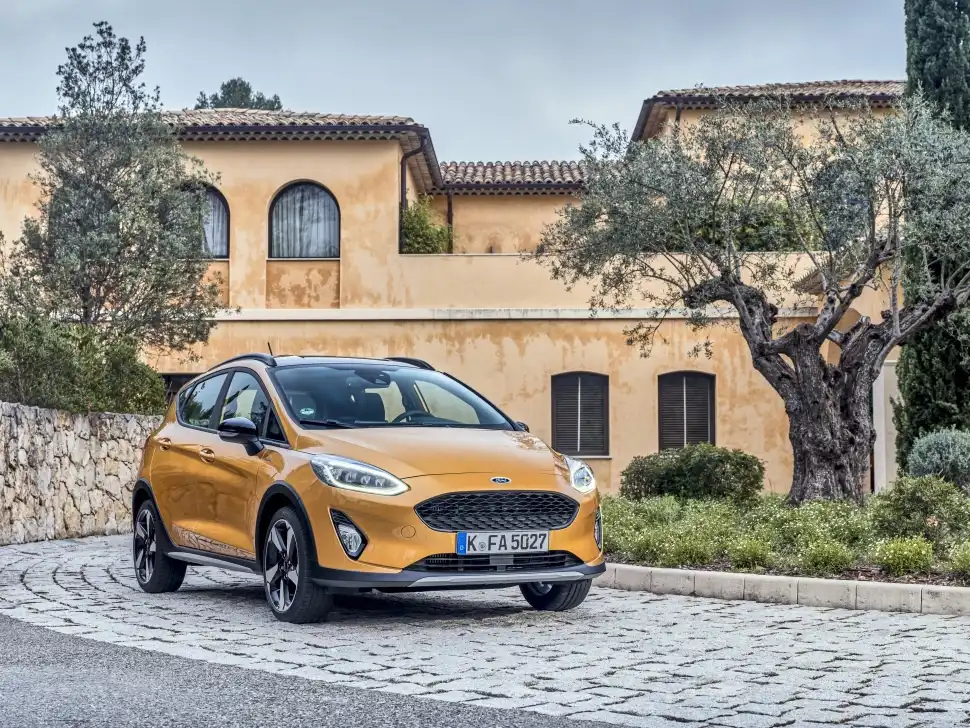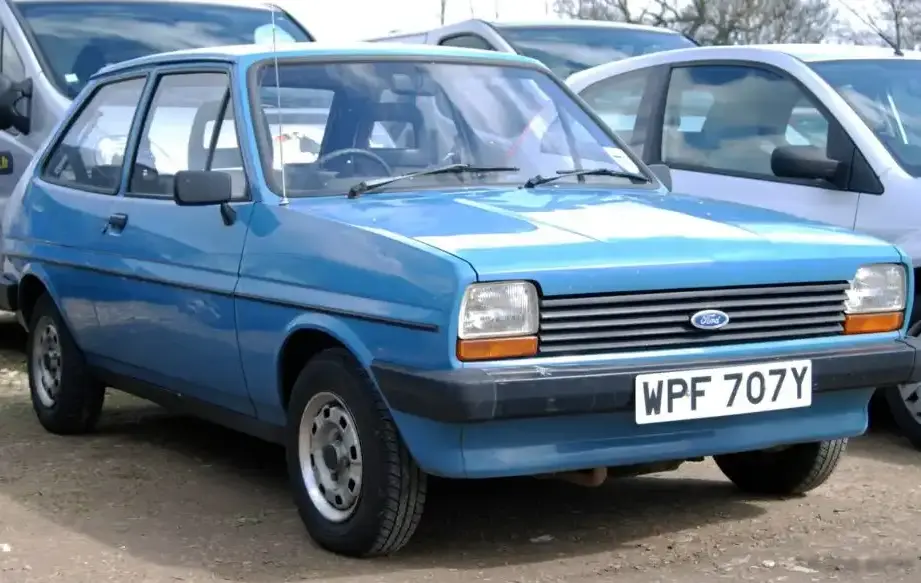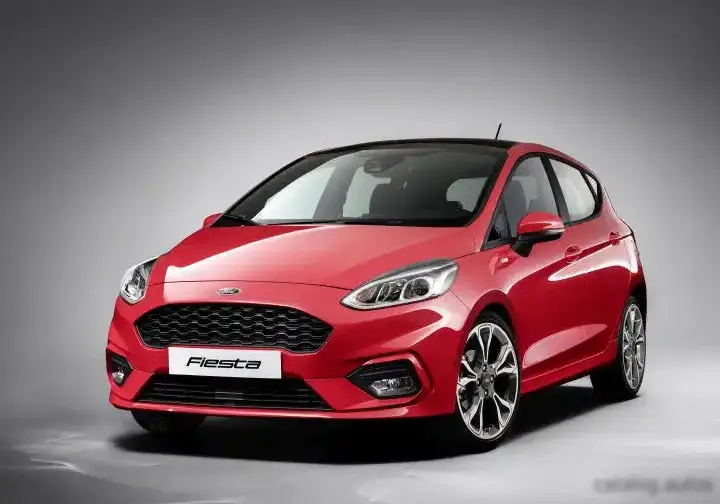
The Ford Fiesta Mk8, produced from 2017 to 2020, represented a significant evolution for Ford’s long-running supermini. Among the various engine and transmission combinations offered, the 1.0 EcoBoost 100 hp Start-Stop Automatic variant occupied a key position as a fuel-efficient and accessible entry point into the Mk8 range. This model, available as a five-door hatchback, aimed to balance affordability with modern features and Ford’s signature driving dynamics. It was positioned as a practical choice for urban commuters and those seeking a low-cost-of-ownership vehicle.
Technical Specifications
| Brand | Ford |
| Model | Fiesta |
| Generation | Fiesta VIII (Mk8) 5 door |
| Type (Engine) | 1.0 EcoBoost (100 Hp) Start-Stop Automatic |
| Start of production | 2017 |
| End of production | 2020 |
| Powertrain Architecture | Internal Combustion engine |
| Body type | Hatchback |
| Seats | 5 |
| Doors | 5 |
| Fuel consumption (urban) | 6.9 l/100 km (34.1 US mpg, 40.9 UK mpg, 14.5 km/l) |
| Fuel consumption (extra urban) | 4.2 l/100 km (56 US mpg, 67.3 UK mpg, 23.8 km/l) |
| Fuel consumption (combined) | 5.2 l/100 km (45.2 US mpg, 54.3 UK mpg, 19.2 km/l) |
| CO2 emissions | 118 g/km |
| Fuel Type | Petrol (Gasoline) |
| Acceleration 0 – 100 km/h | 12.2 sec |
| Acceleration 0 – 62 mph | 12.2 sec |
| Acceleration 0 – 60 mph | 11.6 sec |
| Maximum speed | 180 km/h (111.85 mph) |
| Emission standard | Euro 6 |
| Weight-to-power ratio | 11.3 kg/Hp, 88.4 Hp/tonne |
| Weight-to-torque ratio | 6.7 kg/Nm, 150.3 Nm/tonne |
| Power | 100 Hp @ 4500-6500 rpm |
| Power per litre | 100.2 Hp/l |
| Torque | 170 Nm @ 1500-4000 rpm (125.39 lb.-ft. @ 1500-4000 rpm) |
| Engine layout | Front, Transverse |
| Engine Model/Code | SFJE, SFJF, SFJH, SFJJ, SFJK, SFJN, SFJP |
| Engine displacement | 998 cm3 (60.9 cu. in.) |
| Number of cylinders | 3 |
| Engine configuration | Inline |
| Cylinder Bore | 71.9 mm (2.83 in.) |
| Piston Stroke | 82 mm (3.23 in.) |
| Compression ratio | 10:1 |
| Number of valves per cylinder | 4 |
| Fuel injection system | Direct injection |
| Engine aspiration | Turbocharger, Intercooler |
| Valvetrain | DOHC, Ti-VCT |
| Engine oil capacity | 4.6 l (4.86 US qt | 4.05 UK qt) |
| Coolant | 5.8 l (6.13 US qt | 5.1 UK qt) |
| Kerb Weight | 1131-1206 kg (2493.43 – 2658.77 lbs.) |
| Max. weight | 1655-1675 kg (3648.65 – 3692.74 lbs.) |
| Max load | 469-524 kg (1033.97 – 1155.22 lbs.) |
| Trunk (boot) space – minimum | 303 l (10.7 cu. ft.) |
| Trunk (boot) space – maximum | 984 l (34.75 cu. ft.) |
| Fuel tank capacity | 42 l (11.1 US gal | 9.24 UK gal) |
| Max. roof load | 50 kg (110.23 lbs.) |
| Permitted trailer load with brakes (12%) | 1000 kg (2204.62 lbs.) |
| Permitted trailer load without brakes | 600 kg (1322.77 lbs.) |
| Permitted towbar download | 45 kg (99.21 lbs.) |
| Length | 4040-4065 mm (159.06 – 160.04 in.) |
| Width | 1735 mm (68.31 in.) |
| Width with mirrors folded | 1783 mm (70.2 in.) |
| Width including mirrors | 1941 mm (76.42 in.) |
| Height | 1466-1476 mm (57.72 – 58.11 in.) |
| Wheelbase | 2493 mm (98.15 in.) |
| Drivetrain Architecture | The Internal combustion engine (ICE) drives the front wheels of the vehicle. |
| Drive wheel | Front wheel drive |
| Number of gears and type of gearbox | 6 gears, automatic transmission |
| Front suspension | Independent, type McPherson with coil spring and anti-roll bar |
| Rear suspension | Semi-independent, coil spring, Elastic beam |
| Front brakes | Ventilated discs |
| Rear brakes | Drum |
| Assisting systems | ABS (Anti-lock braking system) |
| Steering type | Steering rack and pinion |
| Power steering | Electric Steering |
| Tires size | 195/60 R15; 195/55 R16; 205/45 R17; 205/40 R18 |
| Wheel rims size | 15J x 6; 16J x 6.5; 17J x 7; 18J x 7 |
INTRODUCTION
The Ford Fiesta Mk8 1.0 EcoBoost 100 hp Automatic, launched in 2017, was a key variant within the eighth generation of Ford’s globally successful Fiesta. Built on the B746 platform (internally known as the 1HX0), this model aimed to deliver a compelling blend of fuel efficiency, practicality, and affordability. The 1.0 EcoBoost engine, a three-cylinder turbocharged unit, was a cornerstone of Ford’s powertrain strategy, offering a downsized alternative to larger, traditionally aspirated engines. The availability of an automatic transmission broadened the Fiesta’s appeal to drivers prioritizing convenience, particularly in congested urban environments.
Powertrain & Engine Architecture
At the heart of this Fiesta variant lies the 1.0 EcoBoost engine, specifically the SFJE, SFJF, SFJH, SFJJ, SFJK, SFJN, or SFJP engine code depending on the specific market and year. This engine is a 998cc inline-three cylinder unit featuring direct fuel injection and a single turbocharger with an intercooler. The engine utilizes a dual overhead camshaft (DOHC) valvetrain with variable valve timing (Ti-VCT) on both intake and exhaust valves, optimizing performance and efficiency across the rev range. The 100 hp output is achieved at 4500-6500 rpm, with a peak torque of 170 Nm (125 lb-ft) available from 1500-4000 rpm. The automatic transmission is a six-speed torque converter unit, chosen for its smoothness and refinement compared to earlier automated manual transmissions. The Start-Stop system further enhances fuel economy by automatically shutting off the engine when the vehicle is stationary.
Driving Characteristics
The 1.0 EcoBoost 100 hp Automatic Fiesta delivers a surprisingly capable driving experience. While not overtly sporty, the engine provides adequate power for everyday driving situations. Acceleration from 0-60 mph takes around 11.6 seconds, and the top speed is 111.85 mph. The automatic transmission is well-programmed, offering smooth gear changes and a responsive feel. However, compared to the manual transmission versions or the 125 hp EcoBoost variant, this setup feels slightly less eager. The gear ratios are tuned for fuel efficiency, meaning the engine can feel a little strained when accelerating hard or climbing hills. The relatively light weight of the Fiesta (1131-1206 kg) helps to mitigate the lower power output, providing a reasonable level of agility.
Equipment & Trim Levels
The 1.0 EcoBoost 100 hp Automatic was typically offered in mid-range trim levels, such as Zetec or Titanium. Standard equipment generally included air conditioning, power windows, central locking, a basic audio system with Bluetooth connectivity, and alloy wheels. Higher trim levels added features like a touchscreen infotainment system with Apple CarPlay and Android Auto, cruise control, and parking sensors. Interior upholstery was typically cloth, with options for upgraded materials. Safety features included ABS, electronic stability control, and multiple airbags.
Chassis & Braking
The Fiesta Mk8 utilizes a McPherson strut front suspension and a semi-independent Elastic beam rear suspension. This setup provides a good balance between ride comfort and handling. The front brakes are ventilated discs, while the rear brakes are drums, a cost-saving measure common in this segment. The steering is electrically assisted, offering a light and precise feel. Stabilizer bars are fitted to both the front and rear axles to reduce body roll during cornering.
Market Reception & Comparison
The 1.0 EcoBoost Automatic Fiesta was generally well-received by automotive critics. It was praised for its fuel efficiency, comfortable ride, and surprisingly refined engine. However, some reviewers noted the lack of outright performance compared to higher-powered variants. Compared to the 1.5-liter petrol or 1.6-liter diesel versions, the 1.0 EcoBoost offered superior fuel economy but less power. The automatic transmission, while convenient, was sometimes criticized for being slightly less engaging than the manual gearbox. In terms of reliability, the 1.0 EcoBoost engine has proven to be generally robust, although some owners have reported issues with the timing belt system.
Legacy
The Ford Fiesta Mk8 1.0 EcoBoost 100 hp Automatic remains a popular choice in the used car market. Its fuel efficiency, affordability, and relatively low running costs make it an attractive option for budget-conscious buyers. The 1.0 EcoBoost engine has established itself as a reliable and efficient powerplant, and the automatic transmission provides a comfortable and convenient driving experience. While not the most exciting Fiesta variant, it represents a well-rounded and practical choice for everyday transportation. Its continued presence on the used market is a testament to its enduring appeal and Ford’s successful formula for a compact, efficient, and affordable hatchback.