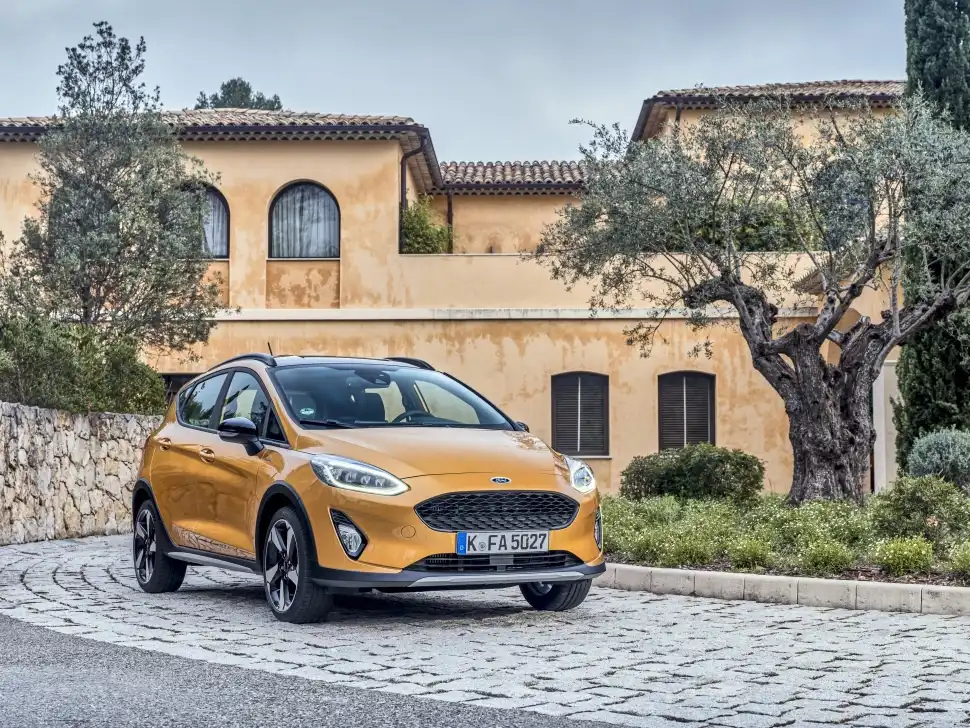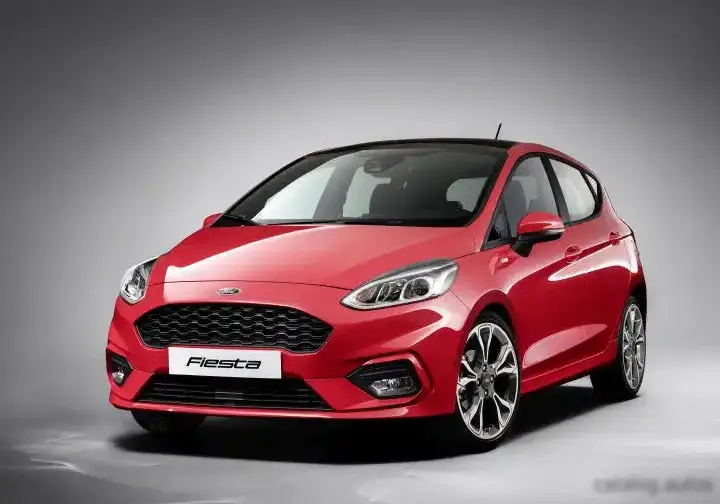
The Ford Fiesta Mk8, produced from 2017 to 2020, represented a significant evolution for Ford’s long-running supermini. The 1.0 EcoBoost 125 horsepower variant, equipped with a six-speed manual transmission, occupied a key position in the lineup, offering a balance between fuel efficiency, performance, and affordability. This model aimed to appeal to buyers seeking a modern, well-equipped hatchback for daily commuting and occasional longer journeys. It was a core offering within the Mk8 range, positioned above the lower-powered 1.0 EcoBoost 100 PS version and below the sporty ST models.
Technical Specifications
| Brand | Ford |
| Model | Fiesta |
| Generation | Fiesta VIII (Mk8) 5 door |
| Type (Engine) | 1.0 EcoBoost (125 Hp) Start-Stop |
| Start of production | July, 2017 |
| End of production | May, 2020 |
| Powertrain Architecture | Internal Combustion engine |
| Body type | Hatchback |
| Seats | 5 |
| Doors | 5 |
| Fuel consumption (urban) | 5.4 l/100 km (43.6 US mpg, 52.3 UK mpg, 18.5 km/l) |
| Fuel consumption (extra urban) | 3.6 l/100 km (65.3 US mpg, 78.5 UK mpg, 27.8 km/l) |
| Fuel consumption (combined) | 4.3 l/100 km (54.7 US mpg, 65.7 UK mpg, 23.3 km/l) |
| CO2 emissions | 98 g/km |
| Fuel Type | Petrol (Gasoline) |
| Acceleration 0 – 100 km/h | 9.9 sec |
| Acceleration 0 – 62 mph | 9.9 sec |
| Acceleration 0 – 60 mph | 9.4 sec |
| Maximum speed | 195 km/h (121.17 mph) |
| Emission standard | Euro 6 |
| Weight-to-power ratio | 8.7 kg/Hp, 114.8 Hp/tonne |
| Weight-to-torque ratio | 6.4 kg/Nm, 156.1 Nm/tonne |
| Power | 125 Hp @ 6000 rpm |
| Power per litre | 125.3 Hp/l |
| Torque | 170 Nm @ 1400-4500 rpm (125.39 lb.-ft. @ 1400-4500 rpm) |
| Engine layout | Front, Transverse |
| Engine Model/Code | M1JL, M1JM, M1JP |
| Engine displacement | 998 cm3 (60.9 cu. in.) |
| Number of cylinders | 3 |
| Engine configuration | Inline |
| Cylinder Bore | 71.9 mm (2.83 in.) |
| Piston Stroke | 82 mm (3.23 in.) |
| Compression ratio | 10:1 |
| Number of valves per cylinder | 4 |
| Fuel injection system | Direct injection |
| Engine aspiration | Turbocharger, Intercooler |
| Valvetrain | DOHC, Ti-VCT |
| Engine oil capacity | 4.6 l (4.86 US qt | 4.05 UK qt) |
| Coolant | 5.8 l (6.13 US qt | 5.1 UK qt) |
| Kerb Weight | 1089-1164 kg (2400.83 – 2566.18 lbs.) |
| Max. weight | 1650-1665 kg (3637.63 – 3670.7 lbs.) |
| Max load | 501-561 kg (1104.52 – 1236.79 lbs.) |
| Trunk (boot) space – minimum | 303 l (10.7 cu. ft.) |
| Trunk (boot) space – maximum | 984 l (34.75 cu. ft.) |
| Fuel tank capacity | 42 l (11.1 US gal | 9.24 UK gal) |
| Max. roof load | 50 kg (110.23 lbs.) |
| Permitted trailer load with brakes (12%) | 1000 kg (2204.62 lbs.) |
| Permitted trailer load without brakes | 580 kg (1278.68 lbs.) |
| Permitted towbar download | 65 kg (143.3 lbs.) |
| Length | 4040-4065 mm (159.06 – 160.04 in.) |
| Width | 1735 mm (68.31 in.) |
| Width with mirrors folded | 1783 mm (70.2 in.) |
| Width including mirrors | 1941 mm (76.42 in.) |
| Height | 1466-1476 mm (57.72 – 58.11 in.) |
| Wheelbase | 2493 mm (98.15 in.) |
| Drivetrain Architecture | The Internal combustion engine (ICE) drives the front wheels of the vehicle. |
| Drive wheel | Front wheel drive |
| Number of gears and type of gearbox | 6 gears, manual transmission |
| Front suspension | Independent, type McPherson with coil spring and anti-roll bar |
| Rear suspension | Semi-independent, coil spring, Elastic beam |
| Front brakes | Ventilated discs |
| Rear brakes | Drum |
| Assisting systems | ABS (Anti-lock braking system) |
| Steering type | Steering rack and pinion |
| Power steering | Electric Steering |
| Tires size | 195/60 R15; 195/55 R16; 205/45 R17; 205/40 R18 |
| Wheel rims size | 15J x 6; 16J x 6.5; 17J x 7; 18J x 7 |
INTRODUCTION
The Ford Fiesta Mk8, launched in July 2017, marked a departure from previous generations with its more sophisticated styling and increased focus on technology. The 1.0 EcoBoost 125 PS variant was a popular choice, offering a compelling blend of performance and economy. Built on the global B-platform, shared with models like the Ford Focus, the Mk8 Fiesta aimed to compete with rivals such as the Volkswagen Polo, Opel/Vauxhall Corsa, and Renault Clio. The 125 horsepower engine, part of Ford’s award-winning EcoBoost family, provided a noticeable step up in power compared to the base 1.0-liter engine, making it suitable for both urban driving and longer highway journeys.
Powertrain & Engine Architecture
The heart of this Fiesta variant is the 1.0 EcoBoost engine, specifically the M1JL, M1JM, or M1JP engine code depending on the specific production date and market. This is a three-cylinder, 998cc turbocharged gasoline engine featuring direct fuel injection and a double overhead camshaft (DOHC) valvetrain with variable valve timing (Ti-VCT). The turbocharger and intercooler significantly boost power output despite the small displacement. The engine utilizes a sophisticated engine management system to optimize fuel efficiency and emissions. The six-speed manual transmission provides precise gear changes and contributes to the car’s overall responsiveness. The transmission ratios are geared towards maximizing fuel economy while still providing adequate acceleration. The Start & Stop system further enhances fuel efficiency by automatically shutting off the engine when the vehicle is stationary.
Driving Characteristics
The 1.0 EcoBoost 125 PS Fiesta offers a surprisingly lively driving experience. While not a performance car, the engine delivers ample power for everyday driving, with a noticeable surge of torque from 1400-4500 rpm. Acceleration to 60 mph takes around 9.4 seconds, and the car feels confident at highway speeds. The six-speed manual transmission allows drivers to keep the engine in its optimal power band. Compared to the 100 PS version, the 125 PS model feels significantly more responsive, particularly when overtaking or climbing hills. The steering is precise and well-weighted, providing good feedback to the driver. The suspension, tuned for comfort, absorbs bumps and imperfections in the road well, although it can feel slightly soft in spirited driving.
Equipment & Trim Levels
The 1.0 EcoBoost 125 PS Fiesta was typically offered in mid-range trim levels, such as Zetec or Titanium. Standard equipment often included air conditioning, power windows, a touchscreen infotainment system with Bluetooth connectivity, and alloy wheels. Higher trim levels added features like automatic headlights, rain-sensing wipers, a rear parking sensor, and upgraded interior trim. Optional extras included a panoramic sunroof, navigation system, and a premium sound system. Interior upholstery was typically cloth, with higher trims offering partial leather options. The dashboard layout was modern and functional, with a clear instrument cluster and intuitive controls.
Chassis & Braking
The Fiesta Mk8 utilizes a McPherson strut front suspension and a semi-independent elastic beam rear suspension. This setup provides a good balance between ride comfort and handling. Front brakes are ventilated discs, providing ample stopping power, while rear brakes are drums. ABS (Anti-lock Braking System) is standard, enhancing safety in emergency braking situations. The electric power steering system provides light and precise steering feel. The chassis is relatively lightweight, contributing to the car’s agility and fuel efficiency. Stabilizer bars are fitted to both the front and rear axles to reduce body roll during cornering.
Market Reception & Comparison
The 1.0 EcoBoost 125 PS Fiesta received generally positive reviews from automotive critics. It was praised for its fuel efficiency, responsive engine, and comfortable ride. Compared to the lower-powered 1.0 EcoBoost variant, the 125 PS model offered a significant improvement in performance, making it a more versatile choice for drivers who frequently travel on highways or carry passengers. However, some critics noted that the engine could be slightly noisy under hard acceleration. In terms of fuel economy, the 1.0 EcoBoost 125 PS Fiesta consistently outperformed larger-engined rivals. Reliability was generally good, although some owners reported minor issues with the turbocharger and fuel injection system.
Legacy
The 1.0 EcoBoost engine has proven to be a durable and reliable powertrain, and the 125 PS variant remains a popular choice in the used car market. Its combination of fuel efficiency, performance, and affordability makes it an attractive option for buyers seeking a practical and enjoyable supermini. While newer Fiesta models have introduced more advanced technology and features, the Mk8 1.0 EcoBoost 125 PS continues to offer a compelling value proposition. Regular maintenance, including oil changes and turbocharger inspections, is crucial to ensure the long-term reliability of this powertrain.