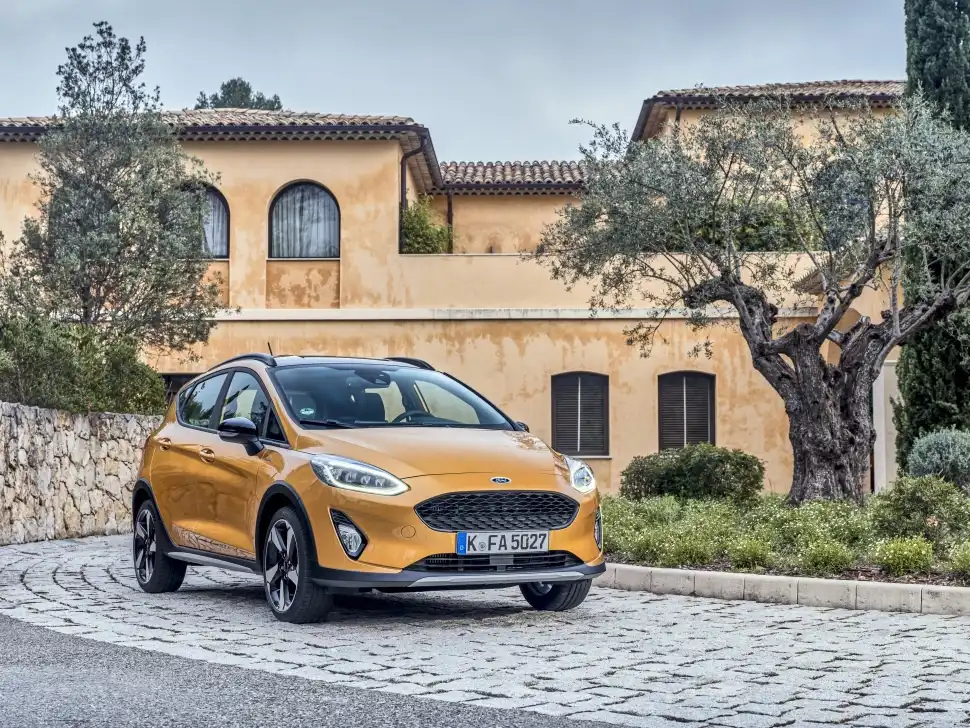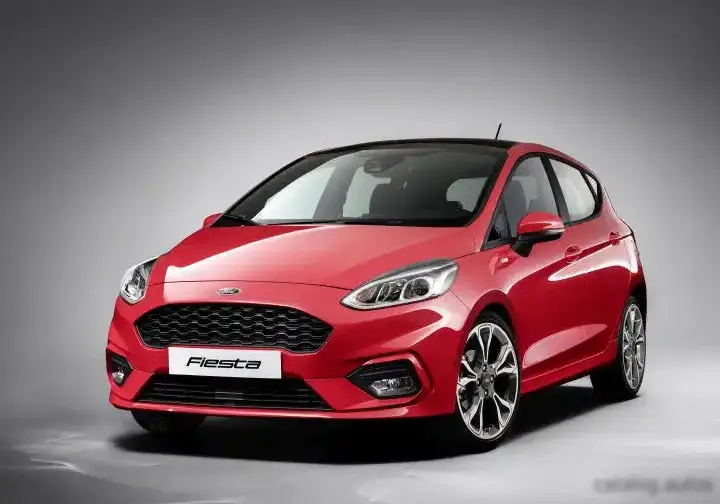
The Ford Fiesta Mk8, produced from 2017 to 2020, represented a significant evolution for Ford’s long-running supermini. Among the various engine and trim combinations offered, the 1.0 EcoBoost 140 horsepower variant with a six-speed manual transmission occupied a sweet spot in the lineup, appealing to drivers seeking a balance of performance, fuel efficiency, and affordability. This particular configuration was available primarily in European markets and, to a lesser extent, in other regions where the Mk8 Fiesta was sold. It served as a step up from the base engine options, offering a more engaging driving experience without the higher price tag of the more performance-focused ST model.
Technical Specifications
| Brand | Ford |
| Model | Fiesta |
| Generation | Fiesta VIII (Mk8) 5 door |
| Type (Engine) | 1.0 EcoBoost (140 Hp) Start-Stop |
| Start of production | July, 2017 |
| End of production | May, 2020 |
| Powertrain Architecture | Internal Combustion engine |
| Body type | Hatchback |
| Seats | 5 |
| Doors | 5 |
| Fuel consumption (urban) | 5.8 l/100 km (40.6 US mpg, 48.7 UK mpg, 17.2 km/l) |
| Fuel consumption (extra urban) | 3.8 l/100 km (61.9 US mpg, 74.3 UK mpg, 26.3 km/l) |
| Fuel consumption (combined) | 4.5 l/100 km (52.3 US mpg, 62.8 UK mpg, 22.2 km/l) |
| CO2 emissions | 102 g/km |
| Fuel Type | Petrol (Gasoline) |
| Acceleration 0 – 100 km/h | 9 sec |
| Acceleration 0 – 62 mph | 9 sec |
| Acceleration 0 – 60 mph | 8.6 sec |
| Maximum speed | 202 km/h (125.52 mph) |
| Emission standard | Euro 6 |
| Weight-to-power ratio | 7.8 kg/Hp, 128.6 Hp/tonne |
| Weight-to-torque ratio | 6.1 kg/Nm, 165.3 Nm/tonne |
| Power | 140 Hp @ 6000 rpm |
| Power per litre | 140.3 Hp/l |
| Torque | 180 Nm @ 1500-5000 rpm (132.76 lb.-ft. @ 1500-5000 rpm) |
| Engine layout | Front, Transverse |
| Engine Model/Code | YYJE, YYJG |
| Engine displacement | 998 cm3 (60.9 cu. in.) |
| Number of cylinders | 3 |
| Engine configuration | Inline |
| Cylinder Bore | 71.9 mm (2.83 in.) |
| Piston Stroke | 82 mm (3.23 in.) |
| Compression ratio | 10:1 |
| Number of valves per cylinder | 4 |
| Fuel injection system | Direct injection |
| Engine aspiration | Turbocharger, Intercooler |
| Valvetrain | DOHC, Ti-VCT |
| Engine oil capacity | 4.6 l (4.86 US qt | 4.05 UK qt) |
| Coolant | 5.8 l (6.13 US qt | 5.1 UK qt) |
| Kerb Weight | 1089-1164 kg (2400.83 – 2566.18 lbs.) |
| Max. weight | 1650-1665 kg (3637.63 – 3670.7 lbs.) |
| Max load | 501-561 kg (1104.52 – 1236.79 lbs.) |
| Trunk (boot) space – minimum | 303 l (10.7 cu. ft.) |
| Trunk (boot) space – maximum | 984 l (34.75 cu. ft.) |
| Fuel tank capacity | 42 l (11.1 US gal | 9.24 UK gal) |
| Max. roof load | 50 kg (110.23 lbs.) |
| Permitted trailer load with brakes (12%) | 1000 kg (2204.62 lbs.) |
| Permitted trailer load without brakes | 580 kg (1278.68 lbs.) |
| Permitted towbar download | 65 kg (143.3 lbs.) |
| Length | 4040 mm (159.06 in.) |
| Width | 1735 mm (68.31 in.) |
| Width with mirrors folded | 1783 mm (70.2 in.) |
| Width including mirrors | 1941 mm (76.42 in.) |
| Height | 1476 mm (58.11 in.) |
| Wheelbase | 2493 mm (98.15 in.) |
| Drag coefficient (Cd) | 0.30 |
| Drivetrain Architecture | The Internal combustion engine (ICE) drives the front wheels of the vehicle. |
| Drive wheel | Front wheel drive |
| Number of gears and type of gearbox | 6 gears, manual transmission |
| Front suspension | Independent, type McPherson with coil spring and anti-roll bar |
| Rear suspension | Semi-independent, coil spring, Elastic beam |
| Front brakes | Ventilated discs |
| Rear brakes | Drum |
| Assisting systems | ABS (Anti-lock braking system) |
| Steering type | Steering rack and pinion |
| Power steering | Electric Steering |
| Tires size | 195/60 R15; 195/55 R16; 205/45 R17; 205/40 R18 |
| Wheel rims size | 6J x 15; 6.5J x 16; 7J x 17; 7J x 18 |
INTRODUCTION
The Ford Fiesta Mk8, launched in July 2017, marked a departure from previous generations with its more sophisticated styling and increased focus on technology. Built on the global B-platform, shared with the Ford Focus Mk4, the Mk8 aimed to appeal to a broader audience. The 1.0 EcoBoost 140 PS variant, equipped with a six-speed manual transmission, was positioned as a mid-range offering, bridging the gap between the more economical base models and the performance-oriented ST. This engine and transmission combination was a popular choice for drivers who wanted a responsive and enjoyable driving experience without sacrificing fuel efficiency.
Powertrain & Engine Architecture
The heart of this Fiesta variant is the 1.0 EcoBoost engine, a three-cylinder turbocharged gasoline engine. Ford’s EcoBoost technology focuses on combining direct fuel injection, turbocharging, and variable valve timing (Ti-VCT) to deliver a high power output from a small displacement. The engine codes YYJE and YYJG were commonly used for this specific output. The direct injection system precisely meters fuel into the cylinders, improving combustion efficiency and reducing emissions. The turbocharger, coupled with an intercooler, provides a boost in power and torque, overcoming the limitations typically associated with small-displacement engines. The six-speed manual transmission offers precise gear changes and contributes to the car’s overall responsiveness. The transmission’s gear ratios are tuned to maximize both acceleration and fuel economy, with a relatively short final drive to provide brisk acceleration.
Driving Characteristics
The 1.0 EcoBoost 140 PS Fiesta offers a surprisingly lively driving experience. While not as outright quick as the Fiesta ST, it provides ample power for everyday driving and confident overtaking. The turbocharger provides a noticeable boost in torque from around 1500 rpm, resulting in strong acceleration in the mid-range. The six-speed manual transmission allows drivers to keep the engine in its optimal power band, enhancing responsiveness. Compared to lower-powered versions of the Mk8 Fiesta, this variant feels significantly more capable and engaging. The steering is precise and well-weighted, providing good feedback to the driver. The suspension, while tuned for comfort, offers a reasonable level of control in corners.
Equipment & Trim Levels
The 1.0 EcoBoost 140 PS variant was typically offered in mid-range trim levels, such as Titanium or ST-Line. Standard equipment often included air conditioning, a touchscreen infotainment system with Bluetooth connectivity, alloy wheels, and a suite of safety features including ABS, ESP, and multiple airbags. Optional extras could include a rear parking sensor, a navigation system, heated front seats, and a panoramic sunroof. Interior upholstery typically consisted of cloth seats, although leather options were available. The dashboard layout was modern and functional, with a focus on ease of use.
Chassis & Braking
The Fiesta Mk8 utilizes a McPherson strut front suspension and a semi-independent rear suspension with a torsion beam. This setup provides a good balance between ride comfort and handling. The front brakes are ventilated discs, providing ample stopping power, while the rear brakes are typically drums on lower trim levels and discs on higher trims. The electric power steering system provides a light and precise steering feel. Stabilizer bars are fitted to both the front and rear axles to reduce body roll during cornering.
Market Reception & Comparison
The 1.0 EcoBoost 140 PS Fiesta was generally well-received by automotive critics. It was praised for its combination of performance, fuel efficiency, and affordability. Compared to the lower-powered 1.0 EcoBoost variants, it offered a more engaging driving experience. Compared to the Fiesta ST, it was less focused on outright performance but offered a more comfortable ride and lower running costs. Fuel economy figures of around 52.3 US mpg combined were considered excellent for a car of this type. Reliability was generally good, although some owners reported minor issues with the turbocharger and fuel injection system.
Legacy
The 1.0 EcoBoost engine has proven to be a durable and reliable powerplant, and the 140 PS variant of the Fiesta Mk8 remains a popular choice on the used car market. Its combination of performance, fuel efficiency, and affordability makes it an attractive option for buyers looking for a practical and enjoyable supermini. While newer generations of the Fiesta have been introduced, the Mk8 1.0 EcoBoost 140 PS continues to be regarded as a well-rounded and capable car.