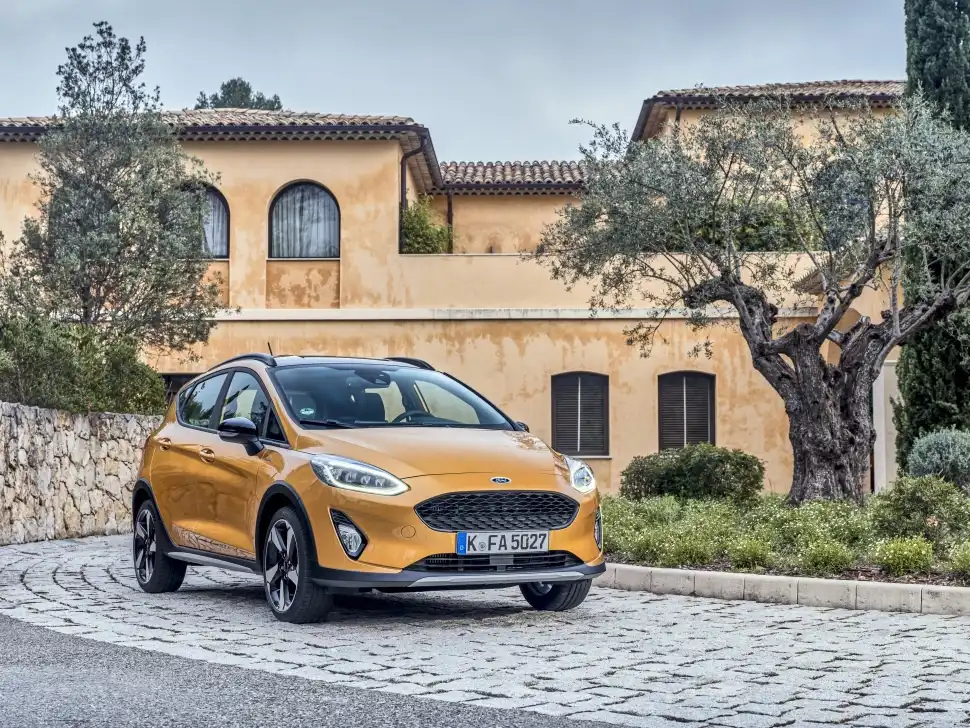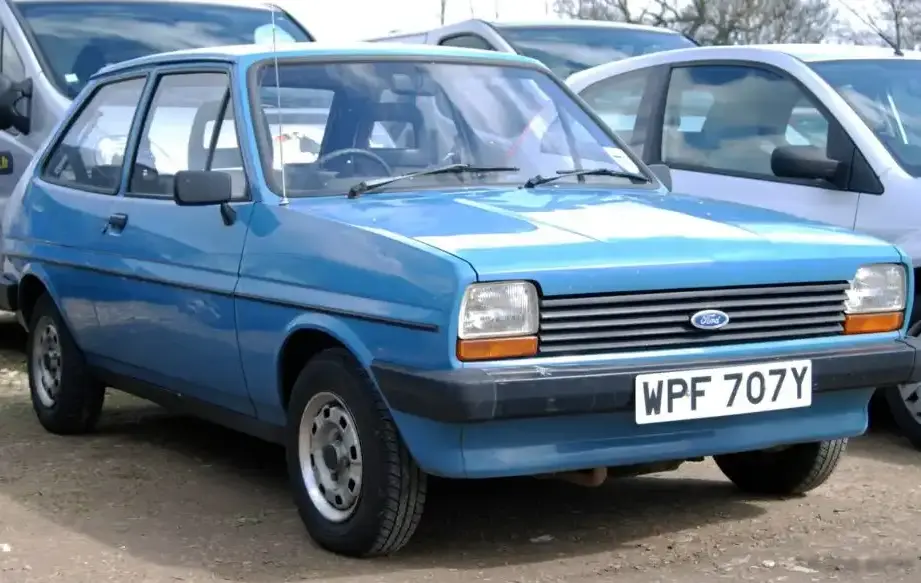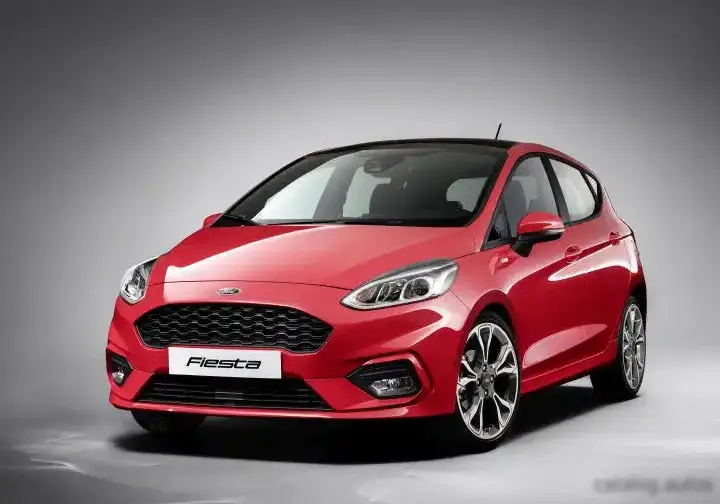
The Ford Fiesta Mk8, launched in 2017, marked a substantial advancement for Ford’s enduring supermini. The 5-door 1.0 EcoBoost 155 horsepower Mild Hybrid variant, produced from May 2020 through 2021, held a key position within the Fiesta lineup, effectively bridging the gap between more fuel-conscious trims and the performance-focused ST model. This version aimed to deliver a balance of fuel efficiency, respectable performance, and contemporary technology within the competitive B-segment hatchback class. While immensely popular in Europe and other global markets prioritizing smaller, fuel-efficient vehicles, it was not officially offered for sale in the United States.
Technical Specifications
| Brand | Ford |
| Model | Fiesta |
| Generation | Fiesta VIII (Mk8) 5 door |
| Type (Engine) | 1.0 EcoBoost (155 Hp) Mild Hybrid |
| Start of production | May, 2020 |
| End of production | 2021 |
| Powertrain Architecture | MHEV (Mild Hybrid Electric Vehicle) |
| Body type | Hatchback |
| Seats | 5 |
| Doors | 5 |
| Fuel consumption at Low speed (WLTP) | 6.5 l/100 km (36.2 US mpg) |
| Fuel consumption at Medium speed (WLTP) | 4.7 l/100 km (50 US mpg) |
| Fuel consumption at high speed (WLTP) | 4.3 l/100 km (54.7 US mpg) |
| Fuel consumption at very high speed (WLTP) | 5.5 l/100 km (42.8 US mpg) |
| Combined fuel consumption (WLTP) | 5.1 l/100 km (46.1 US mpg) |
| CO2 emissions (WLTP) | 116 g/km |
| Fuel consumption (economy) – urban (NEDC) | 4.8-5.5 l/100 km (49 – 42.8 US mpg) |
| Fuel consumption (economy) – extra urban (NEDC) | 3.5-3.9 l/100 km (67.2 – 60.3 US mpg) |
| Fuel consumption (economy) – combined (NEDC) | 4-4.6 l/100 km (58.8 – 51.1 US mpg) |
| CO2 emissions (NEDC) | 92-103 g/km |
| Fuel Type | Petrol (Gasoline) |
| Acceleration 0 – 100 km/h | 8.9 sec |
| Acceleration 0 – 62 mph | 8.9 sec |
| Acceleration 0 – 60 mph | 8.5 sec |
| Maximum speed | 219 km/h (136.08 mph) |
| Emission standard | Euro 6d-ISC-FCM |
| Weight-to-power ratio | 7.4 kg/Hp |
| Weight-to-torque ratio | 4.8 kg/Nm |
| Power | 155 Hp @ 6000 rpm |
| Torque | 240 Nm @ 2500 rpm (177.01 lb.-ft. @ 2500 rpm) |
| Engine layout | Front, Transverse |
| Engine Model/Code | B7JA |
| Engine displacement | 999 cm3 (60.96 cu. in.) |
| Number of cylinders | 3 |
| Engine configuration | Inline |
| Number of valves per cylinder | 4 |
| Fuel injection system | Direct injection |
| Engine aspiration | Turbocharger, Intercooler |
| Valvetrain | DOHC |
| Engine oil capacity | 4.6 l (4.86 US qt | 4.05 UK qt) |
| Coolant | 5.8 l (6.13 US qt | 5.1 UK qt) |
| Kerb Weight | 1144 kg (2522.09 lbs.) |
| Max. weight | 1685 kg (3714.79 lbs.) |
| Max load | 541 kg (1192.7 lbs.) |
| Trunk (boot) space – minimum | 292 l (10.31 cu. ft.) |
| Trunk (boot) space – maximum | 1093 l (38.6 cu. ft.) |
| Fuel tank capacity | 42 l (11.1 US gal | 9.24 UK gal) |
| Permitted trailer load with brakes (8%) | 1000 kg (2204.62 lbs.) |
| Permitted trailer load with brakes (12%) | 1000 kg (2204.62 lbs.) |
| Permitted trailer load without brakes | 605 kg (1333.8 lbs.) |
| Permitted towbar download | 45 kg (99.21 lbs.) |
| Length | 4040 mm (159.06 in.) |
| Width | 1735 mm (68.31 in.) |
| Width including mirrors | 1941 mm (76.42 in.) |
| Height | 1476 mm (58.11 in.) |
| Wheelbase | 2493 mm (98.15 in.) |
| Front overhang | 839 mm (33.03 in.) |
| Rear overhang | 708 mm (27.87 in.) |
| Ride height (ground clearance) | 133 mm (5.24 in.) |
| Minimum turning circle | 9.8 m (32.15 ft.) |
| Drivetrain Architecture | ICE and electric motor, Front wheel drive |
| Number of gears and type of gearbox | 6 gears, manual transmission |
| Front suspension | Independent type McPherson, Transverse stabilizer |
| Rear suspension | Independent multi-link suspension, Transverse stabilizer |
| Assisting systems | ABS (Anti-lock braking system) |
| Steering type | Steering rack and pinion |
| Power steering | Electric Steering |
| Tires size | 195/60 R 15 |
| Wheel rims size | 6 J x 15 |
Powertrain & Engine Architecture
The core of this Fiesta variant is the Ford 1.0 EcoBoost engine, specifically the B7JA code. This is a three-cylinder, 1.0-liter turbocharged gasoline engine, benefiting from direct fuel injection and a double overhead camshaft (DOHC) valvetrain. The integration of mild-hybrid technology incorporates a 48-volt electrical system and a belt-integrated starter-generator (BiSG). This system enables extended engine-off periods during coasting and deceleration, capturing kinetic energy during braking to provide a modest power boost during acceleration. The engine generates 155 horsepower at 6000 rpm and 240 Nm (177 lb-ft) of torque at 2500 rpm. The turbocharger and intercooler are essential components, maximizing power output from such a small displacement engine. The engine is transversely mounted, delivering power to the front wheels via a six-speed manual transmission.
Driving Characteristics
The 1.0 EcoBoost 155 hp version of the Fiesta Mk8 delivers a surprisingly spirited driving experience. While not as aggressively sporty as the ST model, it provides ample power for everyday driving and even some enthusiastic maneuvers. The turbocharger does introduce some turbo lag at lower engine speeds, but once boosted, the engine delivers a strong and linear power delivery. The six-speed manual transmission is well-suited to the engine’s characteristics, allowing drivers to maintain the engine within its optimal power range. Compared to the lower-powered 1.0 EcoBoost variants (e.g., 100 hp), this version offers a significant improvement in acceleration and overtaking capability. It also provides a more engaging driving experience than the diesel options, which prioritize fuel economy over performance.
Equipment & Trim Levels
The 1.0 EcoBoost 155 hp Mild Hybrid typically came equipped as a mid-range trim level, often designated as ‘Titanium’ or a similar name. Standard features generally included air conditioning, a touchscreen infotainment system with Apple CarPlay and Android Auto compatibility, alloy wheels, and a suite of safety features such as lane-keeping assist and automatic emergency braking. Optional extras could include a panoramic sunroof, heated seats, and upgraded audio systems. Interior upholstery was typically cloth, with higher trims offering partial leather options. The dashboard layout was modern and driver-focused, featuring a clear instrument cluster and intuitive controls.
Chassis & Braking
The Fiesta Mk8 utilizes an independent McPherson strut suspension at the front and an independent multi-link suspension at the rear. This configuration provides a good balance of ride comfort and handling precision. The 1.0 EcoBoost 155 hp variant typically included a transverse stabilizer bar on both axles to minimize body roll during cornering. The braking system consisted of disc brakes on the front wheels and drum brakes on the rear wheels, although some higher-specification models may have been equipped with rear discs. ABS (Anti-lock Braking System) was standard, enhancing braking performance and stability.
Market Reception & Comparison
The 1.0 EcoBoost 155 hp Mild Hybrid Fiesta was generally well-received by automotive reviewers. It was praised for its fuel efficiency, surprisingly strong performance, and enjoyable driving dynamics. Compared to the lower-powered EcoBoost models, it offered a noticeable improvement in acceleration and overall driving experience. Against competitors like the Volkswagen Polo, Opel Corsa, and Renault Clio, the Fiesta was often lauded for its handling and engaging driving feel. Fuel economy figures were competitive, and the mild-hybrid system contributed to reduced CO2 emissions.
Legacy
The Fiesta Mk8 1.0 EcoBoost 155 hp Mild Hybrid represents a significant advancement in small-car technology. The combination of a turbocharged engine, mild-hybrid assistance, and a well-tuned chassis made it a compelling choice for buyers seeking a practical, efficient, and enjoyable hatchback. While the Fiesta itself has been discontinued in many markets, the 1.0 EcoBoost engine continues to be utilized in other Ford vehicles. On the used car market, these models are generally considered reliable, although regular maintenance is crucial, particularly concerning the turbocharger and timing chain. The mild-hybrid system has proven relatively robust, adding to the long-term appeal of this Fiesta variant.