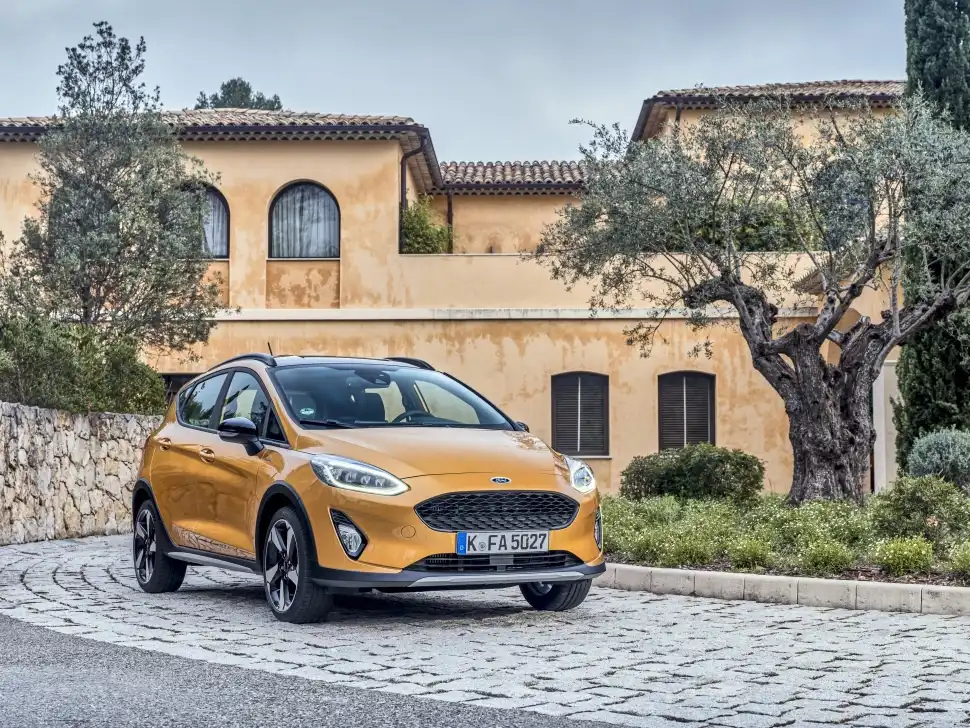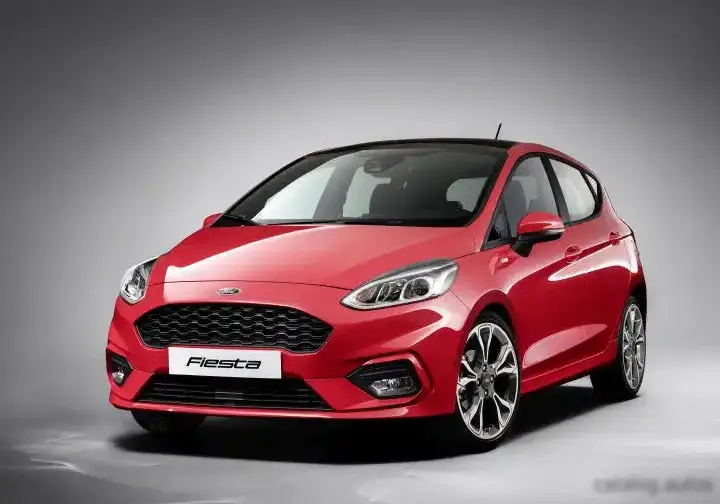
The Ford Fiesta Mk8, launched in 2019, represented a significant evolution for Ford’s long-running supermini. Within the Mk8 range, the 1.0 EcoBoost 95 horsepower variant, typically paired with a six-speed manual transmission, served as a key entry point into the model line, offering a balance of fuel efficiency and affordability. Production of this specific configuration ran from October 2019 through March 2021. It was positioned as a mainstream offering, appealing to buyers seeking a practical and economical city car, while more powerful EcoBoost variants and the diesel options catered to those prioritizing performance or long-distance cruising.
Technical Specifications
| Brand | Ford |
| Model | Fiesta |
| Generation | Fiesta VIII (Mk8) 5 door |
| Type (Engine) | 1.0 EcoBoost (95 Hp) |
| Start of production | October, 2019 |
| End of production | March, 2021 |
| Powertrain Architecture | Internal Combustion engine |
| Body type | Hatchback |
| Seats | 5 |
| Doors | 5 |
| Fuel consumption at Low speed (WLTP) | 6.2 l/100 km (37.9 US mpg, 45.6 UK mpg, 16.1 km/l) |
| Fuel consumption at Medium speed (WLTP) | 4.9 l/100 km (48 US mpg, 57.6 UK mpg, 20.4 km/l) |
| Fuel consumption at high speed (WLTP) | 4.4 l/100 km (53.5 US mpg, 64.2 UK mpg, 22.7 km/l) |
| Fuel consumption at very high speed (WLTP) | 5.4 l/100 km (43.6 US mpg, 52.3 UK mpg, 18.5 km/l) |
| Combined fuel consumption (WLTP) | 5.1 l/100 km (46.1 US mpg, 55.4 UK mpg, 19.6 km/l) |
| CO2 emissions (WLTP) | 116 g/km |
| Fuel consumption (economy) – urban (NEDC) | 5-5.4 l/100 km (47 – 43.6 US mpg, 56.5 – 52.3 UK mpg, 20 – 18.5 km/l) |
| Fuel consumption (economy) – extra urban (NEDC) | 3.6-4 l/100 km (65.3 – 58.8 US mpg, 78.5 – 70.6 UK mpg, 27.8 – 25 km/l) |
| Fuel consumption (economy) – combined (NEDC) | 4.1-4.5 l/100 km (57.4 – 52.3 US mpg, 68.9 – 62.8 UK mpg, 24.4 – 22.2 km/l) |
| CO2 emissions (NEDC) | 94-103 g/km |
| Fuel Type | Petrol (Gasoline) |
| Acceleration 0 – 100 km/h | 10.9 sec |
| Acceleration 0 – 62 mph | 10.9 sec |
| Acceleration 0 – 60 mph | 10.4 sec |
| Maximum speed | 180 km/h (111.85 mph) |
| Emission standard | Euro 6d-ISC-FCM |
| Weight-to-power ratio | 11.5 kg/Hp, 87.2 Hp/tonne |
| Weight-to-torque ratio | 6.4 kg/Nm, 156.1 Nm/tonne |
| Power | 95 Hp @ 4000-6000 rpm |
| Power per litre | 95.1 Hp/l |
| Torque | 170 Nm @ 1750-3900 rpm (125.39 lb.-ft. @ 1750-3900 rpm) |
| Engine layout | Front, Transverse |
| Engine Model/Code | MOJA, MOJB |
| Engine displacement | 999 cm3 (60.96 cu. in.) |
| Number of cylinders | 3 |
| Engine configuration | Inline |
| Number of valves per cylinder | 4 |
| Fuel injection system | Direct injection |
| Engine aspiration | Turbocharger, Intercooler |
| Valvetrain | DOHC |
| Engine oil capacity | 4.6 l (4.86 US qt | 4.05 UK qt) |
| Coolant | 5.8 l (6.13 US qt | 5.1 UK qt) |
| Kerb Weight | 1089 kg (2400.83 lbs.) |
| Max. weight | 1690 kg (3725.81 lbs.) |
| Max load | 601 kg (1324.98 lbs.) |
| Trunk (boot) space – minimum | 292 l (10.31 cu. ft.) |
| Trunk (boot) space – maximum | 1093 l (38.6 cu. ft.) |
| Fuel tank capacity | 42 l (11.1 US gal | 9.24 UK gal) |
| Max. roof load | 50 kg (110.23 lbs.) |
| Permitted trailer load with brakes (8%) | 1100 kg (2425.08 lbs.) |
| Permitted trailer load with brakes (12%) | 1000 kg (2204.62 lbs.) |
| Permitted trailer load without brakes | 580 kg (1278.68 lbs.) |
| Permitted towbar download | 65 kg (143.3 lbs.) |
| Length | 4040 mm (159.06 in.) |
| Width | 1735 mm (68.31 in.) |
| Width including mirrors | 1941 mm (76.42 in.) |
| Height | 1476 mm (58.11 in.) |
| Wheelbase | 2493 mm (98.15 in.) |
| Front overhang | 839 mm (33.03 in.) |
| Rear overhang | 708 mm (27.87 in.) |
| Ride height (ground clearance) | 133 mm (5.24 in.) |
| Minimum turning circle (turning diameter) | 9.8 m (32.15 ft.) |
| Drivetrain Architecture | The Internal combustion engine (ICE) drives the front wheels of the vehicle. |
| Drive wheel | Front wheel drive |
| Number of gears and type of gearbox | 6 gears, manual transmission |
| Front suspension | Independent type McPherson, Transverse stabilizer |
| Rear suspension | Independent multi-link suspension, Transverse stabilizer |
| Assisting systems | ABS (Anti-lock braking system) |
| Steering type | Steering rack and pinion |
| Power steering | Electric Steering |
| Tires size | 195/60 R 15 |
| Wheel rims size | 6 J x 15 |
INTRODUCTION
The Ford Fiesta Mk8, launched in late 2017 for the European market and 2019 for North America, represented a significant departure from its predecessors, adopting a more sophisticated and rounded design language. The 1.0 EcoBoost 95 horsepower variant, offered with a six-speed manual transmission, was a cornerstone of the range, designed to appeal to buyers prioritizing fuel economy and affordability. This engine and transmission combination was particularly popular in Europe, where smaller, more efficient cars are highly valued. It sat below the 125 hp EcoBoost and diesel options in the lineup, offering a more accessible price point.
Powertrain & Engine Architecture
The heart of this Fiesta variant is Ford’s 1.0 EcoBoost engine, specifically the MOJA or MOJB engine code depending on the exact specification. This is a three-cylinder, 1.0-liter turbocharged gasoline engine featuring direct fuel injection and a double overhead camshaft (DOHC) valvetrain. The turbocharger, coupled with intercooling, allows for a surprisingly punchy power output for its size. The engine utilizes a timing belt, a detail important for maintenance scheduling. The six-speed manual transmission provides a good spread of gears, aiding both fuel efficiency and responsiveness. The gear ratios are tuned for economy, with a relatively long final drive. The engine also incorporates Ford’s Auto Start-Stop technology to further reduce fuel consumption in urban driving conditions.
Driving Characteristics
The 95 horsepower EcoBoost engine, while not overtly powerful, provides adequate performance for everyday driving. Acceleration from 0-60 mph takes around 10.4 seconds, and top speed is around 112 mph. The turbocharger does mean there’s a slight delay in power delivery, but once on boost, the engine pulls reasonably well. Compared to the 125 hp EcoBoost, this variant feels noticeably less eager, particularly when fully loaded or tackling steep inclines. The manual transmission is light and precise, making for an engaging driving experience. The longer gear ratios prioritize fuel economy over outright acceleration, meaning the engine needs to be revved slightly to maintain speed when overtaking. The relatively light weight of the Fiesta (around 2400 lbs) helps to mitigate the lower power output.
Equipment & Trim Levels
The 1.0 EcoBoost 95 hp model typically came equipped with a reasonable level of standard equipment. This generally included air conditioning, power front windows, a basic audio system with Bluetooth connectivity, and alloy wheels. Safety features such as ABS, electronic stability control, and multiple airbags were also standard. Higher trim levels, such as Titanium, added features like a touchscreen infotainment system, automatic headlights, rain-sensing wipers, and upgraded interior trim. Optional extras included a rear parking sensor, cruise control, and a panoramic sunroof.
Chassis & Braking
The Fiesta Mk8 utilizes a McPherson strut front suspension and an independent multi-link rear suspension. This setup provides a good balance of ride comfort and handling. The 95 hp variant typically featured a smaller diameter rear brake disc or even drum brakes, reflecting its lower performance potential and cost considerations. Front brakes are ventilated discs. Stabilizer bars are fitted to both the front and rear axles, helping to reduce body roll during cornering. The electric power steering provides a light and precise feel, making the Fiesta easy to maneuver in urban environments.
Market Reception & Comparison
The 1.0 EcoBoost 95 hp Fiesta was generally well-received by critics as a practical and economical city car. Its fuel economy figures were consistently praised, and its nimble handling made it enjoyable to drive. However, some reviewers noted that the engine could feel strained when pushed hard, particularly on motorways. Compared to the 125 hp EcoBoost, the 95 hp version offered significantly better fuel economy but at the expense of performance. The diesel variants provided even better fuel economy but were generally more expensive to purchase and maintain. The 95 hp model represented a sweet spot for buyers prioritizing affordability and efficiency.
Legacy
The 1.0 EcoBoost engine has proven to be a reliable and durable unit, although some early models experienced issues with timing belt durability. Regular maintenance, including timely timing belt replacement, is crucial for long-term reliability. On the used car market, the 1.0 EcoBoost 95 hp Fiesta remains a popular choice, offering a good balance of affordability, fuel economy, and practicality. Its relatively low running costs and readily available parts make it an attractive option for first-time buyers or those seeking a dependable city car. The Fiesta Mk8, in general, has established itself as a well-regarded supermini, and the 1.0 EcoBoost 95 hp variant continues to hold its value.