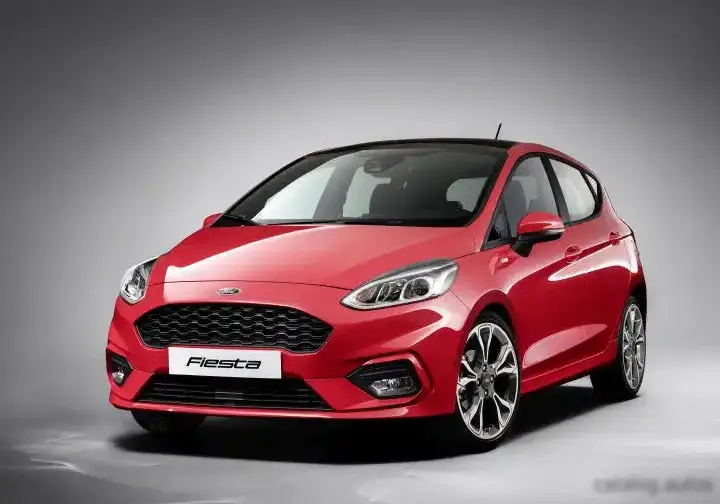
The Ford Fiesta Mk8, produced from 2017 to 2019, represented a significant evolution for Ford’s long-running supermini. The 1.1-liter (70 horsepower) Start-Stop variant, offered exclusively as a five-door hatchback, served as the entry point into the Mk8 Fiesta lineup. Positioned as the most economical and accessible option, it targeted budget-conscious buyers and those prioritizing fuel efficiency over outright performance. This model was a key component of Ford’s strategy to offer a broad range of Fiesta trims catering to diverse customer needs within the highly competitive European and, to a lesser extent, North American small car segments.
Technical Specifications
| Brand | Ford |
| Model | Fiesta |
| Generation | Fiesta VIII (Mk8) 5 door |
| Type (Engine) | 1.1 (70 Hp) Start-Stop |
| Start of production | July, 2017 |
| End of production | October, 2019 |
| Powertrain Architecture | Internal Combustion engine |
| Body type | Hatchback |
| Seats | 5 |
| Doors | 5 |
| Fuel consumption (urban) | 5.6 l/100 km (42 US mpg, 50.4 UK mpg, 17.9 km/l) |
| Fuel consumption (extra urban) | 3.7 l/100 km (63.6 US mpg, 76.3 UK mpg, 27 km/l) |
| Fuel consumption (combined) | 4.4 l/100 km (53.5 US mpg, 64.2 UK mpg, 22.7 km/l) |
| CO2 emissions | 101 g/km |
| Fuel Type | Petrol (Gasoline) |
| Acceleration 0 – 100 km/h | 14.9 sec |
| Acceleration 0 – 62 mph | 14.9 sec |
| Acceleration 0 – 60 mph | 14.2 sec |
| Maximum speed | 160 km/h (99.42 mph) |
| Emission standard | Euro 6 |
| Weight-to-power ratio | 15.1 kg/Hp, 66 Hp/tonne |
| Weight-to-torque ratio | 9.6 kg/Nm, 103.8 Nm/tonne |
| Power | 70 Hp @ 5000-6500 rpm |
| Power per litre | 64.6 Hp/l |
| Torque | 110 Nm @ 3500 rpm (81.13 lb.-ft. @ 3500 rpm) |
| Engine layout | Front, Transverse |
| Engine Model/Code | XPJA, XPJB, XPJC, XPJD |
| Engine displacement | 1084 cm3 (66.15 cu. in.) |
| Number of cylinders | 3 |
| Engine configuration | Inline |
| Cylinder Bore | 73 mm (2.87 in.) |
| Piston Stroke | 86.3 mm (3.4 in.) |
| Compression ratio | 12:1 |
| Number of valves per cylinder | 4 |
| Fuel injection system | Direct injection |
| Engine aspiration | Naturally aspirated engine |
| Valvetrain | DOHC, Ti-VCT |
| Engine oil capacity | 4.1 l (4.33 US qt | 3.61 UK qt) |
| Coolant | 5.5 l (5.81 US qt | 4.84 UK qt) |
| Kerb Weight | 1060-1135 kg (2336.9 – 2502.25 lbs.) |
| Max. weight | 1630-1640 kg (3593.53 – 3615.58 lbs.) |
| Max load | 505-570 kg (1113.33 – 1256.63 lbs.) |
| Trunk (boot) space – minimum | 303 l (10.7 cu. ft.) |
| Trunk (boot) space – maximum | 984 l (34.75 cu. ft.) |
| Fuel tank capacity | 42 l (11.1 US gal | 9.24 UK gal) |
| Max. roof load | 50 kg (110.23 lbs.) |
| Permitted trailer load with brakes (12%) | 750 kg (1653.47 lbs.) |
| Permitted trailer load without brakes | 565 kg (1245.61 lbs.) |
| Permitted towbar download | 65 kg (143.3 lbs.) |
| Length | 4040 mm (159.06 in.) |
| Width | 1735 mm (68.31 in.) |
| Width with mirrors folded | 1783 mm (70.2 in.) |
| Width including mirrors | 1941 mm (76.42 in.) |
| Height | 1476 mm (58.11 in.) |
| Wheelbase | 2493 mm (98.15 in.) |
| Drivetrain Architecture | The Internal combustion engine (ICE) drives the front wheels of the vehicle. |
| Drive wheel | Front wheel drive |
| Number of gears and type of gearbox | 5 gears, manual transmission |
| Front suspension | Independent, type McPherson with coil spring and anti-roll bar |
| Rear suspension | Semi-independent, coil spring, Elastic beam |
| Front brakes | Ventilated discs |
| Rear brakes | Drum |
| Assisting systems | ABS (Anti-lock braking system) |
| Steering type | Steering rack and pinion |
| Power steering | Electric Steering |
| Tires size | 195/60 R15; 195/55 R16; 205/45 R17; 205/40 R18 |
| Wheel rims size | 6J x 15; 6.5J x 16; 7J x 17; 7J x 18 |
Powertrain & Engine Architecture
The heart of this Fiesta variant is the 1.1-liter Duratec three-cylinder gasoline engine, specifically identified by engine codes XPJA, XPJB, XPJC, and XPJD. This engine belongs to the Ford Sigma family, known for its compact design and relatively lightweight construction. It features direct fuel injection, a technology that improves fuel efficiency and reduces emissions by injecting fuel directly into the combustion chamber. The engine utilizes a double overhead camshaft (DOHC) valvetrain with Twin Independent Variable Camshaft Timing (Ti-VCT), allowing for optimized valve timing based on engine speed and load, further enhancing performance and efficiency. The engine’s 12:1 compression ratio contributes to its thermal efficiency. The engine is paired with a five-speed manual transmission, chosen for its simplicity and cost-effectiveness in this entry-level trim. The Start-Stop system automatically shuts off the engine when the vehicle is stationary (e.g., at traffic lights) and restarts it when the driver depresses the clutch pedal, contributing to fuel savings in urban driving conditions.
Driving Characteristics
The 1.1-liter Fiesta delivers modest performance, prioritizing fuel economy over acceleration. With 70 horsepower and 110 Nm (81 lb-ft) of torque, it takes approximately 14.9 seconds to accelerate from 0 to 100 km/h (0-62 mph). The five-speed manual transmission is geared to maximize fuel efficiency, resulting in a somewhat leisurely driving experience. The engine feels strained at higher speeds or when carrying a full load. Compared to higher-output Fiesta variants, such as the 1.0 EcoBoost or 1.5-liter versions, the 1.1 feels significantly less responsive. However, its light weight and nimble chassis make it enjoyable to drive in urban environments. The gear ratios are optimized for low-speed torque, making it relatively easy to maneuver in city traffic.
Equipment & Trim Levels
The 1.1-liter Fiesta typically came equipped with basic, but essential, features. Standard equipment generally included air conditioning, power front windows, a basic audio system with USB connectivity, and ABS brakes. Safety features such as Electronic Stability Control (ESC) and multiple airbags were also standard. Interior upholstery was typically cloth, with a functional, if somewhat spartan, dashboard design. Optional extras included alloy wheels, a more advanced audio system, and parking sensors. This trim level was designed to be affordable, so many desirable features were offered as optional upgrades.
Chassis & Braking
The Fiesta Mk8 utilizes a McPherson strut front suspension and a semi-independent coil spring rear suspension (Elastic beam). This setup provides a good balance between ride comfort and handling. The front brakes are ventilated discs, offering adequate stopping power, while the rear brakes are drums, a cost-saving measure for the entry-level trim. The steering is electric power-assisted, providing light and precise steering feel. The relatively light weight of the 1.1-liter variant contributes to its agility and responsiveness.
Market Reception & Comparison
The 1.1-liter Fiesta was generally well-received by critics as a practical and economical city car. Its fuel efficiency was a major selling point, and it was praised for its nimble handling and comfortable ride. However, its lack of power was often criticized, particularly when compared to more powerful Fiesta variants. Compared to the 1.0 EcoBoost, the 1.1 offered lower running costs but significantly less performance. The 1.5-liter versions provided a more refined driving experience but came at a higher price point. The 1.1-liter model appealed to buyers who prioritized affordability and fuel economy over performance and features.
Legacy
The 1.1-liter Fiesta Mk8 powertrain has proven to be relatively reliable, with few major mechanical issues reported. The engine is known for its durability and low maintenance costs. On the used car market, these models are typically available at very affordable prices, making them an attractive option for first-time car buyers or those seeking a cheap and economical runabout. While not a performance icon, the 1.1-liter Fiesta Mk8 played an important role in making the Fiesta accessible to a wider range of buyers, solidifying its position as one of Europe’s most popular superminis.