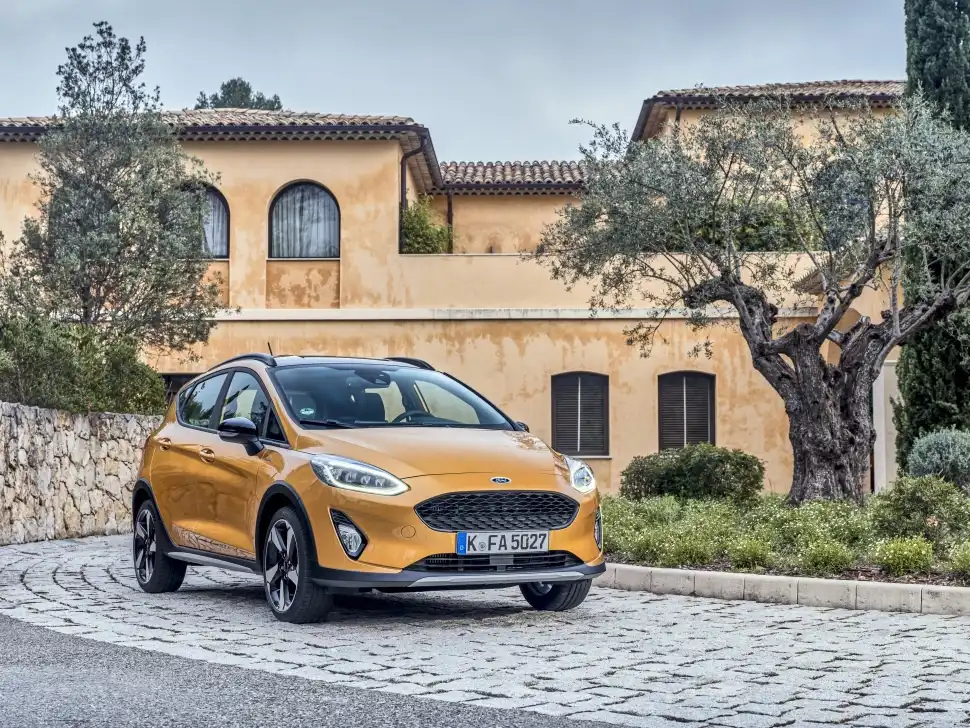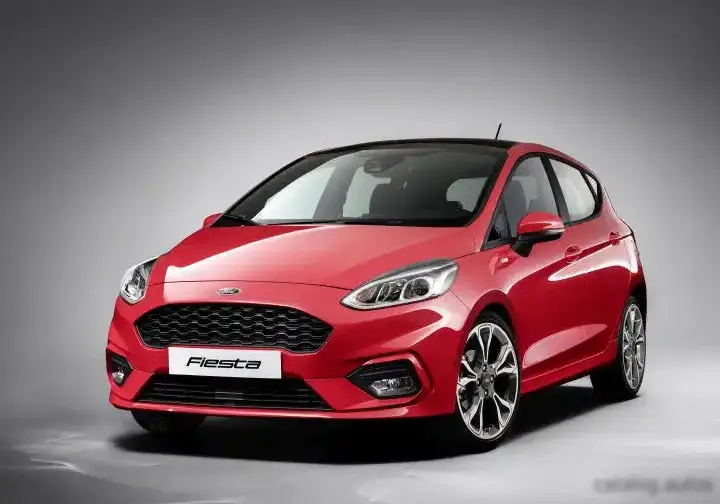
The Ford Fiesta Mk8, produced from 2017 to 2019, represented a significant evolution for Ford’s long-running supermini. The 1.5 TDCI 120 horsepower variant, equipped with a manual transmission, occupied a middle ground in the Fiesta Mk8 lineup, offering a balance between fuel efficiency and respectable performance. This model aimed to appeal to drivers seeking a practical and economical hatchback for daily commuting and longer journeys. It was positioned above the lower-powered diesel options and below the more performance-oriented petrol variants like the 1.0 EcoBoost.
Technical Specifications
| Brand | Ford |
| Model | Fiesta |
| Generation | Fiesta VIII (Mk8) 5 door |
| Type (Engine) | 1.5 TDCI (120 Hp) Start-Stop |
| Start of production | July, 2017 |
| End of production | May, 2019 |
| Powertrain Architecture | Internal Combustion engine |
| Body type | Hatchback |
| Seats | 5 |
| Doors | 5 |
| Fuel consumption (urban) | 3.9 l/100 km (60.3 US mpg, 72.4 UK mpg, 25.6 km/l) |
| Fuel consumption (extra urban) | 3.2 l/100 km (73.5 US mpg, 88.3 UK mpg, 31.3 km/l) |
| Fuel consumption (combined) | 3.5 l/100 km (67.2 US mpg, 80.7 UK mpg, 28.6 km/l) |
| CO2 emissions | 89 g/km |
| Fuel Type | Diesel |
| Acceleration 0 – 100 km/h | 9 sec |
| Acceleration 0 – 62 mph | 9 sec |
| Acceleration 0 – 60 mph | 8.6 sec |
| Maximum speed | 195 km/h (121.17 mph) |
| Emission standard | Euro 6 |
| Weight-to-power ratio | 9.4 kg/Hp, 106 Hp/tonne |
| Weight-to-torque ratio | 4.2 kg/Nm, 238.5 Nm/tonne |
| Power | 120 Hp @ 3600 rpm |
| Power per litre | 80.1 Hp/l |
| Torque | 270 Nm @ 1750-2500 rpm (199.14 lb.-ft. @ 1750-2500 rpm) |
| Engine layout | Front, Transverse |
| Engine Model/Code | XWJA, XWJB, XWJC |
| Engine displacement | 1499 cm3 (91.47 cu. in.) |
| Number of cylinders | 4 |
| Engine configuration | Inline |
| Cylinder Bore | 73.5 mm (2.89 in.) |
| Piston Stroke | 88.3 mm (3.48 in.) |
| Compression ratio | 16:1 |
| Number of valves per cylinder | 2 |
| Fuel injection system | Diesel Commonrail |
| Engine aspiration | Turbocharger, Intercooler |
| Valvetrain | SOHC |
| Engine oil capacity | 3.85 l (4.07 US qt | 3.39 UK qt) |
| Coolant | 5.5 l (5.81 US qt | 4.84 UK qt) |
| Kerb Weight | 1132-1207 kg (2495.63 – 2660.98 lbs.) |
| Max. weight | 1670-1685 kg (3681.72 – 3714.79 lbs.) |
| Max load | 478-538 kg (1053.81 – 1186.09 lbs.) |
| Trunk (boot) space – minimum | 303 l (10.7 cu. ft.) |
| Trunk (boot) space – maximum | 984 l (34.75 cu. ft.) |
| Fuel tank capacity | 42 l (11.1 US gal | 9.24 UK gal) |
| Max. roof load | 50 kg (110.23 lbs.) |
| Permitted trailer load with brakes (12%) | 1000 kg (2204.62 lbs.) |
| Permitted trailer load without brakes | 600 kg (1322.77 lbs.) |
| Permitted towbar download | 40 kg (88.18 lbs.) |
| Length | 4040-4065 mm (159.06 – 160.04 in.) |
| Width | 1735 mm (68.31 in.) |
| Width with mirrors folded | 1783 mm (70.2 in.) |
| Width including mirrors | 1941 mm (76.42 in.) |
| Height | 1466-1476 mm (57.72 – 58.11 in.) |
| Wheelbase | 2493 mm (98.15 in.) |
| Drivetrain Architecture | The Internal combustion engine (ICE) drives the front wheels of the vehicle. |
| Drive wheel | Front wheel drive |
| Number of gears and type of gearbox | 6 gears, manual transmission |
| Front suspension | Independent, type McPherson with coil spring and anti-roll bar |
| Rear suspension | Semi-independent, coil spring, Elastic beam |
| Front brakes | Ventilated discs |
| Rear brakes | Drum |
| Assisting systems | ABS (Anti-lock braking system) |
| Steering type | Steering rack and pinion |
| Power steering | Electric Steering |
| Tires size | 195/60 R15; 195/55 R16; 205/45 R17; 205/40 R18 |
| Wheel rims size | 6J x 15; 6.5J x 16; 7J x 17; 7J x 18 |
INTRODUCTION
The Ford Fiesta Mk8, launched in July 2017, represented a clean-sheet redesign for Ford’s popular supermini. Built on the global B-platform, it aimed to offer a more sophisticated and refined driving experience than its predecessor. The 1.5-liter TDCi diesel engine, producing 120 horsepower, was a key component of the Mk8’s engine lineup, offering a compelling blend of fuel economy and performance. This variant was available with a six-speed manual transmission, catering to drivers who preferred more control over their driving experience. The Mk8 Fiesta aimed to compete with rivals like the Volkswagen Polo, Opel/Vauxhall Corsa, and Renault Clio.
Powertrain & Engine Architecture
The 1.5 TDCI engine, identified by engine codes XWJA, XWJB, and XWJC, is a four-cylinder diesel engine featuring common-rail direct injection and a turbocharger with intercooler. This configuration allowed for a good balance between power and fuel efficiency. The engine utilizes a Single Overhead Camshaft (SOHC) valvetrain, operating with two valves per cylinder. The common-rail system, supplied by Bosch, delivers fuel at extremely high pressure, ensuring efficient combustion. The turbocharger provides increased air intake, boosting power output. The six-speed manual transmission offered precise gear changes and contributed to the car’s engaging driving dynamics. The Start & Stop system, standard on this variant, further enhanced fuel economy by automatically shutting off the engine when the vehicle was stationary.
Driving Characteristics
The 1.5 TDCI 120 hp Fiesta Mk8 offered a surprisingly sprightly driving experience. While not as quick as the petrol-powered models, the engine delivered a healthy 270 Nm (199 lb-ft) of torque from 1750-2500 rpm, providing ample pulling power for everyday driving and overtaking maneuvers. The six-speed manual transmission allowed drivers to keep the engine in its optimal power band. Gear ratios were well-chosen, providing good acceleration in each gear. Compared to the lower-powered 1.5 TDCI variants, the 120 hp version felt noticeably more responsive. However, it didn’t possess the outright punch of the 1.0 EcoBoost petrol engines. The suspension setup provided a comfortable ride, absorbing bumps and imperfections in the road surface effectively.
Equipment & Trim Levels
The 1.5 TDCI 120 hp variant was typically offered in mid-range trim levels, such as Zetec and Titanium. Standard equipment generally included air conditioning, power windows, a touchscreen infotainment system with Bluetooth connectivity, and alloy wheels. Higher trim levels added features like automatic headlights, rain-sensing wipers, a rear parking sensor, and upgraded interior trim. Optional extras included a panoramic sunroof, navigation system, and a premium sound system. Interior upholstery was typically cloth, with higher trims offering partial leather options. The dashboard layout was modern and functional, with a focus on ease of use.
Chassis & Braking
The Fiesta Mk8 featured a McPherson strut front suspension and a semi-independent elastic beam rear suspension. This setup provided a good balance between ride comfort and handling. The front brakes were ventilated discs, offering good stopping power, while the rear brakes were drums. Anti-lock Braking System (ABS) was standard, enhancing safety. The steering was electric power-assisted, providing light and precise steering feel. The chassis was designed to be lightweight, contributing to the car’s agility and fuel efficiency. Stabilizer bars were fitted to both the front and rear axles to reduce body roll during cornering.
Market Reception & Comparison
The 1.5 TDCI 120 hp Fiesta Mk8 received generally positive reviews from automotive critics. It was praised for its fuel efficiency, comfortable ride, and engaging driving dynamics. However, some critics noted that the engine could be slightly noisy under hard acceleration. Compared to the lower-powered diesel variants, the 120 hp version offered a noticeable performance improvement, making it a more appealing option for drivers who frequently travel on motorways or carry passengers. Fuel economy was a key selling point, with the Fiesta Mk8 1.5 TDCI achieving combined fuel consumption figures of around 3.5 l/100 km (67.2 US mpg). Reliability was generally good, although some owners reported issues with the diesel particulate filter (DPF).
Legacy
The Ford Fiesta Mk8 1.5 TDCI 120 hp remains a popular choice in the used car market. Its combination of fuel efficiency, practicality, and affordability makes it an attractive option for budget-conscious buyers. The 1.5 TDCI engine, while not known for being exceptionally durable, has proven to be reasonably reliable with regular maintenance. Potential buyers should be aware of the potential for DPF issues, particularly if the vehicle has primarily been used for short journeys. Overall, the Fiesta Mk8 1.5 TDCI 120 hp represents a well-rounded and capable supermini that continues to offer good value for money.