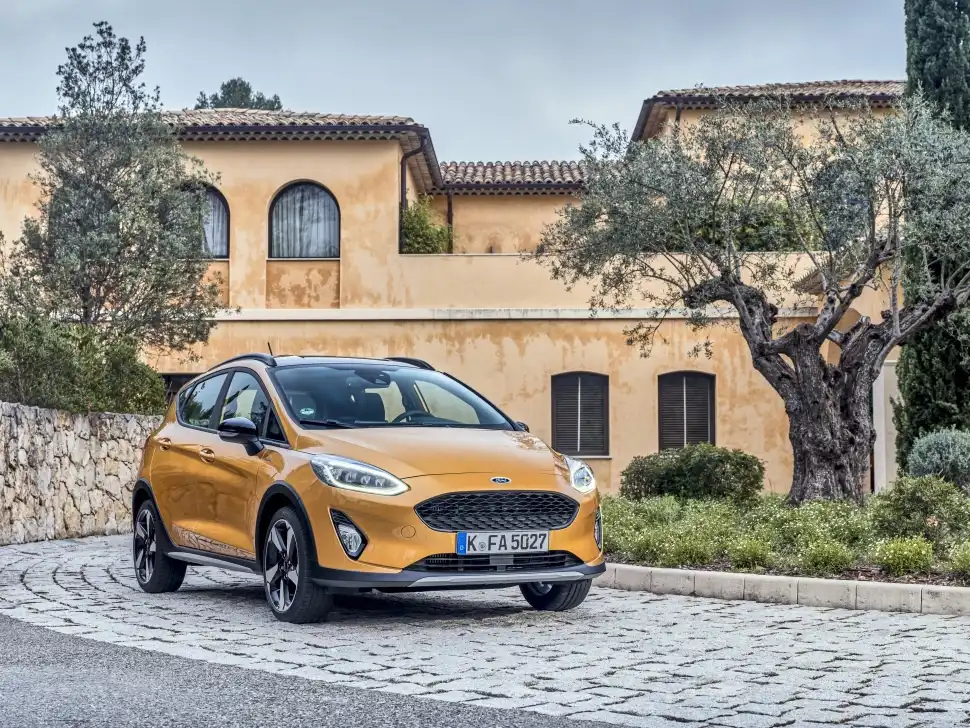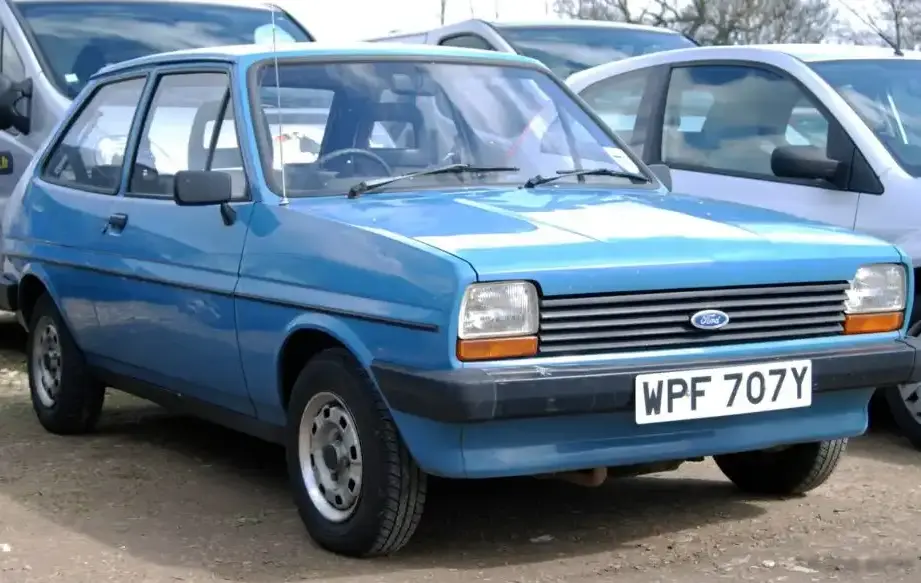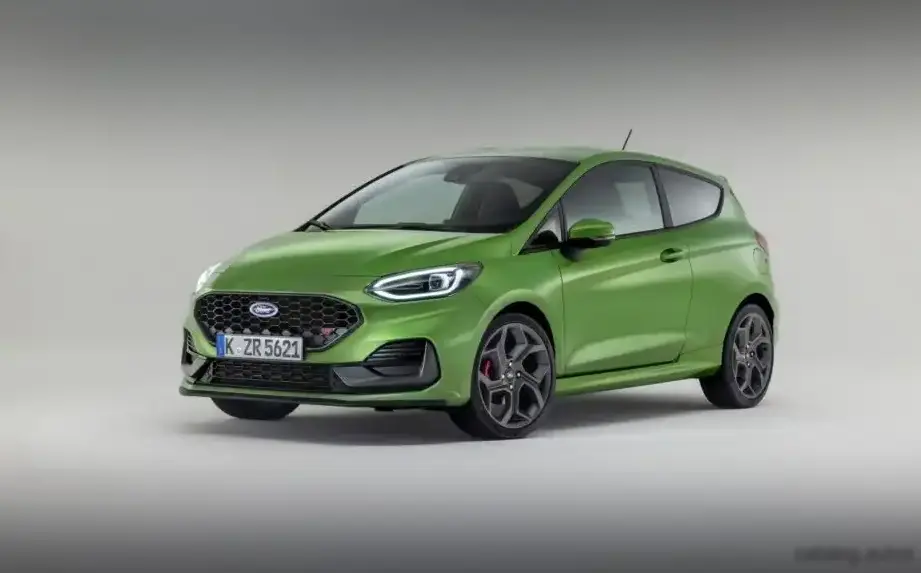
The Ford Fiesta Mk8, specifically the three-door variant equipped with the 1.0 EcoBoost 100 horsepower engine, represents a significant iteration in Ford’s long-running Fiesta lineage. Introduced with the facelift in November 2021 and remaining in production until July 2023, this model aimed to balance fuel efficiency with accessible performance within the supermini segment. Positioned as a mid-range offering, it slotted between the base specification models and the more powerful ST trims. This version was primarily marketed in Europe, where the three-door hatchback body style remained popular, offering a sportier aesthetic and slightly reduced weight compared to the five-door version.
Technical Specifications
| Brand | Ford |
| Model | Fiesta |
| Generation | Fiesta VIII (Mk8, facelift 2022) 3 door |
| Type (Engine) | 1.0 EcoBoost (100 Hp) |
| Start of production | November, 2021 |
| End of production | July, 2023 |
| Powertrain Architecture | Internal Combustion engine |
| Body type | Hatchback |
| Seats | 5 |
| Doors | 3 |
| Fuel consumption at Low speed (WLTP) | 6.8-8.2 l/100 km (34.6 – 28.7 US mpg, 41.5 – 34.4 UK mpg, 14.7 – 12.2 km/l) |
| Fuel consumption at Medium speed (WLTP) | 5-5.9 l/100 km (47 – 39.9 US mpg, 56.5 – 47.9 UK mpg, 20 – 16.9 km/l) |
| Fuel consumption at high speed (WLTP) | 4.5-5.5 l/100 km (52.3 – 42.8 US mpg, 62.8 – 51.4 UK mpg, 22.2 – 18.2 km/l) |
| Fuel consumption at very high speed (WLTP) | 5.5-6.7 l/100 km (42.8 – 35.1 US mpg, 51.4 – 42.2 UK mpg, 18.2 – 14.9 km/l) |
| Combined fuel consumption (WLTP) | 5.3-6.4 l/100 km (44.4 – 36.8 US mpg, 53.3 – 44.1 UK mpg, 18.9 – 15.6 km/l) |
| CO2 emissions (WLTP) | 119-144 g/km |
| Fuel Type | Petrol (Gasoline) |
| Acceleration 0 – 100 km/h | 10.8 sec |
| Acceleration 0 – 62 mph | 10.8 sec |
| Acceleration 0 – 60 mph | 10.3 sec |
| Maximum speed | 180 km/h (111.85 mph) |
| Emission standard | Euro 6d-ISC-FCM |
| Weight-to-power ratio | 10.9 kg/Hp, 91.8 Hp/tonne |
| Weight-to-torque ratio | 6.4 kg/Nm, 156.1 Nm/tonne |
| Power | 100 Hp @ 4500 rpm |
| Power per litre | 100.1 Hp/l |
| Torque | 170 Nm @ 1500-4000 rpm (125.39 lb.-ft. @ 1500-4000 rpm) |
| Engine layout | Front, Transverse |
| Engine Model/Code | SFJP |
| Engine displacement | 999 cm3 (60.96 cu. in.) |
| Number of cylinders | 3 |
| Engine configuration | Inline |
| Cylinder Bore | 71.9 mm (2.83 in.) |
| Piston Stroke | 82 mm (3.23 in.) |
| Compression ratio | 10:1 |
| Number of valves per cylinder | 4 |
| Fuel injection system | Direct injection |
| Engine aspiration | Turbocharger, Intercooler |
| Valvetrain | DOHC |
| Engine oil capacity | 4.6 l (4.86 US qt | 4.05 UK qt) |
| Coolant | 5.6 l (5.92 US qt | 4.93 UK qt) |
| Kerb Weight | 1089 kg (2400.83 lbs.) |
| Max. weight | 1665 kg (3670.7 lbs.) |
| Max load | 576 kg (1269.86 lbs.) |
| Trunk (boot) space – minimum | 292 l (10.31 cu. ft.) |
| Trunk (boot) space – maximum | 1093 l (38.6 cu. ft.) |
| Fuel tank capacity | 42 l (11.1 US gal | 9.24 UK gal) |
| Max. roof load | 50 kg (110.23 lbs.) |
| Permitted trailer load with brakes (12%) | 750 kg (1653.47 lbs.) |
| Permitted trailer load without brakes | 580 kg (1278.68 lbs.) |
| Permitted towbar download | 65 kg (143.3 lbs.) |
| Length | 4048-4069 mm (159.37 – 160.2 in.) |
| Width | 1735 mm (68.31 in.) |
| Width with mirrors folded | 1783 mm (70.2 in.) |
| Width including mirrors | 1941 mm (76.42 in.) |
| Height | 1484-1490 mm (58.43 – 58.66 in.) |
| Wheelbase | 2493 mm (98.15 in.) |
| Front overhang | 846-847 mm (33.31 – 33.35 in.) |
| Rear overhang | 708-730 mm (27.87 – 28.74 in.) |
| Ride height (ground clearance) | 122-130 mm (4.8 – 5.12 in.) |
| Minimum turning circle (turning diameter) | 9.8-10.0 m (32.15 – 32.81 ft.) |
| Drivetrain Architecture | The Internal combustion engine (ICE) drives the front wheels of the vehicle. |
| Drive wheel | Front wheel drive |
| Number of gears and type of gearbox | 6 gears, manual transmission |
| Front suspension | Independent, type McPherson with coil spring and anti-roll bar |
| Rear suspension | Torsion |
| Front brakes | Ventilated discs, 262×23 mm |
| Rear brakes | Drum, 202.8 mm |
| Assisting systems | ABS (Anti-lock braking system) |
| Steering type | Steering rack and pinion |
| Power steering | Electric Steering |
| Tires size | 195/60 R15; 205/45 R17 |
| Wheel rims size | 6J x 15; 7.5J x 17 |
Powertrain & Engine Architecture
The heart of this Fiesta variant is the Ford 1.0 EcoBoost engine, specifically the SFJP iteration. This is a three-cylinder, 999cc turbocharged gasoline engine. It utilizes direct fuel injection and a double overhead camshaft (DOHC) valvetrain with four valves per cylinder. The engine’s turbocharger, coupled with intercooling, allows it to produce 100 horsepower at 4500 rpm and 170 Nm (125 lb-ft) of torque between 1500 and 4000 rpm. This broad torque band is a key characteristic of the EcoBoost engine, providing reasonable responsiveness in everyday driving. The engine features a 10:1 compression ratio. The engine is transversely mounted, driving the front wheels. The transmission is a six-speed manual gearbox, chosen for its efficiency and driver engagement, although an automatic option was available in other trims.
Driving Characteristics
The 1.0 EcoBoost 100 hp model offers a balanced driving experience. While not overtly sporty, it provides sufficient power for typical urban and highway driving. Acceleration from 0-60 mph takes around 10.3 seconds, and the top speed is 111.85 mph. The six-speed manual transmission allows for precise gear selection, and the engine’s torque delivery makes it relatively easy to drive in various conditions. Compared to the higher-output 125 hp EcoBoost version, this variant feels less eager to rev, but it offers improved fuel economy. The manual gearbox also provides a more connected feel than the optional automatic transmission found in other Fiesta models.
Equipment & Trim Levels
The 1.0 EcoBoost 100 hp three-door Fiesta typically came equipped with features such as air conditioning, power front windows, a basic audio system with Bluetooth connectivity, and alloy wheels. Safety features included ABS, electronic stability control, and multiple airbags. Higher trim levels added features like Ford’s SYNC infotainment system, a rear-view camera, and parking sensors. Interior upholstery was typically cloth, with a relatively simple dashboard layout. Optional extras included a panoramic sunroof, heated front seats, and upgraded audio systems.
Chassis & Braking
The Fiesta Mk8 utilizes a McPherson strut front suspension and a torsion beam rear suspension. This setup provides a good balance between ride comfort and handling. The front brakes are ventilated discs measuring 262x23mm, while the rear brakes are drum brakes measuring 202.8mm. This configuration is typical for a vehicle in this weight class. The electric power steering provides light and precise steering feel. Stabilizer bars are fitted to both the front and rear axles to reduce body roll during cornering.
Market Reception & Comparison
The 1.0 EcoBoost 100 hp Fiesta was generally well-received by automotive critics. It was praised for its fuel efficiency, surprisingly punchy engine, and nimble handling. However, some reviewers noted that the three-cylinder engine could be a bit rough sounding at higher revs. Compared to the 1.5-liter EcoBoost variant, this model offered better fuel economy but less outright performance. Against diesel alternatives, such as the 1.5 TDCi, it provided a more refined driving experience but potentially higher running costs depending on mileage. The combination of a manual transmission and the 1.0 EcoBoost engine was considered a sweet spot for many buyers seeking a practical and enjoyable supermini.
Legacy
The 1.0 EcoBoost engine has proven to be a reliable and durable powertrain, although some early models experienced issues with timing belt failures. Regular maintenance, including oil changes and timing belt replacement (where applicable), is crucial for long-term reliability. In the used car market, the 1.0 EcoBoost Fiesta Mk8 remains a popular choice due to its affordability, fuel efficiency, and relatively low running costs. The three-door variant, while less common than the five-door, is sought after by those who appreciate its sportier styling and slightly lighter weight.