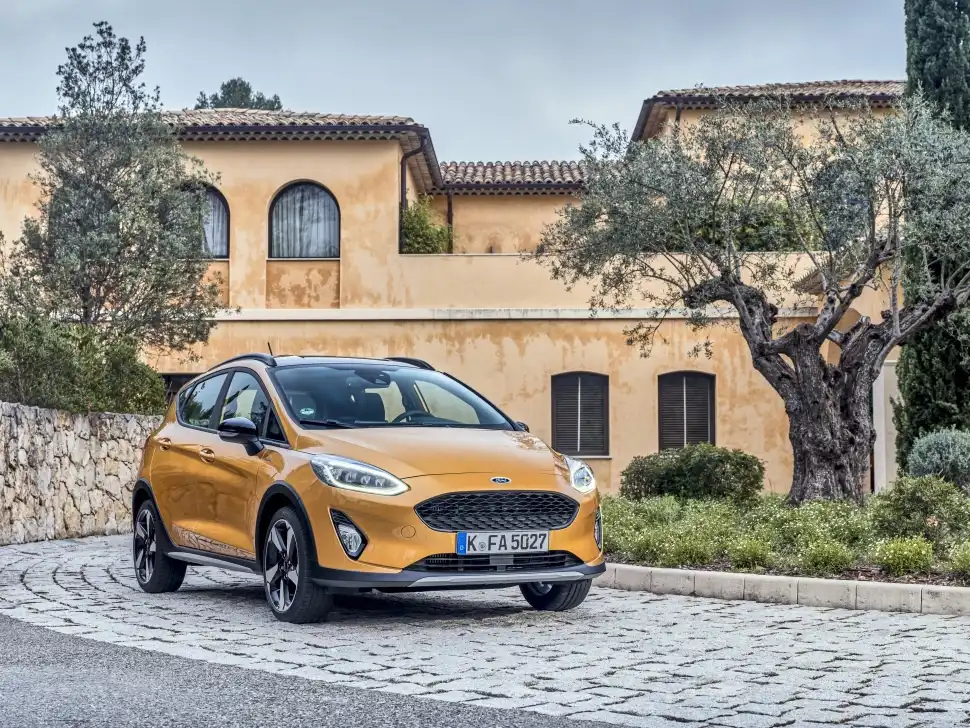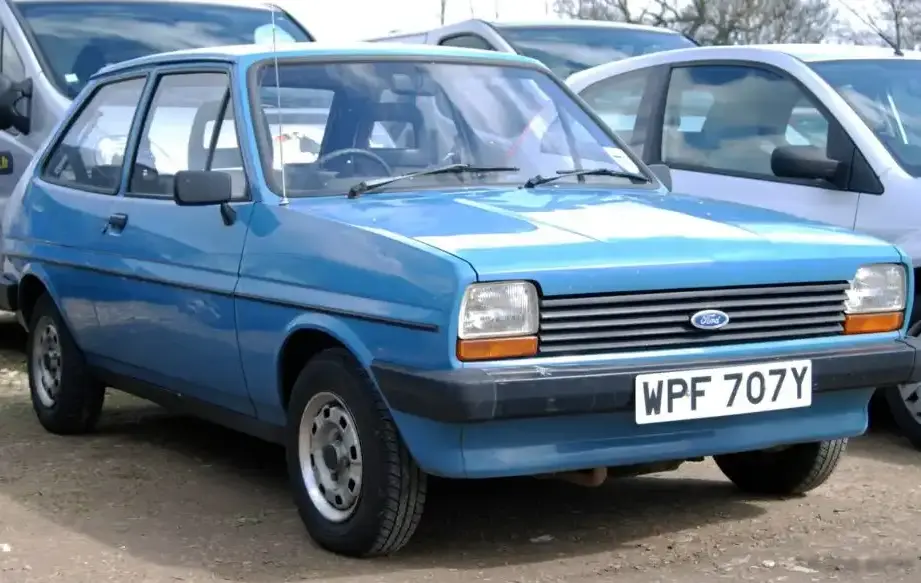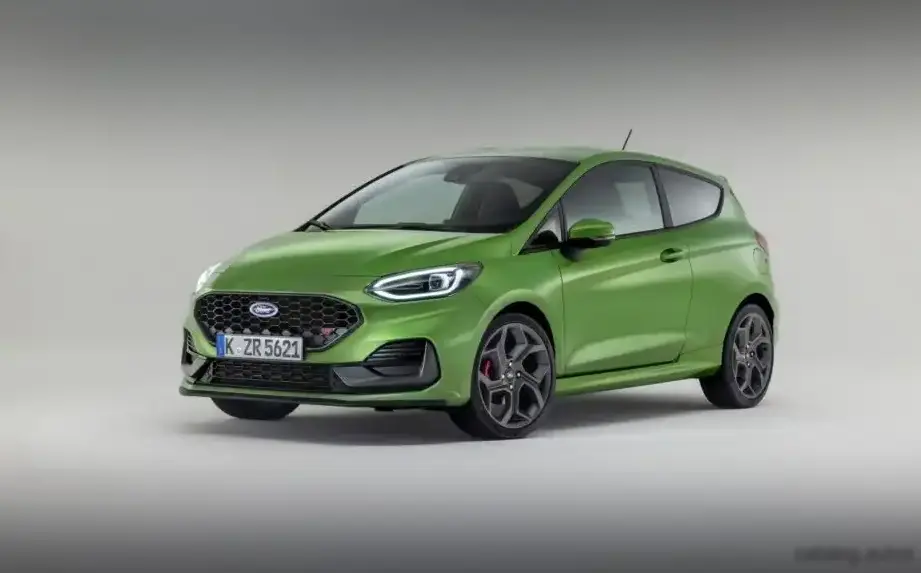
The Ford Fiesta ST 1.5 EcoBoost, produced from November 2021 to July 2023, represents the performance-oriented variant of the eighth-generation (Mk8) Fiesta, specifically the facelifted model. Offered exclusively as a three-door hatchback, this model aimed to deliver a compelling hot hatch experience within the subcompact segment. It served as the flagship performance model in the Fiesta lineup, positioned above the more economical trims like the Trend and Titanium. The Fiesta Mk8, overall, was a significant model for Ford Europe, designed to appeal to a younger demographic with its modern styling and technology. This particular ST variant was not officially sold in the North American market, but it gained a strong following among enthusiasts in Europe and other regions.
Technical Specifications
| Brand | Ford |
| Model | Fiesta |
| Generation | Fiesta VIII (Mk8, facelift 2022) 3 door |
| Type (Engine) | ST 1.5 EcoBoost (200 Hp) |
| Start of production | November, 2021 |
| End of production | July, 2023 |
| Powertrain Architecture | Internal Combustion engine |
| Body type | Hatchback |
| Seats | 5 |
| Doors | 3 |
| Fuel consumption at Low speed (WLTP) | 8.5-8.7 l/100 km (27.7 – 27 US mpg, 33.2 – 32.5 UK mpg, 11.8 – 11.5 km/l) |
| Fuel consumption at Medium speed (WLTP) | 6.3-6.4 l/100 km (37.3 – 36.8 US mpg, 44.8 – 44.1 UK mpg, 15.9 – 15.6 km/l) |
| Fuel consumption at high speed (WLTP) | 5.8-5.9 l/100 km (40.6 – 39.9 US mpg, 48.7 – 47.9 UK mpg, 17.2 – 16.9 km/l) |
| Fuel consumption at very high speed (WLTP) | 6.9-7 l/100 km (34.1 – 33.6 US mpg, 40.9 – 40.4 UK mpg, 14.5 – 14.3 km/l) |
| Combined fuel consumption (WLTP) | 6.7-6.8 l/100 km (35.1 – 34.6 US mpg, 42.2 – 41.5 UK mpg, 14.9 – 14.7 km/l) |
| CO2 emissions (WLTP) | 151-153 g/km |
| Fuel Type | Petrol (Gasoline) |
| Acceleration 0 – 100 km/h | 6.5 sec |
| Acceleration 0 – 62 mph | 6.5 sec |
| Acceleration 0 – 60 mph | 6.2 sec |
| Maximum speed | 230 km/h (142.92 mph) |
| Emission standard | Euro 6d-ISC-FCM |
| Weight-to-power ratio | 6 kg/Hp, 167.8 Hp/tonne |
| Weight-to-torque ratio | 3.7 kg/Nm, 268.5 Nm/tonne |
| Power | 200 Hp @ 6000 rpm |
| Power per litre | 133.7 Hp/l |
| Torque | 320 Nm @ 1600-4000 rpm (236.02 lb.-ft. @ 1600-4000 rpm) |
| Engine layout | Front, Transverse |
| Engine Model/Code | YZJA |
| Engine displacement | 1496 cm3 (91.29 cu. in.) |
| Number of cylinders | 3 |
| Engine configuration | Inline |
| Cylinder Bore | 84 mm (3.31 in.) |
| Piston Stroke | 90 mm (3.54 in.) |
| Compression ratio | 9.7:1 |
| Number of valves per cylinder | 4 |
| Fuel injection system | Direct injection |
| Engine aspiration | Turbocharger, Intercooler |
| Valvetrain | DOHC |
| Engine oil capacity | 4.75 l (5.02 US qt | 4.18 UK qt) |
| Coolant | 5.5 l (5.81 US qt | 4.84 UK qt) |
| Kerb Weight | 1192 kg (2627.91 lbs.) |
| Max. weight | 1645 kg (3626.6 lbs.) |
| Max load | 453 kg (998.69 lbs.) |
| Trunk (boot) space – minimum | 292 l (10.31 cu. ft.) |
| Trunk (boot) space – maximum | 1093 l (38.6 cu. ft.) |
| Fuel tank capacity | 42 l (11.1 US gal | 9.24 UK gal) |
| Length | 4091 mm (161.06 in.) |
| Width | 1735 mm (68.31 in.) |
| Width with mirrors folded | 1783 mm (70.2 in.) |
| Width including mirrors | 1941 mm (76.42 in.) |
| Height | 1487 mm (58.54 in.) |
| Wheelbase | 2493 mm (98.15 in.) |
| Front track | 1504 mm (59.21 in.) |
| Rear (Back) track | 1472 mm (57.95 in.) |
| Front overhang | 865 mm (34.06 in.) |
| Rear overhang | 733 mm (28.86 in.) |
| Ride height (ground clearance) | 126 mm (4.96 in.) |
| Minimum turning circle (turning diameter) | 11 m (36.09 ft.) |
| Drivetrain Architecture | The Internal combustion engine (ICE) drives the front wheels of the vehicle. |
| Drive wheel | Front wheel drive |
| Number of gears and type of gearbox | 6 gears, manual transmission |
| Front suspension | Independent, type McPherson with coil spring and anti-roll bar |
| Rear suspension | Torsion |
| Front brakes | Ventilated discs, 278×23 mm |
| Rear brakes | Disc, 253×12 mm |
| Assisting systems | ABS (Anti-lock braking system) |
| Steering type | Steering rack and pinion |
| Power steering | Electric Steering |
| Tires size | 205/45 R17; 205/40 R18 |
| Wheel rims size | 7.5J x 17; 7.5J x 18 |
INTRODUCTION
The Fiesta ST 1.5 EcoBoost, launched in late 2021 as part of the Mk8 facelift, built upon the already successful formula of its predecessors. It represented a significant upgrade in terms of engine technology and overall driving experience. The facelift brought with it revised styling, updated technology, and crucially, a new three-cylinder turbocharged engine. This variant aimed to provide a more engaging and refined hot hatch experience, appealing to drivers seeking a blend of performance, practicality, and affordability. The three-door configuration further emphasized its sporty intentions, offering a more focused driving experience compared to the five-door model.
Powertrain & Engine Architecture
At the heart of the Fiesta ST 1.5 EcoBoost lies the YZJA engine code, a 1.5-liter inline-three cylinder turbocharged gasoline engine. This engine is a departure from the 1.6-liter four-cylinder unit used in previous Fiesta ST models. The switch to a three-cylinder design allowed for reduced weight and internal friction, contributing to improved fuel efficiency and responsiveness. The engine utilizes direct fuel injection, delivering fuel directly into the combustion chamber for precise control and optimized combustion. A single scroll turbocharger with an integrated exhaust manifold provides quick spool-up and strong torque delivery. The engine also features a dual-mass flywheel designed to reduce engine vibrations inherent in three-cylinder designs. The six-speed manual transmission was the only transmission option available, chosen for its driver engagement and performance characteristics. The gear ratios were carefully selected to maximize acceleration and provide a sporty driving feel.
Driving Characteristics
The Fiesta ST 1.5 EcoBoost delivers a genuinely engaging driving experience. The 200 horsepower and 320 Nm (236 lb-ft) of torque, available from 1600-4000 rpm, provide brisk acceleration. The 0-60 mph sprint is achieved in around 6.2 seconds, and the car reaches a top speed of 230 km/h (143 mph). The relatively low weight of the Fiesta (around 1192 kg or 2628 lbs) contributes to its nimble handling. The steering is precise and well-weighted, providing excellent feedback to the driver. The suspension, tuned for sporty driving, offers a good balance between comfort and control. While firmer than the standard Fiesta, it doesn’t compromise ride quality to an unacceptable degree. Compared to earlier Fiesta ST models, the 1.5 EcoBoost engine offers a broader torque curve, making it more tractable in everyday driving situations. The manual transmission is slick and precise, enhancing the overall driving experience.
Equipment & Trim Levels
The Fiesta ST 1.5 EcoBoost came generously equipped as standard. Key features included sports seats with enhanced bolstering, a unique ST body kit (including a rear spoiler and side skirts), and 17-inch alloy wheels (18-inch wheels were optional). Inside, the ST featured a distinctive steering wheel, aluminum pedals, and a performance-oriented instrument cluster. Infotainment was provided by Ford’s SYNC 3 system, with an 8-inch touchscreen display, Apple CarPlay, and Android Auto compatibility. Optional extras included a Bang & Olufsen sound system, heated front seats, and a winter pack (including heated windscreen and steering wheel). The interior trim was typically dark, with contrasting stitching and accents to emphasize the sporty character of the car.
Chassis & Braking
The Fiesta ST’s chassis was specifically tuned to handle the increased power and performance. It features independent McPherson strut front suspension with a coil spring and anti-roll bar, and a torsion beam rear suspension. The rear torsion beam was upgraded compared to the standard Fiesta, providing improved stability and handling. Braking duties are handled by ventilated discs at the front and solid discs at the rear. The braking system is assisted by ABS (Anti-lock Braking System) and Electronic Stability Control (ESC). The ESC system features a “Track Mode” which allows for a greater degree of wheel slip, catering to more experienced drivers.
Market Reception & Comparison
The Fiesta ST 1.5 EcoBoost was widely praised by automotive journalists for its engaging driving dynamics, responsive engine, and overall value. It was often compared favorably to rivals such as the Volkswagen Polo GTI and the Renault Clio RS. Critics noted the improved refinement and broader torque curve of the 1.5 EcoBoost engine compared to the previous 1.6-liter unit. Fuel economy was also considered good for a hot hatch, with combined figures around 6.7-6.8 l/100 km (35-34.6 mpg). Reliability reports have been generally positive, although some owners have reported minor issues with the turbocharger and cooling system. Compared to the standard Fiesta, the ST offered a significantly more focused driving experience, but at the expense of some ride comfort.
Legacy
The Fiesta ST 1.5 EcoBoost represents a high point in the Fiesta’s lineage, offering a compelling blend of performance, practicality, and affordability. While production ended in July 2023, the model continues to be sought after on the used car market. The 1.5 EcoBoost engine has proven to be a robust and reliable unit when properly maintained. The Fiesta ST’s reputation for fun-to-drive dynamics and its relatively low running costs make it an attractive option for enthusiasts seeking a sporty and practical hatchback. Its discontinuation marks the end of an era for the Fiesta, a model that has been a mainstay of the European automotive landscape for over four decades.