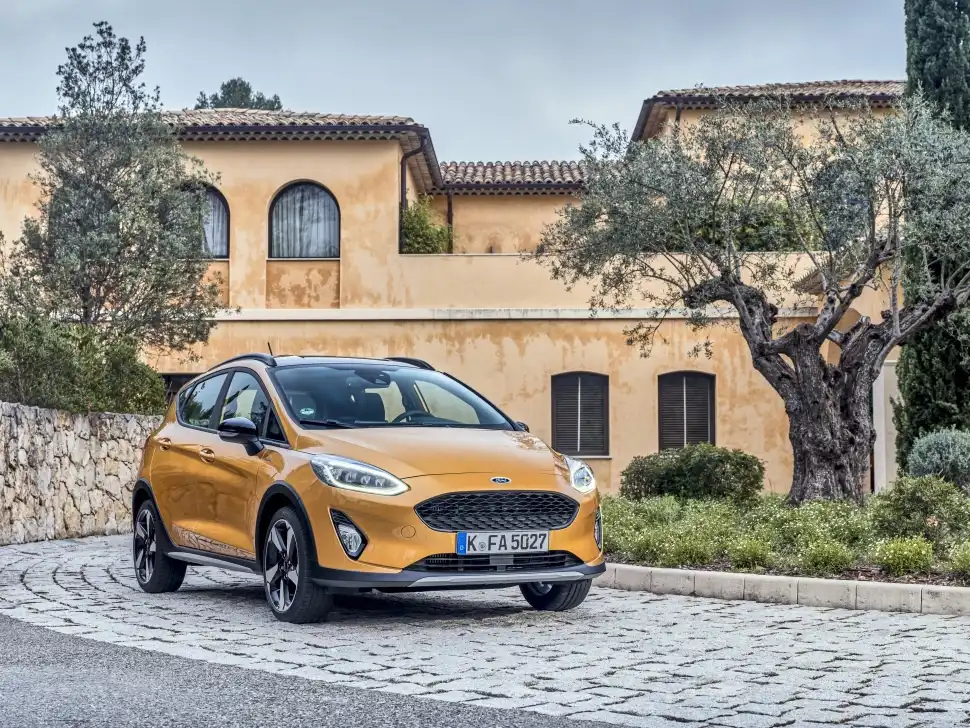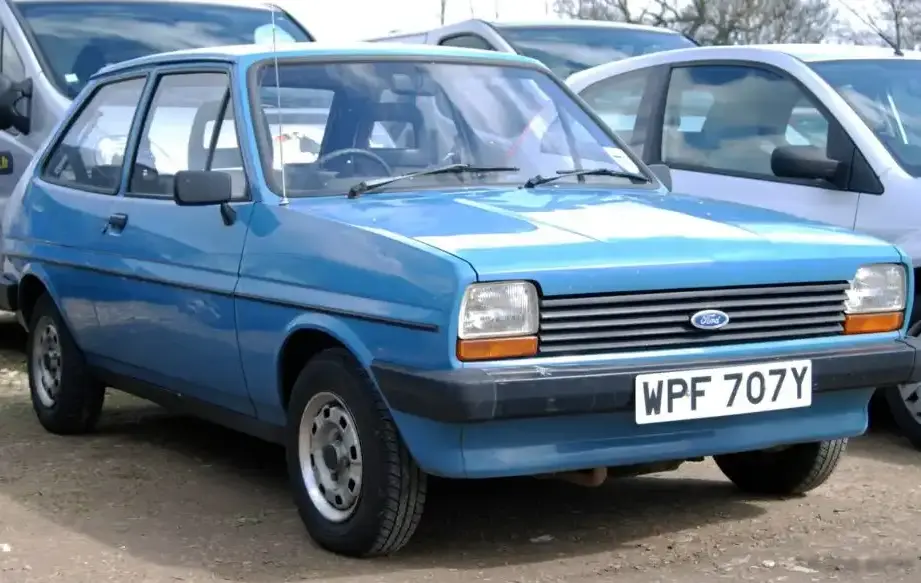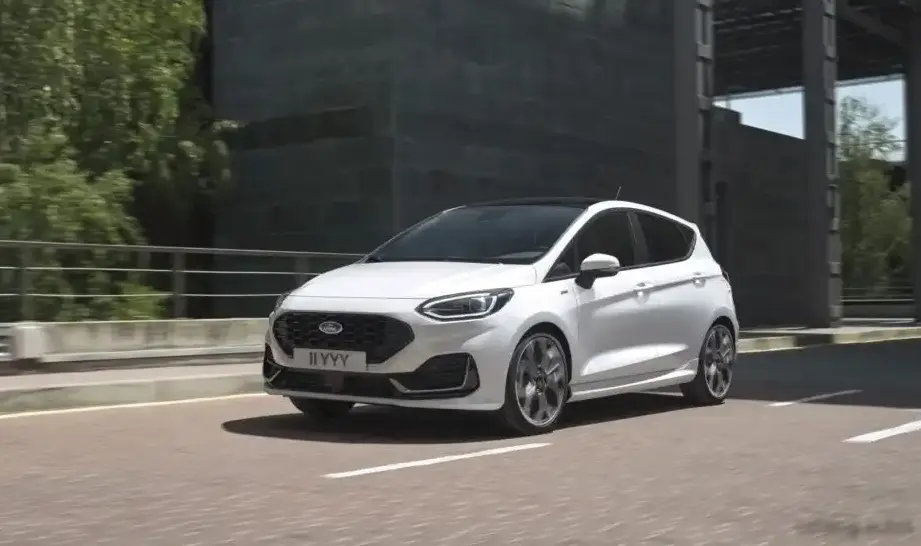
The Ford Fiesta Mk8, specifically the 5-door variant equipped with the 1.0 EcoBoost 100 horsepower engine, represents a significant iteration in Ford’s long-running supermini lineage. Introduced with the facelift in November 2021 and continuing production until July 2023, this model occupied a crucial position in the Fiesta range, offering a balance between fuel efficiency, affordability, and reasonable performance. It falls within the broader Mk8 Fiesta generation (2017-2023), built on the B2E platform, and aimed to appeal to buyers seeking a practical and economical city car with modern features. This particular configuration was positioned as a mid-range option, bridging the gap between the base ‘Active’ trims and the more performance-oriented ‘ST’ models.
Technical Specifications
| Brand | Ford |
| Model | Fiesta |
| Generation | Fiesta VIII (Mk8, facelift 2022) 5 door |
| Type (Engine) | 1.0 EcoBoost (100 Hp) |
| Start of production | November, 2021 |
| End of production | July, 2023 |
| Powertrain Architecture | Internal Combustion engine |
| Body type | Hatchback |
| Seats | 5 |
| Doors | 5 |
| Fuel consumption at Low speed (WLTP) | 6.9-8.2 l/100 km (34.1 – 28.7 US mpg, 40.9 – 34.4 UK mpg, 14.5 – 12.2 km/l) |
| Fuel consumption at Medium speed (WLTP) | 5-5.9 l/100 km (47 – 39.9 US mpg, 56.5 – 47.9 UK mpg, 20 – 16.9 km/l) |
| Fuel consumption at high speed (WLTP) | 4.5-5.5 l/100 km (52.3 – 42.8 US mpg, 62.8 – 51.4 UK mpg, 22.2 – 18.2 km/l) |
| Fuel consumption at very high speed (WLTP) | 5.5-6.7 l/100 km (42.8 – 35.1 US mpg, 51.4 – 42.2 UK mpg, 18.2 – 14.9 km/l) |
| Combined fuel consumption (WLTP) | 5.3-6.4 l/100 km (44.4 – 36.8 US mpg, 53.3 – 44.1 UK mpg, 18.9 – 15.6 km/l) |
| CO2 emissions (WLTP) | 120-144 g/km |
| Fuel Type | Petrol (Gasoline) |
| Acceleration 0 – 100 km/h | 10.8 sec |
| Acceleration 0 – 62 mph | 10.8 sec |
| Acceleration 0 – 60 mph | 10.3 sec |
| Maximum speed | 180 km/h (111.85 mph) |
| Emission standard | Euro 6d-ISC-FCM |
| Weight-to-power ratio | 11 kg/Hp, 90.6 Hp/tonne |
| Weight-to-torque ratio | 6.5 kg/Nm, 154 Nm/tonne |
| Power | 100 Hp @ 4500 rpm |
| Power per litre | 100.1 Hp/l |
| Torque | 170 Nm @ 1500-4000 rpm (125.39 lb.-ft. @ 1500-4000 rpm) |
| Engine layout | Front, Transverse |
| Engine Model/Code | SFJP |
| Engine displacement | 999 cm3 (60.96 cu. in.) |
| Number of cylinders | 3 |
| Engine configuration | Inline |
| Cylinder Bore | 71.9 mm (2.83 in.) |
| Piston Stroke | 82 mm (3.23 in.) |
| Compression ratio | 10:1 |
| Number of valves per cylinder | 4 |
| Fuel injection system | Direct injection |
| Engine aspiration | Turbocharger, Intercooler |
| Valvetrain | DOHC |
| Engine oil capacity | 4.6 l (4.86 US qt | 4.05 UK qt) |
| Coolant | 5.6 l (5.92 US qt | 4.93 UK qt) |
| Kerb Weight | 1104 kg (2433.9 lbs.) |
| Max. weight | 1690 kg (3725.81 lbs.) |
| Max load | 586 kg (1291.91 lbs.) |
| Trunk (boot) space – minimum | 292 l (10.31 cu. ft.) |
| Trunk (boot) space – maximum | 1093 l (38.6 cu. ft.) |
| Fuel tank capacity | 42 l (11.1 US gal | 9.24 UK gal) |
| Max. roof load | 50 kg (110.23 lbs.) |
| Permitted trailer load with brakes (12%) | 750 kg (1653.47 lbs.) |
| Permitted trailer load without brakes | 585 kg (1289.7 lbs.) |
| Permitted towbar download | 65 kg (143.3 lbs.) |
| Length | 4048-4069 mm (159.37 – 160.2 in.) |
| Width | 1735 mm (68.31 in.) |
| Width with mirrors folded | 1783 mm (70.2 in.) |
| Width including mirrors | 1941 mm (76.42 in.) |
| Height | 1484-1490 mm (58.43 – 58.66 in.) |
| Wheelbase | 2493 mm (98.15 in.) |
| Front overhang | 846-847 mm (33.31 – 33.35 in.) |
| Rear overhang | 708-730 mm (27.87 – 28.74 in.) |
| Ride height (ground clearance) | 122-130 mm (4.8 – 5.12 in.) |
| Minimum turning circle (turning diameter) | 9.8-10 m (32.15 – 32.81 ft.) |
| Drivetrain Architecture | The Internal combustion engine (ICE) drives the front wheels of the vehicle. |
| Drive wheel | Front wheel drive |
| Number of gears and type of gearbox | 6 gears, manual transmission |
| Front suspension | Independent, type McPherson with coil spring and anti-roll bar |
| Rear suspension | Torsion |
| Front brakes | Ventilated discs, 262×23 mm |
| Rear brakes | Drum, 202.8 mm |
| Assisting systems | ABS (Anti-lock braking system) |
| Steering type | Steering rack and pinion |
| Power steering | Electric Steering |
| Tires size | 195/60 R15; 205/45 R17 |
| Wheel rims size | 6J x 15; 7.5J x 17 |
Powertrain & Engine Architecture
The heart of this Fiesta variant is the Ford 1.0 EcoBoost engine, specifically the SFJP iteration. This is a three-cylinder, 999cc turbocharged gasoline engine. It utilizes direct fuel injection, a timing belt, and a double overhead camshaft (DOHC) valvetrain with four valves per cylinder. The turbocharger, coupled with an intercooler, helps to mitigate turbo lag and improve power delivery. The engine produces 100 horsepower at 4500 rpm and 170 Nm (125 lb-ft) of torque between 1500 and 4000 rpm. This engine is known for its compact size and relatively lightweight construction, contributing to the Fiesta’s overall agility. The engine is paired with a six-speed manual transmission, delivering power to the front wheels. The transmission’s gear ratios are tuned for a balance of fuel economy and responsiveness, with a relatively long final drive to aid in highway cruising.
Driving Characteristics
The 1.0 EcoBoost 100 hp Fiesta offers a surprisingly lively driving experience for a small car. While not as quick as the higher-powered EcoBoost variants or the ST model, it provides sufficient acceleration for everyday driving and urban commutes. The 0-60 mph time is around 10.3 seconds, and the top speed is 111.85 mph. The turbocharger provides a noticeable boost in power, particularly in the mid-range, making overtaking maneuvers relatively easy. However, the engine can feel slightly strained at higher speeds or when fully loaded. The manual transmission is precise and easy to use, enhancing driver engagement. Compared to the 1.5L EcoBoost, this engine offers less outright power, but it compensates with better fuel economy and a lighter front end, contributing to more nimble handling.
Equipment & Trim Levels
The 1.0 EcoBoost 100 hp Fiesta typically came equipped with a reasonable level of standard features. These included air conditioning, power windows, power door locks, a basic audio system with Bluetooth connectivity, and alloy wheels. Safety features such as ABS, electronic stability control, and multiple airbags were also standard. Higher trim levels offered options such as a touchscreen infotainment system with Apple CarPlay and Android Auto compatibility, a rearview camera, parking sensors, and automatic climate control. Interior upholstery was typically cloth, with options for upgraded materials and finishes.
Chassis & Braking
The Fiesta Mk8 utilizes a McPherson strut front suspension and a torsion beam rear suspension. This setup provides a good balance between ride comfort and handling. The front suspension incorporates a coil spring and anti-roll bar to reduce body roll during cornering. The braking system consists of ventilated discs on the front wheels and drum brakes on the rear. ABS (Anti-lock Braking System) is standard. The relatively lightweight nature of the car, combined with the effective braking system, provides adequate stopping power for most driving situations.
Market Reception & Comparison
The 1.0 EcoBoost 100 hp Fiesta was generally well-received by automotive critics. It was praised for its fuel efficiency, nimble handling, and surprisingly refined engine. However, some reviewers noted that the engine could feel underpowered when fully loaded or on steep inclines. Compared to the 1.5L EcoBoost variant, the 1.0L offered better fuel economy (around 5.3-6.4 l/100km combined) but less performance. The 1.0L also tended to be more affordable, making it an attractive option for budget-conscious buyers. Against competitors like the Volkswagen Polo and Opel Corsa, the Fiesta 1.0 EcoBoost offered a compelling combination of features, performance, and value.
Legacy
The 1.0 EcoBoost engine has proven to be a relatively reliable powertrain, although some owners have reported issues with the timing belt and turbocharger. Regular maintenance, including oil changes and timing belt replacements, is crucial for ensuring long-term reliability. In the used car market, the 1.0 EcoBoost Fiesta remains a popular choice due to its affordability, fuel efficiency, and practicality. It represents a well-rounded and capable supermini that continues to offer good value for money.