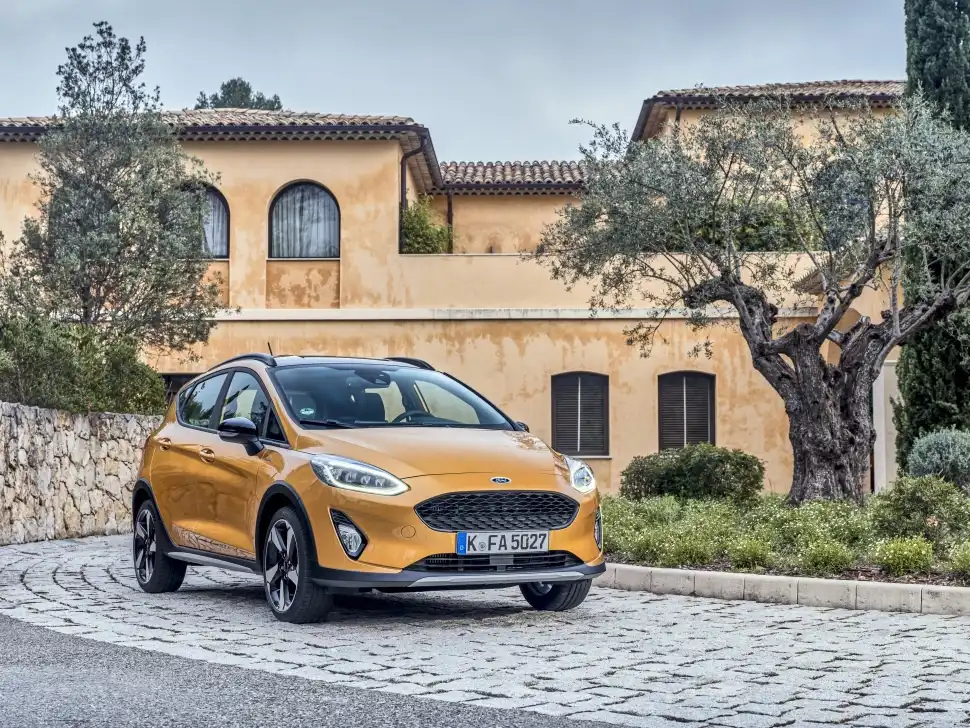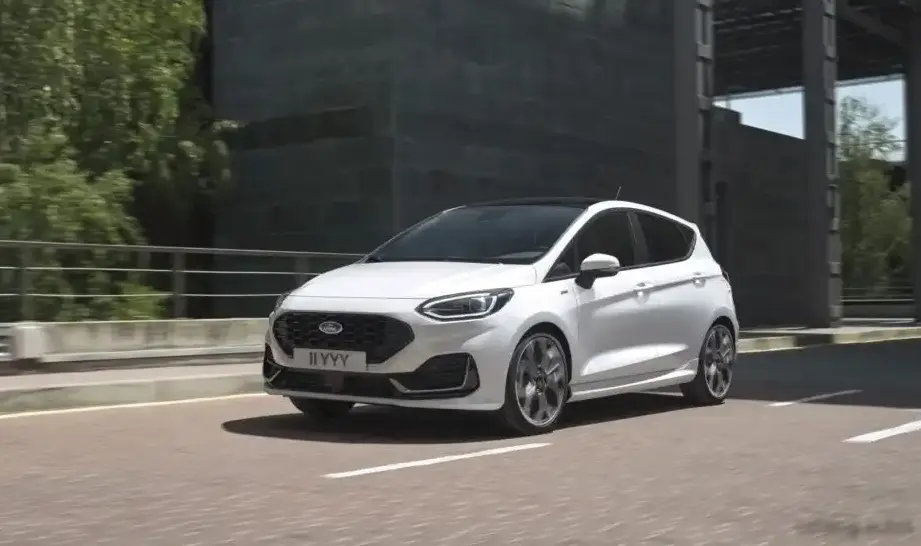
The Ford Fiesta VIII, specifically the facelifted model introduced in late 2021 and produced through July 2023, represented a significant evolution of Ford’s long-running supermini. Within the Mk8 generation (launched in 2017), the 1.0 EcoBoost 125 horsepower variant with a six-speed manual transmission occupied a key position in the lineup, offering a balance between fuel efficiency, performance, and affordability. This model aimed to appeal to buyers seeking a practical and enjoyable daily driver, particularly in European markets where the Fiesta consistently ranked among the best-selling vehicles in its class. The facelift brought styling updates and enhanced technology, further solidifying the Fiesta’s appeal.
Technical Specifications
| Brand | Ford |
| Model | Fiesta |
| Generation | Fiesta VIII (Mk8, facelift 2022) 5 door |
| Type (Engine) | 1.0 EcoBoost (125 Hp) |
| Start of production | November, 2021 |
| End of production | July, 2023 |
| Powertrain Architecture | Internal Combustion engine |
| Body type | Hatchback |
| Seats | 5 |
| Doors | 5 |
| Combined fuel consumption (WLTP) | 5.2-6.4 l/100 km (45.2 – 36.8 US mpg, 54.3 – 44.1 UK mpg, 19.2 – 15.6 km/l) |
| CO2 emissions (WLTP) | 119-144 g/km |
| Fuel Type | Petrol (Gasoline) |
| Acceleration 0 – 100 km/h | 9.4 sec |
| Acceleration 0 – 62 mph | 9.4 sec |
| Acceleration 0 – 60 mph | 8.9 sec |
| Maximum speed | 180 km/h (111.85 mph) |
| Emission standard | Euro 6d-ISC-FCM |
| Weight-to-power ratio | 8.8 kg/Hp, 113.2 Hp/tonne |
| Weight-to-torque ratio | 6.5 kg/Nm, 154 Nm/tonne |
| Power | 125 Hp @ 6000 rpm |
| Power per litre | 125.1 Hp/l |
| Torque | 170 Nm @ 1400-4500 rpm (125.39 lb.-ft. @ 1400-4500 rpm) |
| Engine layout | Front, Transverse |
| Engine Model/Code | M1JP |
| Engine displacement | 999 cm3 (60.96 cu. in.) |
| Number of cylinders | 3 |
| Engine configuration | Inline |
| Cylinder Bore | 71.9 mm (2.83 in.) |
| Piston Stroke | 82 mm (3.23 in.) |
| Compression ratio | 10:1 |
| Number of valves per cylinder | 4 |
| Fuel injection system | Direct injection |
| Engine aspiration | Turbocharger, Intercooler |
| Valvetrain | DOHC |
| Engine oil capacity | 4.52 l (4.78 US qt | 3.98 UK qt) |
| Coolant | 5.6 l (5.92 US qt | 4.93 UK qt) |
| Kerb Weight | 1104 kg (2433.9 lbs.) |
| Max. weight | 1690 kg (3725.81 lbs.) |
| Max load | 586 kg (1291.91 lbs.) |
| Trunk (boot) space – minimum | 292 l (10.31 cu. ft.) |
| Trunk (boot) space – maximum | 1093 l (38.6 cu. ft.) |
| Fuel tank capacity | 42 l (11.1 US gal | 9.24 UK gal) |
| Max. roof load | 50 kg (110.23 lbs.) |
| Permitted trailer load with brakes (12%) | 1000 kg (2204.62 lbs.) |
| Permitted trailer load without brakes | 585 kg (1289.7 lbs.) |
| Permitted towbar download | 65 kg (143.3 lbs.) |
| Length | 4048-4069 mm (159.37 – 160.2 in.) |
| Width | 1735 mm (68.31 in.) |
| Width with mirrors folded | 1783 mm (70.2 in.) |
| Width including mirrors | 1941 mm (76.42 in.) |
| Height | 1484-1490 mm (58.43 – 58.66 in.) |
| Wheelbase | 2493 mm (98.15 in.) |
| Front overhang | 846-847 mm (33.31 – 33.35 in.) |
| Rear overhang | 708-730 mm (27.87 – 28.74 in.) |
| Ride height (ground clearance) | 122-130 mm (4.8 – 5.12 in.) |
| Minimum turning circle (turning diameter) | 9.8-10 m (32.15 – 32.81 ft.) |
| Drivetrain Architecture | The Internal combustion engine (ICE) drives the front wheels of the vehicle. |
| Drive wheel | Front wheel drive |
| Number of gears and type of gearbox | 6 gears, manual transmission |
| Front suspension | Independent, type McPherson with coil spring and anti-roll bar |
| Rear suspension | Torsion |
| Front brakes | Ventilated discs, 262×23 mm |
| Rear brakes | Drum, 202.8 mm |
| Assisting systems | ABS (Anti-lock braking system) |
| Steering type | Steering rack and pinion |
| Power steering | Electric Steering |
| Tires size | 195/60 R15; 205/45 R17 |
| Wheel rims size | 6J x 15; 7.5J x 17 |
Powertrain & Engine Architecture
The heart of this Fiesta variant is the Ford 1.0 EcoBoost engine, specifically the M1JP iteration. This is a three-cylinder, turbocharged gasoline engine displacing 999cc. It utilizes direct fuel injection, a timing belt, and a double overhead camshaft (DOHC) valvetrain with four valves per cylinder. The turbocharger, coupled with an intercooler, provides a significant boost in power and torque despite the small displacement. The engine’s aluminum block contributes to its relatively lightweight design. The six-speed manual transmission was the standard offering, providing precise gear changes and contributing to the car’s engaging driving experience. The transmission’s gear ratios were tuned to maximize fuel efficiency while still providing adequate acceleration.
Driving Characteristics
The 1.0 EcoBoost 125 hp Fiesta offered a surprisingly lively driving experience. While not a performance car, the turbocharger provided a noticeable surge of power in the mid-range, making overtaking and merging onto highways relatively effortless. The 0-60 mph time of around 8.9 seconds was respectable for a supermini. The manual transmission allowed for greater driver control compared to the available automatic option. The steering was precise and well-weighted, providing good feedback to the driver. The suspension, while tuned for comfort, offered a reasonable level of body control in corners. Compared to the higher-output 140 hp version of the 1.0 EcoBoost, this variant felt slightly less eager to rev, but the difference was not dramatic. It also offered better fuel economy than the more powerful engine.
Equipment & Trim Levels
The 1.0 EcoBoost 125 hp model typically came equipped as part of the ‘Trend’ or ‘Titanium’ trim levels, depending on the market. Standard features generally included air conditioning, power windows, a touchscreen infotainment system with Bluetooth connectivity, and alloy wheels. Higher trim levels, like Titanium, added features such as automatic headlights, rain-sensing wipers, and a more sophisticated infotainment system. Optional extras included a panoramic sunroof, parking sensors, and a premium sound system. Interior upholstery was typically cloth, with higher trims offering partial leather options.
Chassis & Braking
The Fiesta Mk8 utilized a McPherson strut front suspension and a torsion beam rear suspension. This setup provided a good balance between ride comfort and handling. The front brakes were ventilated discs, while the rear brakes were drums on most variants, though some higher-spec models received rear discs. Anti-lock Braking System (ABS) was standard. The chassis was designed to be lightweight, contributing to the car’s agility. Stabilizer bars were fitted to both the front and rear axles to reduce body roll during cornering.
Market Reception & Comparison
The 1.0 EcoBoost 125 hp Fiesta was generally well-received by automotive critics. It was praised for its fuel efficiency, surprisingly punchy performance, and engaging driving dynamics. Compared to the 1.5-liter naturally aspirated engine offered in some markets, the EcoBoost engine provided significantly more power and torque while maintaining comparable fuel economy. The 1.0 EcoBoost was also considered a more refined and enjoyable engine than the older 1.6-liter units. However, some critics noted that the three-cylinder engine could be slightly rough at idle. In terms of reliability, the EcoBoost engine had a mixed reputation, with some reports of issues with the timing belt and turbocharger, although these were not widespread.
Legacy
The 1.0 EcoBoost engine became a cornerstone of Ford’s powertrain strategy, and the Fiesta 1.0 EcoBoost 125 hp variant remains a popular choice on the used car market. Its combination of fuel efficiency, performance, and affordability continues to appeal to buyers. While the Fiesta itself has been discontinued in many markets, the engine lives on in other Ford models. The longevity of these powertrains is generally good with regular maintenance, but potential buyers should be aware of the potential for timing belt issues and turbocharger wear, particularly on higher-mileage examples. The Fiesta Mk8, and this variant in particular, represents a high point in the supermini segment, offering a compelling package for everyday driving.