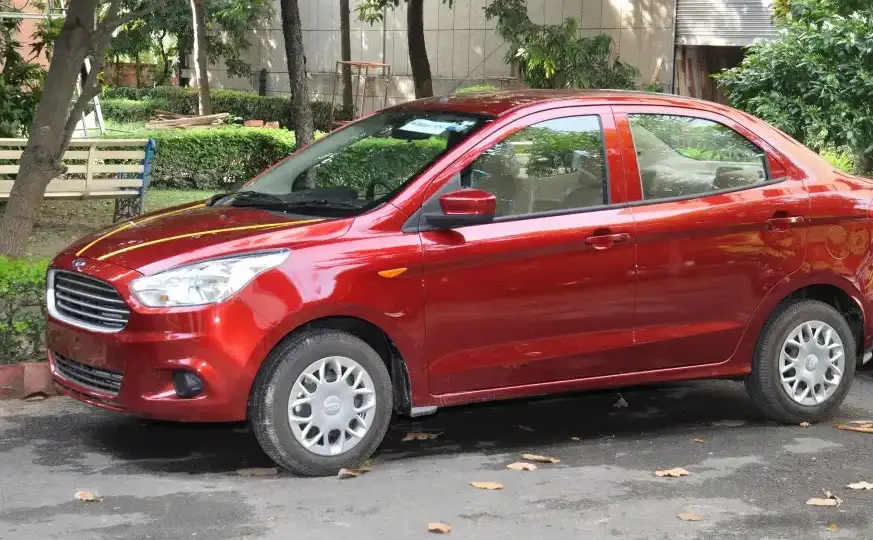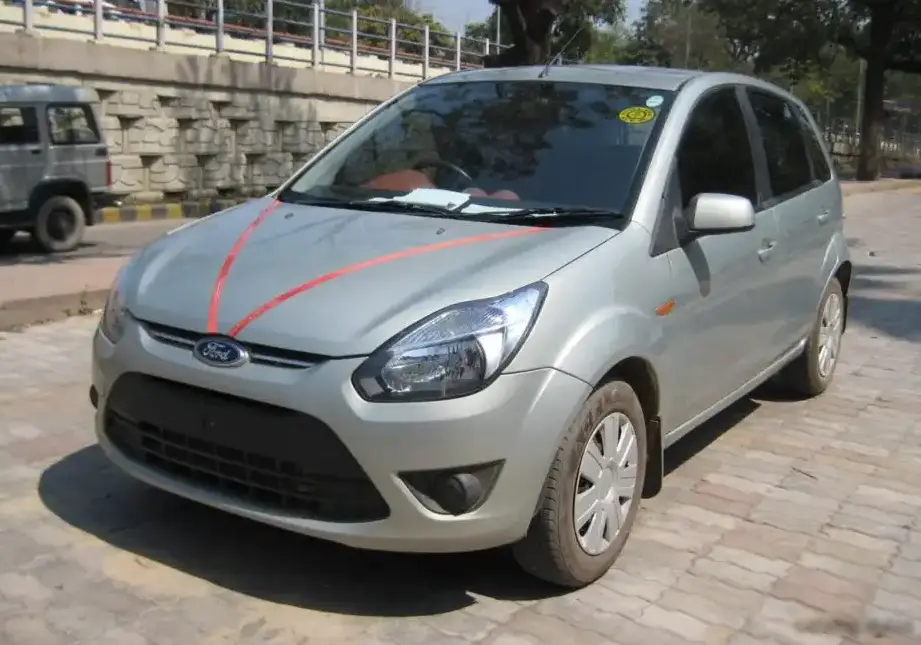
The Ford Figo, launched in March 2010 and continuing through October 2012 for the first generation (Figo I), represented Ford’s entry into the competitive subcompact hatchback segment, primarily targeted at the Indian and South African markets. Built on a modified B-platform derived from the Ford Fiesta, the Figo aimed to provide affordable, reliable transportation with a surprising amount of interior space. The 1.2 Duratec variant, producing 71 horsepower, served as the base model, offering an economical and practical option for first-time car buyers and city commuters. It was positioned as the most accessible trim level within the Figo range, below the higher-specification 1.4 Duratec models.
Technical Specifications
| Brand | Ford |
| Model | Figo |
| Generation | Figo I |
| Type (Engine) | 1.2 Duratec (71 Hp) |
| Start of production | March, 2010 |
| End of production | October, 2012 |
| Powertrain Architecture | Internal Combustion engine |
| Body type | Hatchback |
| Seats | 5 |
| Doors | 5 |
| Fuel Type | Petrol (Gasoline) |
| Emission standard | BS-IV |
| Weight-to-power ratio | 14.6 kg/Hp, 68.3 Hp/tonne |
| Weight-to-torque ratio | 10.2 kg/Nm, 98.1 Nm/tonne |
| Power | 71 Hp @ 6250 rpm |
| Power per litre | 59.4 Hp/l |
| Torque | 102 Nm @ 4000 rpm, 75.23 lb.-ft. @ 4000 rpm |
| Engine layout | Front, Transverse |
| Engine Model/Code | Duratec |
| Engine displacement | 1196 cm3, 72.98 cu. in. |
| Number of cylinders | 4 |
| Engine configuration | Inline |
| Number of valves per cylinder | 4 |
| Fuel injection system | Multi-port manifold injection |
| Engine aspiration | Naturally aspirated engine |
| Valvetrain | DOHC |
| Kerb Weight | 1040-1090 kg, 2292.81 – 2403.04 lbs |
| Trunk (boot) space – minimum | 284 l, 10.03 cu. ft |
| Fuel tank capacity | 45 l, 11.89 US gal | 9.9 UK gal |
| Length | 3795 mm, 149.41 in |
| Width | 1680 mm, 66.14 in |
| Height | 1427 mm, 56.18 in |
| Wheelbase | 2489 mm, 97.99 in |
| Ride height (ground clearance) | 168 mm, 6.61 in |
| Minimum turning circle (turning diameter) | 9.8 m, 32.15 ft |
| Drivetrain Architecture | The Internal combustion engine (ICE) drives the front wheels of the vehicle. |
| Drive wheel | Front wheel drive |
| Number of gears and type of gearbox | 5 gears, manual transmission |
| Front suspension | Independent type McPherson |
| Rear suspension | Coil spring, Torsion |
| Front brakes | Ventilated discs |
| Rear brakes | Drum |
| Assisting systems | ABS (Anti-lock braking system) |
| Steering type | Steering rack and pinion |
| Power steering | Hydraulic Steering |
| Tires size | 175/65 R14 |
| Wheel rims size | 14 |
Powertrain & Engine Architecture
The heart of the Figo 1.2 is the Duratec 1.2-liter inline-four cylinder engine. This engine, while relatively simple in design, was known for its durability and fuel efficiency. It utilized a multi-port fuel injection system, delivering fuel directly into the intake ports, and a double overhead camshaft (DOHC) valvetrain, optimizing airflow for improved performance. The engine code is generally identified as a variant within the Duratec family, though specific sub-codes may vary depending on the production batch and market. The 1.2 Duratec produced 71 horsepower at 6250 rpm and 102 Nm (75.23 lb-ft) of torque at 4000 rpm. This power was delivered to the front wheels through a five-speed manual transmission, the only transmission option available with this engine configuration. The transmission was chosen for its cost-effectiveness and simplicity, contributing to the Figo’s overall affordability.
Driving Characteristics
The 1.2 Duratec-equipped Figo offered modest but adequate performance for urban driving. Acceleration was not its strong suit, with a 0-60 mph time estimated around 14-16 seconds. The five-speed manual transmission helped to keep the engine in its optimal power band, but overtaking maneuvers required careful planning. Compared to the 1.4 Duratec variants, the 1.2 felt noticeably slower, particularly at higher speeds. However, the lighter engine weight contributed to slightly better handling and fuel economy. The gear ratios were tuned for economy rather than outright performance, prioritizing fuel efficiency over spirited driving. The hydraulic power steering provided a reasonably light and responsive feel, making it easy to maneuver in tight city streets.
Equipment & Trim Levels
The base-level Figo 1.2 typically came with a fairly basic equipment list. Standard features generally included power steering, air conditioning, and a basic audio system. Interior upholstery was typically cloth, with a simple dashboard layout. Safety features included a driver’s airbag and ABS (Anti-lock Braking System). Optional extras, depending on the market, could include power windows, central locking, and a more advanced audio system. The interior plastics were durable but not particularly luxurious, reflecting the car’s budget-oriented positioning. The focus was on providing essential features at an affordable price point.
Chassis & Braking
The Figo I utilized a McPherson strut independent suspension system at the front, providing a comfortable ride quality. The rear suspension employed a coil spring and torsion beam setup, which was cost-effective and space-efficient. The braking system consisted of ventilated discs at the front and drum brakes at the rear. While adequate for everyday driving, the braking performance was not particularly strong, especially when the vehicle was fully loaded. The chassis was designed to be lightweight and rigid, contributing to the car’s handling characteristics. A stabilizer bar was included at the front to reduce body roll during cornering.
Market Reception & Comparison
The Ford Figo 1.2 was generally well-received in its target markets, particularly for its affordability and practicality. Critics praised its spacious interior, comfortable ride, and fuel efficiency. However, the engine’s lack of power was a common criticism. Compared to the 1.4 Duratec models, the 1.2 offered significantly lower running costs but at the expense of performance. The 1.2 was often seen as a sensible choice for budget-conscious buyers who prioritized economy over driving excitement. Its fuel economy was a key selling point, consistently achieving around 45-50 mpg in real-world driving conditions.
Legacy
The 1.2 Duratec engine, while not a powerhouse, proved to be a reliable and durable unit. The Figo I, in general, established Ford as a significant player in the subcompact hatchback segment in India and South Africa. In the used car market, the 1.2 Duratec variants are often sought after for their affordability and low maintenance costs. Parts availability is generally good, and the engine is relatively easy to repair. While not a collector’s item, the Figo 1.2 remains a popular choice for those seeking a practical and economical used car. The success of the Figo I paved the way for subsequent generations of the model, further solidifying Ford’s presence in the region.