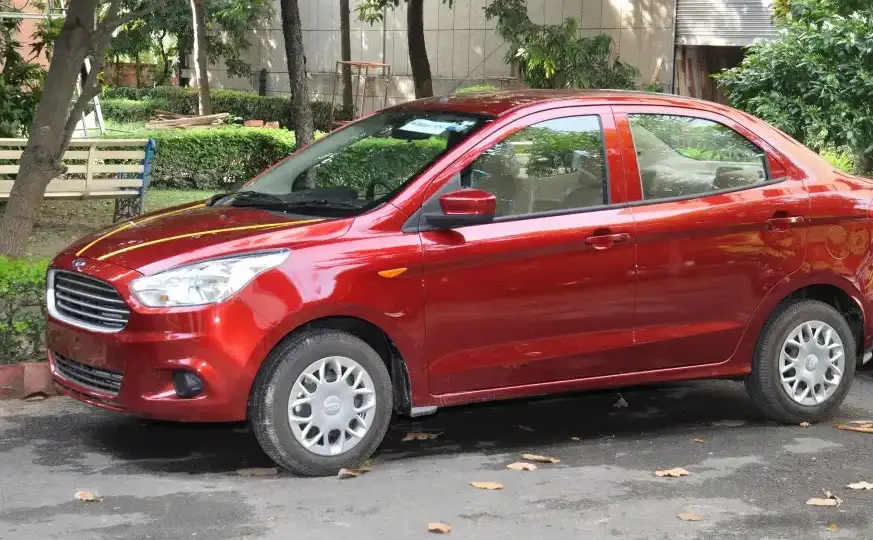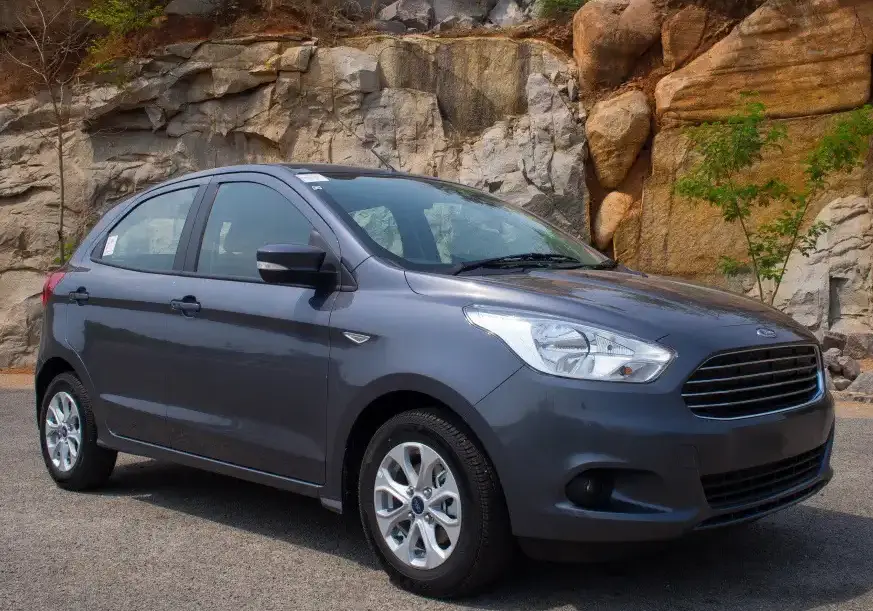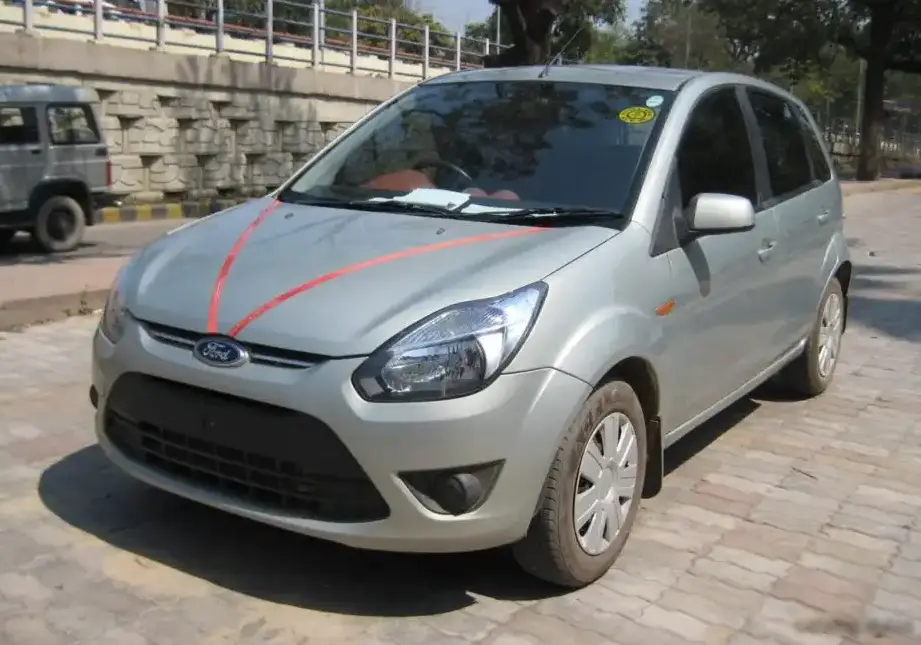
The Ford Figo I 1.4 Duratorq (69 hp) was a subcompact hatchback produced by Ford between March 2010 and October 2012. It represented an entry-level offering within the first generation Figo lineup, primarily targeted at the price-sensitive Indian automotive market. The Figo, built on Ford’s B-platform, was designed to compete with established players like the Maruti Suzuki Swift and Hyundai i10, offering a blend of affordability, fuel efficiency, and practicality. This particular variant, with its 1.4-liter Duratorq diesel engine and five-speed manual transmission, aimed to provide economical transportation for urban commuters and first-time car buyers.
Technical Specifications
| Brand | Ford |
| Model | Figo |
| Generation | Figo I |
| Type (Engine) | 1.4 Duratorq (69 Hp) |
| Start of production | March, 2010 |
| End of production | October, 2012 |
| Powertrain Architecture | Internal Combustion engine |
| Body type | Hatchback |
| Seats | 5 |
| Doors | 5 |
| Fuel Type | Diesel |
| Emission standard | BS-IV |
| Weight-to-power ratio | 15.8 kg/Hp, 63.3 Hp/tonne |
| Weight-to-torque ratio | 6.8 kg/Nm, 146.8 Nm/tonne |
| Power | 69 Hp @ 4000 rpm |
| Power per litre | 49.3 Hp/l |
| Torque | 160 Nm @ 2000 rpm (118.01 lb.-ft. @ 2000 rpm) |
| Engine layout | Front, Transverse |
| Engine Model/Code | Duratorq |
| Engine displacement | 1399 cm3 (85.37 cu. in.) |
| Number of cylinders | 4 |
| Engine configuration | Inline |
| Number of valves per cylinder | 2 |
| Fuel injection system | Diesel Commonrail |
| Engine aspiration | Turbocharger, Intercooler |
| Valvetrain | SOHC |
| Engine oil capacity | 3.8 l (4.02 US qt | 3.34 UK qt) |
| Coolant | 5.5 l (5.81 US qt | 4.84 UK qt) |
| Kerb Weight | 1090-1130 kg (2403.04 – 2491.22 lbs.) |
| Trunk (boot) space – minimum | 284 l (10.03 cu. ft.) |
| Fuel tank capacity | 45 l (11.89 US gal | 9.9 UK gal) |
| Length | 3795 mm (149.41 in.) |
| Width | 1680 mm (66.14 in.) |
| Height | 1427 mm (56.18 in.) |
| Wheelbase | 2489 mm (97.99 in.) |
| Ride height (ground clearance) | 168 mm (6.61 in.) |
| Minimum turning circle (turning diameter) | 9.8 m (32.15 ft.) |
| Drivetrain Architecture | The Internal combustion engine (ICE) drives the front wheels of the vehicle. |
| Drive wheel | Front wheel drive |
| Number of gears and type of gearbox | 5 gears, manual transmission |
| Front suspension | Independent type McPherson |
| Rear suspension | Coil spring, Torsion |
| Front brakes | Ventilated discs |
| Rear brakes | Drum |
| Assisting systems | ABS (Anti-lock braking system) |
| Steering type | Steering rack and pinion |
| Power steering | Hydraulic Steering |
| Tires size | 175/65 R14 |
| Wheel rims size | 14 |
Powertrain & Engine Architecture
The heart of the Figo 1.4 Duratorq was the Duratorq-TDI engine, a 1.4-liter inline-four cylinder diesel. This engine, part of Ford’s Duratorq family, was known for its robust construction and relatively simple design. It featured a single overhead camshaft (SOHC) valvetrain with two valves per cylinder. The engine utilized a diesel commonrail direct injection system, which improved fuel atomization and combustion efficiency compared to older mechanical injection systems. A turbocharger with an intercooler was employed to boost power output and improve torque across a wider RPM range. The engine code for this specific configuration is often referenced as Dw5, a PSA-Ford joint venture engine. The five-speed manual transmission was the sole gearbox option for this variant, chosen for its cost-effectiveness and fuel efficiency. The transmission featured a conventional shift linkage and was geared towards maximizing fuel economy rather than outright performance.
Driving Characteristics
The 69 hp output of the 1.4 Duratorq engine, coupled with the five-speed manual transmission, resulted in a driving experience focused on practicality and fuel economy. Acceleration was modest, with a 0-60 mph time estimated to be around 14-16 seconds. The engine produced its peak torque of 160 Nm (118 lb-ft) at 2000 rpm, providing adequate pulling power for everyday driving conditions, including city traffic and highway cruising. The gear ratios were relatively tall, further emphasizing fuel efficiency. Compared to the higher-output versions of the Figo (which were not widely available in all markets), this variant felt noticeably slower, particularly when fully loaded or climbing hills. However, the engine was surprisingly refined for its size and displacement, with relatively low levels of noise and vibration.
Equipment & Trim Levels
The 1.4 Duratorq variant of the Figo typically represented the base trim level. Standard equipment generally included power steering, air conditioning, and basic instrumentation. Interior upholstery was typically cloth, with a functional but spartan design. The dashboard featured a simple layout with easy-to-use controls. Optional extras, depending on the market and year, could include power windows, central locking, and an audio system. Safety features were also basic, typically limited to ABS (Anti-lock Braking System) and driver and passenger airbags. The focus was on providing essential features at an affordable price point.
Chassis & Braking
The Figo I utilized a McPherson strut independent suspension setup at the front, providing a comfortable ride and decent handling characteristics. The rear suspension employed a coil spring and torsion beam arrangement, which was cost-effective and space-efficient. Braking duties were handled by ventilated discs at the front and drum brakes at the rear. The braking system, while adequate for the vehicle’s weight and performance, lacked the stopping power of more sophisticated setups found in higher-end vehicles. The hydraulic steering provided reasonable feedback and ease of use, although it lacked the precision of more modern electric power steering systems.
Market Reception & Comparison
The Ford Figo 1.4 Duratorq was generally well-received in the Indian market as an affordable and fuel-efficient hatchback. Critics praised its robust build quality and practical interior. However, the engine’s limited power output was often cited as a drawback, particularly for drivers accustomed to more powerful vehicles. Compared to the petrol-powered Figo variants, the 1.4 Duratorq offered significantly better fuel economy, making it a popular choice for drivers covering long distances. Against competitors like the Maruti Suzuki Swift and Hyundai i10, the Figo offered a compelling value proposition, particularly in terms of its diesel engine option.
Legacy
The Ford Figo I 1.4 Duratorq, while not a performance icon, established a solid reputation for reliability and fuel efficiency. The Duratorq engine itself proved to be a durable and long-lasting unit, with many examples still on the road today. In the used car market, this variant remains a popular choice for budget-conscious buyers seeking a dependable and economical hatchback. Maintenance costs are generally low, and spare parts are readily available. The Figo’s success in India paved the way for subsequent generations of the model, further solidifying Ford’s presence in the Indian automotive market.