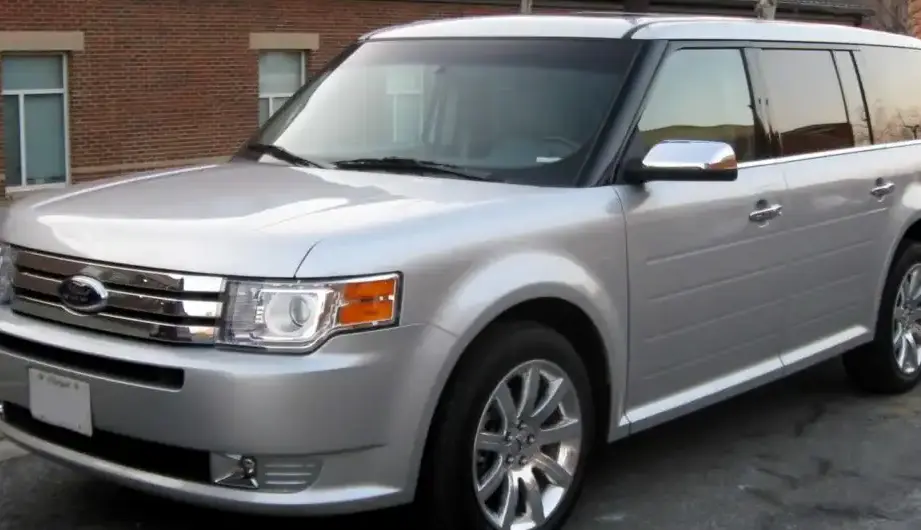
The Ford Flex 3.5, equipped with a 262 horsepower engine and automatic transmission, was a distinctive American SUV produced from 2008 to 2012. Representing a departure from traditional SUV styling, the Flex aimed to blend the practicality of a minivan with the aesthetic appeal of a crossover. This particular variant, powered by the Duratec 35 V6, occupied a mid-range position within the Flex lineup, offering a balance of power, space, and features. It was a key component of Ford’s effort to revitalize its SUV offerings during a period of shifting consumer preferences.
Technical Specifications
| Brand | Ford |
| Model | Flex |
| Generation | Flex |
| Type (Engine) | 3.5 (262 Hp) Automatic |
| Start of production | 2008 |
| End of production | 2012 |
| Powertrain Architecture | Internal Combustion engine |
| Body type | SUV |
| Seats | 6-7 |
| Doors | 5 |
| Fuel consumption (economy) – urban | 13.8 l/100 km (17 US mpg, 20.5 UK mpg, 7.2 km/l) |
| Fuel consumption (economy) – extra urban | 9.8 l/100 km (24 US mpg, 28.8 UK mpg, 10.2 km/l) |
| Fuel consumption (economy) – combined | 12.4 l/100 km (19 US mpg, 22.8 UK mpg, 8.1 km/l) |
| Fuel Type | Petrol (Gasoline) |
| Maximum speed | 185 km/h (114.95 mph) |
| Emission standard | Euro 4 |
| Power | 262 Hp @ 6250 rpm |
| Power per litre | 74.9 Hp/l |
| Torque | 336 Nm @ 4500 rpm (247.82 lb.-ft. @ 4500 rpm) |
| Engine layout | Front, Transverse |
| Engine Model/Code | Duratec 35 |
| Engine displacement | 3496 cm3 (213.34 cu. in.) |
| Number of cylinders | 6 |
| Engine configuration | V-engine |
| Compression ratio | 10.3:1 |
| Number of valves per cylinder | 4 |
| Fuel injection system | Multi-port manifold injection |
| Engine aspiration | Naturally aspirated engine |
| Valvetrain | DOHC |
| Engine oil capacity | 5.2 l (5.49 US qt | 4.58 UK qt) |
| Coolant | 12.5 l (13.21 US qt | 11 UK qt) |
| Trunk (boot) space – minimum | 566 l (19.99 cu. ft.) |
| Fuel tank capacity | 71 l (18.76 US gal | 15.62 UK gal) |
| Length | 5130 mm (201.97 in.) |
| Width | 2032 mm (80 in.) |
| Height | 1727 mm (67.99 in.) |
| Wheelbase | 2995 mm (117.91 in.) |
| Front track | 1661 mm (65.39 in.) |
| Rear (Back) track | 1661 mm (65.39 in.) |
| Ride height (ground clearance) | 150 mm (5.91 in.) |
| Drivetrain Architecture | The Internal combustion engine (ICE) drives the front wheels of the vehicle. |
| Drive wheel | Front wheel drive |
| Number of gears and type of gearbox | 6 gears, automatic transmission |
| Front brakes | Ventilated discs |
| Rear brakes | Disc |
| Assisting systems | ABS (Anti-lock braking system) |
| Tires size | 235/60 R17 |
| Wheel rims size | 17 |
Powertrain & Engine Architecture
The heart of the Ford Flex 3.5 was the Duratec 35 engine, a 3.5-liter naturally aspirated V6. This engine, part of Ford’s Duratec family, featured a 60-degree V-angle and a cast aluminum block with cast iron cylinder liners. It utilized a multi-port fuel injection system, delivering fuel directly into the intake ports, and a double overhead camshaft (DOHC) valvetrain with four valves per cylinder. This configuration allowed for efficient combustion and a relatively broad torque curve. The engine’s 262 horsepower and 247.82 lb-ft of torque were respectable for its time, providing adequate acceleration for a vehicle of the Flex’s size and weight. Paired with a six-speed automatic transmission, the powertrain aimed for smooth and efficient operation. The transmission was calibrated for comfortable cruising and everyday driving, rather than aggressive performance.
Driving Characteristics
The Flex 3.5 Automatic offered a comfortable and composed driving experience. While not a performance-oriented vehicle, the 3.5-liter V6 provided sufficient power for merging onto highways and passing other vehicles. The automatic transmission, while smooth, wasn’t particularly quick to downshift, resulting in a slightly less responsive feel compared to models equipped with the optional EcoBoost turbocharged engine or a manual transmission. The six-speed automatic was geared for fuel efficiency, with taller gear ratios in the upper gears. This contributed to reasonable highway fuel economy but could sometimes feel strained when accelerating uphill or with a full load of passengers. The front-wheel-drive configuration provided predictable handling in most conditions, although it lacked the all-weather capability of available all-wheel-drive models.
Equipment & Trim Levels
The Flex 3.5 Automatic typically came standard with features such as air conditioning, power windows and locks, a basic audio system, and cloth upholstery. Higher trim levels, such as the Limited and SEL, added features like leather upholstery, heated front seats, a premium audio system, and a power liftgate. Optional extras included a navigation system, a rear-seat entertainment system, and a panoramic sunroof. The interior design of the Flex was characterized by its boxy shape, which maximized interior space. The second-row seats could be configured as either a bench seat or captain’s chairs, allowing for flexible seating arrangements. The third-row seats were relatively spacious for a vehicle in this class, making the Flex a viable option for families.
Chassis & Braking
The Ford Flex utilized a unibody construction, providing a good balance of strength and rigidity. The suspension consisted of independent front struts and a multi-link rear suspension. This setup aimed to deliver a comfortable ride while maintaining reasonable handling characteristics. The Flex 3.5 came equipped with ventilated front disc brakes and solid rear disc brakes. The anti-lock braking system (ABS) was standard, enhancing braking performance and stability. The 17-inch wheels and 235/60 R17 tires provided adequate grip in most conditions. The Flex’s relatively high center of gravity and front-wheel-drive configuration meant that it wasn’t a particularly sporty vehicle, but the suspension was well-tuned for absorbing bumps and providing a comfortable ride.
Market Reception & Comparison
The Ford Flex received generally positive reviews from critics, who praised its spacious interior, comfortable ride, and distinctive styling. However, some reviewers criticized its fuel economy and the lack of a more powerful engine option. Compared to other SUVs in its class, such as the Honda Pilot and Toyota Highlander, the Flex offered a more unique and polarizing design. The 3.5-liter V6 engine provided adequate power for most drivers, but it wasn’t as fuel-efficient as the V6 engines offered in some competing models. The Flex’s fuel economy of 19 mpg combined was considered average for its time. The Flex 3.5 Automatic was positioned as a practical and family-friendly SUV, appealing to buyers who prioritized space and comfort over performance.
Legacy
The Ford Flex, while discontinued in 2012, remains a popular choice among used car buyers who appreciate its unique styling and spacious interior. The Duratec 35 engine, when properly maintained, is known for its reliability. Common maintenance items include regular oil changes, spark plug replacements, and coolant flushes. The six-speed automatic transmission is also generally reliable, but it’s important to ensure that it receives regular fluid changes. The Flex’s boxy shape and distinctive design have made it a cult favorite among some car enthusiasts. Today, well-maintained examples of the Flex 3.5 Automatic can be found for relatively affordable prices, making it a compelling option for buyers looking for a spacious and comfortable SUV.