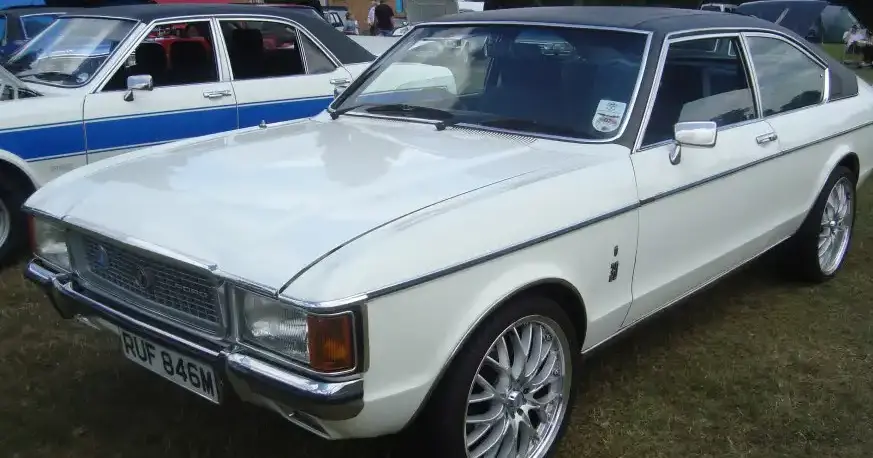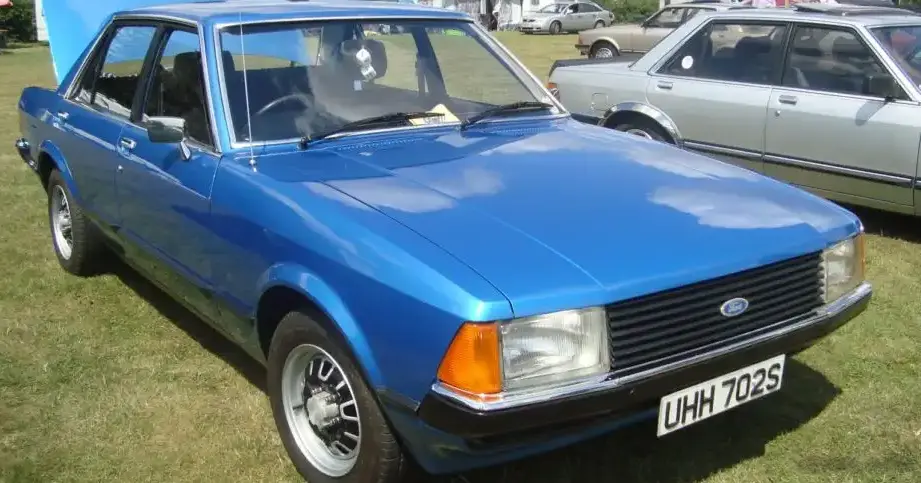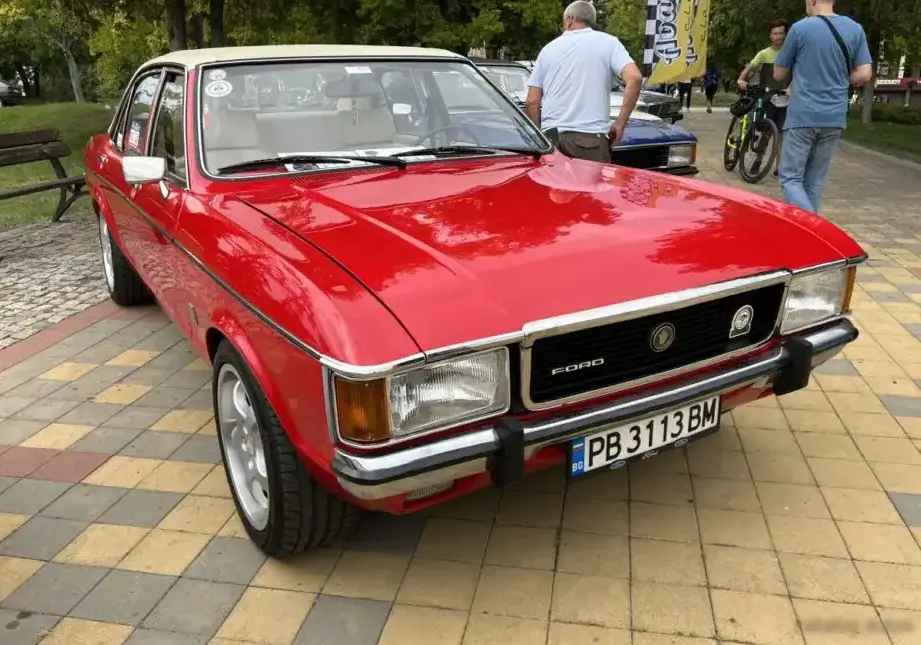
The Ford Granada 1.7L (75 hp) was an entry-level variant of the first-generation Granada, produced between 1972 and 1975. Introduced as a more affordable option within the Granada range, it aimed to provide comfortable, spacious family motoring to a wider audience. The Granada, designated GGTL and GGFL depending on market, represented a significant departure for Ford of Britain, moving away from the traditional Consul and Zephyr models towards a more modern, internationally-focused design. This 1.7L model served as the base trim, offering a balance between practicality and economy, though it lacked the performance of its larger-engined siblings.
Technical Specifications
| Brand | Ford |
| Model | Granada |
| Generation | Granada (GGTL, GGFL) |
| Type (Engine) | 1.7L (75 hp) |
| Start of Production | 1972 |
| End of Production | 1975 |
| Powertrain Architecture | Internal Combustion Engine |
| Body Type | Sedan |
| Fuel Type | Petrol (Gasoline) |
| Power | 75 hp |
| Engine Aspiration | Naturally Aspirated |
Powertrain & Engine Architecture
The Granada 1.7L was powered by the Ford Essex engine, specifically the 1699cc version. This engine, part of the Essex V4 family, was a 60-degree V4 configuration, notable for its relatively smooth operation compared to inline four-cylinder engines. While not a true V-engine in terms of firing order, the 60-degree layout helped to reduce vibrations. The 1.7L version featured a single overhead camshaft (SOHC) and utilized a single Zenith 36mm downdraft carburetor for fuel delivery. This carburetor, while simple and reliable, wasn’t known for its precise fuel metering, contributing to slightly higher fuel consumption compared to later fuel-injected engines. The engine produced 75 horsepower at 5000 rpm and approximately 109 lb-ft of torque at 3000 rpm. The transmission offered was typically a four-speed manual, but a three-speed automatic transmission (Ford C4) was also available, though less common with this engine. The automatic transmission, while providing convenience, noticeably impacted acceleration and fuel economy.
Driving Characteristics
The 1.7L Granada, particularly when equipped with the automatic transmission, offered a comfortable but unhurried driving experience. Acceleration was modest, taking around 14-16 seconds to reach 60 mph. The engine felt strained when pushed hard, especially when fully loaded with passengers and luggage. The automatic transmission’s gear ratios were geared towards economy rather than performance, resulting in a noticeable delay during kickdown. The manual transmission version offered a more engaging driving experience, allowing the driver to better utilize the engine’s limited power. Handling was typical of large sedans of the era – comfortable and stable, but not particularly sporty. The suspension, consisting of independent front suspension with MacPherson struts and a live axle rear suspension with leaf springs, prioritized ride comfort over sharp handling. Steering was power-assisted, making maneuvering easy, but lacked feedback.
Equipment & Trim Levels
The 1.7L Granada represented the entry point to the Granada range, and as such, its standard equipment level was relatively basic. Standard features typically included cloth upholstery, a basic instrument panel with speedometer, fuel gauge, and temperature gauge, and manually operated windows and door locks. Central locking and electric windows were not typically offered on this base model. The interior trim was generally functional and durable, but lacked the refinement of higher-spec Granadas. Optional extras included a radio, heater, and upgraded upholstery. The exterior trim was also fairly basic, with minimal chrome detailing. The 1.7L was often identified by its smaller engine badge and simpler wheel covers.
Chassis & Braking
The Granada’s chassis was a robust body-on-frame construction, providing a solid and durable platform. The front suspension utilized MacPherson struts with anti-roll bar, while the rear suspension employed a live axle with leaf springs. Braking on the 1.7L Granada typically consisted of disc brakes on the front wheels and drum brakes on the rear wheels. The braking system was hydraulically operated, but lacked power assistance in the base model, requiring a reasonable amount of pedal effort. The drum brakes on the rear wheels were adequate for normal driving conditions, but could fade under heavy use. The steering was a recirculating ball system, offering relatively light steering effort but lacking precision.
Market Reception & Comparison
The Ford Granada 1.7L was generally well-received as an affordable and practical family car. Critics acknowledged its spacious interior and comfortable ride, but noted its lack of performance. Compared to the larger-engined Granadas (2.0L, 2.8L, and 3.0L), the 1.7L felt underpowered, particularly when fully loaded. The 2.0L version, while more expensive, offered a significant improvement in performance and was often considered a more sensible choice. The 1.7L’s fuel economy was reasonable for the time, averaging around 25-30 mpg, but was still lower than smaller, more modern cars. Reliability was generally good, although the carburetor required periodic adjustment and maintenance. The automatic transmission version was often criticized for its sluggish performance and reduced fuel economy.
Legacy
The Ford Granada 1.7L, while not the most desirable version of the Granada, played an important role in making the model accessible to a wider range of buyers. It established the Granada as a popular and reliable family car in the UK and Europe. Today, the 1.7L Granada is a relatively rare sight on the road, and well-maintained examples are becoming increasingly sought after by classic car enthusiasts. The Essex V4 engine, while not known for its outright performance, is considered a durable and relatively easy-to-maintain unit. Parts availability can be a challenge, but a dedicated network of classic Ford parts suppliers exists. The 1.7L Granada represents a snapshot of early 1970s family motoring, offering a comfortable and spacious driving experience with a touch of retro charm. Its simplicity and affordability continue to appeal to those seeking a classic Ford saloon.