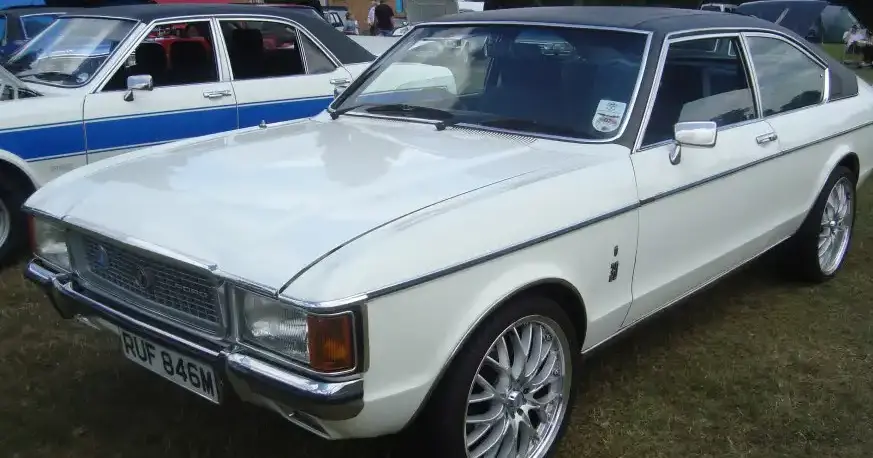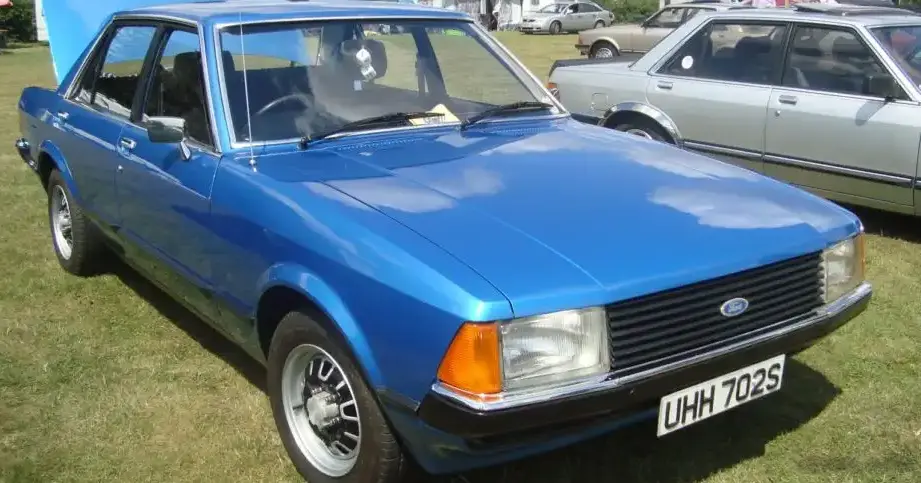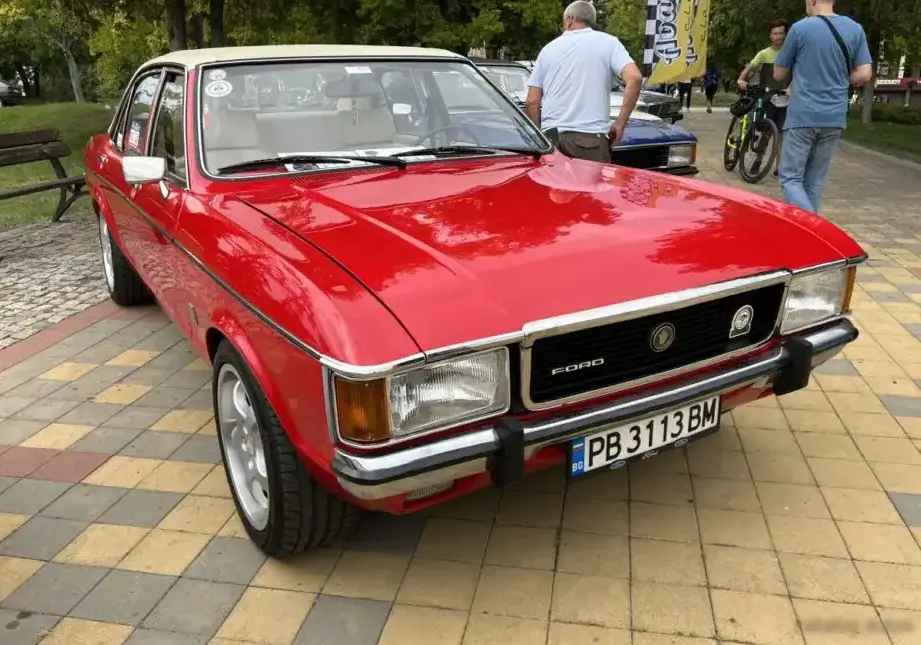
The Ford Granada 3.0, produced between 1972 and 1977, represented a significant step upmarket for Ford of Britain. Part of the GGTL/GGFL series, this variant occupied a premium position within the Granada lineup, offering a blend of comfort, performance, and spaciousness aimed at the executive car market. It was Ford’s attempt to compete with larger, more established British and European saloons. The 3.0-liter engine and automatic transmission combination was positioned as a luxurious and convenient option, appealing to buyers who prioritized ease of driving over outright sporting performance. The Granada, in general, was a crucial model for Ford, establishing a new standard for British-built large family cars.
Technical Specifications
| Brand | Ford |
| Model | Granada |
| Generation | Granada (GGTL,GGFL) |
| Type (Engine) | 3.0 (137 Hp) |
| Start of production | 1972 |
| End of production | 1977 |
| Powertrain Architecture | Internal Combustion engine |
| Body type | Sedan |
| Seats | 5 |
| Doors | 4 |
| Fuel consumption (urban) | 20 l/100 km (11.8 US mpg, 14.1 UK mpg, 5 km/l) |
| Fuel consumption (extra urban) | 10 l/100 km (23.5 US mpg, 28.2 UK mpg, 10 km/l) |
| Fuel consumption (combined) | 16 l/100 km (14.7 US mpg, 17.7 UK mpg, 6.3 km/l) |
| Fuel Type | Petrol (Gasoline) |
| Acceleration 0 – 100 km/h | 9 sec |
| Acceleration 0 – 62 mph | 9 sec |
| Acceleration 0 – 60 mph | 8.6 sec |
| Maximum speed | 160 km/h (99.42 mph) |
| Weight-to-power ratio | 10.3 kg/Hp, 97.2 Hp/tonne |
| Power | 137 Hp @ 4500 rpm |
| Power per litre | 45.7 Hp/l |
| Engine layout | Front, Longitudinal |
| Engine Model/Code | V6 |
| Engine displacement | 2999 cm3 (183.01 cu. in.) |
| Number of cylinders | 6 |
| Engine configuration | V-engine |
| Number of valves per cylinder | 2 |
| Fuel injection system | Carburettor |
| Engine aspiration | Naturally aspirated engine |
| Kerb Weight | 1410 kg (3108.52 lbs.) |
| Drivetrain Architecture | Rear wheel drive |
| Drive wheel | Rear wheel drive |
| Number of gears and type of gearbox | 4 gears, automatic transmission |
| Front suspension | Independent coil spring |
| Rear suspension | Independent coil spring |
| Front brakes | Disc |
| Rear brakes | Drum |
| Power steering | Hydraulic Steering |
| Tires size | 185/70 R14 |
| Wheel rims size | 6J x 14 ET38 5×112 |
Powertrain & Engine Architecture
The heart of the Granada 3.0 was the Ford Essex V6 engine, a 2,999 cc (183.01 cu. in.) naturally aspirated unit. This engine, designated as the ‘Essex’ due to its manufacturing location, featured a 60-degree V-configuration with two valves per cylinder. The 3.0-liter version produced 137 horsepower at 4,500 rpm. Fuel delivery was managed by a carburettor, a common setup for the era, though less efficient than fuel injection. The engine’s longitudinal mounting and rear-wheel-drive configuration were typical of larger European saloons of the time. Paired with the V6 was a four-speed automatic transmission, offering smooth, if not particularly rapid, gear changes. This transmission was a Borg-Warner unit, known for its durability but also for its relatively conservative gear ratios, prioritizing comfort over performance.
Driving Characteristics
The Granada 3.0 Automatic offered a comfortable and refined driving experience. The automatic transmission, while not offering manual control, provided effortless cruising. Acceleration to 60 mph took around 8.6 seconds, which was respectable for the early 1970s, but noticeably slower than the manual transmission versions or the later 3.0S models. The automatic’s gear ratios were geared towards relaxed highway driving, meaning the engine didn’t rev as freely as it could. The car’s weight of 1,410 kg (3,108.52 lbs) also contributed to a less agile feel compared to lighter, more sporting saloons. However, the independent coil spring suspension on all four wheels provided a comfortable ride, absorbing bumps and imperfections in the road effectively.
Equipment & Trim Levels
The Granada 3.0 Automatic typically came well-equipped for its time. Standard features included comfortable cloth upholstery, woodgrain interior trim, and a comprehensive instrument panel. Power steering was standard, making maneuvering the large saloon easier. Optional extras included a vinyl roof, upgraded stereo systems, and air conditioning. The 3.0 model was generally positioned as a mid-to-high trim level, offering more luxury than the base 2.0-liter models but falling short of the fully-equipped 3.0S. The interior layout was functional and spacious, with ample room for five passengers and a reasonably sized boot.
Chassis & Braking
The Granada featured a robust chassis with independent coil spring suspension at both the front and rear. This setup provided a good balance between ride comfort and handling. Braking was accomplished via disc brakes on the front wheels and drum brakes on the rear. While adequate for the car’s weight and performance, the drum brakes on the rear were a point of criticism compared to the all-disc setups found on some competitors. The steering was hydraulic power-assisted, reducing driver effort, particularly at low speeds. The car rode on 185/70 R14 tires, mounted on 6J x 14 inch wheels with a 5×112 bolt pattern.
Market Reception & Comparison
The Ford Granada 3.0 Automatic was generally well-received by the motoring press. Critics praised its comfortable ride, spacious interior, and refined engine. However, the automatic transmission was sometimes criticized for its lack of responsiveness and its impact on fuel economy. Fuel consumption figures of around 16 l/100 km (14.7 US mpg) were considered relatively high, even for the early 1970s. Compared to the manual transmission 3.0-liter models, the automatic version offered less engaging driving experience but greater convenience. The 3.0S, with its uprated engine and sportier suspension, was aimed at a more performance-oriented buyer, while the 2.0-liter models catered to those seeking a more economical option.
Legacy
The Ford Granada 3.0 Automatic, while not the most sought-after variant today, remains a popular classic car. The Essex V6 engine is known for its durability, although it can be prone to overheating if not properly maintained. The automatic transmission is generally reliable, but rebuilds can be costly. Finding well-preserved examples is becoming increasingly difficult, as many were used as family cars and subjected to years of wear and tear. Today, the Granada 3.0 Automatic represents a piece of British automotive history, offering a glimpse into a time when large, comfortable saloons were the norm. Its blend of practicality, comfort, and classic styling continues to appeal to enthusiasts and collectors alike. The car’s relative simplicity makes it a viable project for amateur mechanics, and a well-maintained example can provide years of enjoyable motoring.