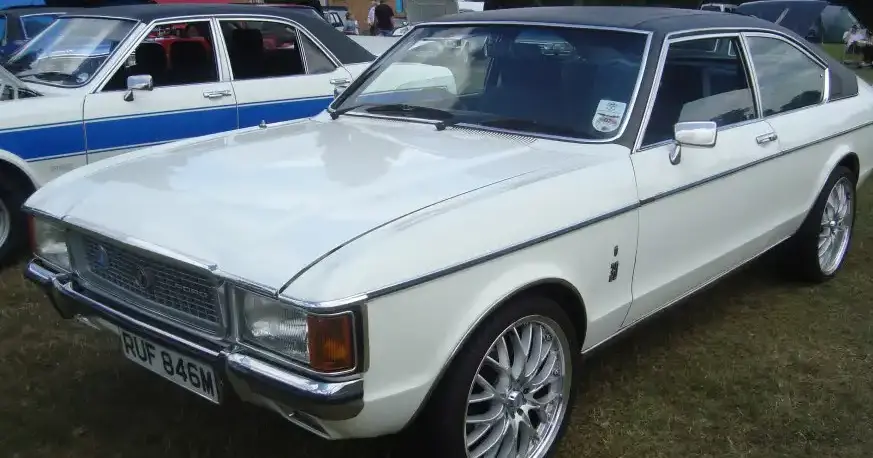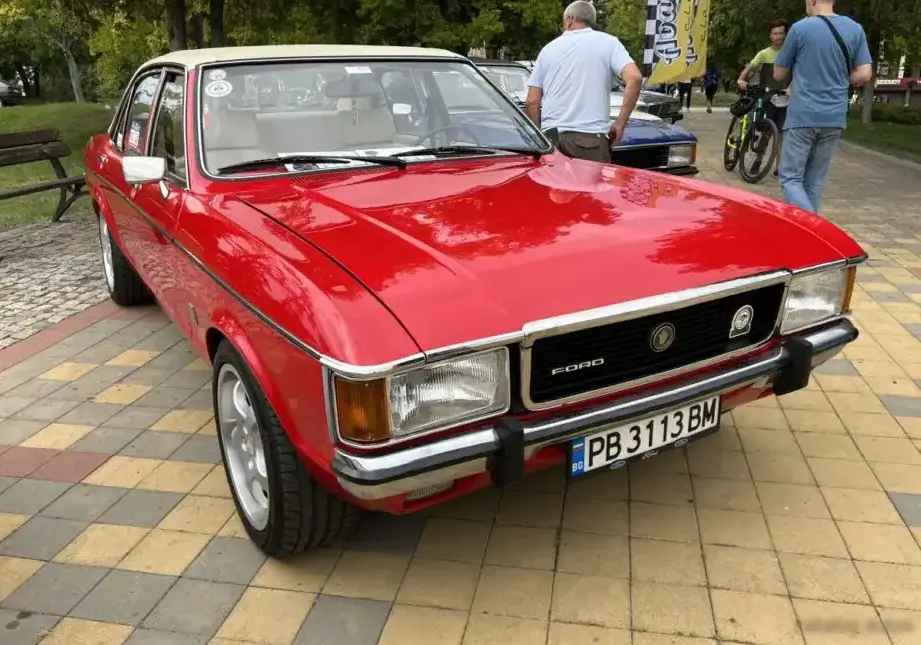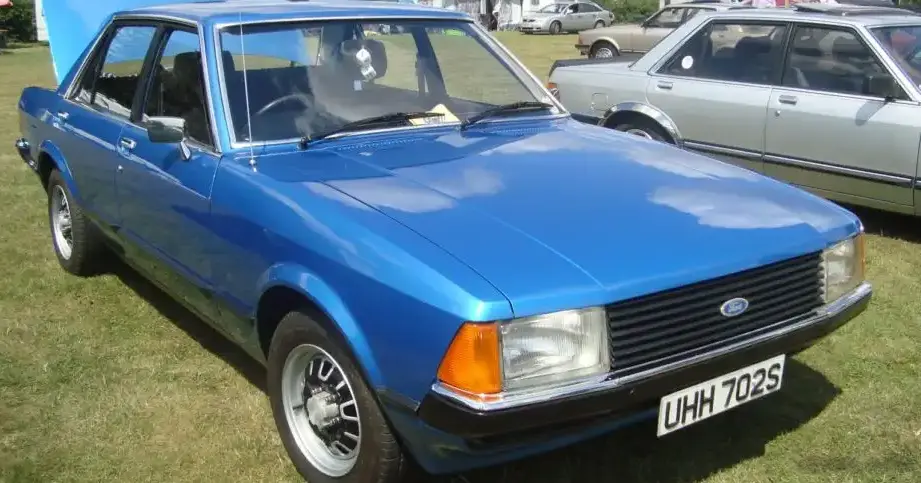
The Ford Granada GU, produced between 1979 and 1985, represented a significant evolution in Ford of Britain’s large family car offerings. Positioned as a more modern and comfortable alternative to the outgoing Ford Zephyr and Zodiac models, the Granada GU aimed to compete with vehicles like the Vauxhall Carlton and Rover SD1. The 2.0-liter (101 hp) variant, while not the most powerful in the Granada range, was a popular choice for buyers seeking a balance between affordability, reasonable performance, and fuel economy. It occupied a mid-range position within the lineup, slotting below the larger displacement V6 engines and above the base 1.6-liter models. This version was primarily sold in the UK and European markets, with limited export to other regions.
Technical Specifications
| Brand | Ford |
| Model | Granada |
| Generation | Granada (GU) |
| Type (Engine) | 2.0 (101 Hp) |
| Start of production | 1979 |
| End of production | 1985 |
| Powertrain Architecture | Internal Combustion engine |
| Body type | Sedan |
| Fuel Type | Petrol (Gasoline) |
| Power | 101 Hp |
| Engine aspiration | Naturally aspirated engine |
| Fuel tank capacity | 62 l / 16.38 US gal / 13.64 UK gal |
| Length | 4630 mm / 182.28 in. |
| Width | 1740 mm / 68.5 in. |
| Height | 1380 mm / 54.33 in. |
| Wheelbase | 2770 mm / 109.06 in. |
| Number of gears and type of gearbox | 4 gears, manual transmission |
Powertrain & Engine Architecture
The 2.0-liter engine in the Granada GU was part of Ford’s ‘Cologne’ engine family, a series of inline-four engines known for their durability and relatively simple design. Specifically, this engine utilized a cast iron block and an aluminum cylinder head. The 101 horsepower output was achieved through a single overhead camshaft (SOHC) valvetrain, operating two valves per cylinder. Fuel delivery was managed by a Bosch K-Jetronic mechanical fuel injection system, a sophisticated system for its time that offered improved fuel efficiency and reduced emissions compared to carbureted engines. The engine’s bore and stroke measured 86.0 mm x 80.3 mm, resulting in a displacement of 1994 cc. While not a high-revving engine, it produced a respectable amount of torque for its size, making it suitable for comfortable cruising and everyday driving. The four-speed manual transmission was a standard offering, providing a relatively direct connection between the engine and the rear wheels.
Driving Characteristics
The 2.0-liter Granada GU offered a driving experience geared towards comfort and practicality rather than outright performance. Acceleration was adequate, with a 0-60 mph time estimated around 11-12 seconds. The four-speed manual gearbox featured relatively widely spaced gear ratios, prioritizing fuel economy at cruising speeds. The engine felt most at home in the mid-range, providing sufficient power for overtaking maneuvers on open roads. Compared to the larger V6 engines available in the Granada range, the 2.0-liter version felt noticeably less powerful, particularly when fully loaded with passengers and luggage. However, the lighter engine weight contributed to improved handling and a more balanced feel in corners. The suspension, consisting of MacPherson struts at the front and a live axle with trailing arms at the rear, provided a comfortable ride, absorbing bumps and imperfections in the road surface effectively.
Equipment & Trim Levels
The 2.0-liter Granada GU typically came equipped with a reasonable level of standard features. Interior upholstery was generally cloth, with options for upgraded velour trim available. The dashboard layout was functional and straightforward, featuring analog gauges for speed, fuel level, coolant temperature, and battery voltage. Power-assisted steering was often included as standard, making the car easier to maneuver in tight spaces. Other common features included a heated rear window, a basic stereo system, and front and rear windscreen wipers. Optional extras included a sunroof, electric windows, central locking, and upgraded sound systems. Trim levels varied slightly depending on the market, but generally, the 2.0-liter model was positioned as a mid-range offering, bridging the gap between the more basic 1.6-liter versions and the more luxurious V6-powered models.
Chassis & Braking
The Granada GU utilized a body-on-frame construction, providing a robust and durable chassis. The front suspension employed MacPherson struts, while the rear suspension featured a live axle with trailing arms and leaf springs. This setup prioritized ride comfort over ultimate handling precision. Braking was initially provided by disc brakes at the front and drum brakes at the rear. Later models often featured disc brakes all around, offering improved stopping power. The steering system was a recirculating ball system, providing a relatively heavy but precise steering feel. Stabilizer bars were fitted to both the front and rear axles to reduce body roll during cornering. The overall chassis design was geared towards providing a comfortable and stable ride, making the Granada GU a suitable long-distance cruiser.
Market Reception & Comparison
The Ford Granada GU 2.0-liter was generally well-received by automotive critics as a practical and reliable family car. It was praised for its comfortable ride, spacious interior, and relatively fuel-efficient engine. However, it was also criticized for its somewhat bland styling and lack of sporting pretensions. Compared to the V6-powered Granadas, the 2.0-liter version offered significantly lower running costs, making it a popular choice for fleet buyers and private individuals seeking a more economical option. Against competitors like the Vauxhall Carlton and Rover SD1, the Granada GU 2.0-liter offered a compelling combination of value, reliability, and practicality. Fuel economy averaged around 25-30 mpg, depending on driving conditions. Reliability was generally good, with the Cologne engine proving to be a durable and long-lasting unit.
Legacy
The Ford Granada GU 2.0-liter has developed a loyal following among classic car enthusiasts. The Cologne engine is known for its robustness and relative ease of maintenance, making it a popular choice for restoration projects. While not a particularly rare or valuable classic, well-maintained examples of the 2.0-liter Granada GU are increasingly sought after by collectors. The car’s simple mechanical design and readily available spare parts contribute to its ongoing appeal. Today, the Granada GU 2.0-liter represents a nostalgic reminder of a bygone era of British motoring, offering a comfortable and reliable driving experience that is increasingly difficult to find in modern cars. Its enduring popularity is a testament to the quality of its engineering and the practicality of its design.