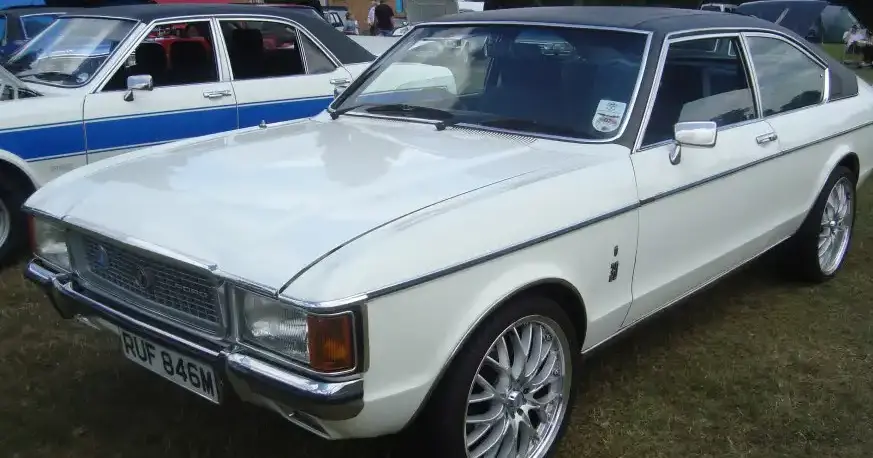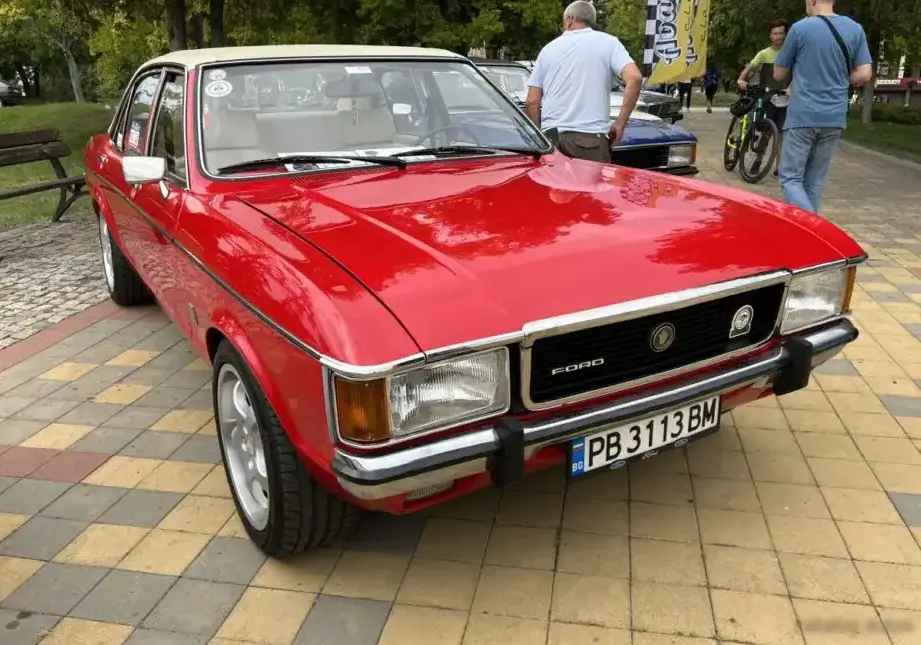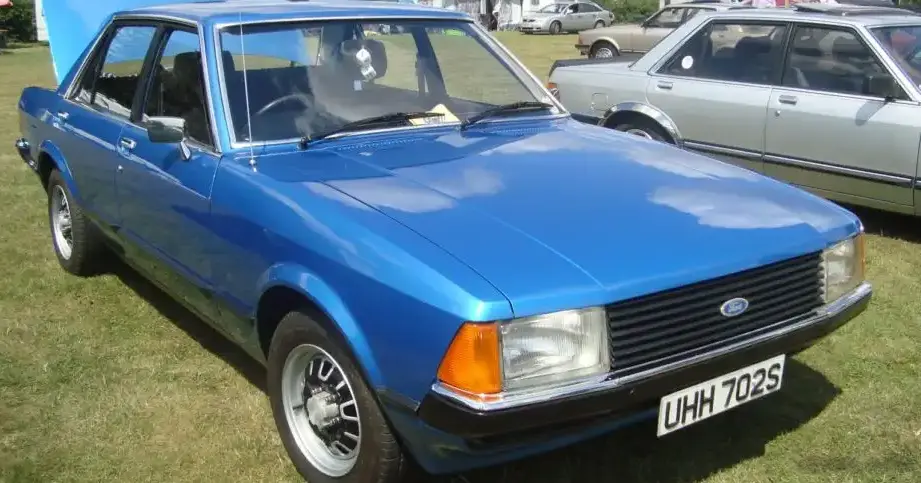
The Ford Granada GU 2.1 D, produced between 1977 and 1982, represented Ford of Britain’s entry into the larger executive car segment with a diesel option. Positioned as the most fuel-efficient variant of the GU Granada range, it catered to drivers prioritizing economy over outright performance. This model occupied the lower end of the Granada lineup, appealing to fleet buyers and private owners seeking a spacious and comfortable saloon with reduced running costs. The GU series, launched in 1977, was a significant redesign of the previous Granada, offering improved refinement and a more modern appearance. The 2.1-liter diesel engine was a key addition, broadening the Granada’s appeal in a market increasingly sensitive to fuel prices.
Technical Specifications
| Brand | Ford |
| Model | Granada |
| Generation | Granada (GU) |
| Type (Engine) | 2.1 D (63 Hp) |
| Start of Production | 1977 |
| End of Production | 1982 |
| Powertrain Architecture | Internal Combustion Engine |
| Body Type | Sedan |
| Fuel Type | Diesel |
| Power | 63 Hp |
| Engine Aspiration | Naturally Aspirated |
| Length | 4630 mm (182.28 in) |
| Width | 1740 mm (68.5 in) |
| Height | 1380 mm (54.33 in) |
| Wheelbase | 2770 mm (109.06 in) |
Powertrain & Engine Architecture
The heart of the Granada 2.1 D was the Ford 2114cc four-cylinder diesel engine. This engine, derived from the earlier 2.0-liter unit, was a naturally aspirated, indirect injection diesel. It utilized a Bosch rotary injection pump, delivering fuel to the pre-combustion chambers. The engine featured a robust cast iron block and cylinder head, designed for longevity and durability. While the 63 horsepower output seems modest by modern standards, it was considered adequate for the Granada’s size and weight, particularly when paired with the available automatic transmission. The engine’s torque characteristics were its strength, providing reasonable pulling power at low engine speeds. The automatic transmission offered with this variant was typically a three-speed unit, chosen for its ease of use and suitability for relaxed cruising. It wasn’t designed for rapid acceleration, but rather for smooth, comfortable progress.
Driving Characteristics
The driving experience in the Granada 2.1 D was defined by its relaxed nature. Acceleration was deliberately unhurried, with a 0-60 mph time estimated to be around 18-20 seconds. The three-speed automatic transmission contributed to this leisurely pace, with relatively wide gear ratios. The engine’s peak torque was available at relatively low RPMs, making it reasonably tractable in everyday driving situations. However, overtaking maneuvers required careful planning. Compared to the petrol-powered Granadas, the 2.1 D felt significantly slower, particularly the larger-engined versions like the 2.8i. The automatic transmission, while convenient, did sap some power compared to the available manual gearbox. The suspension, tuned for comfort, provided a reasonably smooth ride, absorbing bumps and imperfections in the road surface effectively. Steering was power-assisted, making it light and easy to maneuver, although lacking in ultimate feel.
Equipment & Trim Levels
The 2.1 D typically occupied a base or mid-range position within the Granada GU lineup. Standard equipment generally included cloth upholstery, a basic instrument panel, and central locking. Power steering was usually standard, reflecting the car’s size and weight. Air conditioning, electric windows, and a more sophisticated stereo system were typically offered as optional extras. Interior trim levels varied depending on the specific market and optional packages selected. The dashboard layout was functional and straightforward, prioritizing ease of use over stylistic flair. The 2.1 D often featured a simpler dashboard compared to the higher-spec models, with fewer wood veneers or chrome accents. The seats were generally comfortable, providing adequate support for long journeys.
Chassis & Braking
The Granada GU utilized a traditional body-on-frame construction, providing a robust and durable chassis. Front suspension consisted of independent wishbones and coil springs, while the rear suspension employed a live axle with leaf springs. This setup prioritized ride comfort over handling precision. Braking systems varied depending on the market and trim level. Lower-spec models, including the 2.1 D, often featured drum brakes on the rear wheels, while higher-spec models received disc brakes all around. Front brakes were typically disc brakes. The braking performance was adequate for the car’s weight and power output, but lacked the stopping power of more modern vehicles. Stabilizer bars were fitted to both the front and rear axles to reduce body roll during cornering.
Market Reception & Comparison
The Ford Granada 2.1 D was generally well-received as a practical and economical executive car. Critics praised its fuel efficiency and comfortable ride, but noted its lack of performance compared to the petrol-powered models. It was often compared to other diesel-powered saloons of the era, such as the Vauxhall Victor/VX4E diesel and the Rover SD1 diesel. The Granada 2.1 D typically offered a better balance of comfort and economy than its rivals. Fuel economy was a key selling point, particularly in the late 1970s and early 1980s when fuel prices were rising. Reliability was generally good, although the diesel engine required regular maintenance to ensure optimal performance. Compared to the 2.0L petrol and the 2.8i versions, the 2.1D was significantly cheaper to run, but offered a considerably slower driving experience.
Legacy
The Ford Granada 2.1 D, while not a performance icon, played a significant role in establishing the Granada as a popular choice for fleet buyers and private owners seeking a spacious and economical executive car. The 2.1-liter diesel engine proved to be a durable and reliable unit, capable of covering high mileages with proper maintenance. Today, the Granada 2.1 D is a relatively rare sight on the roads, but it remains a popular choice among classic car enthusiasts who appreciate its simplicity, durability, and fuel efficiency. Parts availability can be a challenge, but a dedicated network of classic Ford parts suppliers exists. The car’s robust construction and relatively simple mechanicals make it a relatively easy vehicle to maintain and repair for those with the necessary skills and knowledge. The 2.1 D represents a specific era of automotive engineering, prioritizing practicality and economy over outright performance.