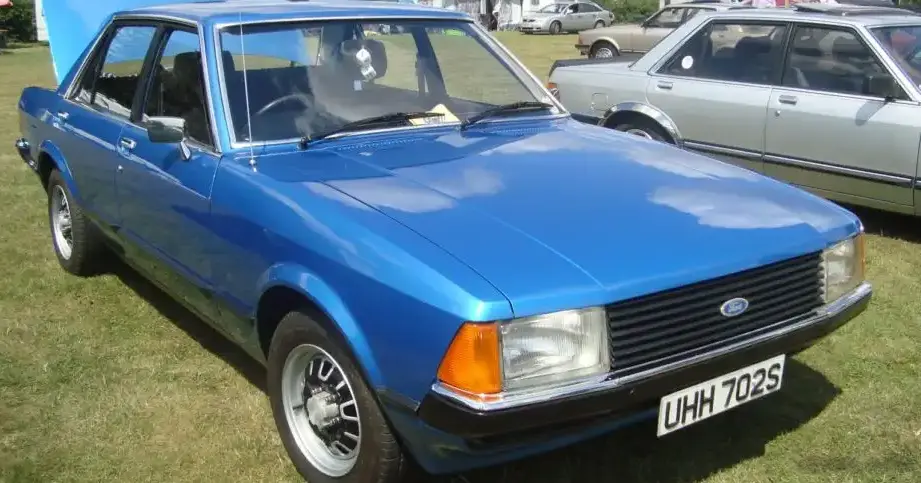
The Ford Granada GU, produced between 1981 and 1985, represented a significant update to Ford of Europe’s large family car. The 2.3-liter variant, developing 112 horsepower, occupied a middle ground within the GU range, positioned as a more affordable and fuel-conscious alternative to the larger V6 engines. This model aimed to balance practicality, comfort, and reasonable performance for the typical family driver in the European market. The GU series itself was a substantial revision of the original Granada, offering improved aerodynamics, interior space, and a more modern driving experience. It was a key player in Ford’s lineup during a period of increasing competition from German and Japanese manufacturers.
Technical Specifications
| Brand | Ford |
| Model | Granada |
| Generation | Granada (GU) |
| Type (Engine) | 2.3 (112 Hp) |
| Start of Production | 1981 |
| End of Production | 1985 |
| Powertrain Architecture | Internal Combustion Engine |
| Body Type | Sedan |
| Fuel Type | Petrol (Gasoline) |
| Power | 112 Hp |
| Engine Aspiration | Naturally Aspirated |
| Length | 4630 mm (182.28 in) |
| Width | 1740 mm (68.5 in) |
| Height | 1380 mm (54.33 in) |
| Wheelbase | 2770 mm (109.06 in) |
Powertrain & Engine Architecture
The 2.3-liter engine in the Granada GU was a four-cylinder, inline configuration, designated as the Cologne 2.3. This engine, part of the Cologne engine family, was a mainstay in Ford of Europe’s vehicles for many years. It featured a cast iron block and an aluminum cylinder head. Fuel delivery was managed by a Bosch K-Jetronic mechanical fuel injection system, a sophisticated system for its time that offered improved fuel efficiency and reduced emissions compared to carbureted engines. The engine utilized a single overhead camshaft (SOHC) design, operating two valves per cylinder. The 112 horsepower output was achieved at approximately 5500 rpm, with peak torque of around 134 lb-ft at 3500 rpm. The engine was typically paired with a four-speed automatic transmission, although a five-speed manual was also available. The automatic transmission, a Ford-built unit, was designed for smooth operation and reliability, prioritizing comfort over outright performance.
Driving Characteristics
The 2.3-liter automatic Granada offered a comfortable, if not particularly exhilarating, driving experience. Acceleration was adequate for everyday driving, with a 0-60 mph time estimated around 11-12 seconds. The automatic transmission, while smooth, did contribute to some power loss, making the car feel less responsive than the manual transmission versions. Gear ratios were geared towards fuel economy and cruising comfort, rather than rapid acceleration. The engine was relatively quiet and refined for a four-cylinder unit, providing a pleasant driving environment. Compared to the larger 2.8-liter V6 models, the 2.3 felt noticeably less powerful, especially when fully loaded or tackling steep inclines. However, the lighter weight of the four-cylinder engine did contribute to slightly improved handling and fuel economy. The steering was power-assisted, providing light and easy maneuverability, but lacked the precision of more modern systems.
Equipment & Trim Levels
The 2.3-liter Granada GU typically came equipped with a reasonable level of standard features. These included power steering, central locking, and a basic stereo system. Interior upholstery was typically cloth, available in a range of colors and patterns. The dashboard layout was functional and straightforward, with clearly labeled controls. Optional extras included a sunroof, upgraded stereo systems, and air conditioning. Higher trim levels, such as the ‘GL’ and ‘Ghia’, added features like electric windows, upgraded interior trim, and alloy wheels. The Ghia models, in particular, were positioned as the premium offering, with a more luxurious interior and a higher level of standard equipment. The 2.3L trim was generally considered a mid-range offering, appealing to buyers who wanted a comfortable and well-equipped car without the expense of the larger engine options.
Chassis & Braking
The Granada GU utilized a traditional body-on-frame construction, providing a robust and durable chassis. The front suspension featured independent coil springs and MacPherson struts, while the rear suspension employed a live axle with leaf springs. This setup provided a comfortable ride, but wasn’t particularly sporty in terms of handling. Braking was initially equipped with front disc brakes and rear drum brakes on the base models. Higher trim levels, and later production years, often featured all-round disc brakes, offering improved stopping power. Power assistance was standard for the brakes. Stabilizer bars were fitted to both the front and rear axles to reduce body roll during cornering. The steering system was a recirculating ball system, providing a relatively light steering feel but lacking the precision of rack and pinion steering.
Market Reception & Comparison
The Ford Granada GU 2.3 was generally well-received by critics as a practical and comfortable family car. It was praised for its fuel efficiency, especially compared to the V6 models, and its smooth-shifting automatic transmission. However, some critics noted that the engine lacked the power to fully exploit the car’s size and weight. Compared to its rivals, such as the Opel/Vauxhall Commodore and the BMW 5 Series, the Granada offered a good balance of price, comfort, and practicality. The 2.3-liter engine provided a noticeable improvement in fuel economy over the V6 options, making it a popular choice for drivers who covered long distances. Reliability was generally good, although the K-Jetronic fuel injection system could be prone to issues if not properly maintained. The Granada’s relatively simple mechanical design made it relatively easy and affordable to repair.
Legacy
The Ford Granada GU 2.3, while not a performance icon, remains a fondly remembered classic among enthusiasts. The Cologne 2.3 engine proved to be a durable and reliable unit, and many examples are still on the road today. The car’s simple mechanical design and readily available parts make it a relatively easy vehicle to maintain and restore. In the used car market, the 2.3-liter automatic Granada represents a relatively affordable entry point into classic Ford ownership. While not as sought-after as the V6 models, it offers a comfortable and practical classic car experience. The GU series, as a whole, marked a significant step forward for Ford of Europe, and the 2.3-liter variant played a crucial role in appealing to a wider range of buyers.