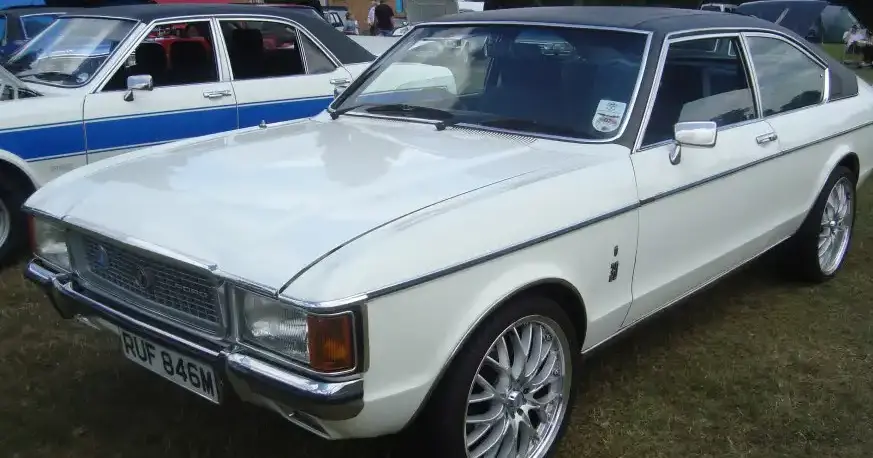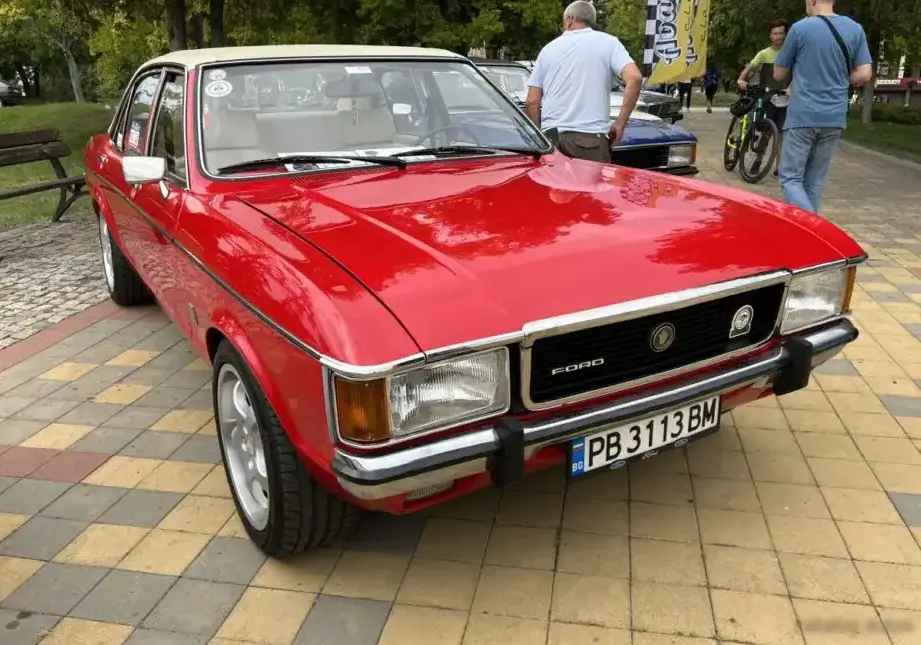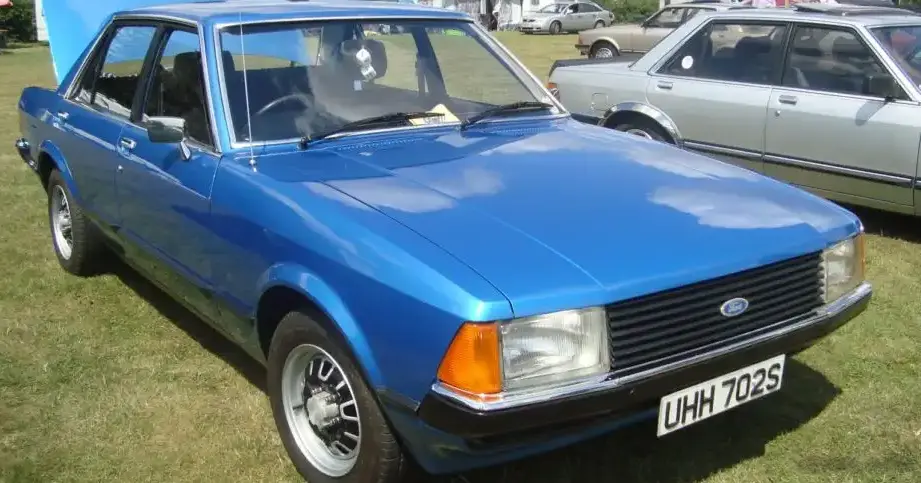
The Ford Granada GU, produced between 1977 and 1985, represented Ford of Britain’s ambitious attempt to create a large, comfortable, and technologically advanced executive car to compete with rivals like the Rover SD1 and Opel Commodore. The 2.8-liter variant, developing 135 horsepower, occupied a significant position within the Granada range, offering a balance between performance and affordability. It was positioned as a step up from the smaller-engined models, appealing to buyers who desired a more refined driving experience without the expense of the top-of-the-line Ghia trim or the V6 options. This generation, known internally as the GU, was a substantial redesign of the original Granada, offering improved space, comfort, and a more modern aesthetic.
Technical Specifications
| Brand | Ford |
| Model | Granada |
| Generation | Granada (GU) |
| Type (Engine) | 2.8 (135 Hp) |
| Start of Production | 1977 |
| End of Production | 1985 |
| Powertrain Architecture | Internal Combustion Engine |
| Body Type | Sedan |
| Fuel Type | Petrol (Gasoline) |
| Power | 135 Hp |
| Engine Aspiration | Naturally Aspirated |
| Length | 4630 mm (182.28 in) |
| Width | 1740 mm (68.5 in) |
| Height | 1380 mm (54.33 in) |
| Wheelbase | 2770 mm (109.06 in) |
Powertrain & Engine Architecture
The 2.8-liter engine, designated the Cologne V6, was a 60-degree V6 engine. While often referred to as a 2.8, its actual displacement was 2792cc (170.3 cubic inches). This engine featured a cast iron block and aluminum cylinder heads, a common configuration for Ford’s V6 engines of the era. Fuel delivery was managed by a Bosch K-Jetronic mechanical fuel injection system, a sophisticated system for its time that offered improved fuel efficiency and reduced emissions compared to carbureted engines. The engine utilized a single overhead camshaft (SOHC) valvetrain, operating two valves per cylinder. The 135 horsepower output was achieved at 5500 rpm, with peak torque of 192 lb-ft (260 Nm) arriving at 3300 rpm. The transmission paired with this engine was typically a four-speed automatic, although a five-speed manual was also available, albeit less common. The automatic transmission was a Ford-built unit, designed to provide smooth and comfortable gear changes, prioritizing refinement over outright performance.
Driving Characteristics
The 2.8-liter Granada offered a comfortable and relaxed driving experience. The automatic transmission, while not particularly sporty, provided seamless gear changes, making it well-suited for long-distance cruising. Acceleration was adequate, with a 0-60 mph time of around 10-11 seconds, placing it firmly in the mid-range of performance for cars of its size and era. Compared to the smaller 2.0-liter four-cylinder Granadas, the 2.8 offered significantly more torque, making overtaking maneuvers easier and less stressful. However, it lacked the outright punch of the larger 3.0-liter V6 models. The gear ratios in the automatic transmission were geared towards fuel economy and comfort, rather than maximizing acceleration. The steering was power-assisted, providing a light and easy feel, but lacked the precision of more modern systems. Overall, the driving experience was geared towards providing a comfortable and refined ride, rather than engaging driving dynamics.
Equipment & Trim Levels
The 2.8-liter Granada was typically offered in L, GL, and Ghia trim levels. The base L trim included features such as cloth upholstery, basic instrumentation, and central locking. The GL trim, which was the most common specification for the 2.8-liter engine, added features like a more comprehensive instrument panel, upgraded interior trim, and a vinyl roof. The Ghia trim, the top-of-the-line model, offered luxurious features such as leather upholstery, wood trim, and additional comfort features. Standard equipment on the 2.8 GL included power steering, a four-speed automatic transmission, and radial tires. Optional extras included air conditioning, a sunroof, and upgraded audio systems. Interior upholstery was typically a durable cloth material in the L and GL trims, while the Ghia models featured high-quality leather. The dashboard layout was functional and straightforward, with clearly labeled controls.
Chassis & Braking
The Granada GU utilized a rear-wheel-drive layout with independent front suspension and a live axle rear suspension. The front suspension featured MacPherson struts with anti-roll bar, while the rear suspension employed leaf springs. The 2.8-liter models typically featured disc brakes on the front wheels and drum brakes on the rear wheels. The braking system was hydraulically assisted, providing adequate stopping power for most driving conditions. Stabilizer bars were fitted to both the front and rear suspension to reduce body roll during cornering. The chassis was robust and well-built, providing a comfortable ride and good handling characteristics. The steering was a recirculating ball system, offering a light and easy feel, but lacking the precision of more modern rack-and-pinion systems.
Market Reception & Comparison
The Ford Granada 2.8 received generally positive reviews from automotive critics. It was praised for its comfortable ride, spacious interior, and refined engine. However, some critics noted that the automatic transmission could feel sluggish at times, and the handling was not as sharp as some of its rivals. Compared to the 2.0-liter models, the 2.8 offered a significant improvement in performance and refinement. However, it was more expensive to run, due to its larger engine and higher fuel consumption. Compared to the 3.0-liter V6 models, the 2.8 offered a good balance between performance and affordability. Fuel economy for the 2.8-liter automatic was typically around 18-22 mpg, depending on driving conditions. Reliability was generally good, although the K-Jetronic fuel injection system could be prone to issues if not properly maintained.
Legacy
The Ford Granada GU 2.8 remains a popular classic car among enthusiasts. The Cologne V6 engine is known for its durability and relatively simple construction, making it a relatively easy engine to maintain. Parts availability is generally good, although some specific components can be difficult to find. The Granada GU 2.8 is often sought after as a comfortable and reliable classic car, offering a taste of 1970s and 1980s British motoring. In the used car market today, well-maintained examples of the 2.8-liter Granada can fetch reasonable prices, reflecting their growing popularity among collectors and enthusiasts. The car represents a significant chapter in Ford’s history, showcasing the company’s commitment to building large, comfortable, and technologically advanced executive cars.