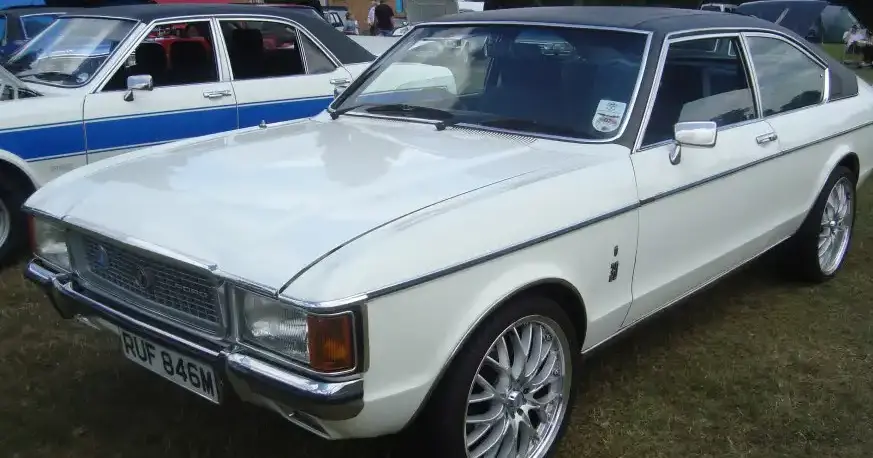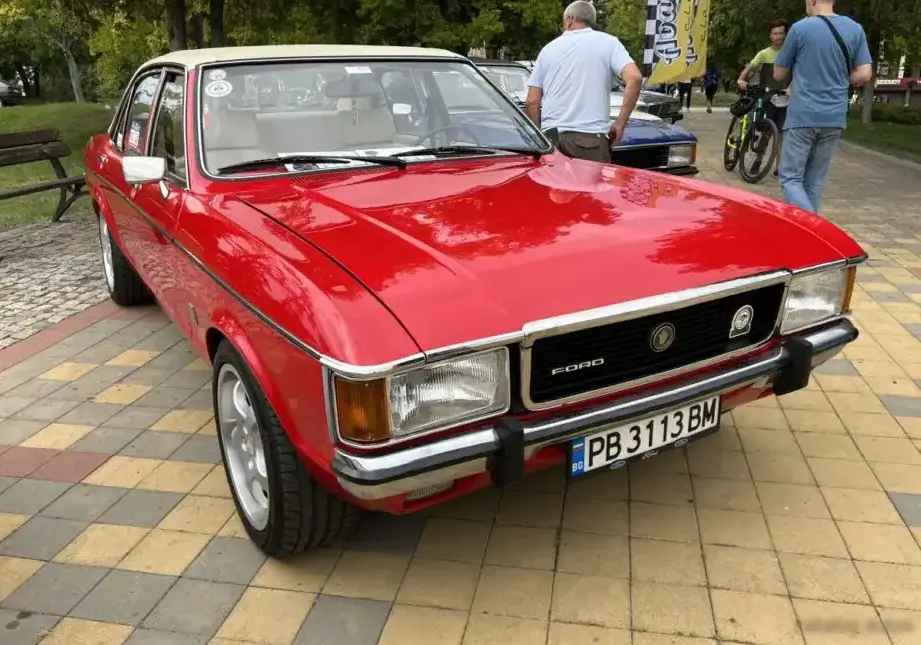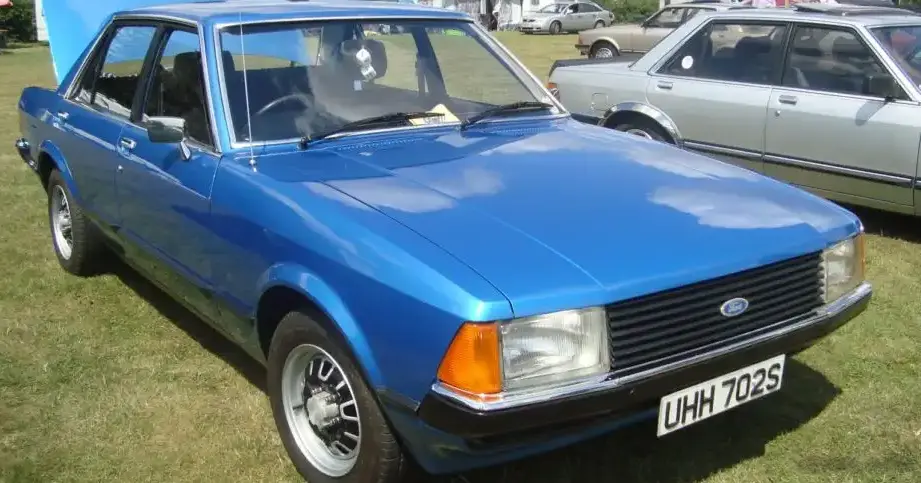
The Ford Granada 2.8i, produced between 1977 and 1985, represented the top-of-the-line performance offering within the GU generation of Ford’s large family car. Positioned as the premium variant, it aimed to provide a blend of comfort, space, and respectable performance for the discerning driver. The GU Granada, launched in late 1977, was a significant redesign of the original Granada, offering a more modern aesthetic and improved interior space. The 2.8i model, with its fuel-injected V6 engine, was the flagship, appealing to those seeking a more refined and powerful driving experience compared to the four-cylinder options available.
Technical Specifications
| Brand | Ford |
| Model | Granada |
| Generation | Granada (GU) |
| Type (Engine) | 2.8 i (147 Hp) |
| Start of production | 1977 |
| End of production | 1985 |
| Powertrain Architecture | Internal Combustion engine |
| Body type | Sedan |
| Fuel Type | Petrol (Gasoline) |
| Power | 147 Hp |
| Engine aspiration | Naturally aspirated engine |
| Length | 4630 mm (182.28 in.) |
| Width | 1740 mm (68.5 in.) |
| Height | 1380 mm (54.33 in.) |
| Wheelbase | 2770 mm (109.06 in.) |
Powertrain & Engine Architecture
The heart of the Granada 2.8i was the Ford Cologne 2.8-liter V6 engine. This engine, designated as the ‘Cologne’ due to its place of manufacture, was a 60-degree V6, known for its relatively smooth operation and durability. The ‘i’ designation signified the use of Bosch K-Jetronic fuel injection, a mechanical fuel injection system that offered improved efficiency and performance compared to carbureted engines. The engine produced 147 horsepower at 5500 rpm and 198 lb-ft of torque at 3300 rpm. The engine featured a single overhead camshaft (SOHC) design, operating two valves per cylinder. While not a cutting-edge design by the 1980s standards, it was a robust and reliable unit. The Granada 2.8i was typically paired with a four-speed automatic transmission, although a five-speed manual transmission was also available, albeit less common. The automatic transmission, while providing convenience, did slightly diminish the car’s acceleration potential.
Driving Characteristics
The Granada 2.8i offered a comfortable and refined driving experience. The V6 engine provided ample power for cruising on highways and overtaking, although it wasn’t a particularly sporty car. The automatic transmission, while smooth, had relatively widely spaced gear ratios, which could result in some engine ‘hunting’ for the right gear during acceleration. Compared to the 2.0-liter four-cylinder Granadas, the 2.8i offered a significant performance boost, reducing the 0-60 mph time to around 9.5 seconds, depending on the transmission. The manual transmission version was noticeably quicker. The suspension, featuring independent front suspension and a live axle rear suspension, provided a comfortable ride, but handling was somewhat compromised by the car’s size and weight. Steering was power-assisted, making it relatively light and easy to maneuver, but lacked significant feedback.
Equipment & Trim Levels
The 2.8i Granada was the most well-equipped version of the model. Standard features typically included velour upholstery, central locking, electric windows, a sunroof, and a high-quality stereo system. The interior trim was generally finished in richer materials than the lower-spec models. Optional extras included leather upholstery, air conditioning, and upgraded sound systems. The dashboard layout was functional and straightforward, with clearly labeled controls. The 2.8i often featured additional chrome trim on the exterior, distinguishing it from the more basic models. The overall ambiance was one of understated luxury, aimed at appealing to a more affluent clientele.
Chassis & Braking
The Granada GU utilized a body-on-frame construction, which contributed to its robust feel but also added to its weight. The front suspension consisted of independent MacPherson struts, while the rear suspension employed a live axle with leaf springs. Braking was initially provided by disc brakes on the front wheels and drum brakes on the rear wheels. Later models often featured disc brakes all around, offering improved stopping power. Power steering was standard on the 2.8i. Stabilizer bars were fitted to both the front and rear axles to reduce body roll during cornering. The braking system, while adequate for the car’s weight and performance, wasn’t particularly sophisticated by modern standards.
Market Reception & Comparison
The Granada 2.8i was generally well-received by automotive critics. It was praised for its comfortable ride, spacious interior, and refined engine. However, some critics noted its relatively high price and somewhat dated design. Compared to its rivals, such as the Opel Commodore and the Rover SD1, the Granada 2.8i offered a good balance of performance, comfort, and reliability. The 2.0-liter Granadas offered better fuel economy, but at the expense of performance. The 2.8i was significantly more expensive than the four-cylinder models, targeting a different segment of the market. Fuel economy for the 2.8i was typically in the range of 18-22 mpg, depending on driving conditions.
Legacy
The Ford Granada 2.8i remains a popular classic car today, particularly among enthusiasts who appreciate its robust engineering and comfortable driving experience. The Cologne V6 engine is known for its durability, and well-maintained examples can still provide reliable service. Parts availability is generally good, although some trim-specific items can be difficult to find. The Granada 2.8i has a loyal following in the classic car community, and prices for well-preserved examples have been steadily increasing in recent years. It represents a significant piece of Ford’s history, embodying the company’s commitment to building large, comfortable, and reliable family cars. The car’s relatively simple mechanical design makes it a relatively straightforward vehicle to maintain and repair for those with some mechanical aptitude.