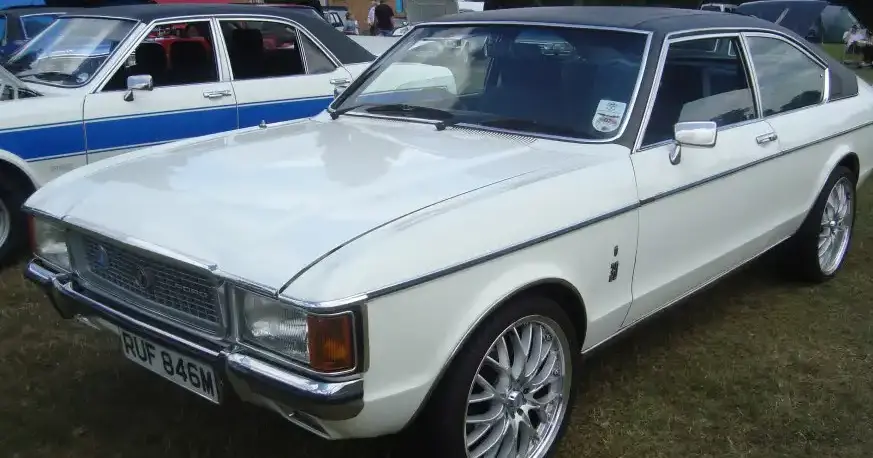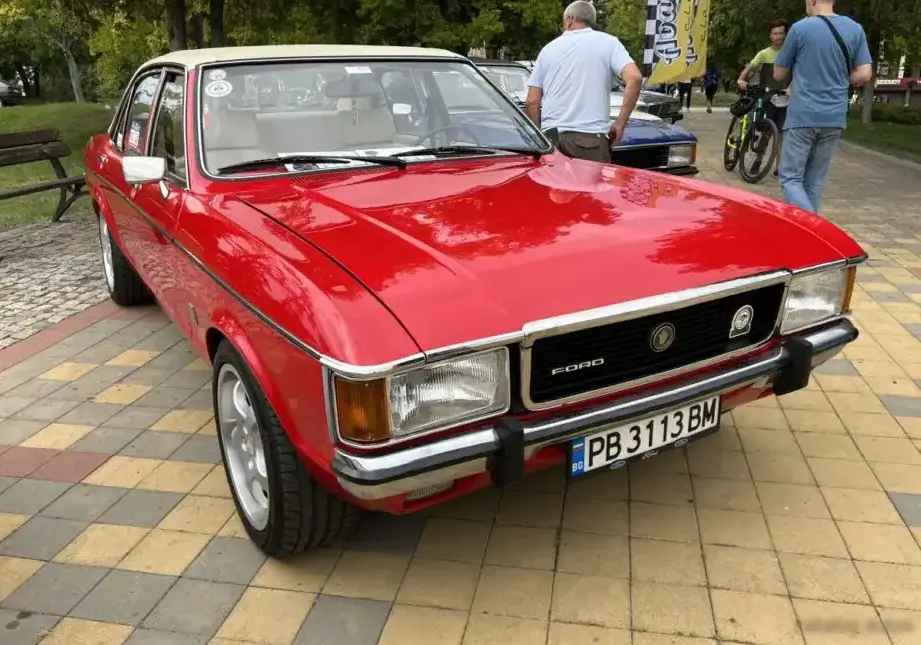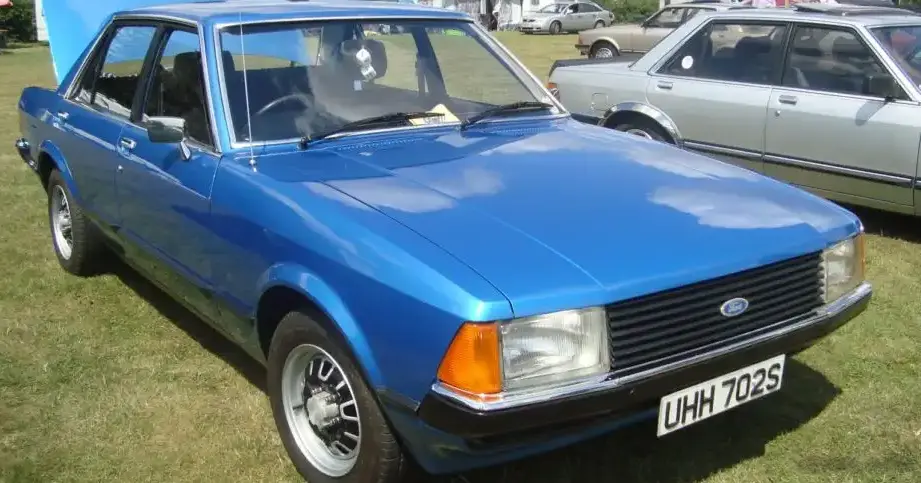
The Ford Granada 2.8i, produced between 1982 and 1985, represented the top-of-the-line performance offering within the GU series Granada range. This iteration of the Granada, the third generation, aimed to blend British comfort with Ford’s engineering prowess, primarily targeting the upper-middle-class executive car market in Europe. The 2.8i, distinguished by its fuel-injected V6 engine, offered a significant step up in power and refinement compared to the four-cylinder models, positioning itself as a comfortable and capable grand tourer. It was a direct response to competitors like the Opel Commodore and Rover SD1, offering a more modern and technically advanced package.
Technical Specifications
| Brand | Ford |
| Model | Granada |
| Generation | Granada (GU) |
| Type (Engine) | 2.8 i (150 Hp) |
| Start of production | 1982 |
| End of production | 1985 |
| Powertrain Architecture | Internal Combustion engine |
| Body type | Sedan |
| Fuel Type | Petrol (Gasoline) |
| Power | 150 Hp |
| Engine aspiration | Naturally aspirated engine |
| Length | 4630 mm (182.28 in.) |
| Width | 1740 mm (68.5 in.) |
| Height | 1380 mm (54.33 in.) |
| Wheelbase | 2770 mm (109.06 in.) |
Powertrain & Engine Architecture
The heart of the Granada 2.8i was the Ford Cologne 2.8-liter V6 engine. This engine, designated as the ‘OHC’ (Overhead Camshaft) unit, was a 60-degree V6, known for its relatively smooth operation and decent power output. The ‘i’ designation signified the use of Bosch K-Jetronic fuel injection, a mechanical fuel injection system that offered improved efficiency and performance over carbureted alternatives. The engine produced 150 horsepower at 5500 rpm and 192 lb-ft of torque at 3500 rpm. The engine featured a single overhead camshaft per cylinder bank, operating two valves per cylinder. While not a cutting-edge design by the 1980s, the Cologne V6 was a robust and reliable unit. The transmission offered with the 2.8i was typically a four-speed automatic, although a five-speed manual was available as an option, though less common. The automatic transmission, a Ford unit, was designed for smooth cruising rather than sporty performance, with relatively widely spaced gear ratios.
Driving Characteristics
The Granada 2.8i offered a distinctly comfortable and refined driving experience. The V6 engine provided ample power for effortless cruising on motorways and confident overtaking. However, it wasn’t a particularly sporty car. The automatic transmission, while smooth, did detract from outright acceleration. Zero to sixty mph times were typically around 9.5-10.5 seconds, respectable for the era but not groundbreaking. The suspension, featuring MacPherson struts at the front and a coil-sprung live axle at the rear, prioritized ride comfort over sharp handling. The steering was power-assisted, making it light and easy to use, but lacked significant feedback. Compared to the 2.0-liter four-cylinder Granadas, the 2.8i felt significantly more relaxed and capable, especially when fully loaded with passengers and luggage. The manual transmission version, when equipped, offered a more engaging driving experience, allowing the driver to fully exploit the engine’s power band.
Equipment & Trim Levels
The 2.8i was the most luxurious trim level available on the GU Granada. Standard equipment included central locking, electric windows, a sunroof, and upgraded interior trim. Interior upholstery was typically velour or leather, with wood veneer trim on the dashboard and door panels. The dashboard featured a comprehensive instrument cluster with gauges for engine temperature, fuel level, and a clock. Optional extras included air conditioning, a stereo system, and upgraded sound insulation. The 2.8i also featured larger wheels and tires compared to the lower-spec models, contributing to a more substantial appearance. The overall interior ambiance was one of understated elegance, reflecting the car’s target market.
Chassis & Braking
The Granada GU utilized a body-on-frame construction, a relatively traditional approach for the time. The chassis was designed to provide a comfortable ride and good structural rigidity. The front suspension employed MacPherson struts with anti-roll bar, while the rear suspension featured a live axle with coil springs and trailing arms. Braking was initially provided by disc brakes at the front and drum brakes at the rear, although later models often featured disc brakes all around. Power steering was standard on the 2.8i. The braking system, while adequate for normal driving, wasn’t particularly powerful by modern standards. The car’s weight, around 3,400 lbs, contributed to a moderate stopping distance.
Market Reception & Comparison
The Ford Granada 2.8i was generally well-received by automotive critics. It was praised for its comfortable ride, spacious interior, and refined engine. However, some critics noted its lack of sporty handling and relatively high price. Compared to the four-cylinder Granadas, the 2.8i offered a significant improvement in performance and refinement, but at a considerable cost. The 2.0-liter models were more popular with fleet buyers and private buyers seeking a more economical option. Against rivals like the Opel Commodore and Rover SD1, the Granada 2.8i offered a good balance of comfort, performance, and reliability. Fuel economy was reasonable for the time, averaging around 18-22 mpg. Reliability was generally good, although the K-Jetronic fuel injection system could be prone to issues if not properly maintained.
Legacy
The Ford Granada 2.8i remains a popular classic car today, particularly among enthusiasts who appreciate its comfortable ride and distinctive styling. The Cologne V6 engine is known for its durability, and well-maintained examples can still provide reliable service. Parts availability is generally good, although some specific trim items can be difficult to find. The Granada 2.8i represents a high point in Ford’s large family car history, offering a blend of British comfort and Ford engineering that appealed to a discerning clientele. While not a performance icon, it remains a fondly remembered and respected vehicle from the 1980s, and a testament to Ford’s ability to create comfortable and capable grand tourers.