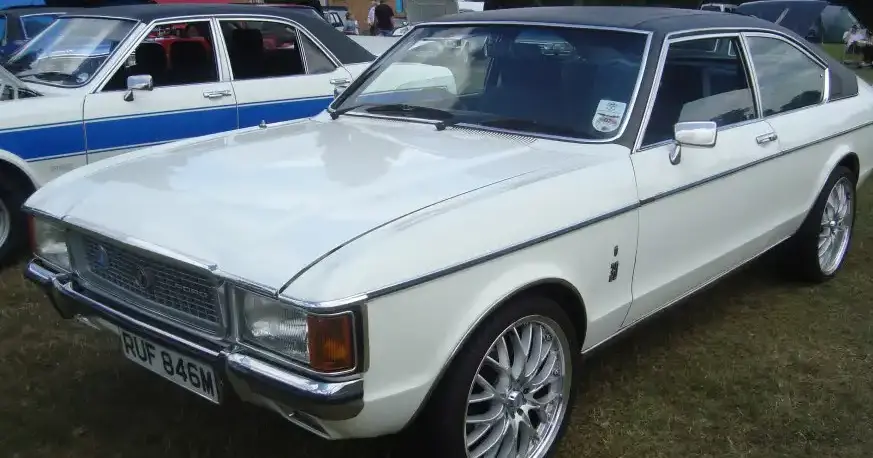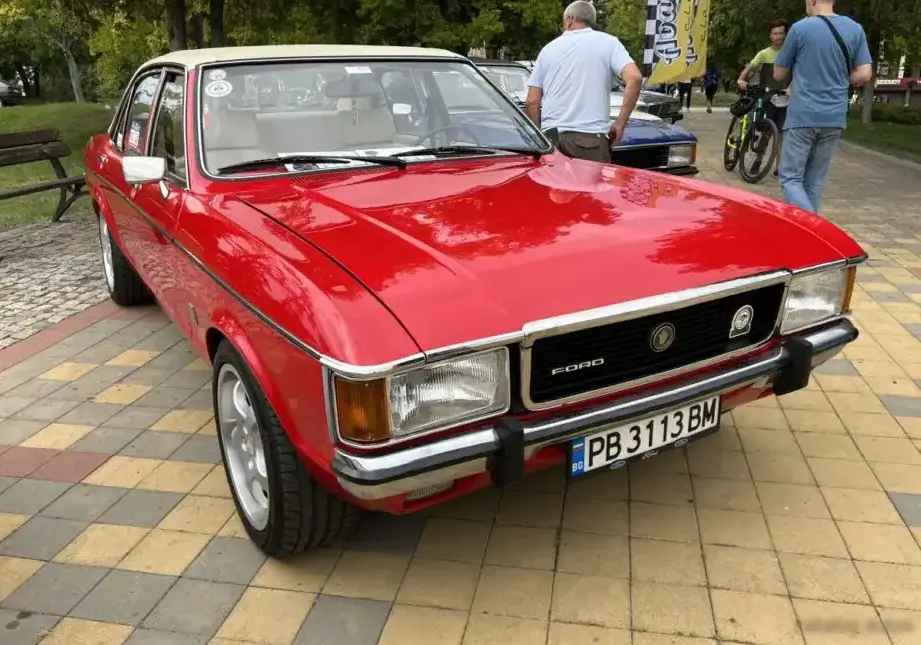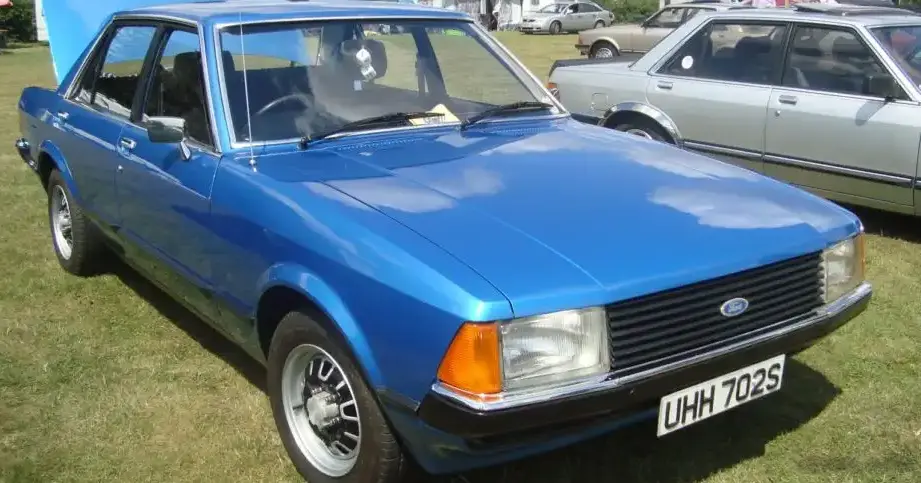
The Ford Granada GU 2.8i, produced between 1977 and 1981, represented the top-of-the-line performance offering within the GU series of the Granada. Positioned as the flagship model, it aimed to provide a blend of luxury and respectable performance for the discerning driver. The GU Granada, launched in late 1974, was Ford of Britain’s large family car, replacing the earlier Mark IV model. It was a significant vehicle for Ford, intended to compete with rivals like the Vauxhall Carlton and Rover SD1, and offered a more modern and spacious alternative to the outgoing model. The 2.8i variant, with its fuel injection and increased horsepower, was the pinnacle of the GU range, offering a more refined driving experience than the lower-spec models.
Technical Specifications
| Brand | Ford |
| Model | Granada |
| Generation | Granada (GU) |
| Type (Engine) | 2.8 i (160 Hp) |
| Start of production | 1977 |
| End of production | 1981 |
| Powertrain Architecture | Internal Combustion engine |
| Body type | Sedan |
| Fuel Type | Petrol (Gasoline) |
| Power | 160 Hp |
| Engine aspiration | Naturally aspirated engine |
| Length | 4630 mm (182.28 in.) |
| Width | 1740 mm (68.5 in.) |
| Height | 1380 mm (54.33 in.) |
| Wheelbase | 2770 mm (109.06 in.) |
Powertrain & Engine Architecture
The heart of the Granada 2.8i was the Ford Essex V6 engine, specifically the fuel-injected variant. Displacing 2.8 liters (170 cubic inches), this engine produced 160 horsepower. Unlike earlier Essex V6s which utilized a carburetor, the 2.8i employed Bosch K-Jetronic mechanical fuel injection. This system, while complex for its time, offered improved fuel efficiency and a more responsive throttle compared to carbureted engines. The engine featured a single overhead camshaft (SOHC) design with two valves per cylinder. The cylinder block was cast iron, while the cylinder heads were aluminum, contributing to a relatively lightweight engine for its size. The engine was typically paired with a four-speed automatic transmission, although a five-speed manual transmission was also available, albeit less common. The automatic transmission provided smooth shifts, prioritizing comfort over outright performance, aligning with the Granada’s grand touring character.
Driving Characteristics
The 2.8i Granada offered a noticeably more spirited driving experience than its lower-powered siblings. While not a sports car, the 160 hp engine provided ample power for comfortable highway cruising and confident overtaking. The automatic transmission, while smooth, did result in some power loss compared to the manual version. Gear ratios were geared towards relaxed cruising, with a focus on maximizing fuel economy at highway speeds. The car’s relatively heavy weight (around 3,400 lbs) meant that acceleration wasn’t particularly brisk, but the engine’s torque provided good mid-range punch. Handling was generally considered competent for a large saloon of the era, but it wasn’t particularly agile. The suspension, consisting of independent front suspension with MacPherson struts and a live axle rear suspension, provided a comfortable ride, but body roll was noticeable in corners.
Equipment & Trim Levels
The 2.8i Granada was the most luxurious trim level available. Standard features typically included velour upholstery, central locking, electric windows, a wood-trimmed dashboard, and a high-quality stereo system. Air conditioning was a popular optional extra. The exterior was distinguished by chrome trim, a vinyl roof (often available in various colors), and distinctive alloy wheels. Interior color schemes were typically conservative, with shades of brown, beige, and blue being common. The 2.8i also benefited from upgraded instrumentation, including a comprehensive gauge cluster with oil pressure and voltmeter readings. The overall ambiance was one of understated luxury, aimed at appealing to buyers who valued comfort and refinement.
Chassis & Braking
The Granada GU utilized a body-on-frame construction, which was becoming less common in the late 1970s. This contributed to the car’s robust feel and durability. The front suspension featured MacPherson struts with anti-roll bar, while the rear suspension employed a live axle with trailing arms and a Panhard rod. Braking was initially provided by disc brakes on the front wheels and drum brakes on the rear wheels. Later models often featured disc brakes all around, offering improved stopping power. Steering was power-assisted, making the car relatively easy to maneuver, despite its size. The chassis was designed to provide a comfortable ride, prioritizing isolation from road imperfections over sporty handling.
Market Reception & Comparison
The Ford Granada 2.8i was generally well-received by automotive critics. It was praised for its comfortable ride, spacious interior, and refined engine. However, some critics noted that the car’s styling was somewhat conservative and that its handling wasn’t as sharp as some of its rivals. Compared to the carbureted 2.0L and 2.3L models, the 2.8i offered a significant performance upgrade, but at a higher price point. Against competitors like the Vauxhall Carlton and Rover SD1, the Granada 2.8i offered a good balance of value, comfort, and performance. Fuel economy, while improved by the fuel injection system, was still relatively poor by modern standards, averaging around 18-22 mpg. Reliability was generally good, although the K-Jetronic fuel injection system could be complex to diagnose and repair.
Legacy
The Ford Granada GU 2.8i remains a popular classic car today, particularly among enthusiasts who appreciate its understated style and robust engineering. The Essex V6 engine, while not known for its outright performance, is considered a durable and reliable unit. Parts availability is generally good, although some specific components for the fuel injection system can be difficult to find. The car’s relatively simple construction makes it relatively easy to maintain and repair for those with mechanical skills. In the used car market, well-maintained examples of the 2.8i Granada command a premium price, reflecting their status as the top-of-the-line model in the GU range. The Granada GU, and the 2.8i variant in particular, represents a significant chapter in Ford’s history, showcasing the company’s ability to produce large, comfortable, and well-equipped family cars.