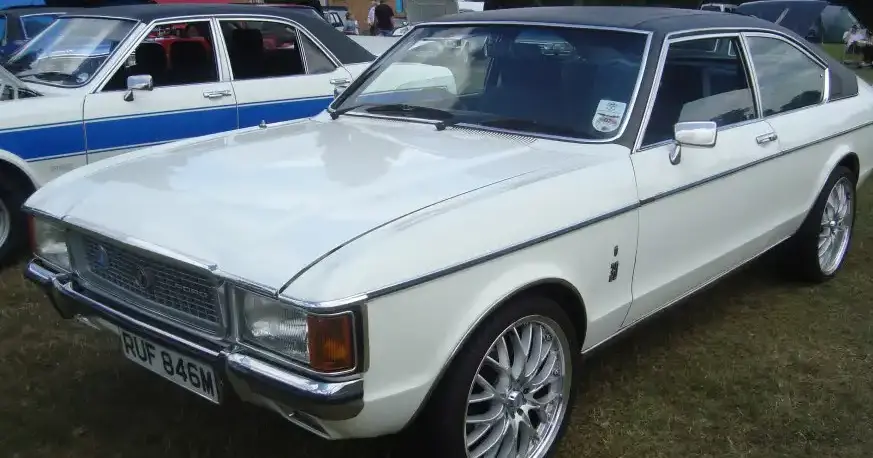
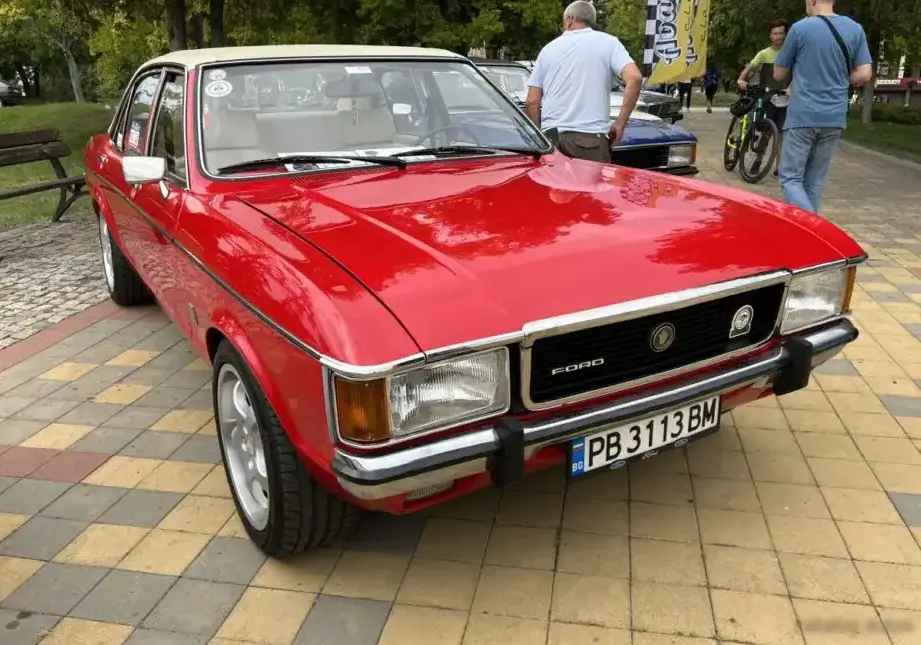
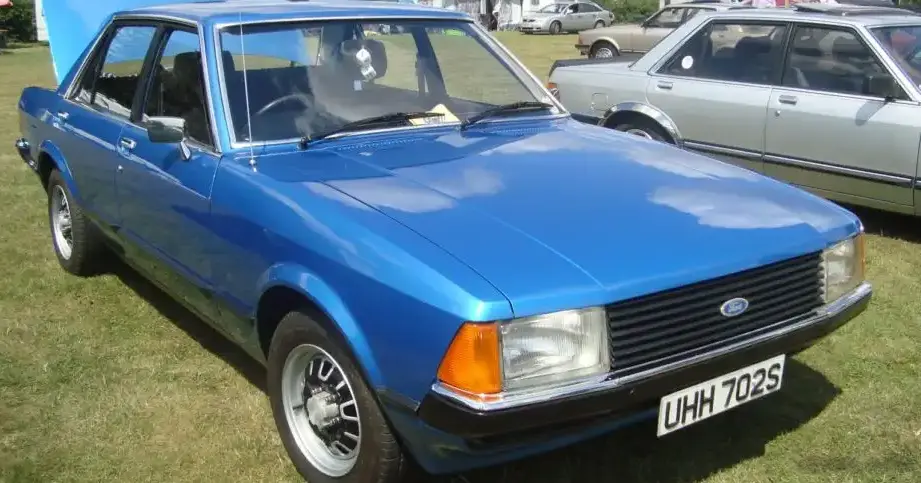
The Ford Granada Turnier 1.6, produced between 1977 and 1982, represented the entry-level variant of the GNU-series Granada estate car. Positioned as a practical and affordable family vehicle, it offered the spaciousness of a station wagon combined with a smaller, more economical engine. The Turnier body style, Ford’s designation for its estate cars, was a key selling point, providing a larger cargo capacity than the saloon version. This particular 1.6-liter model served as a stepping stone into the Granada range, appealing to buyers who prioritized fuel efficiency and lower purchase costs over outright performance. It was part of the second generation of the Granada, which aimed to modernize Ford’s large family car offering and compete with rivals like the Vauxhall Carlton and Rover SD1.
Technical Specifications
| Brand | Ford |
| Model | Granada |
| Generation | Granada Turnier (GNU) |
| Type (Engine) | 1.6 (74 Hp) |
| Start of production | 1977 |
| End of production | 1982 |
| Powertrain Architecture | Internal Combustion engine |
| Body type | Station wagon (estate) |
| Fuel Type | Petrol (Gasoline) |
| Power | 74 Hp |
| Engine aspiration | Naturally aspirated engine |
| Length | 4630 mm (182.28 in.) |
| Width | 1740 mm (68.5 in.) |
| Height | 1380 mm (54.33 in.) |
| Wheelbase | 2770 mm (109.06 in.) |
Powertrain & Engine Architecture
The Granada Turnier 1.6 was powered by the Ford Essex engine, specifically the 1600cc variant. This engine, designated as the 1600 pre-crossflow, was a four-cylinder, inline configuration. It featured a relatively simple design, utilizing a single overhead camshaft and a two-barrel carburetor for fuel delivery. While not known for its high performance, the Essex 1.6 was regarded as a durable and reliable unit. The 74 horsepower output was achieved at approximately 5000 rpm, with peak torque of around 94 lb-ft at 3000 rpm. The engine was paired with a three-speed automatic transmission, which was a popular choice for buyers seeking ease of driving, particularly in urban environments. This automatic transmission, while providing convenience, did impact acceleration and fuel economy compared to the available four-speed manual gearbox.
Driving Characteristics
The driving experience in the Granada Turnier 1.6 Automatic was characterized by its comfortable ride and relaxed pace. The automatic transmission, while smooth, resulted in somewhat sluggish acceleration. The 0-60 mph time was estimated to be around 14-16 seconds, making it noticeably slower than the larger-engined Granada models. The gear ratios were optimized for cruising rather than rapid acceleration, prioritizing fuel efficiency and reducing engine noise at highway speeds. The steering was power-assisted, making maneuvering relatively easy, although it lacked the precision of more modern systems. The suspension, consisting of MacPherson struts at the front and a live axle with leaf springs at the rear, provided a comfortable, if somewhat floaty, ride quality. Compared to the 2.0L or 2.8L versions, the 1.6 felt underpowered, especially when fully loaded with passengers and luggage. However, for everyday commuting and family trips, it proved to be adequate.
Equipment & Trim Levels
The 1.6L Granada Turnier typically represented the base trim level. Standard equipment included cloth upholstery, a basic instrument panel, and manual windows. Features like a radio, heated rear window, and upgraded interior trim were often optional extras. The interior was functional and durable, designed for practicality rather than luxury. The Turnier’s estate body style provided a generous cargo area, accessible through a large rear tailgate. The rear seats could be folded down to further increase the load capacity. Exterior features typically included steel wheels with hubcaps, chrome bumpers, and relatively simple exterior trim. Optional extras could include alloy wheels, a sunroof, and upgraded sound systems.
Chassis & Braking
The Granada Turnier 1.6 utilized a body-on-frame construction, which was common for vehicles of that era. The front suspension featured MacPherson struts, while the rear suspension employed a live axle with leaf springs. This setup provided a comfortable ride but wasn’t particularly sporty. The braking system consisted of disc brakes at the front and drum brakes at the rear. The brakes were adequate for normal driving conditions, but lacked the stopping power of more modern systems. Steering was power-assisted, making it easier to maneuver the relatively large vehicle. The suspension was tuned for comfort, with a focus on absorbing bumps and providing a stable ride. Stabilizer bars were fitted to reduce body roll during cornering, but the overall handling was not particularly sharp.
Market Reception & Comparison
The Granada Turnier 1.6 Automatic was generally well-received as a practical and affordable family car. Critics praised its spacious interior, comfortable ride, and fuel efficiency. However, it was often criticized for its lack of performance, particularly when compared to the larger-engined models. The 1.6L engine offered better fuel economy than the 2.0L and 2.8L options, making it a popular choice for buyers who prioritized running costs. The automatic transmission, while convenient, further reduced performance and increased fuel consumption. Compared to rivals like the Vauxhall Carlton and Rover SD1, the Granada Turnier 1.6 offered a more affordable entry point, but lacked the prestige and refinement of some of its competitors. The 2.0L version offered a noticeable performance improvement for a relatively small price increase, making it a popular alternative for those seeking more power.
Legacy
The Ford Granada Turnier 1.6, while not the most powerful or glamorous version of the Granada, remains a fondly remembered classic. The Essex 1.6 engine, despite its relatively simple design, proved to be remarkably durable and reliable. Many examples are still on the road today, testament to the quality of its construction. In the used car market, the 1.6L models are typically the most affordable Granadas, making them an attractive option for classic car enthusiasts on a budget. Parts availability is generally good, although some specific trim items can be difficult to find. The Turnier estate body style continues to be highly valued, offering a practical and stylish alternative to more modern vehicles. The Granada Turnier 1.6 represents a significant chapter in Ford’s history, embodying the practicality and affordability that defined the brand during the 1970s and early 1980s.