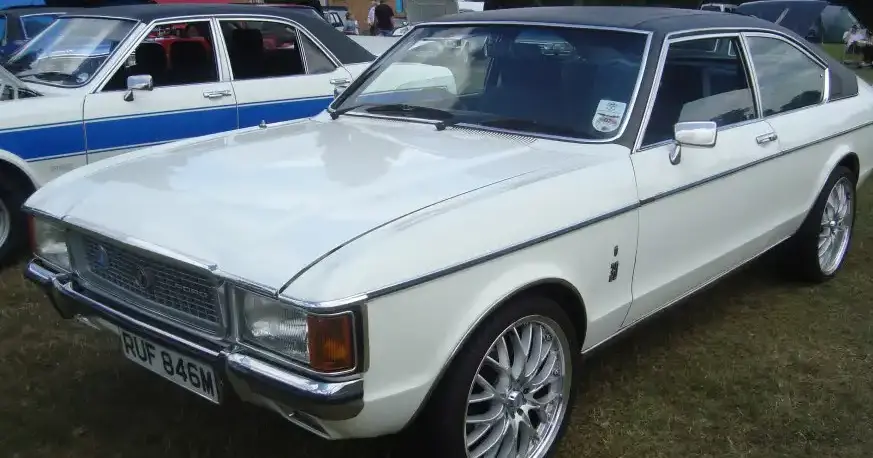
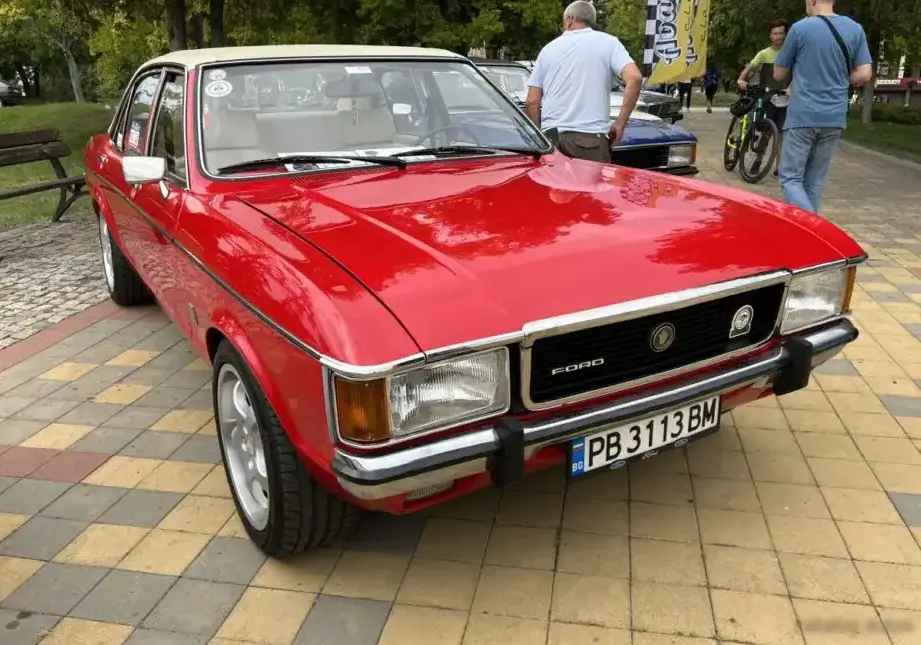
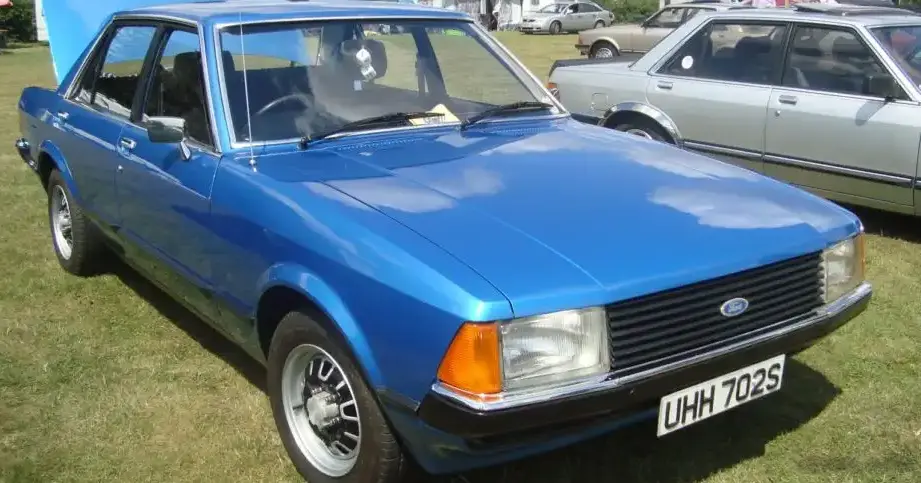
The Ford Granada Turnier 2.3, produced between 1977 and 1979, represented a practical and spacious offering within the third generation (GNU) of the Granada line. Positioned as a mid-range variant within the Turnier (estate/wagon) body style, it aimed to provide family-oriented buyers with a comfortable and reasonably powered vehicle. The Turnier, introduced in 1974, expanded the Granada’s appeal beyond the traditional large saloon, offering increased cargo capacity and versatility. This 2.3-liter version occupied a space between the base models and the more powerful V6 options, appealing to those seeking a balance of economy and performance.
Technical Specifications
| Brand | Ford |
| Model | Granada |
| Generation | Granada Turnier (GNU) |
| Type (Engine) | 2.3 (107 Hp) |
| Start of production | 1977 |
| End of production | 1979 |
| Powertrain Architecture | Internal Combustion engine |
| Body type | Station wagon (estate) |
| Fuel Type | Petrol (Gasoline) |
| Power | 107 Hp |
| Engine aspiration | Naturally aspirated engine |
| Length | 4630 mm (182.28 in.) |
| Width | 1740 mm (68.5 in.) |
| Height | 1380 mm (54.33 in.) |
| Wheelbase | 2770 mm (109.06 in.) |
Powertrain & Engine Architecture
The heart of the Granada Turnier 2.3 was the Ford Cologne 2.3-liter inline-four cylinder engine. This engine, part of the Cologne engine family, was a robust and relatively simple design. It featured a cast iron block and an aluminum cylinder head, utilizing a single overhead camshaft (SOHC) valvetrain. Fuel delivery was managed by a Ford-designed carburetor, typically a Weber or Solex unit, depending on the specific market. While not particularly advanced by contemporary standards, the Cologne engine was known for its durability and ease of maintenance. The 107 horsepower output was achieved at approximately 5,500 rpm, with peak torque of around 134 lb-ft at 3,500 rpm. The engine was mated to a three-speed automatic transmission, a Borg-Warner unit, which was a common choice for Ford vehicles of the era. This transmission, while providing convenience, wasn’t known for its particularly quick shifts or fuel efficiency.
Driving Characteristics
The driving experience in the Granada Turnier 2.3 Automatic was characterized by comfortable cruising rather than sporty performance. The automatic transmission, while smooth, did sap some of the engine’s power, resulting in a 0-60 mph time of around 12-14 seconds. The gear ratios were geared towards relaxed highway driving, with a focus on fuel economy over acceleration. Compared to the manual transmission versions of the 2.3, the automatic felt noticeably slower. The larger V6 engines offered significantly more power and responsiveness, but at the cost of increased fuel consumption. The Turnier’s suspension, featuring independent front suspension and a live axle rear suspension with leaf springs, provided a comfortable ride, absorbing bumps and imperfections in the road reasonably well. However, it wasn’t particularly agile in corners, exhibiting noticeable body roll.
Equipment & Trim Levels
The Granada Turnier 2.3 typically came equipped with a reasonable level of standard features for the late 1970s. Interior appointments included cloth upholstery, often in muted colors like brown or beige. The dashboard featured a woodgrain trim, and instrumentation included a speedometer, fuel gauge, and temperature gauge. Power steering was often included as standard equipment, making maneuvering the large estate car easier. Optional extras included a radio (often an AM/FM unit), a vinyl roof, and upgraded interior trim. The Turnier trim level itself generally signified a higher level of equipment compared to the base Granada saloon models. Features like rear window wiper and heated rear window were standard on the Turnier.
Chassis & Braking
The Granada Turnier 2.3 utilized a body-on-frame construction, which was common for larger cars of the period. The chassis was designed to provide a robust and durable platform for the vehicle. The front suspension featured independent double wishbones with coil springs, while the rear suspension employed a live axle with leaf springs. Braking was initially provided by disc brakes on the front wheels and drum brakes on the rear wheels. Later models sometimes featured disc brakes all around, depending on the market and trim level. The braking system was hydraulically assisted, providing adequate stopping power for the vehicle’s weight. Stabilizer bars were fitted to both the front and rear axles to reduce body roll during cornering.
Market Reception & Comparison
The Ford Granada Turnier 2.3 Automatic was generally well-received by critics as a practical and comfortable family car. It offered a good balance of space, comfort, and affordability. However, the automatic transmission was often criticized for its sluggish performance and relatively poor fuel economy. Compared to the manual transmission versions, the automatic suffered a noticeable performance penalty. The V6-powered Granadas offered significantly more performance, but were more expensive to purchase and operate. Fuel economy for the 2.3 Automatic was typically in the range of 18-22 mpg, which was fairly typical for a large estate car of the era. Reliability was generally good, with the Cologne engine proving to be a durable and long-lasting unit.
Legacy
The Ford Granada Turnier 2.3 Automatic, while not a particularly groundbreaking vehicle, holds a significant place in automotive history as a representative of the large, comfortable family cars of the 1970s. The Cologne engine family, in particular, is remembered for its robustness and longevity. Today, these vehicles are relatively rare, and well-maintained examples are sought after by classic car enthusiasts. The automatic transmission, while not the most desirable configuration, is still functional in many surviving vehicles. The Turnier body style, with its increased cargo capacity, remains a popular choice for those seeking a classic estate car. Parts availability can be a challenge, but a dedicated network of Ford enthusiasts and specialist suppliers helps to keep these vehicles on the road.