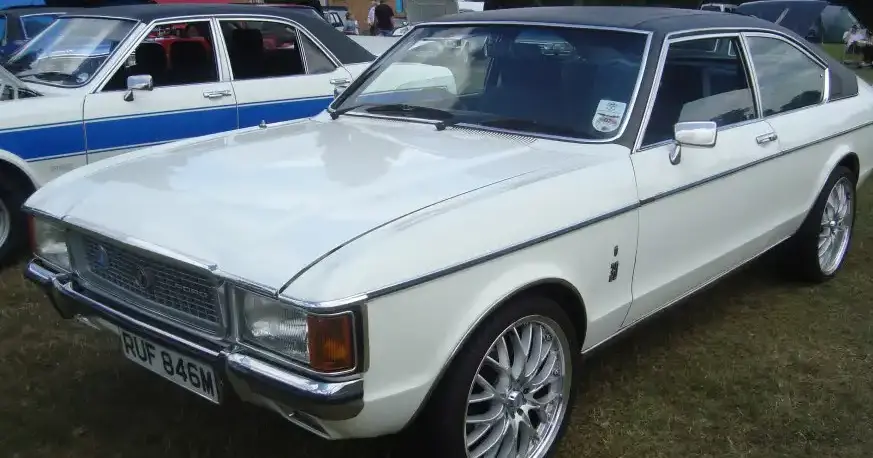
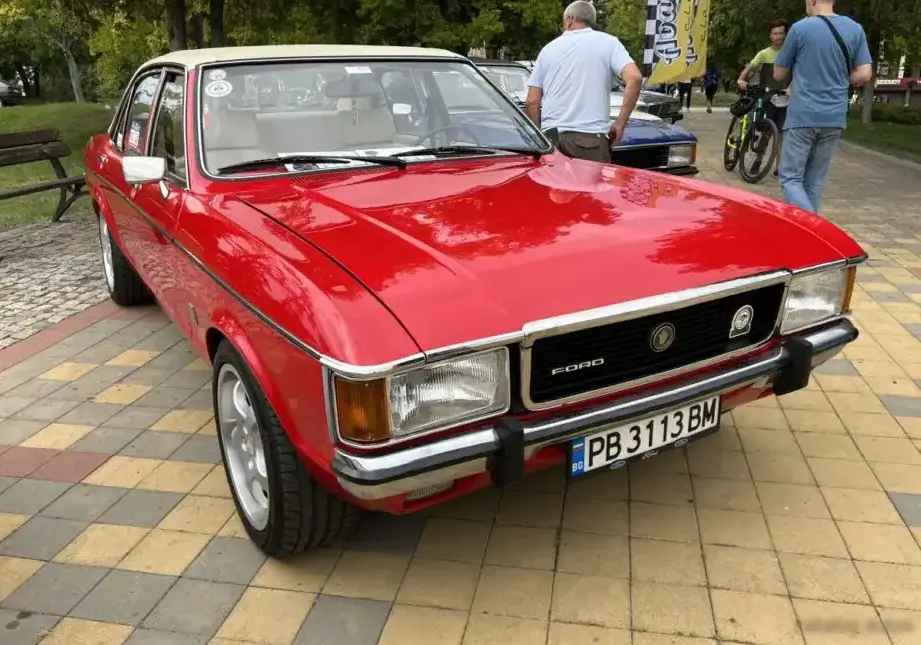
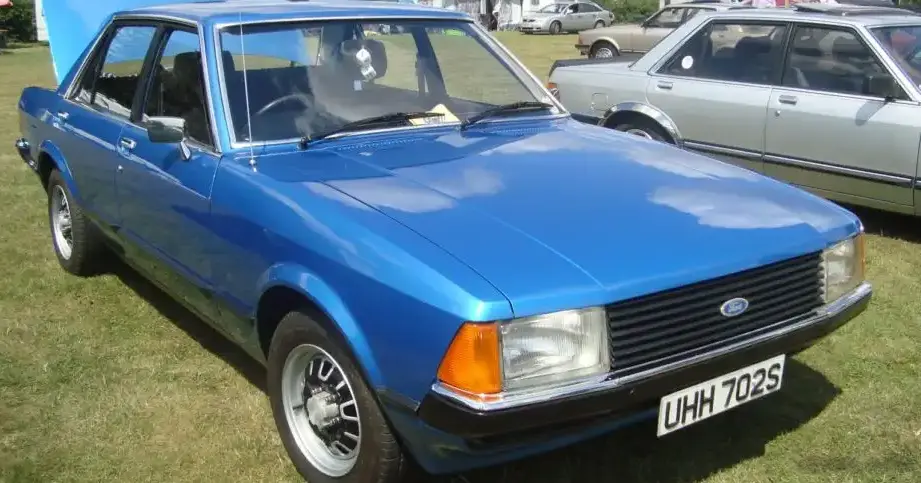
The Ford Granada Turnier 2.8, produced between 1977 and 1985, represented the top-of-the-line variant of the GNU generation Granada estate car. Positioned as a premium family vehicle, the Turnier (estate) body style offered increased practicality compared to the saloon, while the 2.8-liter engine provided a significant performance upgrade over the lower-capacity models. The Granada, in general, was Ford of Britain’s answer to larger European family cars, aiming to provide a comfortable and well-equipped alternative to offerings from manufacturers like Opel/Vauxhall, Volvo, and Peugeot. The Turnier specifically targeted buyers needing space and towing capacity without sacrificing refinement.
Technical Specifications
| Brand | Ford |
| Model | Granada |
| Generation | Granada Turnier (GNU) |
| Type (Engine) | 2.8 (135 Hp) |
| Start of production | 1977 |
| End of production | 1985 |
| Powertrain Architecture | Internal Combustion engine |
| Body type | Station wagon (estate) |
| Fuel Type | Petrol (Gasoline) |
| Power | 135 Hp |
| Engine aspiration | Naturally aspirated engine |
| Length | 4630 mm (182.28 in.) |
| Width | 1740 mm (68.5 in.) |
| Height | 1380 mm (54.33 in.) |
| Wheelbase | 2770 mm (109.06 in.) |
Powertrain & Engine Architecture
The heart of the Granada Turnier 2.8 was the Ford Essex V6 engine. This 2.8-liter (2792 cc) naturally aspirated engine, designated as the ‘Cologne’ V6 in some literature, was a 60-degree V6 featuring a cast iron block and aluminum cylinder heads. It produced 135 horsepower (metric) at 5000 rpm and 198 lb-ft of torque at 3000 rpm. The engine utilized a single overhead camshaft (SOHC) design, operating two valves per cylinder. Fuel delivery was managed by a Ford-designed carburetor, typically a Zenith-Stromberg CD175, though later models sometimes featured a Motorcraft unit. While not particularly advanced by the 1980s standards, the Essex V6 was known for its smoothness and relatively robust construction. The engine was typically paired with a four-speed automatic transmission, although a five-speed manual was also available, albeit less common in the Turnier 2.8.
Driving Characteristics
The 2.8-liter engine provided a noticeable performance improvement over the four-cylinder Granadas. Acceleration was brisk for the era, allowing for comfortable highway cruising and effortless overtaking. The automatic transmission, while providing convenience, did slightly diminish the engine’s potential, with some reviewers noting a slight ‘slushiness’ in gear changes. The gear ratios were geared towards comfortable cruising rather than outright acceleration. The Turnier’s increased weight compared to the saloon was noticeable, but the V6 engine had sufficient power to mitigate this. Handling was typical of large 1970s/80s estates – comfortable and predictable, but not particularly sporty. The suspension, consisting of MacPherson struts at the front and a live axle with trailing arms at the rear, prioritized ride comfort over sharp handling.
Equipment & Trim Levels
The Granada Turnier 2.8 occupied the premium end of the Granada lineup. Standard equipment typically included velour upholstery, a woodgrain dashboard trim, and a comprehensive instrument panel. Power steering and central locking were often included, though not always standard. Optional extras included a sunroof, upgraded stereo systems, and air conditioning. The Turnier trim also featured additional chrome trim around the windows and body, distinguishing it from the lower-spec models. Interior space was generous, particularly in the rear, making it a comfortable vehicle for families. The estate body style offered a substantial cargo area, further enhancing its practicality.
Chassis & Braking
The Granada Turnier 2.8 utilized a body-on-frame construction, providing a robust and durable chassis. The front suspension featured MacPherson struts with anti-roll bar, while the rear suspension employed a live axle with trailing arms and a four-link setup. Braking was initially provided by disc brakes at the front and drum brakes at the rear. Later models often featured disc brakes all around, offering improved stopping power. Steering was power-assisted, making maneuvering the large estate car relatively easy. The Turnier 2.8 typically featured heavier-duty suspension components compared to the lower-spec models to cope with the increased weight and potential for towing.
Market Reception & Comparison
The Granada Turnier 2.8 was generally well-received by automotive critics. It was praised for its comfortable ride, spacious interior, and powerful engine. However, some reviewers criticized its fuel economy, which was relatively poor even for the 1970s and 80s. Compared to the 2.0-liter and 1.6-liter Granadas, the 2.8 offered a significant performance advantage, but at the cost of increased fuel consumption and a higher purchase price. Against rivals like the Opel Commodore/Caravan and Volvo 240 estate, the Granada Turnier 2.8 offered a competitive package, particularly in terms of value for money. The 2.8L was often seen as a more luxurious alternative to the diesel-powered Granadas, which prioritized fuel economy over performance.
Legacy
The Ford Granada Turnier 2.8, while not a particularly rare classic today, has gained a following among enthusiasts. The Essex V6 engine, while not known for its outright performance, is considered relatively reliable and easy to maintain. The Turnier body style remains popular due to its practicality and spaciousness. Finding well-maintained examples can be challenging, as many were used as family cars and subjected to heavy use. Rust is a common issue, particularly in areas prone to moisture. However, a well-preserved Granada Turnier 2.8 represents a stylish and comfortable classic estate car, offering a glimpse into a bygone era of automotive design. Parts availability is reasonable, with many components still available from specialist suppliers. The car’s enduring appeal lies in its blend of practicality, comfort, and classic British styling.