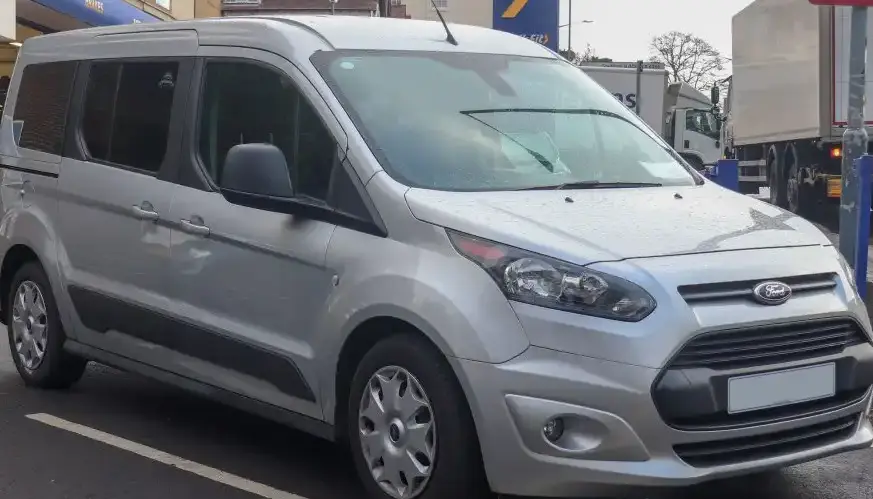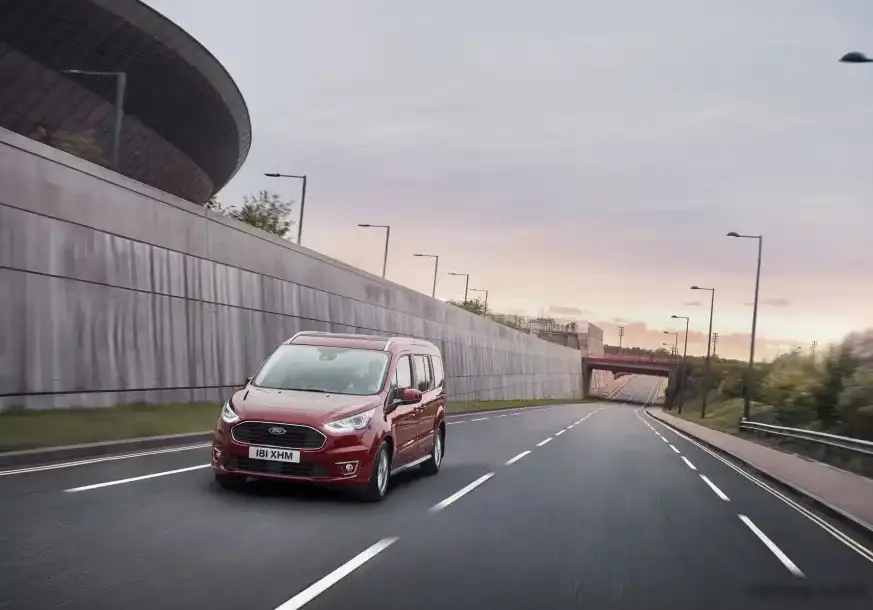
The Ford Grand Tourneo Connect II, specifically the facelifted version introduced in 2018, represented Ford’s entry into the compact people carrier segment in Europe. This variant, powered by the 1.5 EcoBlue diesel engine producing 100 horsepower, and equipped with a six-speed manual transmission, was a popular choice for families and commercial users alike. Production of this specific configuration ran from 2018 to 2020. It sat within the broader second-generation Tourneo Connect range (based on the Ford Transit Connect platform), offering a balance between practicality, fuel efficiency, and affordability. The Grand Tourneo Connect, being the long-wheelbase version, provided increased interior space and cargo capacity compared to the standard Tourneo Connect.
Technical Specifications
| Brand | Ford |
| Model | Tourneo Connect |
| Generation | Grand Tourneo Connect II (facelift 2018) |
| Type (Engine) | 1.5 EcoBlue (100 Hp) S&S |
| Start of production | 2018 |
| End of production | 2020 |
| Powertrain Architecture | Internal Combustion engine |
| Body type | Minivan |
| Seats | 5 |
| Doors | 5 |
| Fuel consumption (urban) | 4.9-5.0 l/100 km (48-47 US mpg, 57.6-56.5 UK mpg, 20.4-20 km/l) |
| Fuel consumption (extra urban) | 4.5-4.6 l/100 km (52.3-51.1 US mpg, 62.8-61.4 UK mpg, 22.2-21.7 km/l) |
| Fuel consumption (combined) | 4.7-4.8 l/100 km (50-49 US mpg, 60.1-58.9 UK mpg, 21.3-20.8 km/l) |
| CO2 emissions | 122-125 g/km |
| Fuel Type | Diesel |
| Acceleration 0 – 100 km/h | 13.3 sec |
| Acceleration 0 – 62 mph | 13.3 sec |
| Acceleration 0 – 60 mph | 12.6 sec |
| Maximum speed | 169 km/h (105.01 mph) |
| Emission standard | Euro 6 d-TEMP |
| Weight-to-power ratio | 15.9 kg/Hp, 63 Hp/tonne |
| Weight-to-torque ratio | 6.6 kg/Nm, 151.2 Nm/tonne |
| Power | 100 Hp @ 3600 rpm |
| Power per litre | 66.7 Hp/l |
| Torque | 240 Nm @ 1750-2500 rpm (177.01 lb.-ft. @ 1750-2500 rpm) |
| Engine layout | Front, Transverse |
| Engine Model/Code | Z2GA |
| Engine displacement | 1499 cm3 (91.47 cu. in.) |
| Number of cylinders | 4 |
| Engine configuration | Inline |
| Number of valves per cylinder | 2 |
| Fuel injection system | Diesel Commonrail |
| Engine aspiration | Turbocharger, Intercooler |
| Engine oil capacity | 6 l (6.34 US qt | 5.28 UK qt) |
| Coolant capacity | 7 l (7.4 US qt | 6.16 UK qt) |
| Kerb Weight | 1587-1884 kg (3498.74 – 4153.51 lbs.) |
| Max. weight | 2260-2445 kg (4982.45 – 5390.3 lbs.) |
| Max load | 561-673 kg (1236.79 – 1483.71 lbs.) |
| Trunk (boot) space – minimum | 1529 l (54 cu. ft.) |
| Trunk (boot) space – maximum | 2761 l (97.5 cu. ft.) |
| Permitted trailer load with brakes (12%) | 1073-1263 kg (2365.56 – 2784.44 lbs.) |
| Permitted trailer load without brakes | 750 kg (1653.47 lbs.) |
| Permitted towbar download | 75 kg (165.35 lbs.) |
| Length | 4825 mm (189.96 in.) |
| Width | 1835 mm (72.24 in.) |
| Width with mirrors folded | 1966 mm (77.4 in.) |
| Width including mirrors | 2137 mm (84.13 in.) |
| Height | 1847 mm (72.72 in.) |
| Wheelbase | 3062 mm (120.55 in.) |
| Minimum turning circle | 12.2 m (40.03 ft.) |
| Drivetrain | Front wheel drive |
| Number of gears | 6 |
| Gearbox type | Manual |
| Front suspension | Independent, type McPherson with coil spring and anti-roll bar |
| Rear suspension | Semi-dependent beam with stabilizer lateral stability |
| Front brakes | Ventilated discs |
| Rear brakes | Disc |
| Assisting systems | ABS (Anti-lock braking system) |
| Steering type | Steering rack and pinion |
| Tires size | 205/60 R16 |
| Wheel rims size | 6.5J x 16 |
Powertrain & Engine Architecture
The heart of this Tourneo Connect variant is the 1.5 EcoBlue diesel engine, specifically the Z2GA engine code. This engine is part of Ford’s EcoBlue family, designed for improved fuel efficiency and reduced emissions. It’s a four-cylinder, inline engine with a displacement of 1499cc. The engine utilizes a common-rail direct fuel injection system, delivering fuel directly into the combustion chamber at high pressure for optimized combustion. A turbocharger with an intercooler is employed to boost power output and improve torque across a wider rev range. The 100 horsepower output is achieved at 3600 rpm, while peak torque of 240 Nm (177 lb-ft) is available between 1750 and 2500 rpm. The six-speed manual transmission provides a good balance between fuel economy and drivability. The EcoBlue engines also incorporate features like reduced friction components and improved thermal management to enhance efficiency.
Driving Characteristics
The 1.5 EcoBlue 100 hp engine, paired with the six-speed manual transmission, delivers adequate performance for everyday driving. Acceleration is not particularly brisk, with a 0-62 mph time of around 13.3 seconds. However, the engine provides sufficient torque for comfortable cruising and overtaking on highways. The gear ratios are well-matched, allowing for relaxed driving at motorway speeds. Compared to higher-powered versions of the Tourneo Connect, such as those with the 1.5 EcoBlue engine tuned to 120 hp, this variant feels less responsive. The manual transmission offers more driver engagement than the optional automatic, and allows for better control over the engine’s power delivery. Fuel economy is a strong point, with combined figures ranging from 4.7 to 4.8 liters per 100 kilometers (49-50 US mpg).
Equipment & Trim Levels
The 1.5 EcoBlue 100 hp variant typically came as a mid-range trim level, offering a good balance of features and affordability. Standard equipment generally included air conditioning, power windows, central locking, a basic audio system with USB connectivity, and driver and passenger airbags. Higher trim levels added features like alloy wheels, a touchscreen infotainment system with navigation, rear parking sensors, and cruise control. Interior upholstery was typically cloth, with a functional and durable design. Optional extras included metallic paint, upgraded audio systems, and various comfort and convenience packages.
Chassis & Braking
The Grand Tourneo Connect II utilizes a McPherson strut front suspension and a semi-independent beam rear suspension. This setup provides a comfortable ride quality, although it’s not particularly sporty. The front brakes are ventilated discs, while the rear brakes are discs, providing adequate stopping power for the vehicle’s weight. ABS (Anti-lock Braking System) is standard. The steering is a rack and pinion system, offering reasonable precision and feedback. Stabilizer bars are fitted to both the front and rear axles to reduce body roll during cornering.
Market Reception & Comparison
The Ford Grand Tourneo Connect II 1.5 EcoBlue 100 hp was generally well-received by critics as a practical and economical people carrier. It was praised for its spacious interior, good fuel economy, and competitive pricing. However, some reviewers noted that the engine could feel underpowered when fully loaded or driving uphill. Compared to other compact MPVs in the market, such as the Citroën Berlingo and Volkswagen Caddy, the Tourneo Connect offered a compelling combination of features and value. The 1.5 EcoBlue engine provided better fuel economy than the older 1.6-liter diesel engines it replaced, and its lower emissions helped it meet stricter European emission standards.
Legacy
The 1.5 EcoBlue engine has proven to be a relatively reliable powertrain, although, like any diesel engine, it’s important to ensure regular maintenance, including oil changes and filter replacements. The Tourneo Connect II, in general, has a good reputation for durability. In the used car market, this variant represents a good value proposition for buyers seeking a practical and economical people carrier. Its fuel efficiency and spacious interior make it a popular choice for families and small businesses. While not the fastest or most luxurious option in its class, the 1.5 EcoBlue 100 hp Tourneo Connect offers a solid and dependable transportation solution.