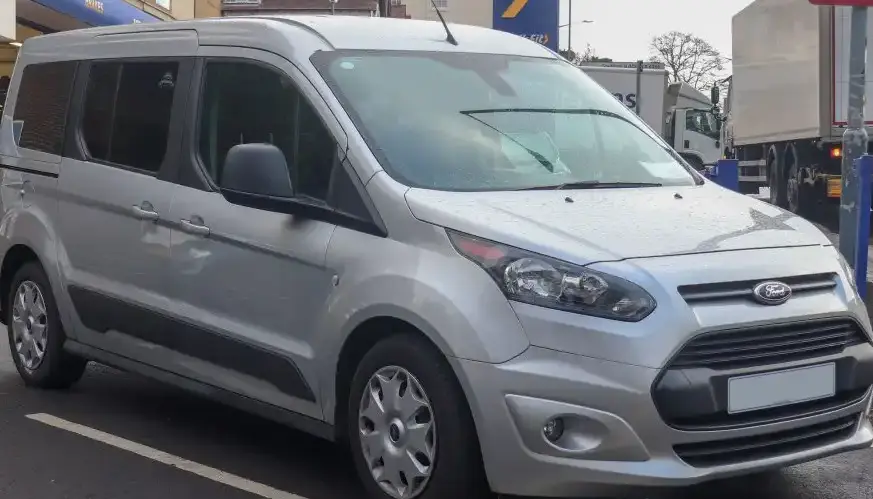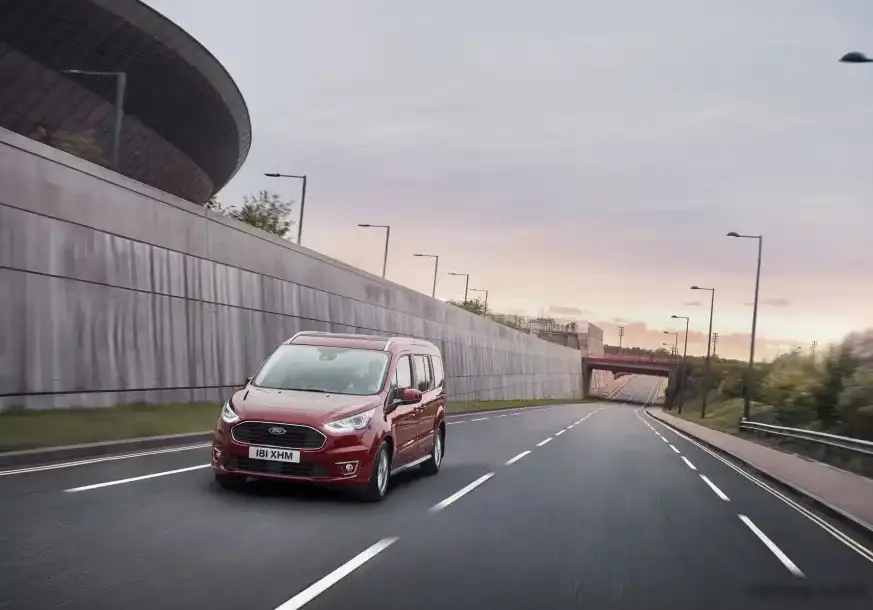
The Ford Grand Tourneo Connect II, specifically the 1.5 EcoBlue 120 horsepower automatic variant with Start/Stop technology, represents a significant iteration of Ford’s compact people carrier, produced from 2018 through 2020. This facelifted version of the second-generation Tourneo Connect (introduced in 2013) aimed to refine the vehicle’s appeal in the European market, offering a practical and efficient option for families and commercial users alike. Positioned as a mid-range offering within the Tourneo Connect lineup, it bridged the gap between the more basic, lower-powered engines and the higher-specification trims. The Grand Tourneo Connect, with its extended wheelbase, provided increased interior space and versatility compared to the standard Tourneo Connect.
Technical Specifications
| Brand | Ford |
| Model | Tourneo Connect |
| Generation | Grand Tourneo Connect II (facelift 2018) |
| Type (Engine) | 1.5 EcoBlue (120 Hp) Automatic S&S |
| Start of production | 2018 |
| End of production | 2020 |
| Powertrain Architecture | Internal Combustion engine |
| Body type | Minivan |
| Seats | 5 |
| Doors | 5 |
| Fuel consumption (urban) | 5.3-5.4 l/100 km (44.4 – 43.6 US mpg) |
| Fuel consumption (extra urban) | 5.0-5.2 l/100 km (47 – 45.2 US mpg) |
| Fuel consumption (combined) | 5.2-5.3 l/100 km (45.2 – 44.4 US mpg) |
| CO2 emissions | 135-139 g/km |
| Fuel Type | Diesel |
| Acceleration 0 – 100 km/h | 12.9 sec |
| Acceleration 0 – 62 mph | 12.9 sec |
| Acceleration 0 – 60 mph | 12.3 sec |
| Maximum speed | 170 km/h (105.63 mph) |
| Emission standard | Euro 6 d-TEMP |
| Weight-to-power ratio | 14.2 kg/Hp |
| Weight-to-torque ratio | 6.3 kg/Nm |
| Power | 120 Hp @ 3600 rpm |
| Torque | 270 Nm @ 1750-2500 rpm (199.14 lb.-ft.) |
| Engine layout | Front, Transverse |
| Engine Model/Code | ZTGA |
| Engine displacement | 1499 cm3 (91.47 cu. in.) |
| Number of cylinders | 4 |
| Engine configuration | Inline |
| Number of valves per cylinder | 2 |
| Fuel injection system | Diesel Commonrail |
| Engine aspiration | Turbocharger, Intercooler |
| Engine oil capacity | 6 l (6.34 US qt | 5.28 UK qt) |
| Coolant capacity | 7 l (7.4 US qt | 6.16 UK qt) |
| Kerb Weight | 1700-1893 kg (3747.86 – 4173.35 lbs.) |
| Max. weight | 2320-2445 kg (5114.72 – 5390.3 lbs.) |
| Max load | 552-620 kg (1216.95 – 1366.87 lbs.) |
| Trunk (boot) space – minimum | 1529 l (54 cu. ft.) |
| Trunk (boot) space – maximum | 2761 l (97.5 cu. ft.) |
| Permitted trailer load with brakes (12%) | 744-919 kg (1640.24 – 2026.05 lbs.) |
| Permitted trailer load without brakes | 730-750 kg (1609.37 – 1653.47 lbs.) |
| Permitted towbar download | 75 kg (165.35 lbs.) |
| Length | 4825 mm (189.96 in.) |
| Width | 1835 mm (72.24 in.) |
| Width with mirrors folded | 1966 mm (77.4 in.) |
| Width including mirrors | 2137 mm (84.13 in.) |
| Height | 1847 mm (72.72 in.) |
| Wheelbase | 3062 mm (120.55 in.) |
| Minimum turning circle | 12.2 m (40.03 ft.) |
| Drivetrain Architecture | Front wheel drive |
| Number of gears | 8 |
| Gearbox type | Automatic transmission |
| Front suspension | Independent, McPherson with coil spring and anti-roll bar |
| Rear suspension | Semi-dependent beam with stabilizer |
| Front brakes | Ventilated discs |
| Rear brakes | Disc |
| Assisting systems | ABS (Anti-lock braking system) |
| Steering type | Steering rack and pinion |
| Tires size | 205/60 R16 |
| Wheel rims size | 6.5J x 16 |
Introduction
The 1.5 EcoBlue engine, introduced as part of Ford’s wider engine family, was designed to offer improved fuel efficiency and reduced emissions compared to its predecessors. The 120 horsepower variant, coupled with a six-speed automatic transmission, was a popular choice for drivers prioritizing comfort and ease of use. This combination aimed to provide a balance between acceptable performance and lower running costs, making it suitable for both urban commuting and longer journeys. The Grand Tourneo Connect II, in this configuration, served as a versatile vehicle for families, tradespeople, and those needing a practical and spacious vehicle.
Powertrain & Engine Architecture
The heart of this variant is the 1.5-liter EcoBlue turbocharged diesel engine, designated with the engine code ZTGA. This engine utilizes a common-rail direct injection system, delivering fuel directly into the combustion chamber at extremely high pressure for optimized combustion. The EcoBlue series incorporates several technologies aimed at improving efficiency, including a revised combustion chamber design and low-friction components. The engine features a single turbocharger with an intercooler to increase air density and boost power output. The eight-speed automatic transmission, a key component of this variant, provides smooth and efficient gear changes. This transmission is designed to optimize engine performance and fuel economy by keeping the engine within its optimal operating range. The Start/Stop system further enhances fuel efficiency by automatically shutting off the engine when the vehicle is stationary, such as at traffic lights.
Driving Characteristics
The 120 horsepower EcoBlue engine, paired with the eight-speed automatic, delivers adequate performance for everyday driving. Acceleration from 0-60 mph takes around 12.3 seconds, and top speed is rated at 170 km/h (105.63 mph). While not particularly sporty, the engine provides sufficient torque (270 Nm or 199.14 lb.-ft.) for comfortable cruising and overtaking. The automatic transmission contributes to a relaxed driving experience, particularly in urban environments. Compared to the lower-powered versions of the Tourneo Connect, this variant offers a noticeable improvement in responsiveness. However, it falls short of the performance offered by higher-output engines, such as those found in the Sport trim levels. The gear ratios are tuned for fuel efficiency, which can sometimes result in the transmission being hesitant to downshift quickly when needing immediate acceleration.
Equipment & Trim Levels
The 1.5 EcoBlue 120 hp Automatic S&S typically came equipped with a reasonable level of standard features. These generally included air conditioning, power windows, power mirrors, a basic audio system with USB connectivity, and ABS brakes. Safety features such as electronic stability control and multiple airbags were also standard. Higher trim levels offered additional features like alloy wheels, a touchscreen infotainment system with navigation, rear parking sensors, and cruise control. Interior upholstery was typically cloth, with options for upgraded materials available. The dashboard layout was functional and straightforward, prioritizing practicality over luxury.
Chassis & Braking
The Grand Tourneo Connect II utilizes a McPherson strut front suspension and a semi-independent beam rear suspension. This setup provides a comfortable ride quality, although it’s not particularly sporty. The front suspension incorporates a stabilizer bar to reduce body roll during cornering. Braking duties are handled by ventilated discs on the front wheels and solid discs on the rear. ABS (Anti-lock Braking System) is standard, providing enhanced braking performance and stability. The steering is a rack and pinion system, offering reasonable precision and feedback.
Market Reception & Comparison
The 1.5 EcoBlue 120 hp Automatic variant of the Grand Tourneo Connect II was generally well-received by critics as a practical and efficient option. It was praised for its spacious interior, comfortable ride, and reasonable fuel economy (5.2-5.3 l/100 km). Compared to the lower-powered engines, it offered a noticeable improvement in performance, making it more suitable for longer journeys and carrying heavier loads. However, some reviewers noted that the automatic transmission could be somewhat hesitant at times. In terms of reliability, the EcoBlue engine has proven to be generally robust, although some owners have reported issues with the diesel particulate filter (DPF), particularly with frequent short journeys. Compared to petrol-powered alternatives, the diesel engine offered significantly better fuel economy.
Legacy
The Ford Grand Tourneo Connect II 1.5 EcoBlue 120 hp Automatic S&S remains a popular choice in the used car market due to its practicality, fuel efficiency, and relatively low running costs. The EcoBlue engine has proven to be reasonably reliable, although regular maintenance is essential, particularly regarding the DPF. These vehicles represent a good value proposition for families and businesses seeking a versatile and economical people carrier. While newer models offer more advanced technology and features, the second-generation Tourneo Connect continues to provide a solid and dependable transportation solution.