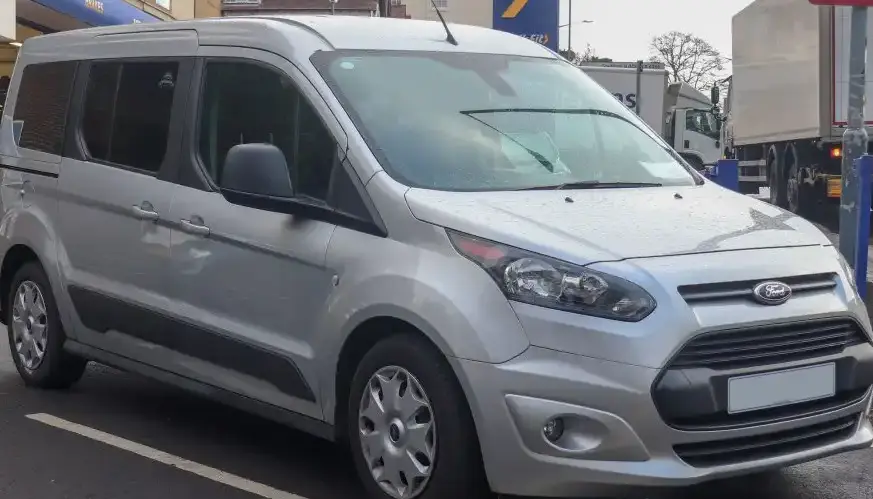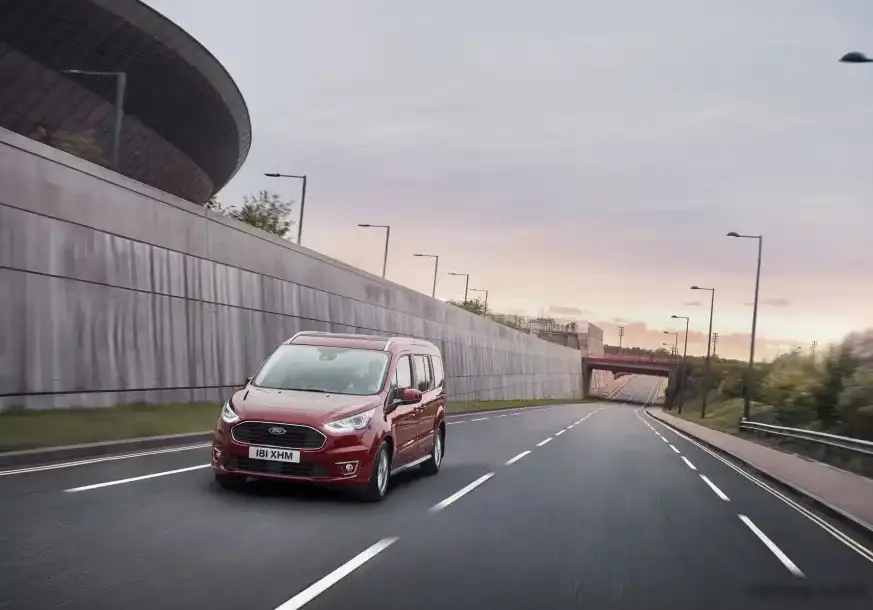
The Ford Grand Tourneo Connect II, specifically the 1.5 EcoBlue (75 hp) S&S 7-seat variant produced from 2018 to 2020, represents an entry-level offering within the second generation of Ford’s compact people carrier. This model, a facelift of the original Tourneo Connect II introduced in 2013, was primarily aimed at the European market, offering a practical and affordable seven-seater option for families and businesses. It slots into the lineup below higher-powered diesel variants and the petrol-powered options, prioritizing fuel efficiency and lower running costs over outright performance. The “S&S” designation indicates the inclusion of Ford’s Auto Start/Stop technology, further enhancing fuel economy.
Technical Specifications
| Brand | Ford |
| Model | Tourneo Connect |
| Generation | Grand Tourneo Connect II (facelift 2018) |
| Type | 1.5 EcoBlue (75 Hp) S&S 7 Seat |
| Start of production | 2018 |
| End of production | 2020 |
| Powertrain Architecture | Internal Combustion engine |
| Body type | Minivan |
| Seats | 7 |
| Doors | 5 |
| Fuel consumption (urban) | 5.2-5.5 l/100 km (45.2 – 42.8 US mpg) |
| Fuel consumption (extra urban) | 4.5-4.7 l/100 km (52.3 – 50 US mpg) |
| Fuel consumption (combined) | 4.8-5.0 l/100 km (49 – 47 US mpg) |
| CO2 emissions | 125-130 g/km |
| Fuel Type | Diesel |
| Acceleration 0 – 100 km/h | 17.8 sec |
| Acceleration 0 – 62 mph | 17.8 sec |
| Acceleration 0 – 60 mph | 16.9 sec |
| Maximum speed | 155 km/h (96.31 mph) |
| Emission standard | Euro 6 d-TEMP |
| Weight-to-power ratio | 22.3 kg/Hp |
| Weight-to-torque ratio | 7.6 kg/Nm |
| Power | 75 Hp @ 3600 rpm |
| Torque | 220 Nm @ 1750-2250 rpm (162.26 lb.-ft.) |
| Engine layout | Front, Transverse |
| Engine Model/Code | BEGA |
| Engine displacement | 1499 cm3 (91.47 cu. in.) |
| Number of cylinders | 4 |
| Engine configuration | Inline |
| Number of valves per cylinder | 2 |
| Fuel injection system | Diesel Commonrail |
| Engine aspiration | Turbocharger, Intercooler |
| Engine oil capacity | 6 l (6.34 US qt | 5.28 UK qt) |
| Coolant capacity | 7 l (7.4 US qt | 6.16 UK qt) |
| Kerb Weight | 1676-1838 kg (3694.95 – 4052.1 lbs.) |
| Max. weight | 2300-2405 kg (5070.63 – 5302.12 lbs.) |
| Max load | 567-624 kg (1250.02 – 1375.68 lbs.) |
| Trunk (boot) space – minimum | 322 l (11.37 cu. ft.) |
| Trunk (boot) space – maximum | 2620 l (92.52 cu. ft.) |
| Permitted trailer load with brakes (12%) | 1100-1263 kg (2425.08 – 2784.44 lbs.) |
| Permitted trailer load without brakes | 750 kg (1653.47 lbs.) |
| Permitted towbar download | 75 kg (165.35 lbs.) |
| Length | 4825 mm (189.96 in.) |
| Width | 1835 mm (72.24 in.) |
| Width with mirrors folded | 1966 mm (77.4 in.) |
| Width including mirrors | 2137 mm (84.13 in.) |
| Height | 1847 mm (72.72 in.) |
| Wheelbase | 3062 mm (120.55 in.) |
| Minimum turning circle | 12.2 m (40.03 ft.) |
| Drivetrain Architecture | Front wheel drive |
| Number of gears | 6 |
| Gearbox type | Manual transmission |
| Front suspension | Independent, McPherson with coil spring and anti-roll bar |
| Rear suspension | Semi-dependent beam with stabilizer |
| Front brakes | Ventilated discs |
| Rear brakes | Disc |
| Assisting systems | ABS |
| Steering type | Steering rack and pinion |
| Tires size | 205/60 R16 |
| Wheel rims size | 6.5J x 16 |
INTRODUCTION
The Ford Grand Tourneo Connect II (facelift 2018) 1.5 EcoBlue 75 hp model is a five-door, seven-seat minivan designed to provide affordable and practical transportation. Introduced as part of the mid-life refresh of the second-generation Tourneo Connect, this variant utilizes Ford’s 1.5-liter EcoBlue diesel engine, paired with a six-speed manual transmission. Positioned as the entry point to the Grand Tourneo Connect range, it catered to budget-conscious buyers who prioritized space and fuel efficiency over performance. Built on the 1HX0/A3 platform shared with other Ford and PSA Group vehicles, the Tourneo Connect aimed to combine the practicality of a van with the comfort and features expected of a family vehicle.
Powertrain & Engine Architecture
At the heart of this variant lies Ford’s 1.5-liter EcoBlue diesel engine, designated with the code BEGA. This engine is a four-cylinder, inline configuration, featuring two valves per cylinder and a turbocharger with intercooler. The EcoBlue series represented a significant step forward in Ford’s diesel technology, incorporating features like a low-pressure exhaust gas recirculation (EGR) system and a revised combustion chamber design to improve efficiency and reduce emissions. Fuel is delivered via a common-rail direct injection system, optimizing fuel atomization and combustion. The 75 hp output is achieved at 3600 rpm, while peak torque of 220 Nm (162.26 lb.-ft.) is available between 1750 and 2250 rpm. The engine is transversely mounted in the front of the vehicle. The six-speed manual transmission provides a relatively long gearing, prioritizing fuel economy over rapid acceleration. Gear ratios are tuned to keep the engine operating within its optimal torque band during typical driving conditions.
Driving Characteristics
The 1.5 EcoBlue 75 hp engine, coupled with the manual transmission, delivers a driving experience focused on economy rather than excitement. Acceleration is modest, taking approximately 17.8 seconds to reach 100 km/h (62 mph). The long gearing contributes to a relaxed cruising experience on motorways, but can feel strained when overtaking or climbing hills. The engine’s torque delivery is relatively flat, providing adequate pulling power for everyday driving, but it lacks the responsiveness of higher-powered variants. Compared to the 1.0 EcoBoost petrol engine or the more powerful 1.5 EcoBlue 120 hp diesel, this variant feels noticeably slower. However, the manual transmission allows for greater driver control and engagement compared to an automatic, and contributes to improved fuel economy.
Equipment & Trim Levels
The 1.5 EcoBlue 75 hp S&S 7-seat model typically came equipped with a basic level of standard features. These generally included air conditioning, power steering, electric front windows, a basic audio system with USB connectivity, and ABS brakes. Safety features such as driver and passenger airbags were standard. Interior upholstery was typically cloth, with a functional, rather than luxurious, design. Optional extras included alloy wheels, rear parking sensors, a touchscreen infotainment system with navigation, and cruise control. Trim levels varied slightly depending on the market, but this variant generally represented the entry-level offering, with more premium features reserved for higher-spec models.
Chassis & Braking
The Grand Tourneo Connect II utilizes a McPherson strut independent suspension setup at the front, providing a comfortable ride quality. The rear suspension employs a semi-dependent beam with a stabilizer bar, offering a good balance between ride comfort and handling. Braking duties are handled by ventilated discs at the front and solid discs at the rear. ABS (Anti-lock Braking System) is standard, enhancing braking performance and stability. The suspension tuning is geared towards comfort and practicality, rather than sporty handling. The relatively lightweight construction of the vehicle helps to mitigate the effects of the modest engine power.
Market Reception & Comparison
The 1.5 EcoBlue 75 hp variant of the Grand Tourneo Connect II was generally well-received by critics as a practical and affordable family vehicle. Its fuel economy was a key selling point, with combined figures ranging from 4.8 to 5.0 l/100 km. However, its performance was often criticized as being underpowered, particularly when fully loaded with passengers and luggage. Compared to the 1.5 EcoBlue 120 hp model, the 75 hp version offered significantly lower running costs but at the expense of performance and refinement. The petrol-powered 1.0 EcoBoost offered a more responsive driving experience, but typically delivered lower fuel economy. The 75 hp variant appealed to buyers who prioritized practicality and economy over driving enjoyment.
Legacy
The 1.5 EcoBlue engine proved to be a relatively reliable unit, although, like all diesel engines, it is susceptible to issues related to the diesel particulate filter (DPF) if not driven on longer journeys regularly. The Grand Tourneo Connect II, in general, has proven to be a durable and practical vehicle, and the 1.5 EcoBlue 75 hp variant remains a popular choice in the used car market for those seeking an affordable and spacious people carrier. Its simplicity and relatively low maintenance costs contribute to its ongoing appeal. While not the most exciting vehicle to drive, it fulfills its intended purpose of providing practical and economical transportation for families and businesses.