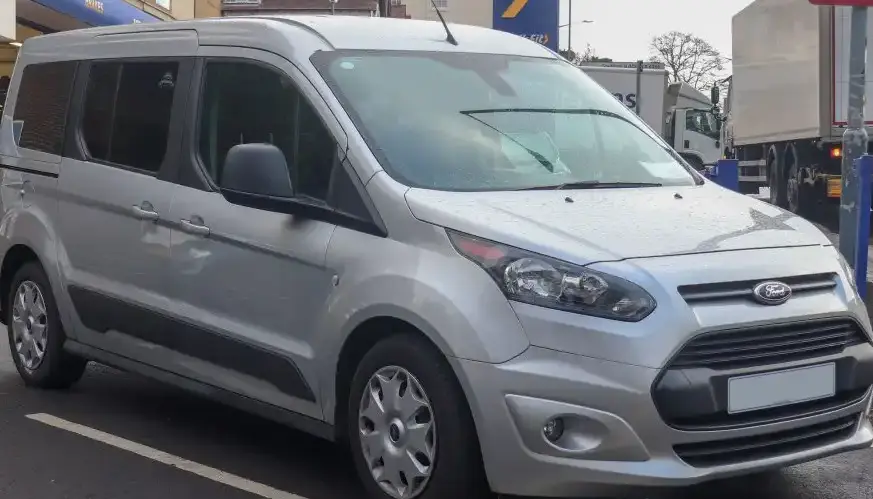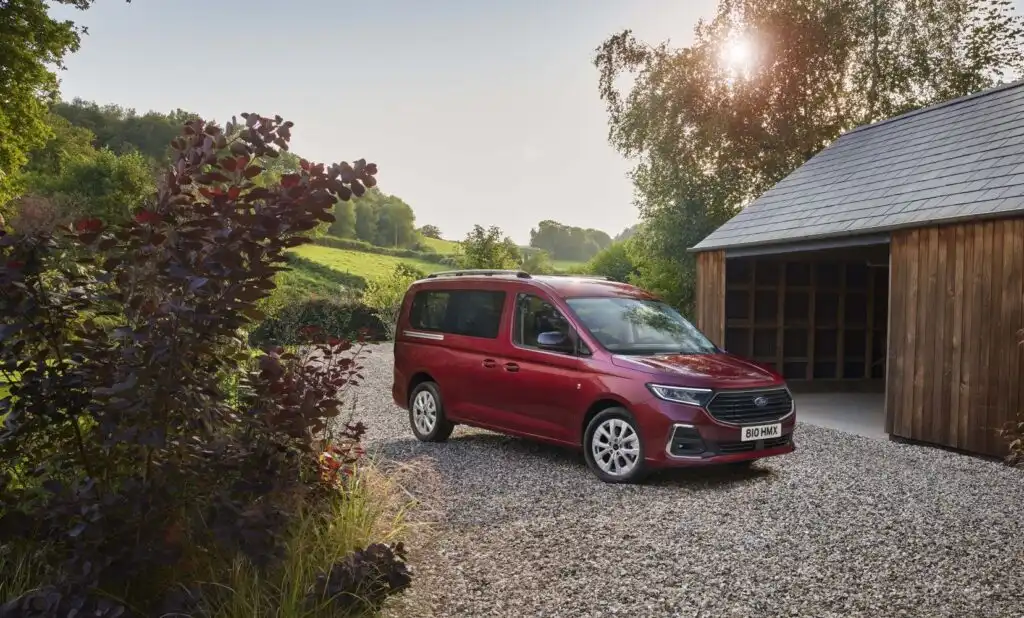
The Ford Grand Tourneo Connect III 1.5 EcoBoost (114 hp) Powershift is a compact multi-purpose vehicle (MPV) produced by Ford starting in 2022. It represents a significant update to the Tourneo Connect line, built upon the shared platform with the Volkswagen Caddy, following Ford’s collaboration with the Volkswagen Group. This particular variant, equipped with the 1.5-liter EcoBoost engine and a seven-speed Powershift dual-clutch transmission, occupies a mid-range position within the Tourneo Connect III lineup, offering a balance between fuel efficiency, practicality, and affordability. It’s designed to appeal to families and individuals needing a versatile vehicle for both passenger and cargo transport.
Technical Specifications
| Brand | Ford |
| Model | Tourneo Connect |
| Generation | Grand Tourneo Connect III |
| Type (Engine) | 1.5 EcoBoost (114 Hp) Powershift |
| Start of production | 2022 |
| Powertrain Architecture | Internal Combustion engine |
| Body type | MPV |
| Seats | 5-7 |
| Doors | 5 |
| Fuel consumption at Low speed (WLTP) | 9-7.9 l/100 km (26.1 – 29.8 US mpg, 31.4 – 35.8 UK mpg, 11.1 – 12.7 km/l) |
| Fuel consumption at Medium speed (WLTP) | 7.1-6.1 l/100 km (33.1 – 38.6 US mpg, 39.8 – 46.3 UK mpg, 14.1 – 16.4 km/l) |
| Fuel consumption at high speed (WLTP) | 7.1-5.4 l/100 km (33.1 – 43.6 US mpg, 39.8 – 52.3 UK mpg, 14.1 – 18.5 km/l) |
| Fuel consumption at very high speed (WLTP) | 7.4-6.6 l/100 km (31.8 – 35.6 US mpg, 38.2 – 42.8 UK mpg, 13.5 – 15.2 km/l) |
| Combined fuel consumption (WLTP) | 7.1-6.3 l/100 km (33.1 – 37.3 US mpg, 39.8 – 44.8 UK mpg, 14.1 – 15.9 km/l) |
| CO2 emissions (WLTP) | 143-162 g/km |
| Fuel Type | Petrol (Gasoline) |
| Acceleration 0 – 100 km/h | 12.4 sec |
| Acceleration 0 – 62 mph | 12.4 sec |
| Acceleration 0 – 60 mph | 11.8 sec |
| Maximum speed | 182 km/h (113.09 mph) |
| Emission standard | Euro 6d-ISC-FCM |
| Weight-to-power ratio | 13.8 kg/Hp, 72.5 Hp/tonne |
| Weight-to-torque ratio | 7.1 kg/Nm, 139.9 Nm/tonne |
| Power | 114 Hp @ 4500-6000 rpm |
| Power per litre | 76.1 Hp/l |
| Torque | 220 Nm @ 1750-3000 rpm (162.26 lb.-ft. @ 1750-3000 rpm) |
| Engine layout | Front, Transverse |
| Engine Model/Code | DPBC |
| Engine displacement | 1498 cm3 (91.41 cu. in.) |
| Number of cylinders | 4 |
| Engine configuration | Inline |
| Cylinder Bore | 74.5 mm (2.93 in.) |
| Piston Stroke | 85.9 mm (3.38 in.) |
| Compression ratio | 12.5:1 |
| Number of valves per cylinder | 4 |
| Fuel injection system | Direct injection |
| Engine aspiration | Turbocharger, Intercooler |
| Valvetrain | DOHC |
| Kerb Weight | 1572-1688 kg (3465.67 – 3721.4 lbs.) |
| Max. weight | 2350 kg (5180.86 lbs.) |
| Max load | 662-778 kg (1459.46 – 1715.2 lbs.) |
| Trunk (boot) space – minimum | 650 l (22.95 cu. ft.) |
| Trunk (boot) space – maximum | 3105 l (109.65 cu. ft.) |
| Fuel tank capacity | 50 l (13.21 US gal | 11 UK gal) |
| Max. roof load | 100 kg (220.46 lbs.) |
| Permitted trailer load with brakes (8%) | 1500 kg (3306.93 lbs.) |
| Permitted trailer load with brakes (12%) | 1500 kg (3306.93 lbs.) |
| Permitted trailer load without brakes | 750 kg (1653.47 lbs.) |
| Permitted towbar download | 75 kg (165.35 lbs.) |
| Length | 4868 mm (191.65 in.) |
| Width | 1855 mm (73.03 in.) |
| Width including mirrors | 2100 mm (82.68 in.) |
| Height | 1835 mm (72.24 in.) |
| Wheelbase | 2970 mm (116.93 in.) |
| Front track | 1565-1572 mm (61.61 – 61.89 in.) |
| Rear (Back) track | 1602-1606 mm (63.07 – 63.23 in.) |
| Ride height (ground clearance) | 144 mm (5.67 in.) |
| Minimum turning circle (turning diameter) | 12.1 m (39.7 ft.) |
| Drivetrain Architecture | The Internal combustion engine (ICE) drives the front wheels of the vehicle. |
| Drive wheel | Front wheel drive |
| Number of gears and type of gearbox | 7 gears, automatic transmission Powershift |
| Front suspension | Independent, type McPherson with coil spring and anti-roll bar |
| Rear suspension | Rigid axle suspension, Trailing arm, Coil spring |
| Front brakes | Ventilated discs, 288-312 mm |
| Rear brakes | Disc, 272-300 mm |
| Assisting systems | ABS (Anti-lock braking system) |
| Steering type | Steering rack and pinion |
| Power steering | Electric Steering |
| Tires size | 205/65 R15; 205/60 R16 |
| Wheel rims size | 6.0J x 15; 6.5J x 16 |
Powertrain & Engine Architecture
The heart of this Tourneo Connect variant is the Ford 1.5 EcoBoost DPBC engine, a turbocharged, direct-injection inline-four cylinder. This engine is part of Ford’s EcoBoost family, designed to deliver a balance of power and fuel efficiency. The 1498cc displacement is achieved with a bore of 74.5mm and a stroke of 85.9mm, operating at a compression ratio of 12.5:1. The engine utilizes a double overhead camshaft (DOHC) valvetrain with four valves per cylinder. Direct fuel injection ensures precise fuel delivery, optimizing combustion and reducing emissions. A single turbocharger with an intercooler provides forced induction, boosting power output. The engine also incorporates cylinder deactivation technology, allowing it to run on three cylinders under light load conditions to further improve fuel economy. Paired with the engine is Ford’s Powershift seven-speed dual-clutch transmission (DCT). This transmission offers quick and smooth gear changes, contributing to a more engaging driving experience compared to a traditional automatic. The Powershift utilizes two separate clutches, one for odd gears and one for even gears, allowing for pre-selection of the next gear and seamless shifts.
Driving Characteristics
The 114 hp and 220 Nm (162 lb-ft) of torque produced by this powertrain configuration results in a practical, but not particularly sporty, driving experience. Acceleration from 0-60 mph takes approximately 11.8 seconds, and top speed is around 113 mph. The Powershift transmission generally provides smooth shifts, although some drivers have reported occasional low-speed jerkiness, a common characteristic of early dual-clutch transmissions. The engine delivers adequate power for everyday driving situations, including highway cruising and city commuting. However, when fully loaded with passengers and cargo, or when tackling steep inclines, the engine can feel somewhat strained. Compared to higher-output EcoBoost variants or diesel options, this 1.5L engine prioritizes fuel economy over outright performance. The gear ratios in the Powershift transmission are tuned for efficiency, with taller gearing in higher gears to reduce engine speed at cruising speeds.
Equipment & Trim Levels
The 1.5 EcoBoost (114 hp) Powershift trim typically falls into the mid-range of the Tourneo Connect III lineup. Standard equipment generally includes air conditioning, a basic infotainment system with Bluetooth connectivity, power windows and mirrors, and a driver’s airbag. Higher trim levels add features such as a touchscreen infotainment system with navigation, Apple CarPlay and Android Auto compatibility, rear parking sensors, cruise control, and upgraded interior upholstery. Optional extras often include a panoramic sunroof, alloy wheels, and advanced driver-assistance systems like lane departure warning and automatic emergency braking. Interior materials are generally durable and practical, reflecting the vehicle’s utilitarian nature. The dashboard layout is functional and straightforward, with easy-to-use controls.
Chassis & Braking
The Grand Tourneo Connect III utilizes a front-wheel-drive layout. The front suspension consists of an independent McPherson strut setup with coil springs and an anti-roll bar. The rear suspension employs a rigid axle configuration with trailing arms and coil springs. Braking duties are handled by ventilated discs at the front and solid discs at the rear. Anti-lock Braking System (ABS) is standard. The suspension is tuned for comfort and ride quality, prioritizing a smooth and compliant ride over sporty handling. Steering is provided by an electric power steering system, offering light and easy steering feel.
Market Reception & Comparison
The 1.5 EcoBoost (114 hp) Powershift variant of the Tourneo Connect III has been generally well-received as a practical and fuel-efficient option for families and businesses. Critics have praised its spacious interior, versatile seating configurations, and competitive fuel economy. However, some reviewers have noted the engine’s lack of outright power, particularly when the vehicle is fully loaded. Compared to the diesel-powered Tourneo Connect models, the 1.5 EcoBoost offers lower initial cost but slightly higher running costs due to fuel consumption. Compared to higher-output EcoBoost variants, it provides better fuel economy but less performance. The Powershift transmission has also received mixed reviews, with some drivers reporting occasional issues with smoothness.
Legacy
The Ford 1.5 EcoBoost engine and Powershift transmission combination, while offering a good balance of efficiency and practicality, has had some reported reliability concerns, particularly with the Powershift transmission itself. Early versions of the Powershift DCT experienced issues with clutch wear and shuddering. However, Ford has issued software updates and hardware revisions to address these problems. The long-term reliability of this powertrain will depend on proper maintenance and driving habits. In the used car market, this variant represents a relatively affordable entry point into the Tourneo Connect III range, making it an attractive option for budget-conscious buyers seeking a versatile and spacious MPV.