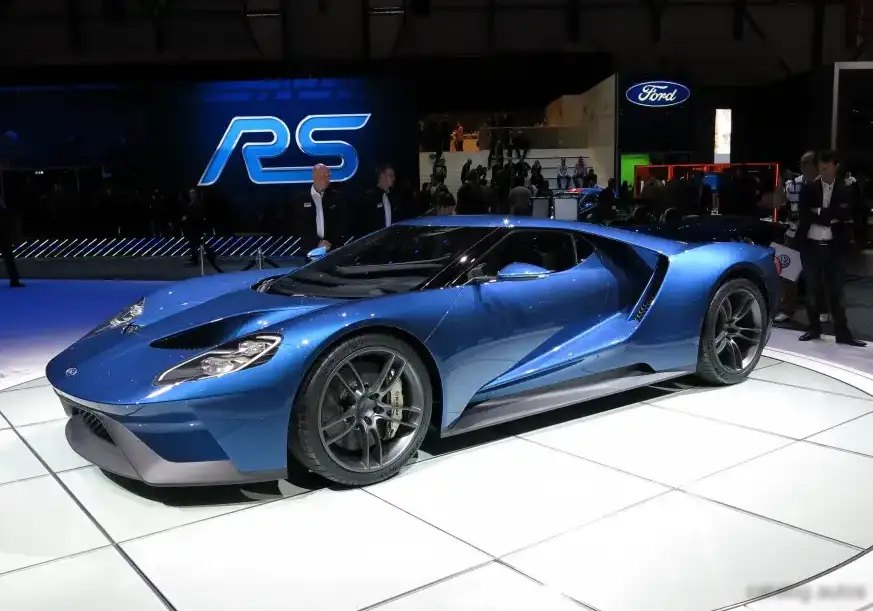
The Ford GT II, produced from 2017 to December 2022, represents the second generation of the iconic Ford GT supercar. Building upon the legacy of the original GT40, the GT II aimed to deliver a modern, high-performance experience with advanced technology and a focus on aerodynamic efficiency. This specific variant, equipped with a 3.5-liter twin-turbocharged V6 engine producing 656 horsepower and paired with a seven-speed automatic transmission, was positioned as the core offering within the GT lineup, balancing performance with relative usability for a supercar. It served as the primary model available to customers, with limited production runs and a high degree of customization available.
Technical Specifications
| Brand | Ford |
| Model | GT |
| Generation | GT II |
| Type (Engine) | 3.5 V6 (656 Hp) Automatic |
| Start of production | 2017 |
| End of production | December, 2022 |
| Powertrain Architecture | Internal Combustion engine |
| Body type | Coupe |
| Seats | 2 |
| Doors | 2 |
| Fuel consumption (urban) | 21.4 l/100 km (11 US mpg, 13.2 UK mpg, 4.7 km/l) |
| Fuel consumption (extra urban) | 13.1 l/100 km (18 US mpg, 21.6 UK mpg, 7.6 km/l) |
| Fuel consumption (combined) | 16.8 l/100 km (14 US mpg, 16.8 UK mpg, 6 km/l) |
| Fuel Type | Petrol (Gasoline) |
| Maximum speed | 347 km/h (215.62 mph) |
| Weight-to-power ratio | 2.1 kg/Hp, 473.6 Hp/tonne |
| Weight-to-torque ratio | 1.9 kg/Nm, 538.6 Nm/tonne |
| Power | 656 Hp @ 6250 rpm |
| Power per litre | 187.6 Hp/l |
| Torque | 746 Nm @ 5900 rpm (550.22 lb.-ft. @ 5900 rpm) |
| Engine layout | Middle, Longitudinal |
| Engine Model/Code | URWA |
| Engine displacement | 3497 cm3 (213.4 cu. in.) |
| Number of cylinders | 6 |
| Engine configuration | V-engine |
| Cylinder Bore | 92.51 mm (3.64 in.) |
| Piston Stroke | 86.7 mm (3.41 in.) |
| Compression ratio | 9:1 |
| Number of valves per cylinder | 4 |
| Fuel injection system | Multi-port manifold injection |
| Engine aspiration | Twin-Turbo, Intercooler |
| Valvetrain | DOHC, Ti-VCT |
| Engine oil capacity | 13 l (13.74 US qt | 11.44 UK qt) |
| Coolant | 19 l (20.08 US qt | 16.72 UK qt) |
| Kerb Weight | 1385 kg (3053.4 lbs.) |
| Max. weight | 1450 kg (3196.7 lbs.) |
| Max load | 65 kg (143.3 lbs.) |
| Fuel tank capacity | 57 l (15.06 US gal | 12.54 UK gal) |
| Length | 4763 mm (187.52 in.) |
| Width | 2004 mm (78.9 in.) |
| Width with mirrors folded | 2113 mm (83.19 in.) |
| Width including mirrors | 2238 mm (88.11 in.) |
| Height | 1110 mm (43.7 in.) |
| Wheelbase | 2710 mm (106.69 in.) |
| Front track | 1694 mm (66.69 in.) |
| Rear (Back) track | 1661 mm (65.39 in.) |
| Ride height (ground clearance) | 119 mm (4.69 in.) |
| Drag coefficient (Cd) | 0.35 |
| Minimum turning circle (turning diameter) | 12.2 m (40.03 ft.) |
| Approach angle | 9.5° |
| Drivetrain Architecture | The Internal combustion engine (ICE) drives the rear wheels of the vehicle. |
| Drive wheel | Rear wheel drive |
| Number of gears and type of gearbox | 7 gears, automatic transmission |
| Front suspension | Independent coil spring |
| Rear suspension | Independent coil spring |
| Front brakes | Ventilated discs |
| Rear brakes | Ventilated discs |
| Assisting systems | ABS (Anti-lock braking system) |
| Steering type | Steering rack and pinion |
| Power steering | Hydraulic Steering |
| Tires size | 245/35 R20; 325/30 R20 |
| Wheel rims size | 20 |
Powertrain & Engine Architecture
The heart of the Ford GT II is the 3.5-liter EcoBoost V6 engine, designated as the URWA code. This engine is a significant departure from the traditional V8s often associated with American supercars. It features a twin-turbocharger setup with an intercooler, delivering substantial power and torque. The engine utilizes direct injection combined with port fuel injection, optimizing combustion efficiency and power output. The valvetrain employs a double overhead camshaft (DOHC) design with Ti-VCT (Twin Independent Variable Camshaft Timing), allowing for precise control of valve timing and further enhancing performance. The seven-speed automatic transmission, sourced from Getrag, is specifically tuned for quick and precise shifts, complementing the engine’s power delivery. The transmission features paddle shifters, allowing the driver to manually override the automatic mode for a more engaging driving experience.
Driving Characteristics
The 656 horsepower and 746 lb-ft of torque, combined with the rear-wheel-drive configuration, provide exhilarating acceleration. The GT II can achieve 0-60 mph in around 3.0 seconds and reach a top speed of 215.62 mph. The automatic transmission is programmed for both comfortable cruising and aggressive performance. In automatic mode, it provides smooth gear changes, while paddle shifters allow for more direct control. The relatively low curb weight of 3,053.4 lbs contributes to the car’s agility and responsiveness. Compared to a hypothetical manual version (which was not offered), the automatic transmission provides slightly slower acceleration times but greater ease of use, particularly in traffic. The power delivery is remarkably linear, thanks to the twin-turbochargers, minimizing turbo lag and providing a broad powerband.
Equipment & Trim Levels
The Ford GT II came standard with a high level of equipment, reflecting its status as a premium supercar. Standard features included a fully digital instrument cluster, a touchscreen infotainment system with navigation, leather upholstery, and climate control. Optional extras included various carbon fiber trim pieces, upgraded audio systems, and bespoke paint options. The interior was designed to be driver-focused, with supportive seats and a minimalist dashboard layout. While not offering distinct “trim levels” in the traditional sense, customers could extensively personalize their GT II through Ford’s customization program, allowing for a wide range of interior and exterior options.
Chassis & Braking
The GT II features a lightweight chassis constructed primarily from aluminum alloy. The suspension utilizes independent coil springs on all four wheels, providing a comfortable yet controlled ride. The braking system consists of ventilated discs on all four wheels, coupled with an Anti-lock Braking System (ABS) for enhanced stopping power and stability. The car’s aerodynamic design, including an active rear wing, generates significant downforce, improving handling and stability at high speeds. The steering system is a hydraulic rack and pinion setup, providing precise and responsive steering feel.
Market Reception & Comparison
The Ford GT II was widely praised by automotive critics for its performance, handling, and advanced technology. However, its high price tag and limited availability restricted its appeal to a select group of buyers. Fuel economy, as expected for a supercar, was relatively poor, averaging around 14 US mpg in combined driving. Compared to other supercars in its class, such as the Ferrari 488 or McLaren 720S, the GT II offered a unique blend of American muscle and European refinement. Its twin-turbo V6 engine provided a distinctive character compared to the naturally aspirated engines found in some competitors.
Legacy
The Ford GT II represents a significant achievement in American automotive engineering. Its innovative design, powerful engine, and advanced technology have cemented its place as a modern classic. While the GT II’s complex powertrain requires specialized maintenance, it has proven to be relatively reliable for a supercar. On the used car market, the GT II commands a high price, reflecting its rarity and desirability. It remains a sought-after vehicle for collectors and enthusiasts alike, representing a high point in Ford’s performance car history.