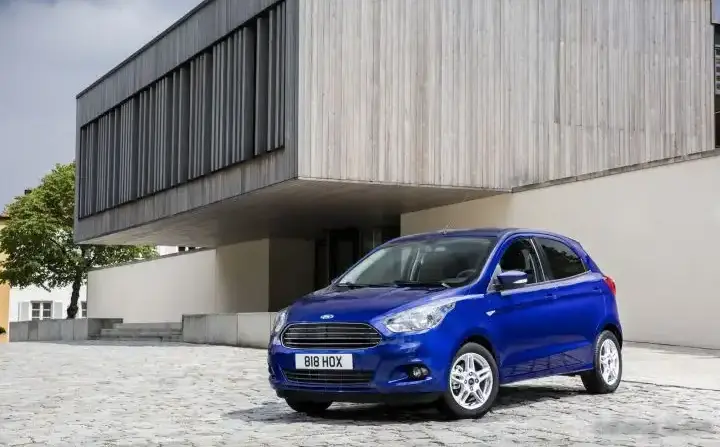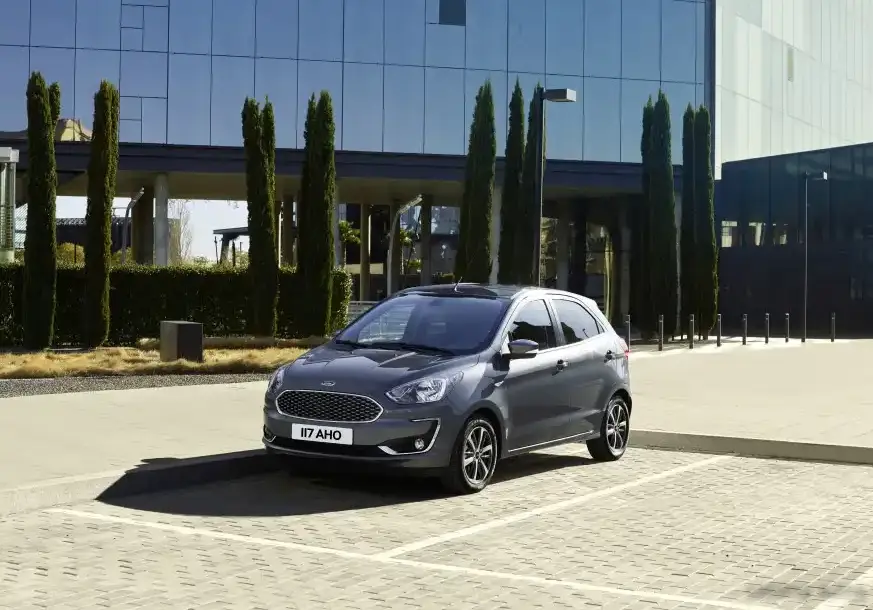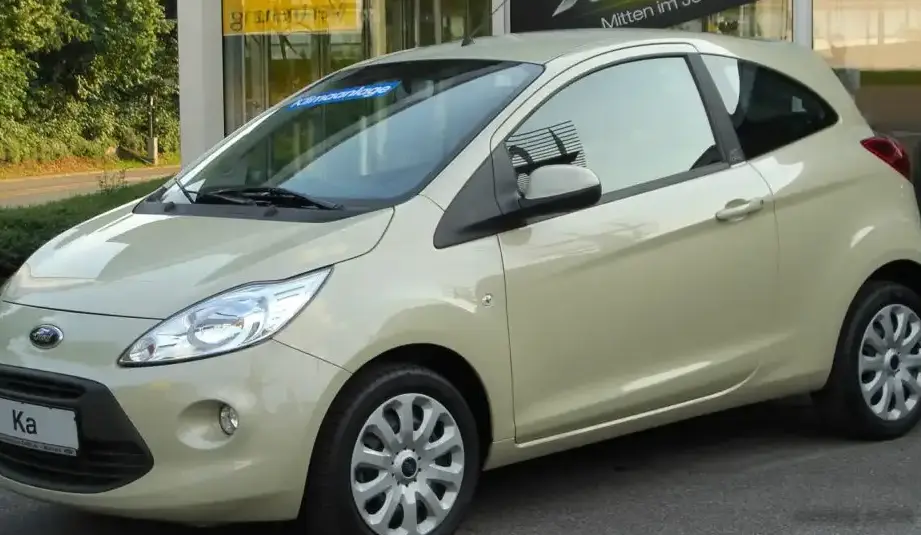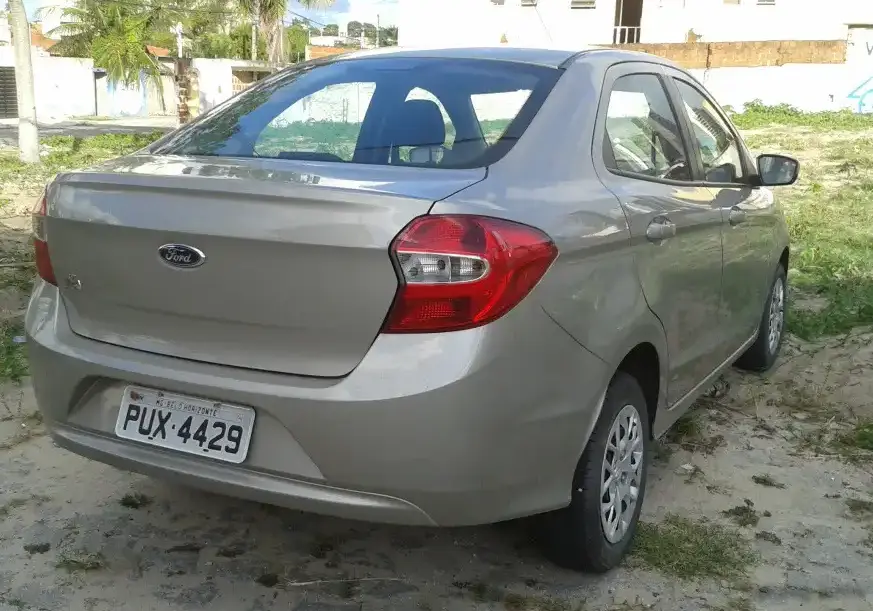
The Ford KA+ Active 1.2 Ti-VCT (85 hp) was a subcompact hatchback and crossover produced by Ford between 2018 and 2021. Positioned as an entry-level offering within the KA+ range, it aimed to provide affordable and practical transportation with a slightly more rugged aesthetic than the standard KA+. This variant was primarily marketed in Europe, where the demand for small, fuel-efficient vehicles remained strong. It represented Ford’s attempt to capture a segment of buyers looking for a versatile and economical city car with a touch of crossover styling.
Technical Specifications
| Brand | Ford |
| Model | KA |
| Generation | KA+ Active |
| Type (Engine) | 1.2 Ti-VCT (85 Hp) |
| Start of production | 2018 |
| End of production | 2021 |
| Powertrain Architecture | Internal Combustion engine |
| Body type | Hatchback, Crossover |
| Seats | 5 |
| Doors | 5 |
| Fuel consumption (urban) | 6.8 l/100 km (34.6 US mpg) |
| Fuel consumption (extra urban) | 5 l/100 km (47 US mpg) |
| Fuel consumption (combined) | 5.7 l/100 km (41.3 US mpg) |
| CO2 emissions | 129 g/km |
| Fuel Type | Petrol (Gasoline) |
| Acceleration 0 – 100 km/h | 13.5 sec |
| Acceleration 0 – 62 mph | 13.5 sec |
| Acceleration 0 – 60 mph | 12.8 sec |
| Maximum speed | 169 km/h (105.01 mph) |
| Emission standard | Euro 6 |
| Power | 85 Hp @ 5500-6500 rpm |
| Torque | 115 Nm @ 4250 rpm (84.82 lb.-ft. @ 4250 rpm) |
| Engine layout | Front, Transverse |
| Engine Model/Code | EN-BI |
| Engine displacement | 1194 cm3 (72.86 cu. in.) |
| Number of cylinders | 3 |
| Engine configuration | Inline |
| Number of valves per cylinder | 4 |
| Fuel injection system | Multi-port manifold injection |
| Engine aspiration | Naturally aspirated engine |
| Engine oil capacity | 4.15 l (4.39 US qt | 3.65 UK qt) |
| Coolant capacity | 6.3 l (6.66 US qt | 5.54 UK qt) |
| Trunk (boot) space – minimum | 270 l (9.53 cu. ft.) |
| Length | 3955 mm (155.71 in.) |
| Width | 1743 mm (68.62 in.) |
| Height | 1551 mm (61.06 in.) |
| Wheelbase | 2489 mm (97.99 in.) |
| Drivetrain Architecture | Front wheel drive |
| Number of gears and type of gearbox | 5 gears, manual transmission |
| Front suspension | Independent, type McPherson with coil spring and anti-roll bar |
| Rear suspension | Semi-independent, coil spring |
| Front brakes | Ventilated discs |
| Rear brakes | Disc |
| Assisting systems | ABS (Anti-lock braking system) |
| Steering type | Steering rack and pinion |
| Power steering | Electric Steering |
| Tires size | 185/60 R15 |
| Wheel rims size | 15 |
Powertrain & Engine Architecture
The KA+ Active 1.2 Ti-VCT utilized Ford’s 1.2-liter three-cylinder EN-BI engine. This engine is part of Ford’s Dragon family of small displacement engines, known for their relatively simple design and focus on fuel efficiency. The ‘Ti-VCT’ designation indicates Twin Independent Variable Camshaft Timing, a technology that optimizes valve timing for improved performance and economy. The engine employs multi-point fuel injection and a naturally aspirated intake, delivering 85 horsepower at between 5,500 and 6,500 rpm and 115 Nm (84.82 lb-ft) of torque at 4,250 rpm. The engine’s compact size and lightweight construction contribute to the KA+’s overall agility. The engine is transversely mounted at the front of the vehicle. The KA+ Active 1.2 Ti-VCT was exclusively offered with a five-speed manual transmission, prioritizing affordability over the convenience of an automatic.
Driving Characteristics
The 1.2 Ti-VCT engine, paired with the five-speed manual transmission, provided adequate, though not exhilarating, performance. Acceleration from 0 to 60 mph took approximately 12.8 seconds, and the top speed was around 105 mph. The engine felt most comfortable in the mid-range, offering sufficient power for everyday driving situations. The gear ratios were tuned for fuel economy, meaning the engine needed to be revved relatively high to achieve brisk acceleration. Compared to potential higher-output versions (which weren’t offered on the KA+ Active), this setup prioritized fuel efficiency and ease of driving over outright performance. The light weight of the KA+ helped to mitigate the engine’s modest power output, making it feel reasonably nimble in urban environments.
Equipment & Trim Levels
The KA+ Active trim level added a degree of ruggedness to the standard KA+. Standard equipment included alloy wheels, roof rails, and protective cladding around the wheel arches and lower body. Inside, the KA+ Active featured durable upholstery and a functional dashboard layout. Air conditioning, power steering, and an audio system with Bluetooth connectivity were typically standard. Optional extras included a rear parking sensor, and upgraded infotainment systems. The interior was designed with practicality in mind, offering ample storage spaces and a comfortable driving position. The Active trim aimed to appeal to buyers who wanted a vehicle that looked capable of handling occasional off-road excursions, even though it remained a front-wheel-drive vehicle.
Chassis & Braking
The KA+ Active utilized a McPherson strut front suspension and a semi-independent coil spring rear suspension. This setup provided a comfortable ride quality, well-suited for navigating city streets. The front brakes were ventilated discs, while the rear brakes were solid discs, providing adequate stopping power for the vehicle’s weight and performance. The electric power steering offered light and precise control. The suspension was tuned to prioritize comfort over sporty handling, resulting in a slightly softer ride. The Active trim often featured a slightly raised ride height compared to the standard KA+, further enhancing its crossover appearance and providing a bit more ground clearance.
Market Reception & Comparison
The Ford KA+ Active 1.2 Ti-VCT was generally well-received by critics as an affordable and practical city car. Its fuel economy of around 41.3 US mpg combined was a major selling point. However, some reviewers noted that the engine lacked power, particularly when fully loaded or driving on inclines. Compared to other small hatchbacks in the European market, such as the Volkswagen Up! or the Hyundai i10, the KA+ Active offered a more spacious interior and a more rugged appearance. Its price point was also competitive, making it an attractive option for budget-conscious buyers. Reliability reports suggested that the 1.2 Ti-VCT engine was generally reliable, although regular maintenance was essential.
Legacy
The Ford KA+ Active 1.2 Ti-VCT represents a specific point in Ford’s strategy to offer affordable and practical vehicles in the European market. While the KA+ range has been discontinued, the 1.2 Ti-VCT engine continues to be used in other Ford models. The powertrain, while not known for exceptional performance, has proven to be reasonably durable and economical. On the used car market, the KA+ Active 1.2 Ti-VCT remains an affordable option for buyers seeking a small, fuel-efficient, and practical vehicle. Its simple mechanical design and readily available parts contribute to its relatively low cost of ownership. The KA+ Active’s blend of hatchback practicality and crossover styling has left a modest but noticeable mark on the subcompact car segment.