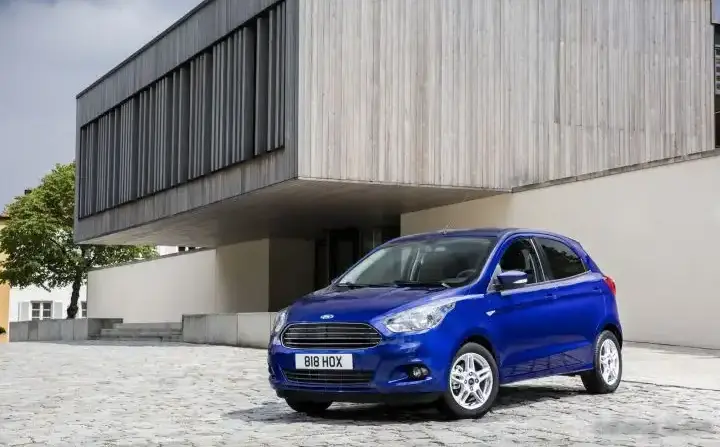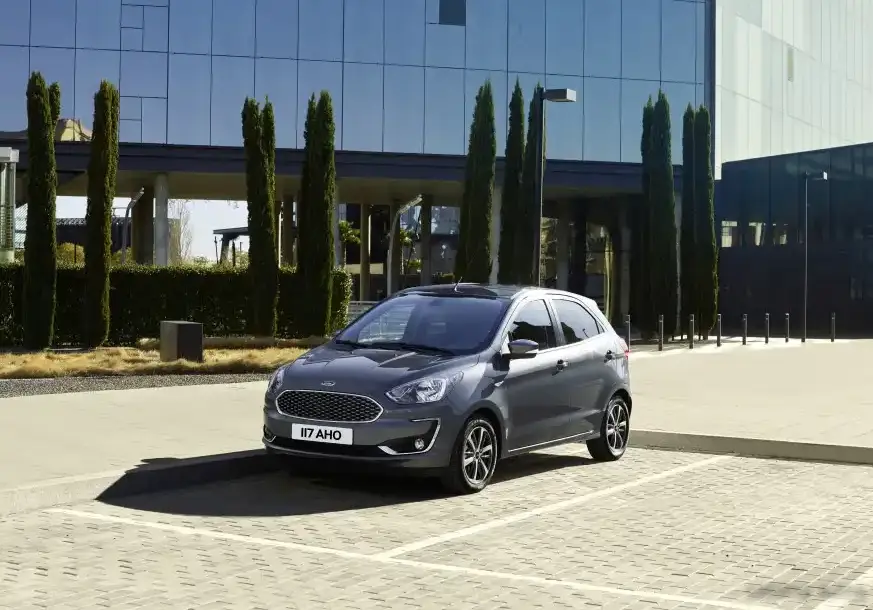
The Ford KA+ (facelift 2018) 1.2 Ti-VCT 70 horsepower variant was a key offering in Ford’s European small car lineup from 2018 to 2021. Positioned as an entry-level option, it aimed to provide affordable and practical transportation within the supermini segment. This version of the KA+ represented a refresh of the original KA+ introduced in 2016, incorporating styling updates and minor mechanical revisions. It was primarily sold in European markets, where the demand for compact, fuel-efficient vehicles remained strong. The KA+ itself was designed to fill a gap left by the discontinuation of the original Ford Ka, offering a more spacious and practical alternative.
Technical Specifications
| Brand | Ford |
| Model | KA |
| Generation | KA+ (facelift 2018) |
| Type (Engine) | 1.2 Ti-VCT (70 Hp) |
| Start of production | 2018 |
| End of production | 2021 |
| Powertrain Architecture | Internal Combustion engine |
| Body type | Hatchback |
| Seats | 5 |
| Doors | 5 |
| Fuel consumption (urban) | 6.3 l/100 km (37.3 US mpg, 44.8 UK mpg, 15.9 km/l) |
| Fuel consumption (extra urban) | 4.4 l/100 km (53.5 US mpg, 64.2 UK mpg, 22.7 km/l) |
| Fuel consumption (combined) | 5.1 l/100 km (46.1 US mpg, 55.4 UK mpg, 19.6 km/l) |
| CO2 emissions | 117 g/km |
| Fuel Type | Petrol (Gasoline) |
| Acceleration 0 – 100 km/h | 14.6 sec |
| Acceleration 0 – 62 mph | 14.6 sec |
| Acceleration 0 – 60 mph | 13.9 sec |
| Maximum speed | 164 km/h (101.9 mph) |
| Emission standard | Euro 6 |
| Power | 70 Hp @ 5500-6500 rpm |
| Power per litre | 58.6 Hp/l |
| Torque | 114 Nm @ 4250 rpm (84.08 lb.-ft. @ 4250 rpm) |
| Engine layout | Front, Transverse |
| Engine Model/Code | EN-AP |
| Engine displacement | 1194 cm3 (72.86 cu. in.) |
| Number of cylinders | 3 |
| Engine configuration | Inline |
| Number of valves per cylinder | 4 |
| Fuel injection system | Multi-port manifold injection |
| Engine aspiration | Naturally aspirated engine |
| Engine oil capacity | 4.15 l (4.39 US qt, 3.65 UK qt) |
| Coolant capacity | 6.3 l (6.66 US qt, 5.54 UK qt) |
| Trunk (boot) space (minimum) | 270 l (9.53 cu. ft.) |
| Length | 3941 mm (155.16 in.) |
| Width | 1704 mm (67.09 in.) |
| Height | 1524 mm (60 in.) |
| Wheelbase | 2489 mm (97.99 in.) |
| Drivetrain Architecture | Front wheel drive |
| Number of gears and type of gearbox | 5 gears, manual transmission |
| Front suspension | Independent, type McPherson with coil spring and anti-roll bar |
| Rear suspension | Semi-independent, coil spring |
| Front brakes | Ventilated discs |
| Rear brakes | Disc |
| Assisting systems | ABS (Anti-lock braking system) |
| Steering type | Steering rack and pinion |
| Power steering | Electric Steering |
| Tires size | 195/55 R15 |
| Wheel rims size | 15 |
Powertrain & Engine Architecture
The heart of the KA+ 1.2 Ti-VCT was the EN-AP engine, a 1.2-liter inline three-cylinder petrol engine. This engine utilized a naturally aspirated configuration and multi-point fuel injection. The Ti-VCT (Twin Independent Variable Camshaft Timing) technology allowed for optimized valve timing, improving both performance and fuel efficiency. The engine produced 70 horsepower at between 5,500 and 6,500 rpm, and 114 Nm (84 lb-ft) of torque at 4,250 rpm. This engine was part of Ford’s Duratec family, known for its relatively simple design and reasonable reliability. The engine was transversely mounted, driving the front wheels. The standard transmission was a five-speed manual gearbox, chosen for its affordability and efficiency. While an automatic transmission was not offered with this specific engine in the KA+ range, the manual gearbox was well-matched to the engine’s power characteristics.
Driving Characteristics
The 1.2 Ti-VCT engine, paired with the five-speed manual transmission, provided adequate, though not exhilarating, performance. Acceleration from 0 to 60 mph took around 13.9 seconds, and top speed was approximately 102 mph. The engine felt somewhat strained at higher speeds or when fully loaded. The gear ratios were tuned for fuel economy rather than outright performance, meaning the engine needed to be revved to extract the most from it. Compared to higher-powered versions of the KA+ (which were not widely available), this variant offered a more economical driving experience, but at the expense of responsiveness. The light weight of the KA+ helped to mitigate the engine’s modest power output, making it feel reasonably nimble in urban environments.
Equipment & Trim Levels
The KA+ 1.2 Ti-VCT typically came with a basic, but functional, level of equipment. Standard features included power steering, ABS, front airbags, and a basic audio system with USB connectivity. Higher trim levels, such as the Zetec, added features like alloy wheels, air conditioning, and electric windows. Interior upholstery was typically cloth, and the dashboard featured a simple, straightforward design. Optional extras included metallic paint, parking sensors, and a more advanced audio system. The focus was on providing essential features at an affordable price point.
Chassis & Braking
The KA+ utilized a McPherson strut front suspension and a semi-independent coil spring rear suspension. This setup provided a comfortable ride quality, particularly on smoother roads. The front brakes were ventilated discs, while the rear brakes were discs. The steering was electrically assisted, providing light and easy steering feel. The chassis was designed to be lightweight and rigid, contributing to the car’s handling characteristics. Stabilizer bars were included to reduce body roll during cornering.
Market Reception & Comparison
The KA+ 1.2 Ti-VCT was generally well-received as an affordable and practical city car. Critics praised its fuel efficiency and low running costs, but noted its modest performance. Compared to other superminis in its class, such as the Volkswagen Up! or the Hyundai i10, the KA+ offered a slightly more spacious interior and a competitive price. However, it lacked some of the refinement and advanced features found in its rivals. Fuel economy was a strong point, with combined figures around 5.1 l/100km, making it an attractive option for budget-conscious buyers.
Legacy
The Ford KA+ 1.2 Ti-VCT has established itself as a reliable and affordable used car option. The EN-AP engine is known for its durability, and routine maintenance is relatively inexpensive. While not a performance car, it provides dependable transportation for urban driving. The simplicity of the powertrain contributes to its long-term reliability. As of today, these vehicles can be found on the used car market at very attractive prices, making them a popular choice for first-time car buyers or those seeking a low-cost runabout.