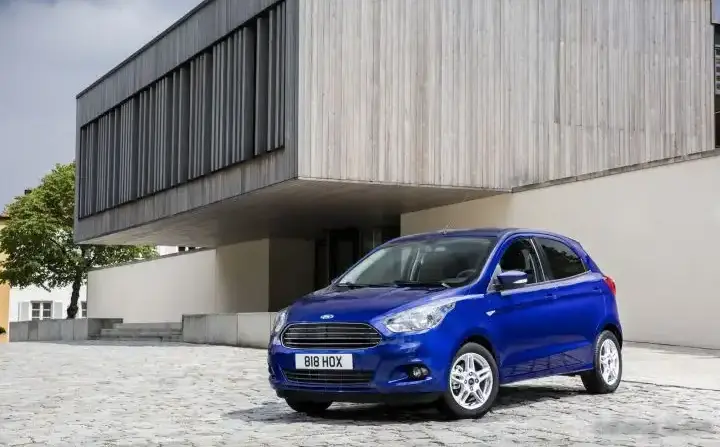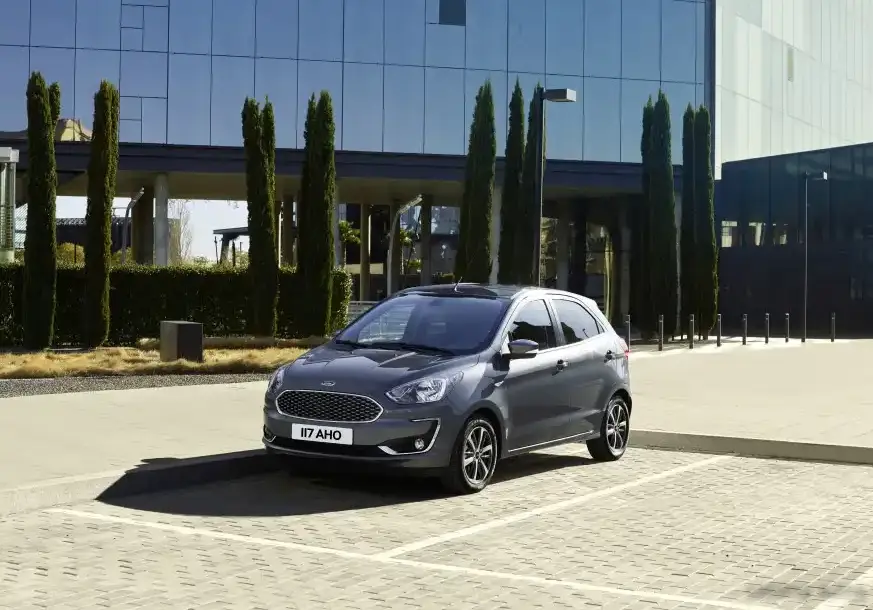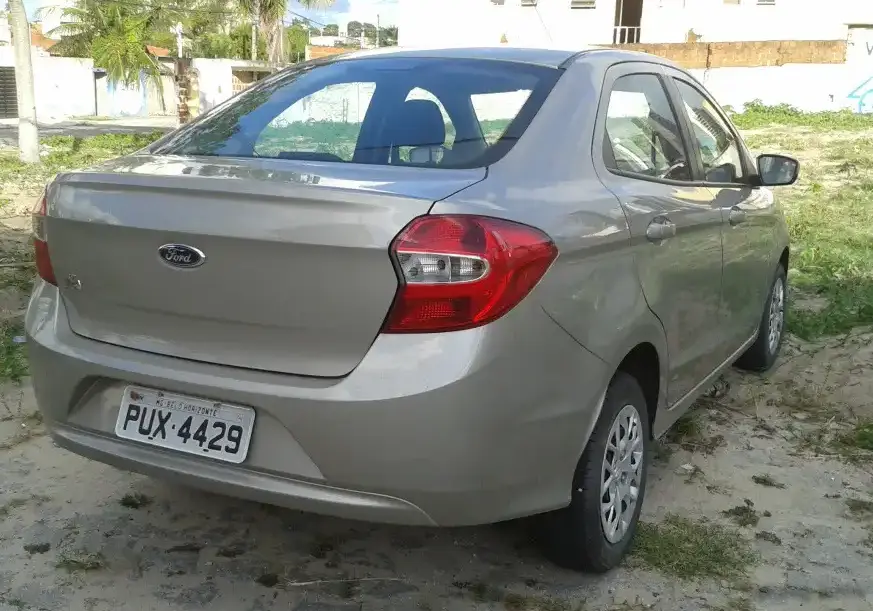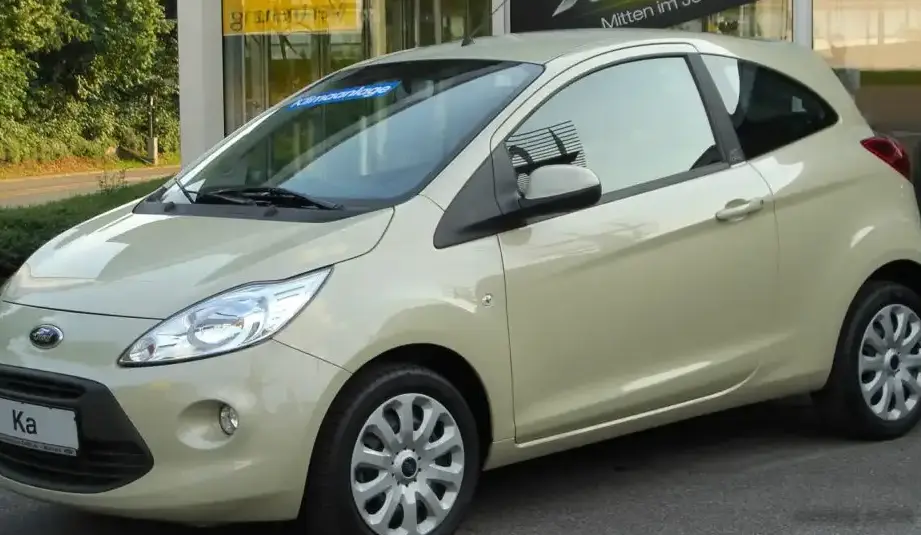
The Ford KA II 1.2 (69 hp) represents an entry-level offering within the second generation of the Ford KA, produced from 2009 to 2016. Positioned as the most affordable and fuel-efficient variant of the KA II range, it primarily targeted first-time car buyers, city commuters, and those seeking a low-cost vehicle for short journeys. This model played a significant role in Ford’s European strategy to offer a competitively priced small car, particularly in markets where fuel economy and affordability were paramount. While not known for outright performance, the 1.2L engine and five-speed manual transmission combination provided a practical and economical solution for everyday transportation.
Technical Specifications
| Brand | Ford |
| Model | KA |
| Generation | KA II |
| Type (Engine) | 1.2 (69 Hp) |
| Start of production | 2009 |
| End of production | 2016 |
| Powertrain Architecture | Internal Combustion engine |
| Body type | Hatchback |
| Seats | 4 |
| Doors | 3 |
| Fuel consumption (economy) – urban (NEDC) | 6.3 l/100 km (37.3 US mpg, 44.8 UK mpg, 15.9 km/l) |
| Fuel consumption (economy) – extra urban (NEDC) | 4.4 l/100 km (53.5 US mpg, 64.2 UK mpg, 22.7 km/l) |
| Fuel consumption (economy) – combined (NEDC) | 5.1 l/100 km (46.1 US mpg, 55.4 UK mpg, 19.6 km/l) |
| CO2 emissions (NEDC) | 119 g/km |
| Fuel Type | Petrol (Gasoline) |
| Acceleration 0 – 100 km/h | 13.1 sec |
| Acceleration 0 – 62 mph | 13.1 sec |
| Acceleration 0 – 60 mph | 12.4 sec |
| Maximum speed | 159 km/h (98.8 mph) |
| Emission standard | Euro 4 |
| Weight-to-power ratio | 12.5 kg/Hp, 79.8 Hp/tonne |
| Weight-to-torque ratio | 8.5 kg/Nm, 117.9 Nm/tonne |
| Power | 69 Hp @ 5500 rpm |
| Power per litre | 55.6 Hp/l |
| Torque | 102 Nm @ 3000 rpm (75.23 lb.-ft. @ 3000 rpm) |
| Engine layout | Front, Transverse |
| Engine Model/Code | 169A4000 |
| Engine displacement | 1242 cm3 (75.79 cu. in.) |
| Number of cylinders | 4 |
| Engine configuration | Inline |
| Cylinder Bore | 70.8 mm (2.79 in.) |
| Piston Stroke | 78.9 mm (3.11 in.) |
| Compression ratio | 10:1 |
| Number of valves per cylinder | 2 |
| Fuel injection system | Multi-port manifold injection |
| Engine aspiration | Naturally aspirated engine |
| Valvetrain | OHC |
| Engine oil capacity | 2.8 l (2.96 US qt | 2.46 UK qt) |
| Coolant | 4.85 l (5.12 US qt | 4.27 UK qt) |
| Kerb Weight | 865 kg (1907 lbs.) |
| Max. weight | 1320 kg (2910.1 lbs.) |
| Max load | 455 kg (1003.1 lbs.) |
| Trunk (boot) space – minimum | 224 l (7.91 cu. ft.) |
| Trunk (boot) space – maximum | 710 l (25.07 cu. ft.) |
| Fuel tank capacity | 35 l (9.25 US gal | 7.7 UK gal) |
| Length | 3620 mm (142.52 in.) |
| Width | 1658 mm (65.28 in.) |
| Width with mirrors folded | 1703 mm (67.05 in.) |
| Width including mirrors | 1894 mm (74.57 in.) |
| Height | 1506 mm (59.29 in.) |
| Wheelbase | 2300 mm (90.55 in.) |
| Front track | 1409 mm (55.47 in.) |
| Rear (Back) track | 1397 mm (55 in.) |
| Minimum turning circle | 10.12 m (33.2 ft.) |
| Drivetrain Architecture | The Internal combustion engine (ICE) drives the front wheels of the vehicle. |
| Drive wheel | Front wheel drive |
| Number of gears and type of gearbox | 5 gears, manual transmission |
| Front suspension | Independent type McPherson, Transverse stabilizer |
| Rear suspension | Transverse stabilizer, Torsion |
| Front brakes | Disc |
| Rear brakes | Drum |
| Assisting systems | ABS (Anti-lock braking system) |
| Steering type | Steering rack and pinion |
| Power steering | Electric Steering |
| Tires size | 175/65 R14 |
| Wheel rims size | 5.5J x 14 |
INTRODUCTION
The Ford KA II, launched in 2008, represented a significant departure from its predecessor, the original Ford KA. Built on the Fiat Punto-derived 1HX0/A3 platform (a result of Ford’s collaboration with Fiat), the KA II aimed to offer a more spacious and refined experience. The 1.2-liter, 69 horsepower variant was introduced alongside a 1.2-liter 82 hp version, serving as the entry point to the KA II range from 2009 through 2016. It was primarily sold in Europe, where its compact size, affordability, and fuel efficiency made it a popular choice for urban drivers. This trim level was designed to appeal to budget-conscious buyers and those prioritizing practicality over performance.
Powertrain & Engine Architecture
The heart of the KA II 1.2 is the Duratec 1.25L inline-four cylinder engine, designated with the engine code 169A4000. This engine is a naturally aspirated, eight-valve (two valves per cylinder) unit featuring a single overhead camshaft (SOHC) valvetrain. It utilizes a multi-point fuel injection system, delivering fuel directly into the intake ports. The engine’s design prioritizes fuel efficiency and reliability over outright power. The 1.2L engine produces 69 horsepower at 5500 rpm and 102 Nm (75.23 lb-ft) of torque at 3000 rpm. This power is delivered through a five-speed manual transmission, which was the standard offering for this variant. The transmission is known for its light shift action, but its ratios are geared towards economy rather than acceleration.
Driving Characteristics
The driving experience in the KA II 1.2 is best described as functional and undemanding. With only 69 horsepower, acceleration is modest, taking approximately 13.1 seconds to reach 62 mph (100 km/h). The engine feels strained at higher speeds, and overtaking maneuvers require careful planning. However, within city limits, the KA II 1.2 is nimble and easy to maneuver, thanks to its small size and light steering. The five-speed gearbox is well-matched to the engine’s characteristics, providing adequate spacing between gears for efficient cruising. Compared to the 82 hp version, the 69 hp model feels noticeably slower, particularly when fully loaded or climbing hills. The suspension setup, while basic, provides a comfortable ride on smooth roads, but can become unsettled on rough surfaces.
Equipment & Trim Levels
The KA II 1.2 typically came with a relatively basic level of equipment, reflecting its position as the entry-level model. Standard features generally included power steering, central locking, front airbags, and an adjustable steering column. Interior upholstery was typically cloth, and the dashboard featured a simple, functional design. Optional extras included air conditioning, electric front windows, and a radio/CD player. Higher trim levels, such as the Style and Zetec, offered additional features like alloy wheels, body-colored bumpers, and upgraded interior trim. The base 1.2 model was often seen as a blank canvas for buyers who prioritized affordability and were willing to forego some of the more luxurious features.
Chassis & Braking
The KA II utilizes a McPherson strut front suspension and a torsion beam rear suspension. This setup provides a reasonable balance between ride comfort and handling, although it’s not particularly sporty. The front brakes are disc brakes, while the rear brakes are drum brakes – a cost-saving measure common in this segment. Anti-lock Braking System (ABS) was standard, enhancing safety during emergency braking situations. The steering is rack and pinion, providing a direct and responsive feel. The relatively lightweight construction of the KA II (approximately 865 kg or 1907 lbs) contributes to its nimble handling characteristics.
Market Reception & Comparison
The Ford KA II 1.2 received generally positive reviews for its affordability, fuel efficiency, and ease of driving. Critics praised its practicality and suitability for urban environments. However, it was often criticized for its lack of power and basic interior. Compared to the 1.2L 82 hp version, the 69 hp model offered slightly better fuel economy but significantly less performance. Rivals such as the Fiat Panda, Volkswagen Up!, and Toyota Aygo offered similar levels of affordability and practicality, but the KA II often stood out for its slightly more spacious interior and comfortable ride. In terms of reliability, the KA II 1.2 proved to be a generally dependable vehicle, with few major mechanical issues reported.
Legacy
The Ford KA II 1.2 remains a popular choice in the used car market, particularly among first-time buyers and those seeking a low-cost, economical vehicle. Its simple mechanical design and readily available parts contribute to its relatively low maintenance costs. While not a performance car, the 1.2L engine has proven to be durable and reliable over the long term. The KA II 1.2 represents a practical and affordable solution for urban transportation, and its legacy as a budget-friendly city car continues to this day.