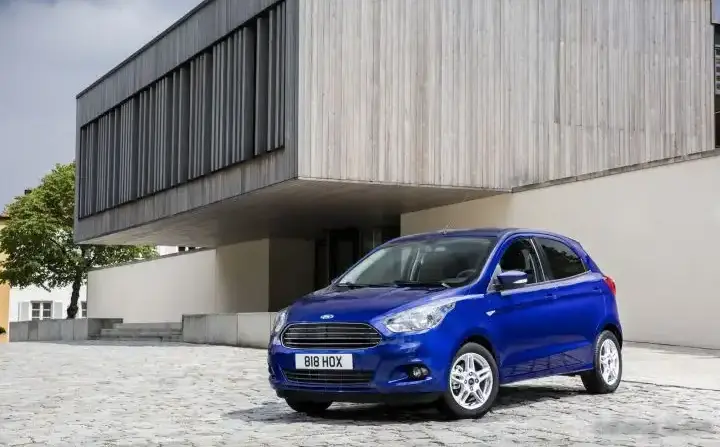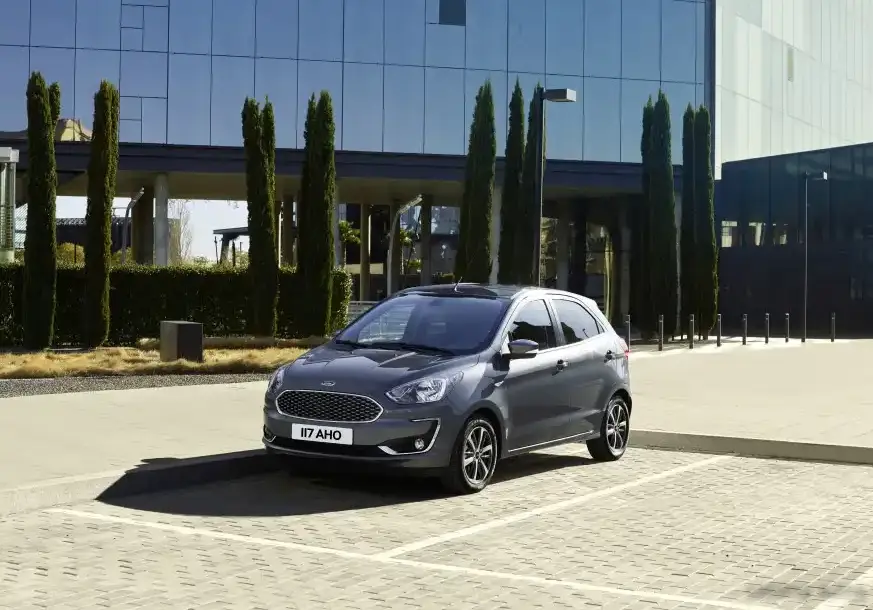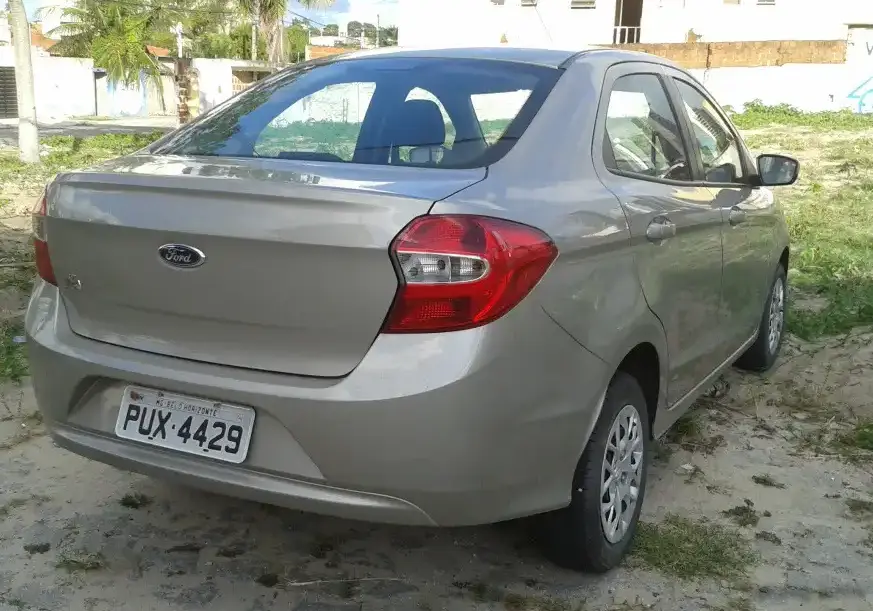
The Ford KA III 1.0 TiVCT 12V (80 hp) was a popular entry-level subcompact car produced by Ford between 2014 and 2018. Positioned as the base engine option within the KA III range, it represented an affordable and fuel-efficient choice for buyers in markets where the KA was primarily sold, particularly in Europe and South America. This variant utilized a small-displacement, three-cylinder engine paired with a five-speed manual transmission, aiming to balance practicality with reasonable running costs. It was built on the Ford B platform, shared with the Ford Fiesta, and represented a significant departure from the earlier KA generations.
Technical Specifications
| Brand | Ford |
| Model | KA |
| Generation | KA III |
| Type (Engine) | 1.0 TiVCT 12V (80 Hp) |
| Start of production | 2014 |
| End of production | 2018 |
| Powertrain Architecture | Internal Combustion engine |
| Body type | Sedan |
| Seats | 5 |
| Doors | 4 |
| Fuel Type | Petrol (Gasoline) |
| Weight-to-power ratio | 12.8 kg/Hp, 78.3 Hp/tonne |
| Weight-to-torque ratio | 10.2 kg/Nm, 97.8 Nm/tonne |
| Power | 80 Hp @ 6300-6500 rpm |
| Power per litre | 80.2 Hp/l |
| Torque | 100 Nm @ 3500 rpm, 73.76 lb.-ft. @ 3500 rpm |
| Maximum engine speed | 6900 rpm |
| Engine layout | Front, Transverse |
| Engine displacement | 997 cm3, 60.84 cu. in. |
| Number of cylinders | 3 |
| Engine configuration | Inline |
| Cylinder Bore | 71.9 mm, 2.83 in. |
| Piston Stroke | 81.8 mm, 3.22 in. |
| Compression ratio | 12:1 |
| Number of valves per cylinder | 4 |
| Fuel injection system | Multi-port manifold injection |
| Engine aspiration | Naturally aspirated engine |
| Valvetrain | DOHC, Ti-VCT |
| Engine oil capacity | 4 l, 4.23 US qt | 3.52 UK qt |
| Coolant | 5.5 l, 5.81 US qt | 4.84 UK qt |
| Kerb Weight | 1022 kg, 2253.12 lbs |
| Max. weight | 1460 kg, 3218.75 lbs |
| Max load | 438 kg, 965.62 lbs |
| Trunk (boot) space – minimum | 445 l, 15.72 cu. ft. |
| Fuel tank capacity | 51.6 l, 13.63 US gal | 11.35 UK gal |
| Length | 4254 mm, 167.48 in. |
| Width | 1695 mm, 66.73 in. |
| Width including mirrors | 1911 mm, 75.24 in. |
| Height | 1460 mm, 57.48 in. |
| Wheelbase | 2491 mm, 98.07 in. |
| Front track | 1480 mm, 58.27 in. |
| Rear (Back) track | 1460 mm, 57.48 in. |
| Ride height (ground clearance) | 140 mm, 5.51 in. |
| Drag coefficient (Cd) | 0.35 |
| Minimum turning circle (turning diameter) | 9.8 m, 32.15 ft. |
| Drivetrain Architecture | The Internal combustion engine (ICE) drives the front wheels of the vehicle. |
| Drive wheel | Front wheel drive |
| Number of gears and type of gearbox | 5 gears, manual transmission |
| Front brakes | Disc |
| Rear brakes | Drum |
| Assisting systems | ABS (Anti-lock braking system) |
| Steering type | Steering rack and pinion |
| Power steering | Electric Steering |
| Tires size | 175/65 R14; 195/55 R15 |
| Wheel rims size | 5.5J x 14; 6.0J x 15 |
Introduction
The Ford KA III 1.0 TiVCT 12V (80 hp) was introduced in 2014 as part of the third generation of the Ford KA. This generation marked a significant shift for the KA, moving away from the retro styling of the previous models and adopting a more contemporary design language. Built on the global Ford B platform, the KA III was intended to be a versatile and affordable option for emerging markets and as an economical city car in Europe. The 1.0 TiVCT engine was the entry point to the KA III range, offering a balance between fuel efficiency and acceptable performance for urban driving. Production continued until 2018, with the KA III receiving minor updates throughout its lifespan.
Powertrain & Engine Architecture
The heart of this KA variant is the 1.0-liter TiVCT three-cylinder engine, internally designated as a member of the Duratec family. This engine utilizes a naturally aspirated configuration with multi-point fuel injection and a double overhead camshaft (DOHC) valvetrain incorporating Ford’s Ti-VCT (Twin Independent Variable Camshaft Timing) technology. Ti-VCT allows for independent control of intake and exhaust valve timing, optimizing engine performance and fuel efficiency across a wider range of engine speeds. The engine produces 80 horsepower at 6300-6500 rpm and 100 Nm (73.76 lb-ft) of torque at 3500 rpm. The engine’s compact size and lightweight construction contribute to the KA’s overall efficiency. The engine is paired with a five-speed manual transmission, chosen for its simplicity and cost-effectiveness. This transmission features a conventional shift linkage and is designed to provide smooth and reliable operation.
Driving Characteristics
The 1.0 TiVCT-equipped KA III offers a driving experience geared towards practicality and fuel economy rather than outright performance. Acceleration is modest, with the car taking a reasonable amount of time to reach highway speeds. The five-speed manual transmission allows drivers to keep the engine in its optimal power band, but the limited torque output means frequent downshifts are often necessary, especially when tackling hills or overtaking. The gear ratios are tuned for efficiency, prioritizing fuel savings over rapid acceleration. Compared to higher-spec KA III models with larger engines, the 1.0 TiVCT feels noticeably less powerful. However, its lighter weight and nimble handling make it enjoyable to drive in urban environments. The steering is light and responsive, making maneuvering in tight spaces easy.
Equipment & Trim Levels
The 1.0 TiVCT version of the KA III typically served as the base trim level. Standard equipment generally included power steering, central locking, front power windows, and a basic audio system. Safety features such as ABS (Anti-lock Braking System) and driver and passenger airbags were also standard. Interior upholstery was typically cloth, with a functional but basic dashboard layout. Optional extras available for this trim level often included air conditioning, alloy wheels, and an upgraded audio system with Bluetooth connectivity. Higher trim levels, such as the SEL, added features like rear power windows, a more sophisticated audio system, and exterior enhancements.
Chassis & Braking
The KA III utilizes a MacPherson strut front suspension and a twist-beam rear suspension. This setup provides a comfortable ride quality for everyday driving, while also keeping costs down. The front brakes are disc brakes, offering adequate stopping power, while the rear brakes are drum brakes, a cost-saving measure common in entry-level vehicles. The steering system employs an electric power steering (EPS) system, which provides light and precise steering feel while also contributing to fuel efficiency. The relatively lightweight construction of the KA III helps to minimize body roll during cornering, enhancing handling stability. The 14- or 15-inch wheels, depending on the trim level, are fitted with tires designed for fuel efficiency and durability.
Market Reception & Comparison
The Ford KA III 1.0 TiVCT was generally well-received as an affordable and economical city car. Critics praised its fuel efficiency and nimble handling, but noted its limited power output. Compared to other trims in the KA III lineup, such as the 1.5-liter versions, the 1.0 TiVCT offered significantly lower performance but also lower running costs. In terms of fuel economy, the 1.0 TiVCT consistently outperformed its larger-engined siblings. Reliability was generally good, with the 1.0 TiVCT engine proving to be a durable and dependable unit. However, some owners reported minor issues with the electric power steering system. Compared to competitors like the Fiat Panda and Volkswagen up!, the KA III offered a competitive price point and a spacious interior.
Legacy
The Ford KA III 1.0 TiVCT 12V (80 hp) has established a reputation as a reliable and economical used car. The 1.0 TiVCT engine is known for its durability and relatively low maintenance costs. Parts availability is generally good, and the simple mechanical design makes it relatively easy to repair. While not a performance car, the KA III 1.0 TiVCT remains a practical and affordable option for buyers seeking a small, fuel-efficient city car. Its enduring popularity in the used car market is a testament to its overall reliability and value.