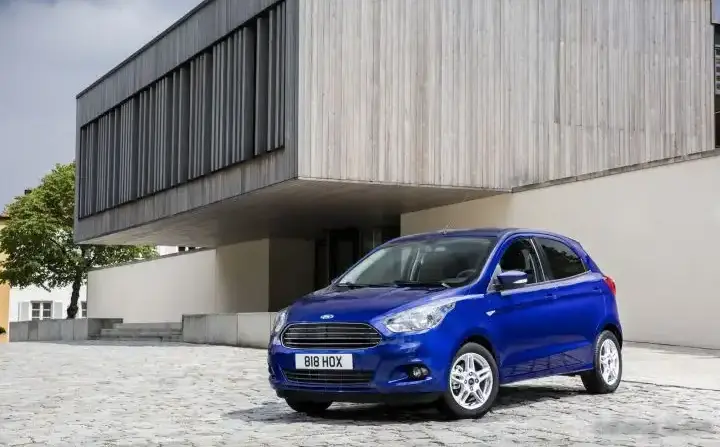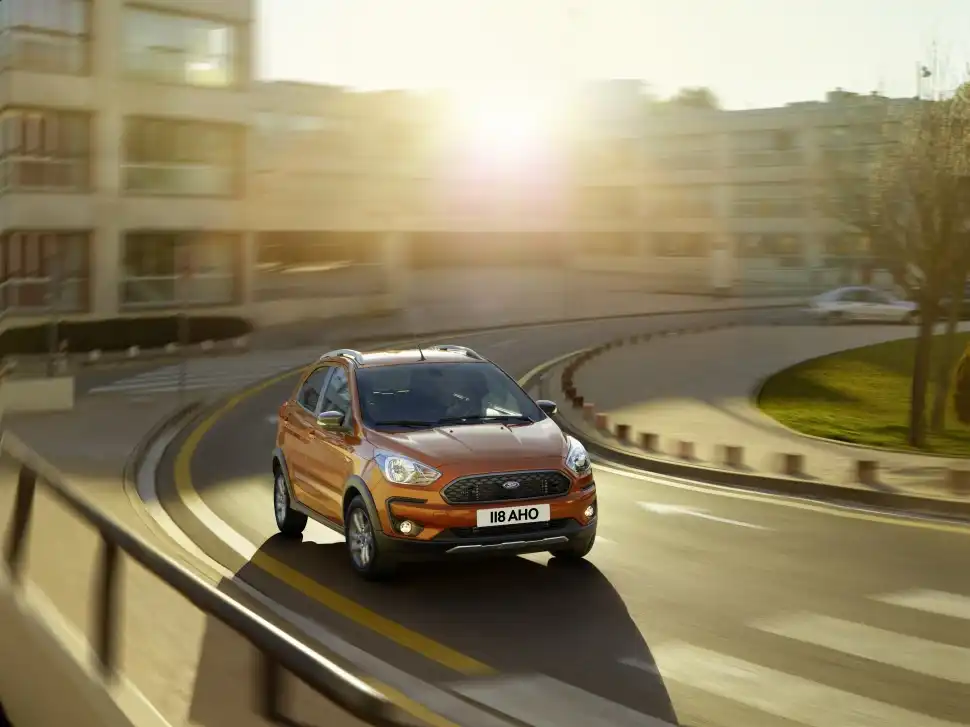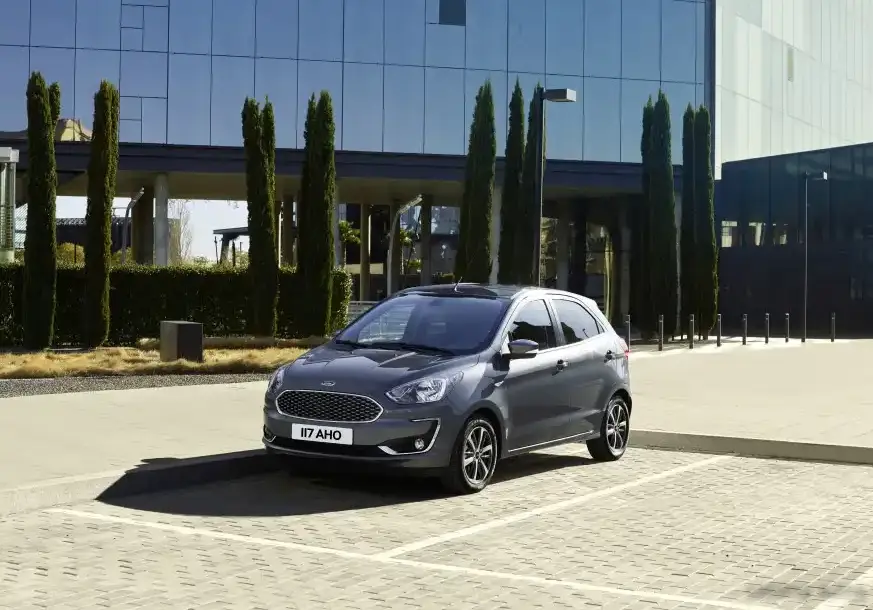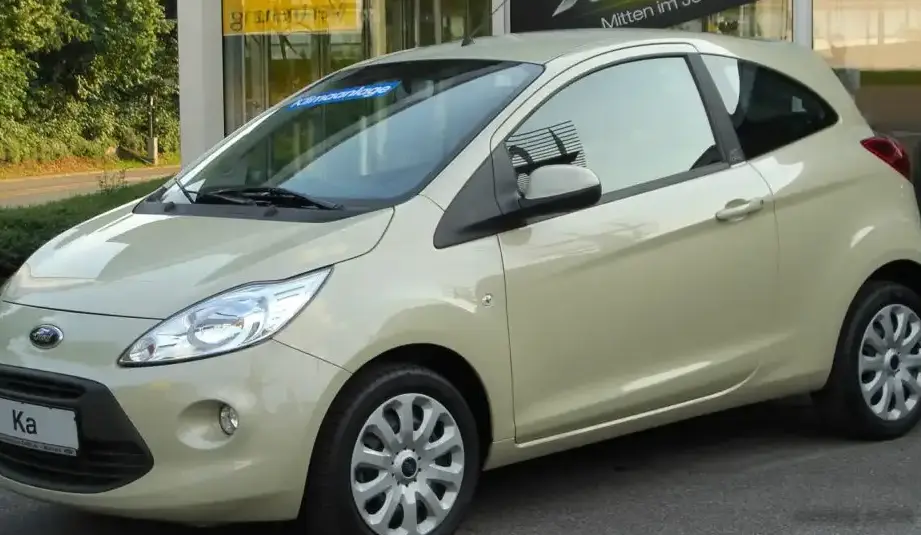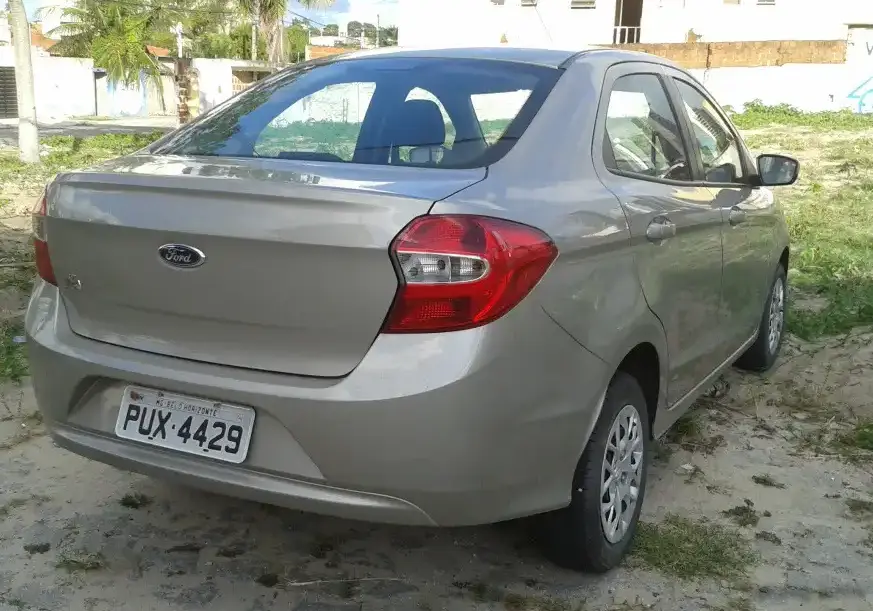
The Ford KA III 1.5 16V, produced between 2014 and 2018, represented a significant evolution of Ford’s city car lineage. This variant, equipped with the Duratec 1.5-liter gasoline engine producing 105 horsepower, occupied a mid-range position within the KA III lineup, offering a balance between affordability and performance. It was primarily marketed in Europe and other international markets as an economical and practical hatchback, designed for urban environments. The KA III itself was a substantial departure from its predecessors, moving to a larger, more conventional hatchback design based on the global Ford B-platform.
Technical Specifications
| Brand | Ford |
| Model | KA |
| Generation | KA III |
| Type (Engine) | 1.5 16V (105 Hp) |
| Start of production | 2014 |
| End of production | 2018 |
| Powertrain Architecture | Internal Combustion engine |
| Body type | Sedan |
| Seats | 5 |
| Doors | 4 |
| Fuel Type | Petrol (Gasoline) |
| Weight-to-power ratio | 10 kg/Hp, 100.2 Hp/tonne |
| Weight-to-torque ratio | 7.3 kg/Nm, 136.5 Nm/tonne |
| Power | 105 Hp @ 6500 rpm |
| Power per litre | 70.1 Hp/l |
| Torque | 143 Nm @ 4250 rpm (105.47 lb.-ft. @ 4250 rpm) |
| Maximum engine speed | 6800 rpm |
| Engine layout | Front, Transverse |
| Engine Model/Code | Duratec |
| Engine displacement | 1498 cm3 (91.41 cu. in.) |
| Number of cylinders | 4 |
| Engine configuration | Inline |
| Cylinder Bore | 79 mm (3.11 in.) |
| Piston Stroke | 76.4 mm (3.01 in.) |
| Compression ratio | 11:1 |
| Number of valves per cylinder | 4 |
| Fuel injection system | Multi-port manifold injection |
| Engine aspiration | Naturally aspirated engine |
| Valvetrain | DOHC |
| Engine oil capacity | 4 l (4.23 US qt | 3.52 UK qt) |
| Coolant | 5.5 l (5.81 US qt | 4.84 UK qt) |
| Kerb Weight | 1048 kg (2310.44 lbs.) |
| Max. weight | 1460 kg (3218.75 lbs.) |
| Max load | 412 kg (908.3 lbs.) |
| Trunk (boot) space – minimum | 445 l (15.72 cu. ft.) |
| Fuel tank capacity | 51.6 l (13.63 US gal | 11.35 UK gal) |
| Length | 4254 mm (167.48 in.) |
| Width | 1695 mm (66.73 in.) |
| Width including mirrors | 1911 mm (75.24 in.) |
| Height | 1460 mm (57.48 in.) |
| Wheelbase | 2491 mm (98.07 in.) |
| Front track | 1480 mm (58.27 in.) |
| Rear (Back) track | 1460 mm (57.48 in.) |
| Ride height (ground clearance) | 140 mm (5.51 in.) |
| Drag coefficient (Cd) | 0.35 |
| Minimum turning circle (turning diameter) | 9.8 m (32.15 ft.) |
| Drivetrain Architecture | The Internal combustion engine (ICE) drives the front wheels of the vehicle. |
| Drive wheel | Front wheel drive |
| Number of gears and type of gearbox | 5 gears, manual transmission |
| Front brakes | Disc |
| Rear brakes | Drum |
| Assisting systems | ABS (Anti-lock braking system) |
| Steering type | Steering rack and pinion |
| Power steering | Electric Steering |
| Tires size | 175/65 R14; 195/55 R15 |
| Wheel rims size | 5.5J x 14; 6.0J x 15 |
Powertrain & Engine Architecture
The heart of the KA III 1.5 16V is the Ford Duratec 1.5-liter inline-four cylinder engine. This engine, part of the Duratec family, utilizes a double overhead camshaft (DOHC) valvetrain with four valves per cylinder, contributing to its relatively efficient breathing. The engine employs multi-port fuel injection, a common setup for this class of vehicle, delivering fuel directly into the intake ports. The 1.5-liter engine produces 105 horsepower at 6500 rpm and 143 Nm (105.47 lb-ft) of torque at 4250 rpm. The engine’s compression ratio is 11:1, a figure that balances performance and fuel efficiency. The engine is transversely mounted at the front of the vehicle, driving the front wheels. The standard transmission for this variant was a five-speed manual gearbox, although a four-speed automatic transmission was also offered, albeit less commonly.
Driving Characteristics
The 1.5-liter 105 hp engine, paired with the five-speed manual transmission, provided adequate performance for city driving and shorter journeys. Acceleration was not particularly brisk, with a 0-60 mph time estimated around 11-12 seconds. However, the engine was reasonably responsive in the mid-range, making overtaking at highway speeds manageable. The manual gearbox offered precise shifts, and the gear ratios were well-suited to maximizing fuel economy. Compared to the lower-powered 1.25-liter engine option, the 1.5-liter provided a noticeable improvement in performance. The automatic transmission, while offering convenience, resulted in slightly slower acceleration and reduced fuel efficiency due to its less efficient torque converter. The suspension was tuned for comfort, prioritizing ride quality over sporty handling.
Equipment & Trim Levels
The KA III 1.5 16V was typically offered in several trim levels, with the base models featuring standard equipment such as power steering, ABS brakes, front airbags, and a basic audio system. Higher trim levels added features like air conditioning, electric windows, central locking, alloy wheels, and a more sophisticated audio system with Bluetooth connectivity. Interior upholstery was typically cloth, with higher trims offering upgraded fabric options. Optional extras included a sunroof, parking sensors, and a navigation system. The dashboard layout was functional and straightforward, prioritizing ease of use.
Chassis & Braking
The KA III utilized a MacPherson strut front suspension and a twist-beam rear suspension. This setup provided a good balance between ride comfort and handling. The front brakes were disc brakes, offering adequate stopping power, while the rear brakes were drum brakes, a cost-saving measure common in this segment. The steering was electrically assisted, providing light and easy steering for urban maneuvering. The KA III’s relatively lightweight construction (around 1048 kg or 2310 lbs) contributed to its agility and fuel efficiency. Stabilizer bars were included to reduce body roll during cornering.
Market Reception & Comparison
The Ford KA III 1.5 16V was generally well-received by automotive critics as a practical and affordable city car. It was praised for its comfortable ride, decent fuel economy (around 45-50 mpg combined), and relatively spacious interior for its size. However, some critics noted its lack of refinement and its somewhat uninspiring driving dynamics. Compared to other small hatchbacks in the European market, such as the Volkswagen Polo or the Renault Clio, the KA III offered a more affordable price point but lacked the same level of sophistication. The 1.5-liter engine offered a good compromise between performance and fuel economy, making it a popular choice for drivers who needed a bit more power than the base 1.25-liter engine.
Legacy
The Ford KA III, including the 1.5 16V variant, has proven to be a relatively reliable vehicle, with the Duratec engine generally considered durable and long-lasting. Common issues include minor electrical problems and wear and tear on suspension components. On the used car market, the KA III 1.5 16V represents a good value proposition for buyers seeking an affordable and practical city car. Its low running costs and relatively simple mechanical design make it an attractive option for first-time car owners or those on a budget. While not a performance icon, the KA III 1.5 16V remains a testament to Ford’s ability to produce economical and dependable vehicles for the masses.