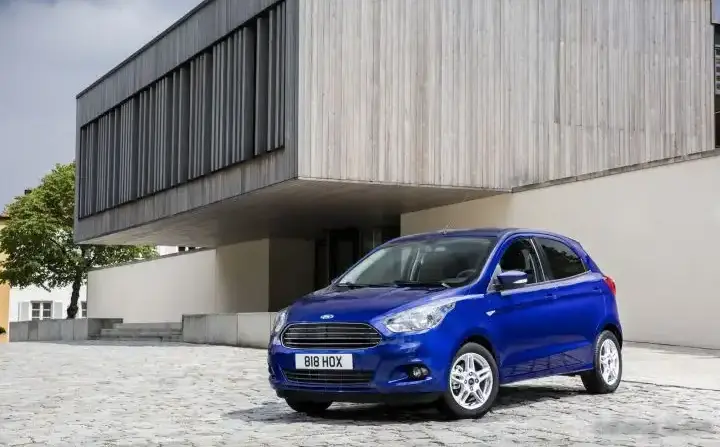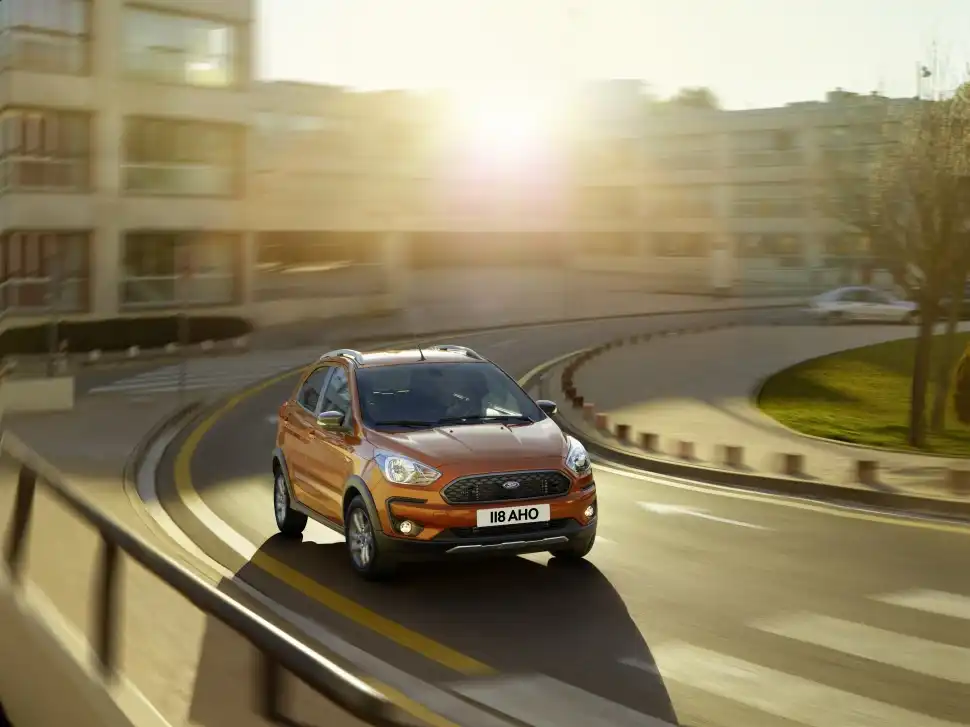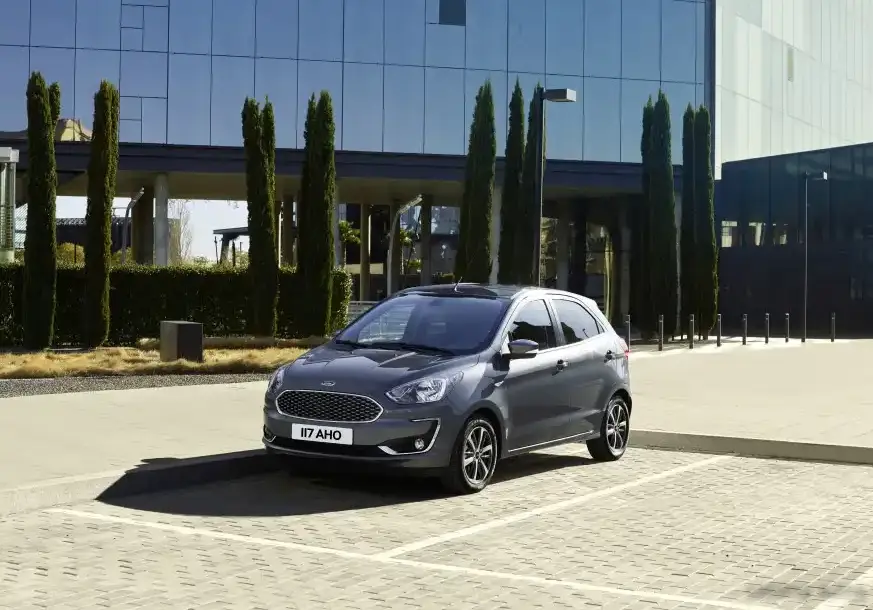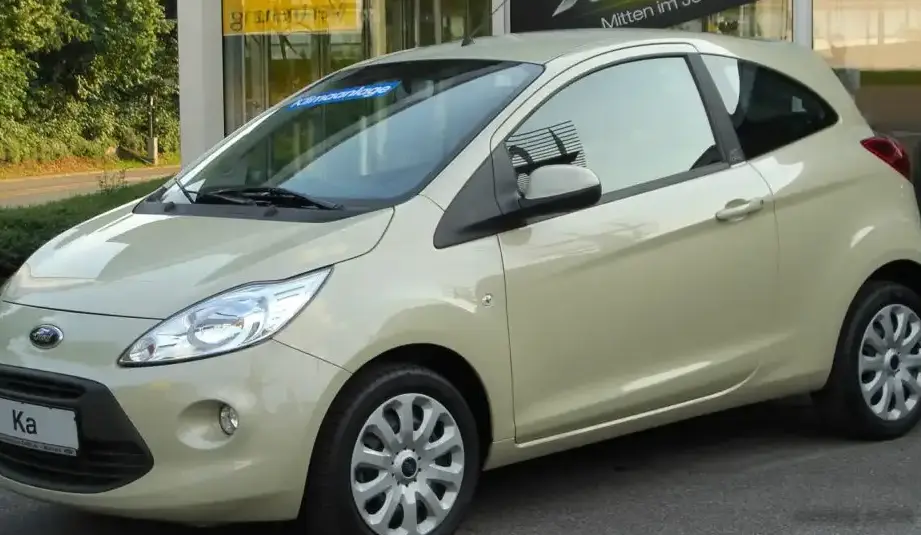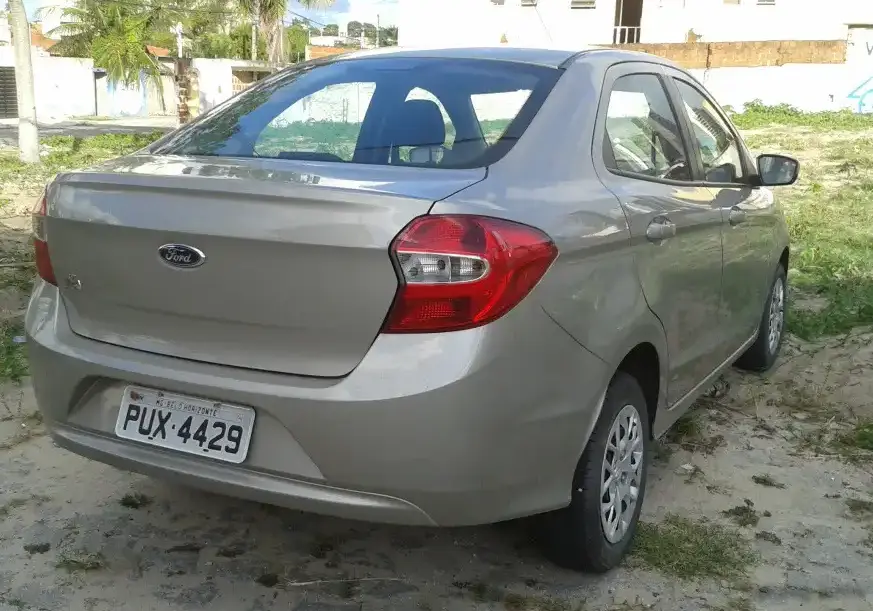
The Ford KA III 1.5 16V, produced between 2014 and 2018, represented a significant evolution of Ford’s small car offering, primarily aimed at the European market. This variant, equipped with the Duratec 1.5-liter engine producing 110 horsepower, occupied a mid-range position within the KA III lineup, offering a balance between affordability and performance. It was built on the Ford B-Car platform, shared with the Ford Fiesta, and designed to compete with rivals like the Volkswagen Polo and Opel Corsa. The KA III marked a departure from its predecessors, offering a more mature and refined driving experience, and a more spacious interior than previous generations.
Technical Specifications
| Brand | Ford |
| Model | KA |
| Generation | KA III |
| Type (Engine) | 1.5 16V (110 Hp) |
| Start of production | 2014 |
| End of production | 2018 |
| Powertrain Architecture | Internal Combustion engine |
| Body type | Sedan |
| Seats | 5 |
| Doors | 4 |
| Fuel Type | Petrol / Ethanol – E85 |
| Weight-to-power ratio | 9.4 kg/Hp, 106.6 Hp/tonne |
| Weight-to-torque ratio | 7.1 kg/Nm, 141.5 Nm/tonne |
| Power | 110 Hp @ 5500 rpm |
| Power per litre | 73.4 Hp/l |
| Torque | 146 Nm @ 4250 rpm (107.68 lb.-ft. @ 4250 rpm) |
| Maximum engine speed | 6800 rpm |
| Engine layout | Front, Transverse |
| Engine Model/Code | Duratec |
| Engine displacement | 1498 cm3 (91.41 cu. in.) |
| Number of cylinders | 4 |
| Engine configuration | Inline |
| Cylinder Bore | 79 mm (3.11 in.) |
| Piston Stroke | 76.4 mm (3.01 in.) |
| Compression ratio | 11:1 |
| Number of valves per cylinder | 4 |
| Fuel injection system | Multi-port manifold injection |
| Engine aspiration | Naturally aspirated engine |
| Valvetrain | DOHC |
| Engine oil capacity | 4 l (4.23 US qt | 3.52 UK qt) |
| Coolant | 5.5 l (5.81 US qt | 4.84 UK qt) |
| Kerb Weight | 1032 kg (2275.17 lbs.) |
| Max. weight | 1460 kg (3218.75 lbs.) |
| Max load | 428 kg (943.58 lbs.) |
| Trunk (boot) space – minimum | 445 l (15.72 cu. ft.) |
| Fuel tank capacity | 51.6 l (13.63 US gal | 11.35 UK gal) |
| Length | 4254 mm (167.48 in.) |
| Width | 1695 mm (66.73 in.) |
| Width including mirrors | 1911 mm (75.24 in.) |
| Height | 1460 mm (57.48 in.) |
| Wheelbase | 2491 mm (98.07 in.) |
| Front track | 1480 mm (58.27 in.) |
| Rear (Back) track | 1460 mm (57.48 in.) |
| Ride height (ground clearance) | 140 mm (5.51 in.) |
| Drag coefficient (Cd) | 0.35 |
| Minimum turning circle (turning diameter) | 9.8 m (32.15 ft.) |
| Drivetrain Architecture | The Internal combustion engine (ICE) drives the front wheels of the vehicle. |
| Drive wheel | Front wheel drive |
| Number of gears and type of gearbox | 5 gears, manual transmission |
| Front brakes | Disc |
| Rear brakes | Drum |
| Assisting systems | ABS (Anti-lock braking system) |
| Steering type | Steering rack and pinion |
| Power steering | Electric Steering |
| Tires size | 175/65 R14; 195/55 R15 |
| Wheel rims size | 5.5J x 14; 6.0J x 15 |
Powertrain & Engine Architecture
The heart of the KA III 1.5 16V is the Ford Duratec 1.5-liter inline-four cylinder engine. This engine, part of the Duratec family, utilizes a double overhead camshaft (DOHC) valvetrain with four valves per cylinder, contributing to its relatively high power output for its displacement. The engine employs multi-port fuel injection, a common setup for this era, delivering fuel directly into the intake ports. The 1.5-liter engine is known for its reasonable reliability and relatively simple construction. The 110 horsepower variant was paired with a five-speed manual transmission, providing a direct connection between the engine and the front wheels. This transmission was chosen for its affordability and efficiency, although it wasn’t known for particularly sporty shift feel. The engine code is often referenced as a variant within the broader Duratec family, and specific sub-codes may exist depending on the exact production year and market.
Driving Characteristics
The 1.5 16V KA III offered a noticeable step up in performance compared to the lower-powered 1.2-liter versions. While not a sports car, the 110 hp engine provided adequate acceleration for everyday driving, with a 0-60 mph time estimated around 11-12 seconds. The five-speed manual transmission allowed drivers to keep the engine in its optimal power band. The gear ratios were tuned for fuel efficiency rather than outright performance. Compared to higher-output engines available in other Ford models, the KA III 1.5 felt somewhat underpowered, especially when fully loaded or tackling steep inclines. However, its light weight helped to mitigate this, providing a reasonably nimble driving experience. The steering was light and easy to use, making it well-suited for urban environments.
Equipment & Trim Levels
The KA III 1.5 16V typically came equipped with a reasonable level of standard features. These included power steering, central locking, electric front windows, and an ABS anti-lock braking system. Interior upholstery was typically cloth, with a functional, if somewhat basic, dashboard layout. Optional extras included air conditioning, alloy wheels, a CD player with auxiliary input, and upgraded interior trim. Trim levels varied slightly depending on the market, but generally, the 1.5 16V sat in the middle of the range, offering more features than the base models but lacking the premium touches found in higher-spec versions.
Chassis & Braking
The KA III utilized a MacPherson strut front suspension and a torsion beam rear suspension. This setup was chosen for its cost-effectiveness and ability to provide a comfortable ride. The front brakes were disc brakes, providing adequate stopping power, while the rear brakes were drum brakes, a cost-saving measure common in this segment. Stabilizer bars were fitted to both the front and rear axles to reduce body roll during cornering. The suspension tuning prioritized comfort over handling, resulting in a relatively soft ride quality. The chassis was relatively lightweight, contributing to the car’s agility.
Market Reception & Comparison
The Ford KA III 1.5 16V was generally well-received by automotive critics as a practical and affordable small car. It was praised for its fuel efficiency, comfortable ride, and relatively spacious interior for its size. However, some critics noted its lack of refinement and somewhat uninspiring driving dynamics compared to rivals like the Volkswagen Polo. The 1.5-liter engine offered a good balance between performance and fuel economy, achieving around 45-50 mpg on the combined cycle. Compared to the lower-powered 1.2-liter KA III, the 1.5 16V offered a significant performance boost, making it a more suitable choice for drivers who frequently travel on highways or carry passengers. Reliability was generally good, with few major issues reported.
Legacy
The Ford KA III 1.5 16V has proven to be a relatively reliable and durable small car. On the used car market, these models are often sought after for their affordability and practicality. The Duratec 1.5-liter engine is known for its longevity, provided it has been properly maintained. Common maintenance items include regular oil changes, timing belt replacement (if applicable), and inspection of the cooling system. While not a collector’s item, the KA III 1.5 16V remains a popular choice for budget-conscious buyers looking for a dependable and economical city car. Its simple design and readily available parts contribute to its continued appeal.