Ford Mustang I 4.3 V8 (164 Hp): The Dawn of an Icon
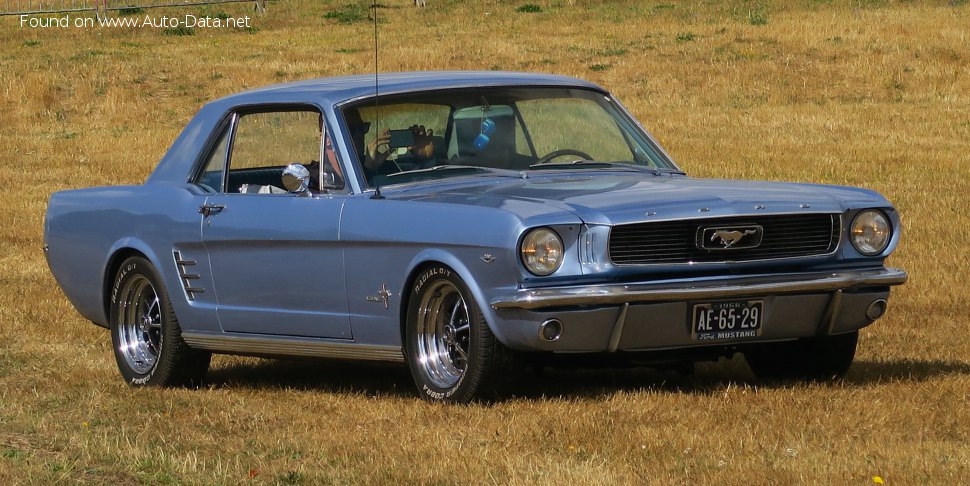
The Ford Mustang, introduced to the public at the New York World’s Fair on April 17, 1964, instantly became one of the most successful product launches in automotive history. The first generation, often retroactively referred to as the Ford Mustang I 4.3 V8 (164 Hp), arrived as a groundbreaking “pony car” that captured the hearts of a generation. Positioned as an affordable, sporty, and customizable vehicle, it created an entirely new market segment. This specific iteration, produced for a short but pivotal period in 1964, featured the 260 cubic inch V8 engine, offering a compelling blend of performance and everyday usability that cemented the Mustang’s legendary status from its very inception.
Unlike many vehicles designed for a specific niche, the Mustang was conceived to appeal to a broad demographic, from young professionals to families seeking a fun second car. Its stylish design, compact dimensions, and range of available engines and options allowed buyers to personalize their vehicles, a concept that resonated deeply with American consumers. The 1964 models, often dubbed “1964 1/2” by enthusiasts due to their early release before the traditional model year changeover, laid the foundation for decades of Mustang dominance and established Ford as a master of market innovation.
Engine and Performance of the Ford Mustang I 4.3 V8 (164 Hp)
At the heart of many early Mustangs, including the featured Ford Mustang I 4.3 V8 (164 Hp), was a robust and reliable V8 engine, specifically the 260 cubic inch (4.3-liter) unit. This powertrain architecture utilized an internal combustion engine mounted longitudinally at the front, driving the rear wheels, a classic American setup for performance and durability. This particular engine delivered a respectable 164 horsepower at 4400 rpm, which was ample for the car’s relatively light curb weight of 2460.36 pounds. The power output translated to a weight-to-power ratio of 6.8 kg/Hp (approximately 147 Hp per ton), making it feel lively and responsive for its era.
Torque production was a strong suit of this V8, peaking at 350 Nm (258.15 lb.-ft.) at a low 2400 rpm. This characteristic low-end grunt was a key factor in the Mustang’s enjoyable driving experience, providing quick acceleration off the line and effortless cruising. The engine’s configuration was a traditional V-engine with eight cylinders, each featuring two valves, operated by an overhead valve (OHV) valvetrain. Fuel delivery was managed by a carburettor, a standard system for the time, ensuring reliable operation with its naturally aspirated design. With a compression ratio of 8.8:1, the engine was designed for regular unleaded gasoline, making it an accessible choice for the average consumer. The engine oil capacity was 4.7 liters (4.97 US quarts), and the cooling system held 13.7 liters (14.48 US quarts) of coolant, indicative of its straightforward, robust engineering.
Power was sent to the rear wheels via a 3-speed manual transmission, offering a direct and engaging driving experience. While three gears might seem limited by modern standards, it was common for the period and perfectly matched the engine’s broad torque band. This combination of a potent V8 and a manual gearbox ensured that the Ford Mustang I 4.3 V8 (164 Hp) delivered on its promise of a sporty and fun-to-drive vehicle, laying the groundwork for the performance legacy that the Mustang brand would build in subsequent decades.
Design and Features
The design of the first-generation Mustang was a stroke of genius, immediately recognizable and universally appealing. The Ford Mustang I 4.3 V8 (164 Hp), like all early Mustangs, was offered in a sleek two-door coupe body type, characterized by its iconic long hood, short deck proportions, and muscular stance. Its dimensions—181.61 inches in length, 68.19 inches in width, and 51.1 inches in height—contributed to its sporty yet compact appearance, making it agile enough for city driving while still commanding presence on the open road. The wheelbase stretched 107.99 inches, providing a stable ride, complemented by identical front and rear track widths of 55.98 inches.
The interior of the Mustang I was designed for four occupants, offering a comfortable yet driver-focused cabin. While not opulent, the emphasis was on functionality and style. The dashboard featured clear, easy-to-read gauges, and the overall aesthetic was clean and uncluttered. Trunk space was practical, ranging from a minimum of 8.51 cubic feet to a maximum of 18.5 cubic feet with the rear seats folded, allowing for reasonable cargo capacity for a sporty coupe. Fuel tank capacity stood at 16.11 US gallons, providing a decent range for road trips.
Underneath its attractive skin, the Mustang featured a suspension system typical of American cars of the era. The front utilized a double wishbone setup, providing a good balance of ride comfort and handling. The rear suspension consisted of a rigid axle with leaf springs, a durable and cost-effective solution for rear-wheel-drive vehicles. Braking power came from drum brakes on all four wheels, with a diameter of 228.6 mm (9 inches) both front and rear. While effective for the period, these would later be upgraded in subsequent models. Steering was managed by a cone worm with recirculation balls system, enhanced by hydraulic power steering, making the car surprisingly easy to maneuver despite its classic design. The car rode on 205/70 R14 tires mounted on 6J x 14-inch wheel rims, a common size that contributed to its balanced handling and classic profile.
Technical Specifications
General Information |
|
| Brand | Ford |
| Model | Mustang |
| Generation | Mustang I |
| Type (Engine) | 4.3 V8 (164 Hp) |
| Start of Production | 1964 year |
| End of Production | 1964 year |
| Powertrain Architecture | Internal Combustion engine |
| Body Type | Coupe |
| Seats | 4 |
| Doors | 2 |
Performance Specs |
|
| Fuel Type | Petrol (Gasoline) |
| Weight-to-power ratio | 6.8 kg/Hp, 147 Hp/tonne |
| Weight-to-torque ratio | 3.2 kg/Nm, 313.6 Nm/tonne |
Engine Specs |
|
| Power | 164 Hp @ 4400 rpm. |
| Power per liter | 38.5 Hp/l |
| Torque | 350 Nm @ 2400 rpm (258.15 lb.-ft. @ 2400 rpm) |
| Engine Layout | Front, Longitudinal |
| Engine Displacement | 4261 cm3 (260.02 cu. in.) |
| Number of Cylinders | 8 |
| Engine Configuration | V-engine |
| Cylinder Bore | 96.52 mm (3.8 in.) |
| Piston Stroke | 72.9 mm (2.87 in.) |
| Compression Ratio | 8.8:1 |
| Number of Valves per Cylinder | 2 |
| Fuel Injection System | Carburettor |
| Engine Aspiration | Naturally aspirated engine |
| Valvetrain | OHV |
| Engine Oil Capacity | 4.7 l (4.97 US qt) |
| Coolant Capacity | 13.7 l (14.48 US qt) |
Space, Volume and Weights |
|
| Kerb Weight | 1116 kg (2460.36 lbs) |
| Trunk (boot) space – minimum | 241 l (8.51 cu. ft.) |
| Trunk (boot) space – maximum | 524 l (18.5 cu. ft.) |
| Fuel Tank Capacity | 61 l (16.11 US gal) |
Dimensions |
|
| Length | 4613 mm (181.61 in.) |
| Width | 1732 mm (68.19 in.) |
| Height | 1298 mm (51.1 in.) |
| Wheelbase | 2743 mm (107.99 in.) |
| Front Track | 1422 mm (55.98 in.) |
| Rear (Back) Track | 1422 mm (55.98 in.) |
| Minimum Turning Circle | 11.6 m (38.06 ft.) |
Drivetrain, Brakes and Suspension Specs |
|
| Drivetrain Architecture | The Internal combustion engine (ICE) drives the rear wheels of the vehicle. |
| Drive Wheel | Rear wheel drive |
| Number of Gears and Type of Gearbox | 3 gears, manual transmission |
| Front Suspension | Double wishbone |
| Rear Suspension | Rigid axle suspension, Leaf spring |
| Front Brakes | Drum, 228.6 mm (9 in.) |
| Rear Brakes | Drum, 228.6 mm (9 in.) |
| Steering Type | Cone worm with recirculation balls |
| Power Steering | Hydraulic Steering |
| Front Wheel Tires | 205/70 R14 |
| Rear Wheel Tires | 205/70 R14 |
| Front Wheel Rims | 6J x 14 |
| Rear Wheel Rims | 6J x 14 |
Legacy and Market Impact
The introduction of the Ford Mustang, particularly the early Ford Mustang I 4.3 V8 (164 Hp) models, was nothing short of a seismic event in the automotive world. It didn’t just join a market segment; it created one: the “pony car.” This new class of vehicle was characterized by its compact, sporty styling, long hood, short deck, and the option for powerful engines at an affordable price point. The Mustang’s immediate and overwhelming success caught its rivals off guard, prompting a frantic scramble to develop competitors.
Competitors quickly emerged, attempting to capitalize on the Mustang’s formula. The Plymouth Barracuda, coincidentally launched just weeks before the Mustang, offered a fastback body but lacked the Mustang’s immediate appeal and marketing prowess. Chevrolet responded with the Camaro in 1967, followed by Pontiac with the Firebird, and AMC with the Javelin. However, none could replicate the Mustang’s initial impact or its sales figures. Its blend of style, performance options, and value made it an instant hit, selling over 400,000 units in its first year alone, far exceeding Ford’s most optimistic projections.
The Mustang’s legacy extends far beyond sales numbers. It became a cultural phenomenon, appearing in countless movies, songs, and television shows, symbolizing American freedom, youth, and individuality. The 4.3 V8 (260 cubic inch) engine played a crucial role in this, offering a stepping stone between the standard inline-six and the more potent big-block V8s that would follow. It provided enough power to make the car feel genuinely sporty without being overly complex or expensive, making performance accessible to a wider audience.
Today, the first-generation Mustang, especially the “1964 1/2” models like the Ford Mustang I 4.3 V8 (164 Hp), are highly sought-after collector’s items. They represent the genesis of a legend, a car that perfectly captured the zeitgeist of the mid-1960s and defined an entire genre. Its innovative marketing, iconic design, and strong performance options ensured that the Mustang would not only endure but thrive for decades, becoming one of the most recognizable and beloved American cars of all time. Its influence continues to be felt in modern automotive design and marketing, proving that sometimes, a car is more than just transportation—it’s a cultural icon.