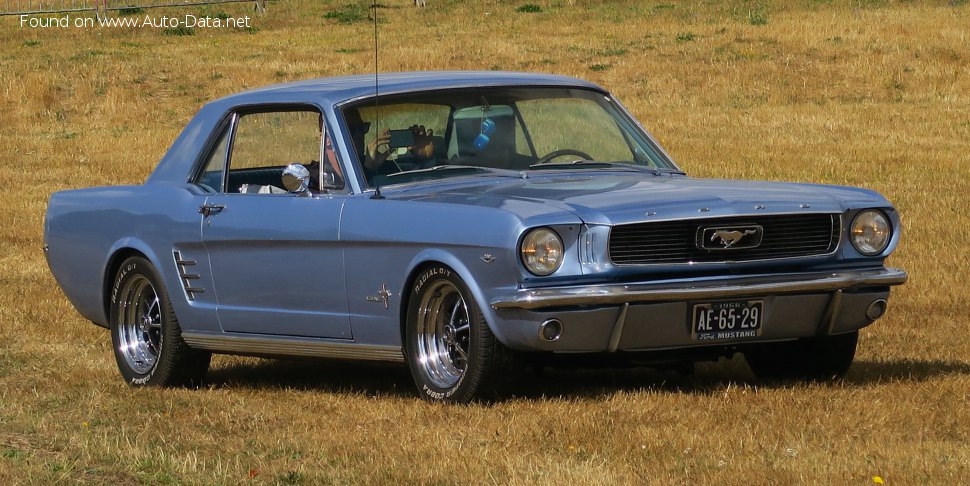
The Iconic Ford Mustang I 4.7 V8 (271 Hp): A Legend Forged
The Ford Mustang I, introduced in the spring of 1964, stands as one of the most significant and influential vehicles in automotive history. Heralded as a “pony car,” it single-handedly created a new market segment, offering sporty styling, accessible performance, and a wide array of customization options at an affordable price. Among its various powertrain offerings, the Ford Mustang I 4.7 V8 (271 Hp) variant, often referred to by enthusiasts as the “K-Code” 289 High-Performance engine, represented the pinnacle of factory-available power for the first generation’s early years. Produced from 1964 to 1967, this particular model cemented the Mustang’s reputation as a formidable performer capable of appealing to both daily drivers and budding enthusiasts seeking thrill and style.
Engine & Performance: The Heart of the Ford Mustang I 4.7 V8 (271 Hp)
At the core of the potent Ford Mustang I 4.7 V8 (271 Hp) lay Ford’s robust 289 cubic inch (4.7-liter) Windsor V8 engine. This particular iteration, factory-rated at a robust 271 horsepower at 6000 rpm and 311.99 lb.-ft. of torque at 3400 rpm, was a force to be reckoned with. Unlike its more common brethren, the 289 Hi-Po featured numerous internal upgrades to handle the increased power output. These included a solid lifter camshaft, larger valves, a high-compression ratio of 10.5:1, and a four-barrel carburetor that efficiently fed the naturally aspirated engine.
The engine’s layout was a classic front, longitudinal V-engine configuration, delivering power to the rear wheels, a quintessential American muscle car setup. With eight cylinders, each boasting a bore of 4 inches and a piston stroke of 2.87 inches, the engine was designed for durability and high-revving performance. The overhead valve (OHV) valvetrain was a proven design, contributing to the engine’s reliability and ease of maintenance. Power was channeled through a standard 4-speed manual transmission, offering direct and engaging control over the car’s substantial power. This combination provided an exhilarating driving experience, allowing the relatively lightweight coupe to accelerate with impressive urgency for its time, further solidifying the Mustang’s performance credentials.
Design & Features of the Ford Mustang I
The Ford Mustang I’s design was revolutionary, characterized by its iconic long hood, short deck, and clean, assertive lines. The specific model under review here, a 2-door coupe, embodied the original vision of the Mustang as a sporty, aspirational vehicle. Its dimensions, with a length of 181.61 inches, a width of 68.19 inches, and a height of 51.1 inches, gave it a compact yet substantial presence on the road. The 107.99-inch wheelbase contributed to a stable ride and agile handling, while the 4-seat configuration made it practical for small families or double dates.
For its era, the Mustang offered a blend of style and functional features. The interior, while not overtly luxurious, was well-appointed for its segment and highly customizable. Owners could choose from a variety of color schemes and optional extras, allowing for personalization. In terms of mechanicals, the car featured a double-wishbone front suspension and a rigid axle suspension with leaf springs at the rear, a common setup for American cars of the period, balancing ride comfort with handling capabilities. Braking was handled by 228.6 mm drum brakes on both the front and rear wheels, which were adequate for the time but would later be surpassed by disc brake technology. The hydraulic power steering, utilizing a cone worm with recirculating balls type, made maneuvering the Mustang relatively effortless, enhancing its appeal to a broader audience. The car rode on 205/70 R14 tires mounted on 6J x 14 wheel rims, providing a classic stance and sufficient grip for its performance.
Technical Specifications
Below are the detailed technical specifications for the Ford Mustang I 4.7 V8 (271 Hp) coupe:
| Category | Specification |
|---|---|
| Brand | Ford |
| Model | Mustang |
| Generation | Mustang I |
| Type (Engine) | 4.7 V8 (271 Hp) |
| Start of Production | 1964 year |
| End of Production | 1967 year |
| Powertrain Architecture | Internal Combustion engine |
| Body type | Coupe |
| Seats | 4 |
| Doors | 2 |
| Performance Specs | |
| Fuel Type | Petrol (Gasoline) |
| Weight-to-power ratio | 4.1 kg/Hp, 242.8 Hp/tonne |
| Weight-to-torque ratio | 2.6 kg/Nm, 379 Nm/tonne |
| Engine Specs | |
| Power | 271 Hp @ 6000 rpm |
| Power per liter | 57.2 Hp/l |
| Torque | 423 Nm @ 3400 rpm (311.99 lb.-ft. @ 3400 rpm) |
| Engine layout | Front, Longitudinal |
| Engine displacement | 4736 cm3 (289.01 cu. in.) |
| Number of cylinders | 8 |
| Engine configuration | V-engine |
| Cylinder Bore | 101.6 mm (4 in.) |
| Piston Stroke | 72.9 mm (2.87 in.) |
| Compression ratio | 10.5:1 |
| Number of valves per cylinder | 2 |
| Fuel injection system | Carburetor |
| Engine aspiration | Naturally aspirated engine |
| Valvetrain | OHV |
| Engine oil capacity | 4.7 l (4.97 US qt) |
| Coolant capacity | 14.2 l (15 US qt) |
| Space, Volume and Weights | |
| Kerb Weight | 1116 kg (2460.36 lbs.) |
| Trunk (boot) space – minimum | 241 l (8.51 cu. ft.) |
| Trunk (boot) space – maximum | 524 l (18.5 cu. ft.) |
| Dimensions | |
| Length | 4613 mm (181.61 in.) |
| Width | 1732 mm (68.19 in.) |
| Height | 1298 mm (51.1 in.) |
| Wheelbase | 2743 mm (107.99 in.) |
| Front track | 1422 mm (55.98 in.) |
| Rear (Back) track | 1422 mm (55.98 in.) |
| Minimum turning circle | 11.6 m (38.06 ft.) |
| Drivetrain, Brakes and Suspension Specs | |
| Drivetrain Architecture | The Internal combustion engine (ICE) drives the rear wheels of the vehicle. |
| Drive wheel | Rear wheel drive |
| Number of gears and type of gearbox | 4 gears, manual transmission |
| Front suspension | Double wishbone |
| Rear suspension | Rigid axle suspension, Leaf spring |
| Front brakes | Drum, 228.6 mm |
| Rear brakes | Drum, 228.6 mm |
| Steering type | Cone worm with recirculation balls |
| Power steering | Hydraulic Steering |
| Tires size | Front wheel tires: 205/70 R14, Rear wheel tires: 205/70 R14 |
| Wheel rims size | Front wheel rims: 6J x 14, Rear wheel rims: 6J x 14 |
Legacy & Market Impact of the Ford Mustang I 4.7 V8 (271 Hp)
The Ford Mustang I, particularly in its potent 4.7 V8 (271 Hp) configuration, left an indelible mark on the automotive landscape. Its immediate and overwhelming success, selling over a million units in its first two years, proved that Ford had tapped into a previously unmet demand for an affordable, stylish, and sporty car. The Mustang didn’t just sell well; it created an entirely new market segment, inspiring a host of imitators and competitors. It became a cultural icon, appearing in numerous films, television shows, and songs, symbolizing American freedom and individuality.
Competitors in its primary market, the United States, quickly emerged to challenge the Mustang’s dominance. These included the Plymouth Barracuda, released just weeks before the Mustang, followed by formidable rivals such as the Chevrolet Camaro, Pontiac Firebird, and AMC Javelin, all vying for a share of the burgeoning “pony car” segment. However, none could replicate the Mustang’s initial impact or its enduring legacy. The 271 HP V8 variant played a crucial role in establishing the Mustang’s performance credibility, demonstrating that the car was not just about looks but also about genuine power and driving excitement. It became a desirable option for those seeking more than just a cruiser, laying the groundwork for future high-performance Mustang models.
Today, the first-generation Ford Mustang, especially the K-Code 289 models, are highly sought after by collectors and enthusiasts worldwide. They represent a golden age of American automotive design and engineering, a time when a simple yet powerful formula could capture the hearts of millions. The Ford Mustang I 4.7 V8 (271 Hp) remains a testament to Ford’s vision and ability to create a timeless classic that continues to resonate with generations of car lovers.