The Ford Mustang IV 3.8 V6 (190 Hp): A Pony Car for the New Millennium
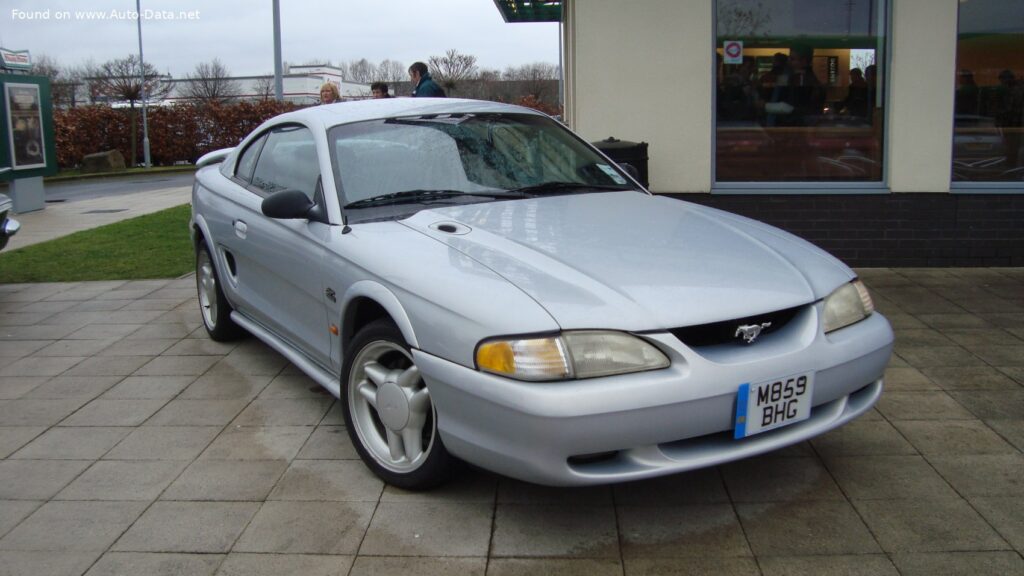
The Ford Mustang, an enduring icon of American automotive culture, entered its fourth generation, known internally as the SN95, for the 1994 model year. This generation marked a significant evolution for the pony car, moving away from the Fox platform that had underpinned the Mustang for 15 years. The SN95 retained the Mustang’s classic long hood, short deck proportions but wrapped them in a more aerodynamic and contemporary design. Within this lineage, the Ford Mustang IV 3.8 V6 (190 Hp) variant, produced from 1998 to 2004, served as the accessible entry point into Mustang ownership, offering a blend of traditional American muscle car styling with everyday usability and a more economical powertrain compared to its V8-powered siblings. This particular iteration represented a crucial period for the Mustang, navigating the late 1990s and early 2000s automotive landscape, appealing to a broad segment of buyers seeking performance, style, and value.
Engine and Performance: The Heart of the Ford Mustang IV 3.8 V6 (190 Hp)
At the core of the Ford Mustang IV 3.8 V6 (190 Hp) lies Ford’s venerable Essex V6 engine. Specifically, the 3.8-liter (232.68 cu. in.) naturally aspirated V6, an engine that had been a staple in Ford’s lineup for various applications, was tasked with providing motive power for the base Mustang. In this 1998-2004 configuration, it delivered a respectable 190 horsepower at 5250 rpm. This output represented a significant improvement over earlier V6 Mustangs, making it a more compelling package for enthusiasts on a budget. Torque was rated at 220 Nm (162.26 lb.-ft.) at a relatively low 2750 rpm, providing a strong, usable powerband for daily driving and spirited acceleration.
Power was channeled to the rear wheels via a standard 5-speed manual transmission, emphasizing the Mustang’s driver-centric philosophy. This combination allowed the Ford Mustang IV 3.8 V6 (190 Hp) to accelerate from 0 to 60 mph in a brisk 6.7 seconds, a performance figure that was quite competitive for a base model in its class during that era. Its top speed was electronically limited to 111.85 mph (180 km/h), a common practice for safety and tire rating considerations. The engine’s multi-port manifold injection system ensured efficient fuel delivery, contributing to its reasonable fuel economy figures: an estimated 19.9 US mpg in urban driving and an impressive 29.8 US mpg on the highway. With a compression ratio of 9.36:1 and a bore of 3.81 inches paired with a stroke of 3.4 inches, the V6 offered a balance of responsiveness and durability, becoming a reliable workhorse for countless Mustang owners.
Design and Features: The SN95 Aesthetic
The Ford Mustang IV, or SN95 generation, introduced a sleeker, more rounded aesthetic compared to its Fox-body predecessor. The 1998-2004 models, particularly after the 1999 “New Edge” facelift, featured sharper creases and more aggressive styling cues, though the 3.8 V6 variant largely retained the pre-facelift body from 1998. It maintained the classic coupe body type, offering two doors and seating for four, though the rear seats were, as is typical for pony cars, best suited for occasional use or smaller passengers. Its dimensions – a length of 183.19 inches, a width of 73.11 inches, and a height of 53.31 inches – gave it a substantial road presence, characteristic of American muscle cars.
The interior of the SN95 Mustang focused on driver ergonomics, with a dashboard design that wrapped around the driver. While the V6 model typically came with more basic trim levels than the GT or SVT Cobra, it still offered essential features. Safety was addressed with standard anti-lock braking system (ABS), ventilated discs at the front, and solid discs at the rear, providing confident stopping power. The suspension setup featured a wishbone front suspension and a coil spring rear suspension, which, while still utilizing a solid rear axle, was a refined evolution of the Mustang’s traditional architecture, offering a balance between ride comfort and handling dynamics. Hydraulic power steering with a rack and pinion setup ensured a direct and communicative steering feel, further enhancing the driving experience. The standard tire size of 205/65 R15 provided a good compromise between grip and ride quality for the base model.
Technical Specifications
| Category | Specification |
|---|---|
| General Information | |
| Brand | Ford |
| Model | Mustang |
| Generation | Mustang IV (SN95) |
| Type (Engine) | 3.8 V6 (190 Hp) |
| Start of Production | 1998 year |
| End of Production | 2004 year |
| Powertrain Architecture | Internal Combustion Engine |
| Body type | Coupe |
| Seats | 4 |
| Doors | 2 |
| Performance Specs | |
| Fuel Consumption (Urban) | 11.8 l/100 km (19.9 US mpg) |
| Fuel Consumption (Extra Urban) | 7.9 l/100 km (29.8 US mpg) |
| Fuel Type | Petrol (Gasoline) |
| Acceleration 0 – 60 mph | 6.7 sec |
| Acceleration 0 – 100 km/h | 7.1 sec |
| Maximum Speed | 180 km/h (111.85 mph) |
| Weight-to-Power Ratio | 7.3 kg/Hp (136.7 Hp/tonne) |
| Weight-to-Torque Ratio | 6.3 kg/Nm (158.3 Nm/tonne) |
| Engine Specs | |
| Power | 190 Hp @ 5250 rpm |
| Power per liter | 49.8 Hp/l |
| Torque | 220 Nm (162.26 lb.-ft.) @ 2750 rpm |
| Engine Layout | Front, Longitudinal |
| Engine Model/Code | Essex / 994 |
| Engine Displacement | 3813 cm³ (232.68 cu. in.) |
| Number of Cylinders | 6 |
| Engine Configuration | V-engine |
| Cylinder Bore | 96.77 mm (3.81 in.) |
| Piston Stroke | 86.4 mm (3.4 in.) |
| Compression Ratio | 9.36:1 |
| Number of Valves per Cylinder | 2 |
| Fuel Injection System | Multi-port manifold injection |
| Engine Aspiration | Naturally aspirated engine |
| Engine Oil Capacity | 4.7 l (4.97 US qt) |
| Coolant Capacity | 11.2 l (11.83 US qt) |
| Space, Volume and Weights | |
| Kerb Weight | 1390 kg (3064.43 lbs.) |
| Trunk (boot) Space – Minimum | 310 l (10.95 cu. ft.) |
| Fuel Tank Capacity | 58 l (15.32 US gal) |
| Dimensions | |
| Length | 4653 mm (183.19 in.) |
| Width | 1857 mm (73.11 in.) |
| Height | 1354 mm (53.31 in.) |
| Wheelbase | 2573 mm (101.3 in.) |
| Front Track | 1535 mm (60.43 in.) |
| Rear (Back) Track | 1540 mm (60.63 in.) |
| Drivetrain, Brakes and Suspension Specs | |
| Drivetrain Architecture | Internal combustion engine drives the rear wheels. |
| Drive Wheel | Rear wheel drive |
| Number of Gears and Type of Gearbox | 5 gears, manual transmission |
| Front Suspension | Wishbone |
| Rear Suspension | Coil spring (Solid Axle) |
| Front Brakes | Ventilated discs |
| Rear Brakes | Disc |
| Assisting Systems | ABS (Anti-lock Braking System) |
| Steering Type | Steering rack and pinion |
| Power Steering | Hydraulic Steering |
| Tires Size | 205/65 R15 |
Legacy and Market Impact
The Ford Mustang IV 3.8 V6 (190 Hp) played a pivotal role in maintaining the Mustang’s market dominance and appeal during a challenging period for traditional American performance cars. As the base model, it served as the gateway for many first-time sports coupe buyers, offering the iconic Mustang styling and rear-wheel-drive dynamics at an accessible price point. Its primary competitors in the American market were the Chevrolet Camaro and Pontiac Firebird, both of which also offered V6 and V8 variants. While the V8-powered Mustangs (GT and Cobra) garnered most of the performance headlines, the V6 models consistently outsold them, proving the importance of an affordable, stylish, and relatively fuel-efficient option within the segment.
The SN95 generation, including the 3.8 V6, faced the challenge of evolving the Mustang while retaining its heritage. Ford succeeded in creating a car that felt more modern and refined than its predecessors, yet still unmistakably a Mustang. The 3.8L V6, despite its humble origins, proved to be a reliable and tunable engine, becoming a popular choice for aftermarket modifications among budget-conscious enthusiasts. Its strong torque delivery at low RPMs made it a pleasant daily driver, while its 190 horsepower was enough to provide genuine fun on winding roads or highway on-ramps. The manual transmission option further solidified its appeal to those who enjoyed a more engaging driving experience.
The legacy of the Ford Mustang IV 3.8 V6 (190 Hp) is one of accessibility and endurance. It allowed the Mustang brand to thrive, bridging the gap between its muscle car roots and the demands of a more efficiency-conscious market. Many of these V6 models are still on the road today, a testament to their durability and the enduring appeal of the Mustang’s design. They remain a popular choice for young enthusiasts, project car builders, and those seeking an affordable classic American coupe. The SN95 V6 Mustang, while perhaps overshadowed by its V8 brethren in performance lore, was undeniably a crucial part of the Mustang’s continued success and evolution, ensuring its place as America’s beloved pony car into the 21st century.