Introduction to the Ford Mustang IV 4.6 V8 GT (263 Hp)
The Ford Mustang IV, often referred to by its internal code SN95, represented a significant evolution for the iconic American pony car. Launched in 1994, it marked the first complete redesign of the Mustang in 15 years, moving away from the Fox platform’s aging architecture. The specific model under review, the Ford Mustang IV 4.6 V8 GT (263 Hp) produced between 1998 and 2004, embodies the refreshed “New Edge” styling that debuted in 1999 and the potent Modular V8 engine that defined its performance credentials. This generation aimed to modernize the Mustang while retaining its quintessential muscle car spirit, appealing to a broad segment of enthusiasts and mainstream buyers seeking a blend of performance, style, and value in the American market.
The Mustang GT variant, with its V8 powertrain, has always been the heart of the Mustang lineup, and this iteration was no exception. It offered a compelling package for those desiring robust acceleration and a distinctive exhaust note. Positioned as a direct competitor to the Chevrolet Camaro and Pontiac Firebird, the Mustang GT carved out its niche by offering a balance of everyday usability and weekend thrill. This detailed article will delve into the technical specifications, design philosophy, and market impact of this pivotal model in the Mustang’s storied history.
Engine and Performance: The Heart of the Ford Mustang IV 4.6 V8 GT (263 Hp)
Under the hood of the Ford Mustang IV 4.6 V8 GT (263 Hp) lies the venerable 4.6-liter “Modular” V8 engine, a powerplant that became synonymous with Ford’s performance vehicles of the era. This particular iteration, featuring a single overhead camshaft (SOHC) design and two valves per cylinder, was known for its robust construction and smooth power delivery. With an engine displacement of 4601 cubic centimeters (280.77 cubic inches), it delivered a respectable 263 horsepower at 5250 rpm. More importantly for real-world driving, it produced a healthy 302 lb.-ft. of torque at 4000 rpm, providing a strong surge of acceleration from mid-range.
The engine’s layout was a classic front-longitudinal configuration, sending power to the rear wheels, a hallmark of American muscle cars. This setup, combined with a standard 5-speed manual transmission, offered an engaging driving experience. Performance figures were impressive for its time, with the GT capable of sprinting from 0 to 60 mph in a swift 5.2 seconds, and achieving a top speed of approximately 138 mph (222 km/h). The naturally aspirated engine utilized a multi-port manifold injection system and a compression ratio of 9.4:1, ensuring efficient combustion of gasoline. While fuel economy wasn’t its primary selling point, the GT managed an estimated 17 US mpg in urban driving and 24 US mpg on the highway, which was competitive for a V8-powered sports coupe of its size and performance capabilities. Its weight-to-power ratio stood at 5.8 kg per horsepower (171.9 hp per ton), underscoring its performance-oriented design.
Design and Features: The “New Edge” Aesthetic
Exterior Design
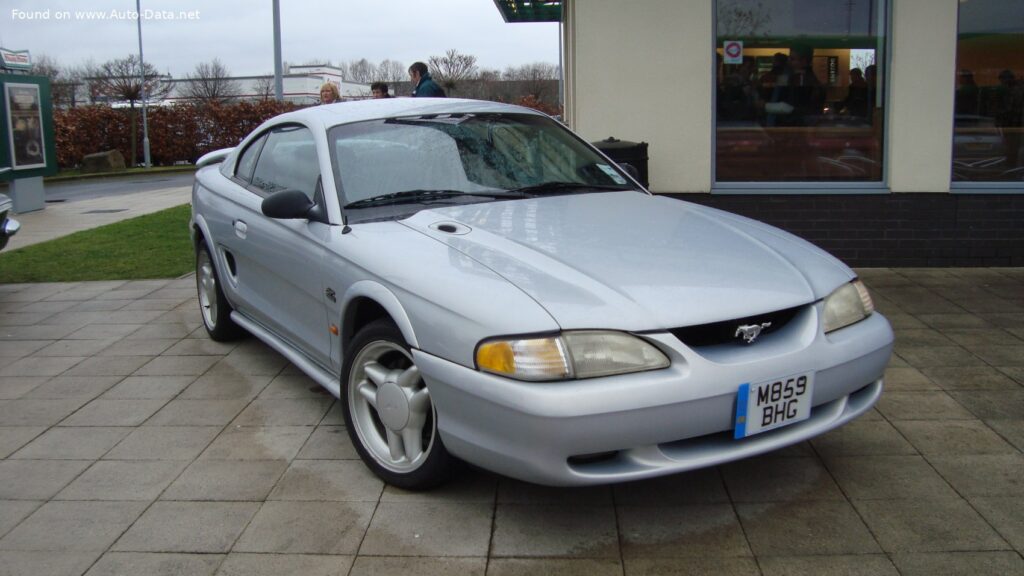
The Ford Mustang IV, especially in its 1999-2004 guise, showcased what Ford termed its “New Edge” design philosophy. This styling update, applied to the SN95 platform, brought sharper creases, more aggressive angles, and a more chiseled appearance compared to the softer, more rounded lines of the earlier 1994-1998 models. The Ford Mustang IV 4.6 V8 GT (263 Hp) presented as a classic two-door coupe, measuring 183.19 inches in length, 73.11 inches in width, and 53.43 inches in height. These dimensions gave it a substantial road presence, while the iconic long hood, short deck proportions remained intact. The updated headlights, taillights, and side scoops contributed to a more modern and assertive aesthetic, distinguishing it from its predecessors.
Interior and Safety Features
Inside, the Mustang GT offered seating for four, though the rear seats, typical of a 2+2 coupe, were best suited for occasional use or smaller passengers. The cabin featured a driver-focused dashboard with clear instrumentation. While not luxurious, the interior was functional and ergonomic, reflecting its performance-oriented mission. For its era, safety features included an Anti-lock Braking System (ABS), which was a crucial assisting system for managing the car’s power, particularly given its rear-wheel-drive architecture. The vehicle also came equipped with hydraulic power steering, providing direct feedback and a connected feel to the road. The front suspension utilized a wishbone setup, while the rear featured coil springs, contributing to a ride that balanced sportiness with reasonable comfort. Stopping power was provided by ventilated disc brakes at the front and disc brakes at the rear, ensuring adequate performance for spirited driving. The 225/55 R16 tires provided a good balance of grip and ride quality for daily driving and performance.
Technical Specifications
| Category | Specification |
|---|---|
| General Information | |
| Brand | Ford |
| Model | Mustang |
| Generation | Mustang IV |
| Type (Engine) | 4.6 V8 GT (263 Hp) |
| Start of Production | 1998 year |
| End of Production | 2004 year |
| Powertrain Architecture | Internal Combustion Engine |
| Body type | Coupe |
| Seats | 4 |
| Doors | 2 |
| Performance Specs | |
| Fuel Consumption (City) | 13.8 l/100 km (17 US mpg) |
| Fuel Consumption (Highway) | 9.8 l/100 km (24 US mpg) |
| Fuel Type | Petrol (Gasoline) |
| Acceleration 0 – 60 mph | 5.2 sec |
| Acceleration 0 – 100 km/h | 5.5 sec |
| Maximum Speed | 222 km/h (137.94 mph) |
| Weight-to-Power Ratio | 5.8 kg/Hp (171.9 Hp/tonne) |
| Weight-to-Torque Ratio | 5.1 kg/Nm (197.4 Nm/tonne) |
| Engine Specs | |
| Power | 263 Hp @ 5250 rpm |
| Power per liter | 57.2 Hp/l |
| Torque | 302 Nm @ 4000 rpm (222.74 lb.-ft. @ 4000 rpm) |
| Engine Layout | Front, Longitudinal |
| Engine Model/Code | Modular / 99WSFI |
| Engine Displacement | 4601 cm³ (280.77 cu. in.) |
| Number of Cylinders | 8 |
| Engine Configuration | V-engine |
| Cylinder Bore | 90.2 mm (3.55 in.) |
| Piston Stroke | 90 mm (3.54 in.) |
| Compression Ratio | 9.4:1 |
| Number of Valves per Cylinder | 2 |
| Fuel Injection System | Multi-port manifold injection |
| Engine Aspiration | Naturally aspirated engine |
| Engine Oil Capacity | 5.7 l (6.02 US qt) |
| Coolant Capacity | 13.3 l (14.05 US qt) |
| Space, Volume and Weights | |
| Kerb Weight | 1530 kg (3373.07 lbs) |
| Trunk (Boot) Space – minimum | 310 l (10.95 cu. ft.) |
| Fuel Tank Capacity | 59 l (15.59 US gal) |
| Dimensions | |
| Length | 4653 mm (183.19 in.) |
| Width | 1857 mm (73.11 in.) |
| Height | 1357 mm (53.43 in.) |
| Wheelbase | 2573 mm (101.3 in.) |
| Front Track | 1535 mm (60.43 in.) |
| Rear (Back) Track | 1540 mm (60.63 in.) |
| Drivetrain, Brakes and Suspension Specs | |
| Drivetrain Architecture | Rear-wheel drive (ICE drives rear wheels) |
| Drive Wheel | Rear wheel drive |
| Number of Gears and Type of Gearbox | 5 gears, manual transmission |
| Front Suspension | Wishbone |
| Rear Suspension | Coil spring |
| Front Brakes | Ventilated discs |
| Rear Brakes | Disc |
| Assisting Systems | ABS (Anti-lock braking system) |
| Steering Type | Steering rack and pinion |
| Power Steering | Hydraulic Steering |
| Tires Size | 225/55 R16 |
Legacy and Market Impact
The Ford Mustang IV, particularly the 4.6 V8 GT variant from 1998-2004, played a crucial role in maintaining the Mustang’s relevance and dominance in the American pony car segment. During its production run, it faced stiff competition from its traditional rivals, the Chevrolet Camaro Z28 and the Pontiac Firebird Trans Am, both of which also offered powerful V8 engines and rear-wheel-drive platforms. However, the Mustang consistently outsold its GM counterparts, solidifying its position as the segment leader.
The “New Edge” styling, introduced in 1999, was particularly well-received, giving the Mustang a more aggressive and contemporary look that resonated with buyers. The 4.6-liter Modular V8, while not as raw or displacement-heavy as some earlier Mustang engines, offered a more refined power delivery and was highly tunable, making it a favorite among aftermarket enthusiasts. Its robust construction and proven reliability also contributed to its appeal.
The Ford Mustang IV 4.6 V8 GT (263 Hp) is remembered as a capable and exciting performance car that offered significant bang for the buck. It successfully bridged the gap between the Fox Body era and the retro-futuristic styling of the S197 fifth-generation Mustang that followed. Its combination of classic American muscle car appeal, modern (for its time) design, and accessible performance ensured its enduring popularity. Today, these models are considered modern classics, cherished by enthusiasts for their distinctive styling, V8 rumble, and engaging driving dynamics, representing a significant chapter in the Mustang’s rich heritage and its continuous evolution as an automotive icon. Its impact on the market was not just about sales numbers; it was about keeping the spirit of the American pony car alive and thriving through a period of evolving automotive tastes and environmental regulations.