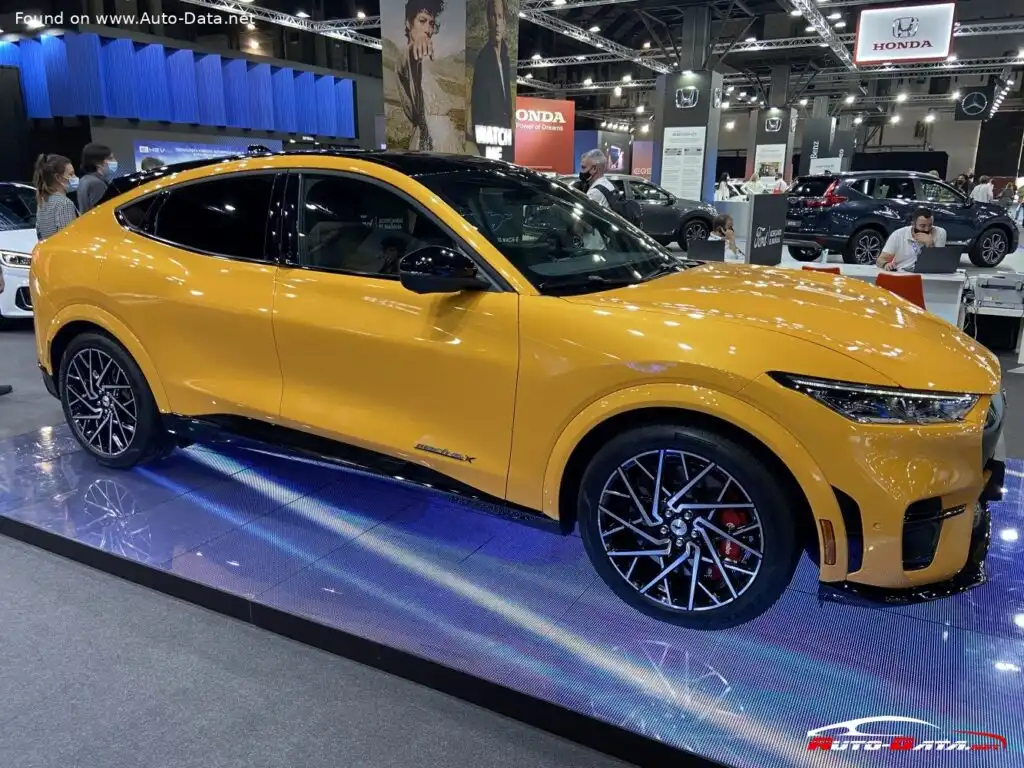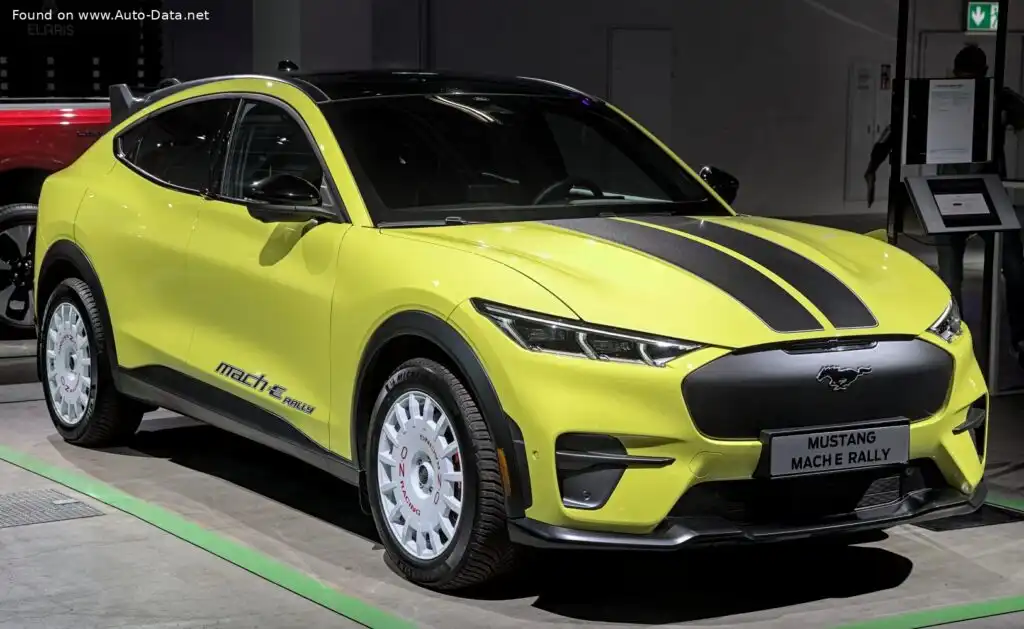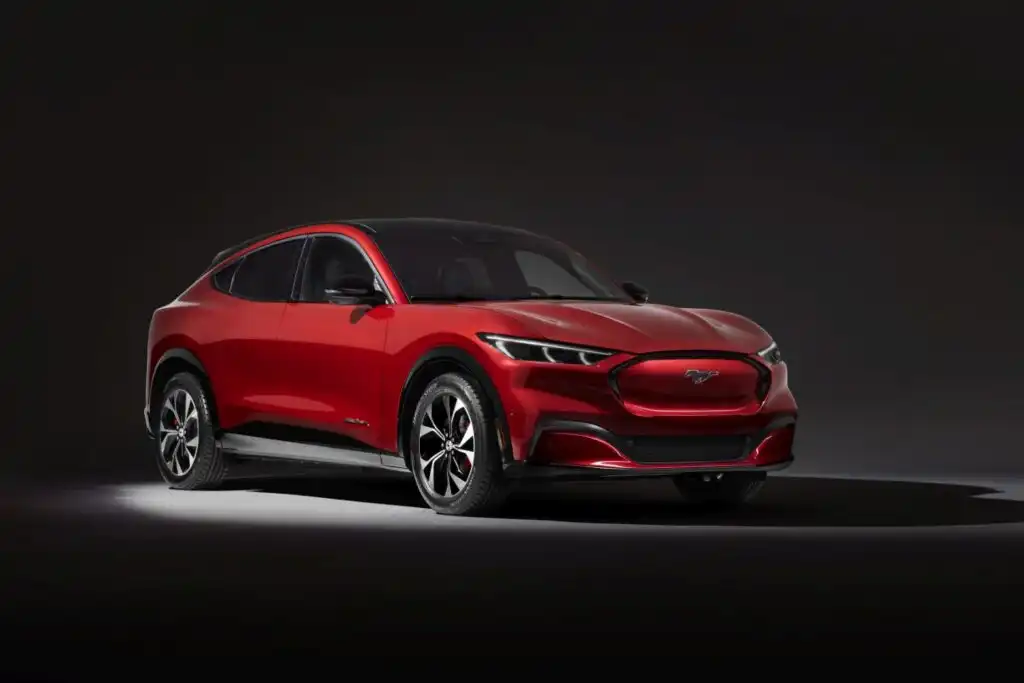
The Ford Mustang Mach-E Extended Range, equipped with a 99 kWh battery and dual electric motors producing 375 horsepower, represents Ford’s significant entry into the all-electric crossover SUV market. Production began in April 2025, positioning it as a premium offering within the Mach-E lineup. This variant aims to deliver a blend of performance, range, and technology, capitalizing on the iconic Mustang nameplate while forging a new path for the brand in the electric vehicle segment. The Mach-E, built on Ford’s all-electric GE2 platform, is a five-door, five-seat vehicle designed to compete with established players like Tesla’s Model Y and the Hyundai IONIQ 5.
Technical Specifications
| Brand | Ford |
| Model | Mustang Mach-E |
| Generation | Mustang Mach-E |
| Type (Engine) | Extended Range 99 kWh (375 Hp) AWD |
| Start of production | April, 2025 |
| Powertrain Architecture | BEV (Electric Vehicle) |
| Body type | Coupe, SUV |
| Seats | 5 |
| Doors | 5 |
| Fuel Type | Electricity |
| Acceleration 0 – 100 km/h | 4.8 sec |
| Acceleration 0 – 62 mph | 4.8 sec |
| Acceleration 0 – 60 mph | 4.6 sec |
| Maximum speed | 180 km/h (111.85 mph) |
| Weight-to-power ratio | 5.8 kg/Hp, 173 Hp/tonne |
| Weight-to-torque ratio | 3.2 kg/Nm, 311.3 Nm/tonne |
| Gross battery capacity | 99 kWh |
| Net (usable) battery capacity | 88 kWh |
| Battery technology | Lithium nickel manganese cobalt oxides (Li-NMC) |
| Battery location | Below the floor |
| All-electric range (WLTP) | 550 km (341.75 mi) |
| All-electric range (EPA) | 483 km (300.12 mi) |
| Average Energy consumption (WLTP) | 19.3 kWh/100 km (31.06 kWh/100 mi) |
| Average Energy consumption (EPA) | 108 MPGe, 5.2 km/kWh (3.2 mi/kWh) |
| Electric motor 1 location | Rear axle, Transverse |
| Electric motor 1 type | Synchronous |
| Electric motor 2 location | Front axle, Transverse |
| Electric motor 2 type | Synchronous |
| System power | 375 Hp |
| System torque | 675 Nm (497.85 lb.-ft.) |
| Kerb Weight | 2168-2170 kg (4779.62 – 4784.03 lbs.) |
| Max. weight | 2695 kg (5941.46 lbs.) |
| Max load | 525-527 kg (1157.43 – 1161.84 lbs.) |
| Trunk (boot) space – minimum | 402 l (14.2 cu. ft.) |
| Trunk (boot) space – maximum | 1420 l (50.15 cu. ft.) |
| Max. roof load | 75 kg (165.35 lbs.) |
| Permitted trailer load with brakes (12%) | 1500 kg (3306.93 lbs.) |
| Permitted trailer load without brakes | 750 kg (1653.47 lbs.) |
| Permitted towbar download | 60 kg (132.28 lbs.) |
| Length | 4713 mm (185.55 in.) |
| Width | 1881 mm (74.06 in.) |
| Width with mirrors folded | 1930 mm (75.98 in.) |
| Width including mirrors | 2097 mm (82.56 in.) |
| Height | 1624 mm (63.94 in.) |
| Wheelbase | 2984 mm (117.48 in.) |
| Front track | 1613-1620 mm (63.5 – 63.78 in.) |
| Rear (Back) track | 1610-1627 mm (63.39 – 64.06 in.) |
| Ride height (ground clearance) | 157 mm (6.18 in.) |
| Minimum turning circle (turning diameter) | 11.6 m (38.06 ft.) |
| Front brakes | Ventilated discs, 362 mm |
| Rear brakes | Disc, 330 mm |
| Front suspension | Independent, type McPherson with coil spring and anti-roll bar |
| Rear suspension | Independent multi-link spring suspension with stabilizer |
| Drive wheel | All wheel drive (4×4) |
| Number of gears and type of gearbox | 1 gears, automatic transmission |
| Tires size | 225/55 R19 |
| Wheel rims size | 7J x 19 |
Powertrain & Engine Architecture
The Mustang Mach-E Extended Range utilizes a dual-motor, all-wheel-drive (AWD) powertrain. Each axle is driven by a synchronous electric motor. The system delivers a combined output of 375 horsepower and 675 Nm (497.85 lb.-ft.) of torque. The 99 kWh gross (88 kWh usable) battery pack, employing Lithium Nickel Manganese Cobalt Oxide (Li-NMC) chemistry, is positioned low in the vehicle’s floor to optimize the center of gravity and enhance handling. The battery supports DC fast charging, allowing for significant range replenishment in a relatively short period. The single-speed automatic transmission is inherent to electric vehicle design, providing seamless acceleration and eliminating the need for traditional gear changes. The power electronics and thermal management systems are crucial components, ensuring efficient operation and longevity of the battery and motors.
Driving Characteristics
The Extended Range AWD variant of the Mach-E delivers brisk acceleration, achieving 0-60 mph in approximately 4.6 seconds. The instant torque characteristic of electric motors provides responsive acceleration in all driving situations. The dual-motor setup offers enhanced traction and stability, particularly in adverse weather conditions. Compared to rear-wheel-drive Mach-E models, the AWD version provides a more confident driving experience. While not as overtly sporty as some performance-focused EVs, the Mach-E Extended Range offers a comfortable and engaging driving experience, balancing performance with practicality. The single-speed transmission provides linear power delivery, and the regenerative braking system allows for one-pedal driving in certain situations.
Equipment & Trim Levels
The Extended Range trim typically includes a comprehensive suite of standard features. These often include a large touchscreen infotainment system with Ford’s SYNC 4A software, a digital instrument cluster, heated front seats, a panoramic glass roof, and a premium sound system. Available options include adaptive cruise control, lane-keeping assist, and a hands-free driving system (BlueCruise). Interior upholstery typically consists of synthetic leather or premium cloth, with higher trims offering genuine leather options. The dashboard layout is minimalist and modern, emphasizing the large central touchscreen.
Chassis & Braking
The Mach-E utilizes an independent suspension system at all four corners. The front suspension employs a McPherson strut design with a coil spring and anti-roll bar, while the rear features a multi-link setup with a stabilizer bar. This configuration provides a comfortable ride and responsive handling. The braking system consists of ventilated discs at the front (362mm) and solid discs at the rear (330mm). Anti-lock braking system (ABS) is standard, along with electronic stability control. The vehicle’s relatively low center of gravity, due to the battery pack’s placement, contributes to its stable and predictable handling characteristics.
Market Reception & Comparison
The Ford Mustang Mach-E has been generally well-received by automotive critics and consumers alike. The Extended Range variant, in particular, has been praised for its impressive range and performance. Compared to other trims in the Mach-E lineup, the Extended Range offers a significant increase in range, making it ideal for longer journeys. Fuel economy, expressed as MPGe, is competitive with other electric SUVs in its class. Reliability data is still emerging, but early reports suggest that the Mach-E is a relatively reliable vehicle. The Mach-E competes directly with models like the Tesla Model Y, Hyundai IONIQ 5, and Kia EV6, offering a compelling alternative with its blend of performance, range, and styling.
Legacy
The Mustang Mach-E represents a pivotal moment for Ford, signaling the company’s commitment to electrification. The Extended Range variant, with its long-range capability and strong performance, is likely to become a popular choice in the used car market. The longevity of the battery pack and the durability of the electric motors will be key factors in determining the long-term value of these vehicles. As battery technology continues to evolve, the Mach-E’s battery management system and thermal control features will play a crucial role in maintaining its performance and extending its lifespan. The Mach-E has already established itself as a significant player in the EV market, and its legacy is likely to endure for years to come.